
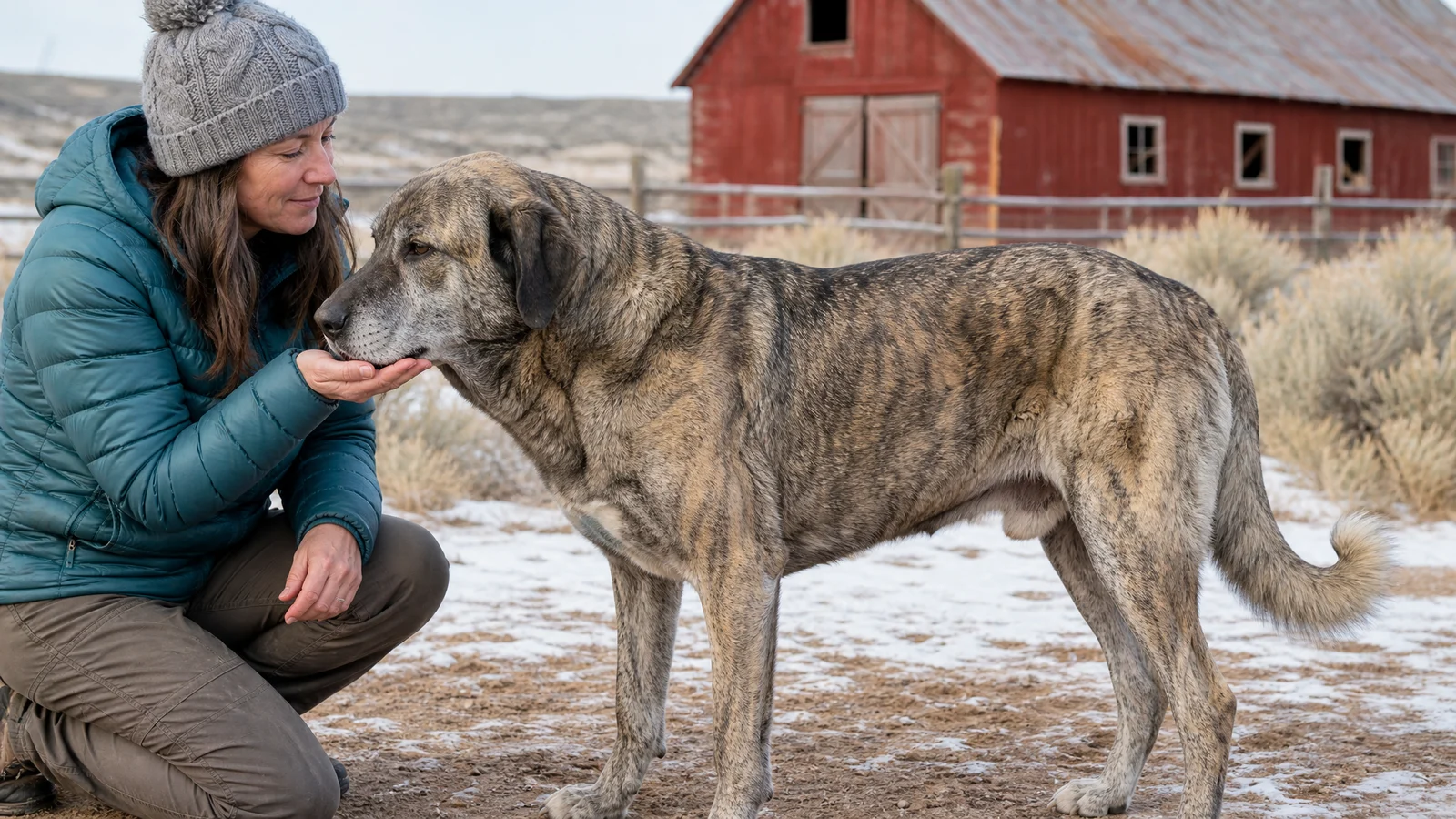
Begin training an older or adopted Anatolian Shepherd with the dog’s present home, known skills and willingness to participate. Age does not prove that a dog is untrained, and adoption does not reveal what happened before. A recent move may call for a quieter start, while a dog who already lives with you may be ready for an ordinary familiar lesson.
The useful first step is to separate settling into a household from teaching a skill. Protect access to rest, make daily expectations understandable and choose one voluntary response the dog already knows when that response is available. In this guide, we will separate those first decisions, protect a retreat, use one familiar learning exchange and route full household lessons without inventing a recovery schedule or assuming a particular past.
Has Your Older Anatolian Shepherd Just Changed Homes?
A home change matters because adjustment varies. Humane World for Animals says a new dog may need days, months or longer to acclimate, especially after several homes or shelters. That range rules out a universal countdown. It does not tell you how long one Anatolian Shepherd will need or prove that every adopted dog is overwhelmed.
The United Kennel Club breed standard describes the Anatolian Shepherd as naturally independent, intelligent and tractable. That is general breed context, not an explanation for reluctance, an explanation of distress or evidence about a dog’s previous home. Observe the individual in the current setting before deciding what kind of lesson is appropriate.
A Recent Move
For a dog who has just arrived, keep the first interactions quiet and consistent. Regular patterns for meals, walks and household movement can make the new environment easier to read. Avoid turning every room, person and rule into a training event at once. Settling and learning can occur together without requiring a formal test of whether the dog trusts you.
Record only what you actually see. A dog who pauses at a doorway, ignores a cue or chooses to rest may be responding to the immediate situation, but that observation does not identify the reason. Reduce pressure and make the next interaction predictable instead of assigning a hidden history to one moment.
An Established Household
An older Anatolian Shepherd who has lived in the home for years does not need an adoption story. Begin with the current routine and the specific behavior you want to maintain or teach. Age alone does not erase familiar responses, require a puppy-style reset or show that a dog understands a cue that has never been taught.
Use the same evidence standard for change. A noticeable difference in participation is information about the present, not proof that the dog has become stubborn with age. Keep routine veterinary care current, and pause to seek appropriate individual guidance when discomfort or a meaningful behavior change may need assessment.
Protect a Retreat Before Training the New Dog
A retreat should remain available without being earned. Battersea Dogs & Cats Home describes a safe space as somewhere to sleep and unwind, not a punishment area. Place it where the dog can disengage, and let rest end an interaction without calling the choice a failed repetition.
This is not a crate-confinement plan or an alone-time program. Do not lure a dog out of the retreat to prove sociability, block access until a cue is performed or send the dog there after an unwanted response. Rest and training have different jobs, and combining them can make both harder to understand.
Keep early social pressure modest after a move. The selected settling guidance recommends postponing visitor introductions through the first several days, but it does not create a permanent visitor rule or a test every new dog must pass. An established-home dog can follow the household’s ordinary pattern unless the current situation gives you a reason to adjust it.
A General Learning Method for an Older Anatolian Shepherd
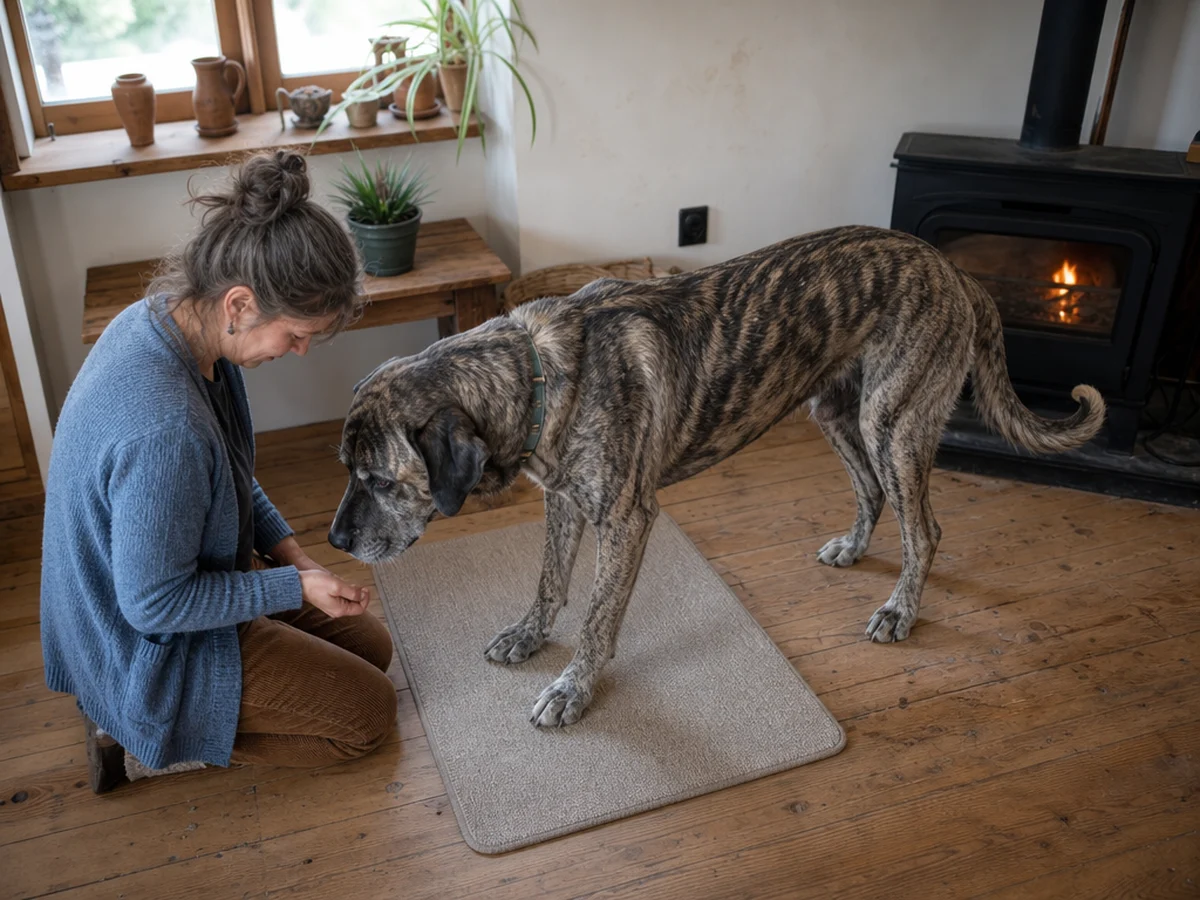
Choose a response the dog already performs voluntarily and has previously learned, such as approaching a familiar station or offering another established behavior. If no familiar cue is available, this brief exchange is not a substitute for teaching a new cue. Move that full lesson to an appropriate skill guide rather than pretending the dog should know the words.
The American Veterinary Society of Animal Behavior describes reward-based training in which a cue requests a behavior, a clicker or verbal marker marks it and an appropriate reinforcer follows. For one familiar response, use this general three-step method:
- Invite the established response in a familiar setting that supports participation. Allow enough time to see whether the familiar cue produces the voluntary behavior here.
- Mark the response when it occurs. Keep the marker consistent so it identifies the wanted action instead of becoming repeated background noise.
- Provide an appropriate reward, then finish or repeat only while the exchange remains useful. A brief successful interaction is enough for this orientation lesson.
If the dog does not participate, stop rather than adding pressure or assuming defiance. Check whether the setting, cue and requested response are genuinely familiar. A later new-cue lesson can use capturing, shaping or luring as appropriate, but those complete teaching methods are outside this transition guide.
The purpose is clarity, not a demonstration of what an older dog ought to know. One response can establish a predictable exchange between cue, marker and reward. It cannot establish reliability in every setting, reveal a prior training history or settle a broader behavior concern.
Separate Household Orientation From Full Training Lessons
House rules can be clear from arrival without turning every rule into a long lesson. Decide where ordinary resources and activities belong, apply the same expectation calmly and give the dog a workable alternative. Consistency tells the dog what happens in this home. It does not prove that a previous household used the same rules.
Toilet habits also deserve a narrow claim. A house-trained dog may have accidents while adjusting to a new environment, but that possibility does not mean every older or adopted dog will. Use the dedicated topic owner when you need a schedule or complete method rather than expanding a transition article beyond its evidence.
- Use the Anatolian Shepherd training timeline to navigate age-based stages without resetting an older dog to a puppy calendar.
- Use Anatolian Shepherd toilet training for the retained step-by-step house-training topic if an accident pattern needs a practical plan.
- Keep feeding locations, resting places and access rules understandable from day one, while preserving the retreat as a place to disengage rather than a consequence.
Orientation is complete when the immediate household setup is understandable enough for the next ordinary interaction. It is not a socialization ladder, livestock transition or complete behavior program. Select one separate lesson when a skill needs fuller teaching, and avoid making a newly arrived dog solve every household question in one session.
Questions About Training an Older or Adopted Anatolian Shepherd
The body has separated a home transition from an established routine, protected the retreat and retained one familiar learning exchange. Three narrower gaps remain about age, unknown history and early visitors without repeating the adjustment range or turning the article into a complete training plan.
Is an older Anatolian Shepherd too old to learn? Nothing in the selected evidence sets an age when learning ends. Start from a response the dog can offer now, keep the cue-marker-reward exchange clear and move a genuinely new skill to its full lesson. Pause and seek individual advice when a notable change or possible discomfort makes a general lesson inappropriate.
Does adoption mean an Anatolian Shepherd was mistreated? No. Adoption identifies a change of home, not a specific history, and reluctance in one setting cannot prove what occurred before. Use verified records when they exist and describe present behavior without filling unknown time with an invented explanation.
Should every visitor meet a newly adopted Anatolian Shepherd right away? No selected source requires immediate greetings. A quieter first few days can reduce pressure while the dog gets used to the household, and the retreat should remain available. That short-term approach is not a claim that the dog must avoid all future visitors or follow a fixed social timetable.
Keep Older-Dog Training Predictable
A useful first phase ends with a dog who can rest without being tested, household expectations that remain consistent and one familiar reward-based exchange when the dog is ready to participate. The endpoint is not a date when adjustment must be complete. It is enough clarity to choose the next interaction without forcing a story onto age or adoption.
Continue regular veterinary visits and seek qualified individual guidance for meaningful changes or concerns instead of trying to explain them from a general guide. Whether the Anatolian Shepherd is newly adopted or long established, preserve rest, observe what is happening now and let the next focused lesson own the skill it is meant to teach.
 Training basicsHow to Teach an Anatolian Shepherd to Leave It
 Exercise and jobsHow to Teach an Anatolian Shepherd to Weave Through Your Legs
 BehaviorLiving With an Anatolian Shepherd Livestock Guardian