
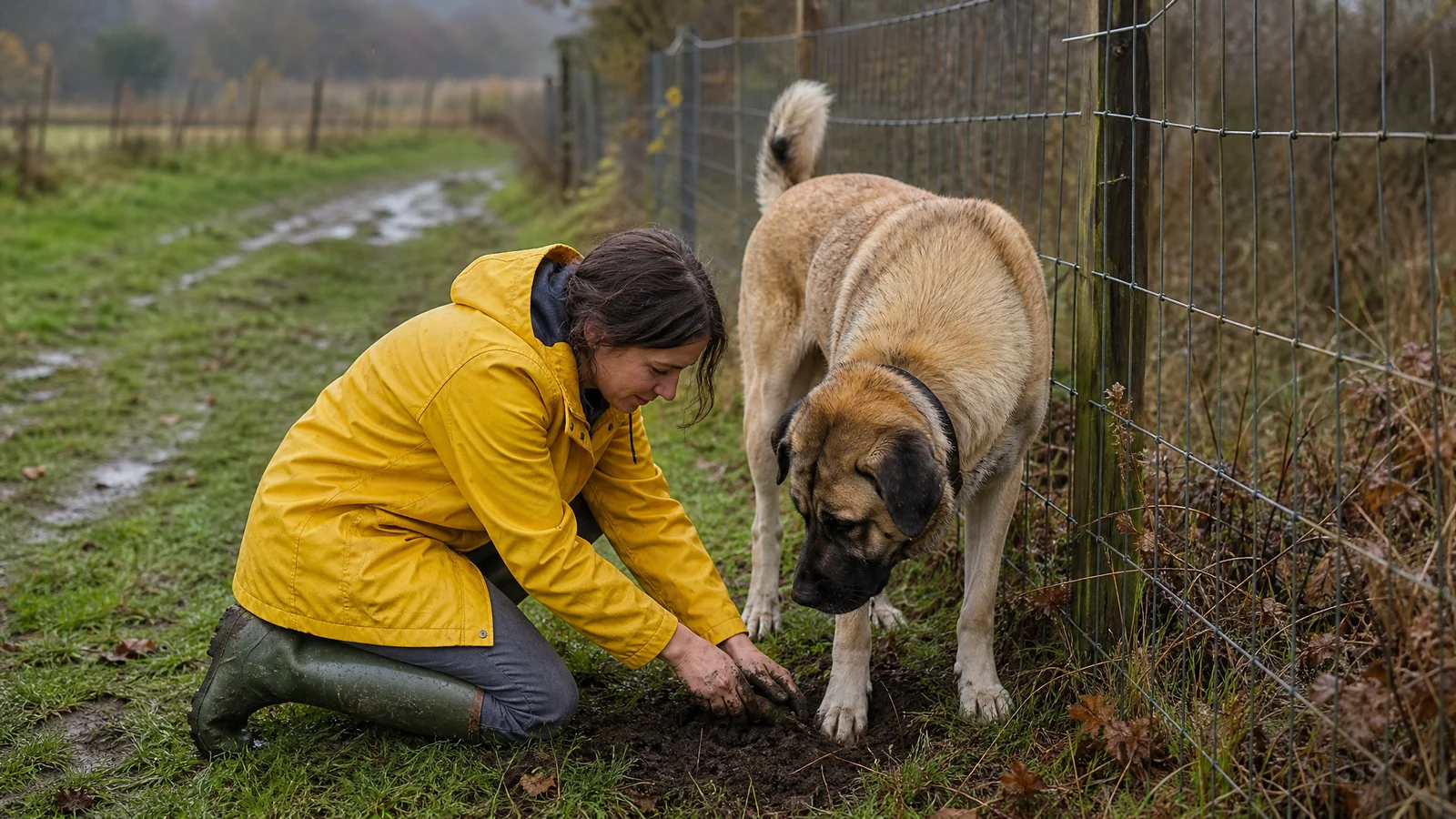
At dusk a big, calm dog trots to the far corner of the yard, stops to study something beyond the fence, and carries on along the line. An hour later the same dog is standing a street away, or has left a fresh hole at one spot on the boundary. Nothing about it looks like mischief, and that is the clue.
An Anatolian Shepherd in this mood is patrolling a territory and testing where it ends, which is exactly what the breed was made to do. This guide covers keeping an Anatolian Shepherd home, from why they roam and which fences hold to gate habits, digging and a defined area they choose to stay in.
Handled badly, roaming means road danger, upset neighbors and a dog who rehearses escape every day. Handled well, you get a settled guardian who treats your yard as a whole world.
Reading Anatolian Shepherd Roaming
Roaming in this breed is rarely about wanting to leave you. The breed was bred for millennia to exercise independent judgment when they sense danger, and many Anatolian Shepherds are still working ranch dogs today. A working guardian spends the day moving along the edge of whatever they protect, so your fence line is their workplace. Treat roaming as a management issue first, and a training issue second.
Testing the Edges
A guardian checks corners, low spots and the places where ground meets fence. To you this looks like pacing. To them it is inspection, and when the inspection finds a gap, the patrol simply continues on the other side.
Walk your boundary the way your dog does. Look for worn paths beside the fence, scuffed dirt at corners and any spot where they linger. Strengthen those places before the dog learns what is possible.
Following Sounds and Scents
These dogs notice anything out of the ordinary. A distant coyote call, a neighbor's truck or a strange smell drifting across the road can pull a guardian off the usual route, and the farther away the stimulus, the stronger the case for going to look.
Block the sight lines at the spots that trigger the most investigating. Whenever your dog turns away from the fence by choice, say your marker word and bring a treat right to them. Our guide to Anatolian Shepherd recall and off-leash safety shows how to build a reliable come-when-called for a dog who thinks for themselves, but a recall should never stand in for a fence.
Dusk and Other Risky Hours
Dusk is a sensible time to be extra careful, since wildlife and neighborhood activity often pick up as the light fades. Check the gates, bring in anything that could serve as a step, and stay close while the dog is outside.
Give the evening a predictable shape. A short walk around the yard with you, then a chew or a meal, tells the dog the day's patrol is finished and the family is home.
Why Roaming Patrol Drive Persists
Wandering in this breed is best understood as patrol behavior, and that makes it a management issue before it is a training issue. These dogs were bred for millennia to exercise independent judgment in response to perceived danger, and the AKC standard describes them as highly territorial. A dog with that background does not stroll the yard for fun. They check their territory, and the territory they feel responsible for may extend well past your property line.
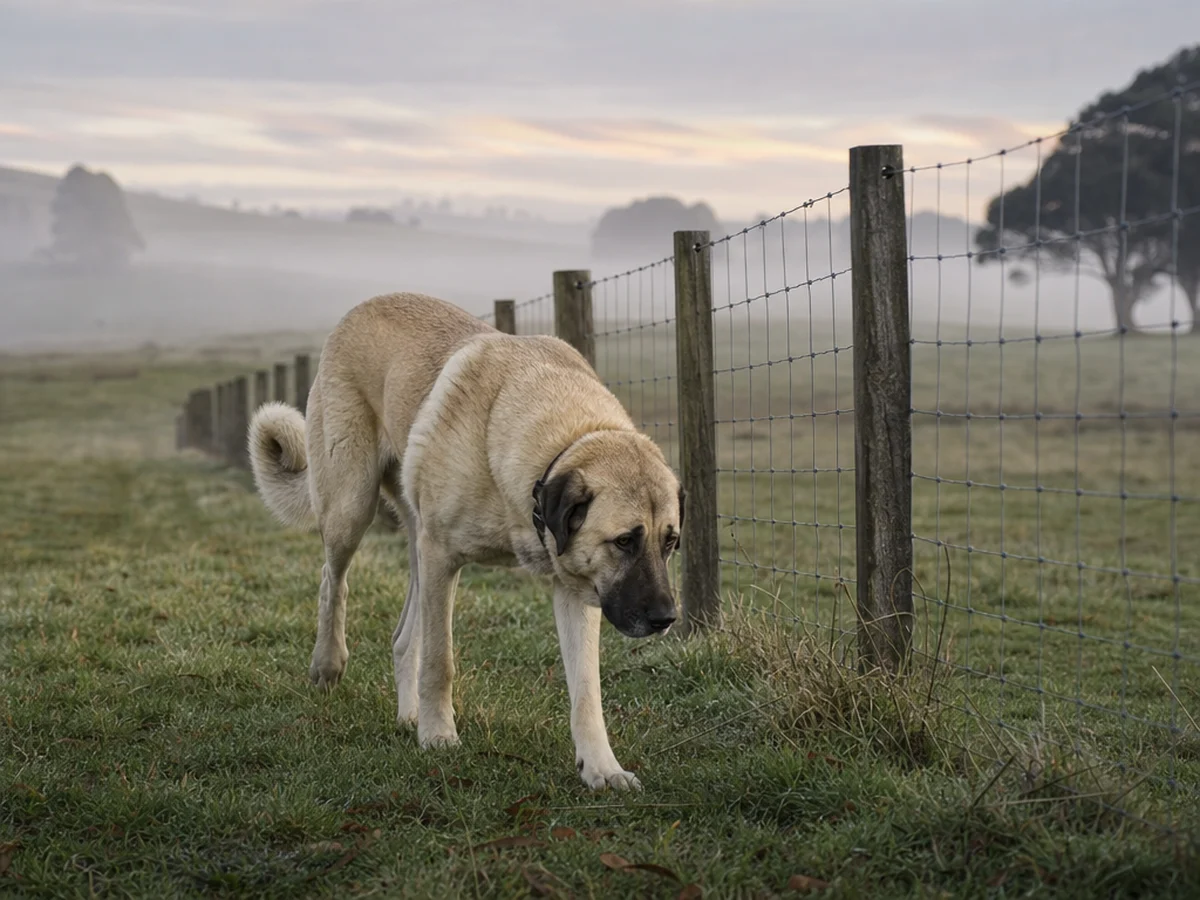
That is why roaming rarely means they want to leave you. A guardian who slips out is usually following the job they were made for: investigating a sound, a scent or a change at the edge of their space. The same instinct that lets a working Anatolian keep predators away and alert their people to anything out of the ordinary will pull a pet dog toward the far side of a weak fence.
Expect the pattern to show up as pacing along the boundary, repeated visits to the same corner and close attention to whatever passes outside. Treat each of these as information about where the fence, the layout or the routine needs work. Close the opportunity to slip out, then reward calm behavior inside the yard so that staying put is what pays off for your dog.
Digging and Roaming at the Fence
Digging under a fence is a fence problem and a dog problem at once. Fix the structure so digging stops paying off, then give the urge a better outlet so your dog still has somewhere to put it.
Why They Dig
A patrolling dog follows scent along the fence, and the strongest smells are often at ground level where wildlife travels. Digging is a logical next step. Boredom, too little activity and the wish for a cool hollow in warm weather all add to it.
Note when and where the digging starts. A pattern in time of day or location tells you whether the cause is scent, restlessness or heat. Keep up regular vet visits as well, and mention any sudden change in energy or habits.
Filling and Blocking
Fill existing holes firmly, then make the spot unrewarding. Large flat stones or a barrier laid along the base of the fence work well, because the dog can no longer reach loose soil. Do not refill and hope, since a half-dug hole invites the dog back.
If the digging keeps happening at one stubborn corner, treat that corner as a project and strengthen it before the dog does. Check it again after rain, since soil settles and gaps reopen.
A Legal Digging Spot
Set up one approved digging spot, such as a sandbox of loose soil well away from the fence. Bury a few treats or a chew there and cheer when your dog finds them. A small reward each time they choose that spot teaches where digging is welcome.
Back it up with enough movement and mental work. Our article on Anatolian Shepherd exercise and brain games has ideas that suit a calm, thoughtful working breed.
Gate Habits That Block Roaming
We have spent many years working with this breed, and we still treat every gate as the likeliest exit. Escapes often begin with a delivery driver, a guest or a hurried family member who leaves a latch undone for a few seconds. That is all a dog needs when something interesting waits on the other side.
Build routines so the right thing happens even when everyone is tired or distracted. Rehearse the same order until it becomes automatic.
- Before you open any door or gate to the outside, know where your dog is, then call them to you or send them to a mat.
- Reward them for staying on the mat while the visitor or delivery comes and goes.
- Open, pass through, close and latch, then confirm the latch with your hand before you release the dog.
- Add a backup on gates that face a road, such as a lock or a spring closer, so one slip does not mean one escape.
- Post a clear sign asking visitors to keep gates shut, and give deliveries a drop spot outside the fence.
Expect barking at arrivals, because these dogs are watchful by design. Reward the quiet moment after the first alert, and teach a settle cue so they have something to do instead. Our article on teaching an off switch covers that skill in detail.
If your dog stiffens or growls at a visitor near the gate, remember that growls are warnings. Calmly move away and let the dog see that nothing needs to escalate. That kind of defensiveness is typically based in anxiety, which is why a relaxed, rewarded arrival routine lowers the stakes for everyone.
Anatolian Shepherd Fence Basics
You will hear that a tired dog is a dog who stays put. Exercise helps, but a patrol drive is not a fitness problem, and a large, capable, persistent guardian treats a flimsy barrier as a puzzle to solve. Build or repair the fence first, and plan for your most determined dog, since individuals vary.
Height
Go taller than seems necessary. The test is simple: could your dog clear the fence from a standing start, or with a run at it? If you are unsure, add height.
Then look at the ground beside the fence. A woodpile, a doghouse, a stack of crates or a bank of packed snow can turn a decent fence into a ramp.
Solid Versus Open Panels
Open fencing lets your dog watch everything that passes, and for an observant guardian that is constant fuel for pacing and barking. Solid panels cut the view and often lower the intensity along the fence line.
Solid fencing has a trade-off, because some dogs dig or lean in when they cannot see out. A sensible compromise is solid panels where people, dogs and vehicles pass most often, and open sections facing quiet land. Watch how your own dog reacts and adjust.
The Base of the Fence
Fence tops get the attention, but the bottom is often where dogs win. A barrier that extends outward along the ground, or a footing set into the soil, removes the reward for working at the base. Fasten it securely to the fence so a determined dog cannot lift an edge.
Run this check every season and after any storm. Walk slowly enough to notice small changes before the dog does.
- Walk the whole line and look for gaps, loose boards, sagging wire and any place where soil has washed away.
- Test every latch and hinge with a firm tug, since a gate that looks closed may not be.
- Clear anything stacked or growing against the fence that could work as a step.
- Look for fresh scuffs or shallow hollows at the base, which show where your dog has been working.
Giving an Anatolian Shepherd Boundaries
A fence tells the dog where they cannot go. A defined area shows them where they want to be. The breed is naturally independent, so short, clear, rewarding lessons work better than long drills, and heavy handling is not a good fit for a dog whose standard calls for a calm, observant temperament. Build the area in the order below.
Layout First
Arrange the yard so the best things sit toward the middle: shade, water, a comfortable resting place and a chew spot. A dog who finds everything they need well away from the fence has less reason to spend the day beside it. Keep the perimeter itself dull, with nothing to climb and no gaps to investigate.
Marker Work at the Edge
Teach the marker indoors first. Say "yes" in a bright, brief voice, then hand over a treat, every time, until your dog looks to you the moment they hear it.
Next, walk the boundary with your dog on a leash. Each time they glance at the fence line and turn back toward you, mark the turn and deliver the treat at your side, inside the area. Keep each session brief and end it before your dog loses interest. Work through the whole perimeter in short stages over several days rather than all at once.
Supervised Time
At first, stay outside with the dog. Read or do chores, and be ready to mark and reward any calm choice. If they head toward a weak spot, call them to you cheerfully and reward the turn.
Once your dog stays in the area while you are present, build to short periods where you are out of sight but nearby. Step back a stage if they start testing the edges again.
Rewarding Calm Inside
Scatter treats in the grass, and praise quietly when your dog lies down and rests, not when they stand tense at the fence. You are building a dog who is relaxed in their own territory, which makes a far better companion than one who is always on duty.
A Roaming Boundary System That Holds
An Anatolian Shepherd does not stay home because they are told to. They stay because home is secure, large enough to feel like a real territory and predictable enough that leaving has no payoff. That independent working role is exactly why the setup matters so much. You are working with an independent thinker who makes their own decisions, so your best tools are the ones that shape what the dog chooses.
Everything covered so far serves that goal. A solid, tall fence closes the obvious exits. Careful gate habits remove the easiest one. A filled and blocked fence base discourages digging, and an approved digging spot gives that urge a harmless outlet. A yard arranged so the best things sit toward the middle, plus calm behavior rewarded inside it, makes the center of the territory the most appealing place to be.
None of this needs to be perfect on the first day. It needs to be consistent, because a guardian notices every weak edge and every lapse in routine. Keep the pieces working together, inspect them often, and reward the choices that hold the dog inside. Consistency gives your Anatolian Shepherd a home range they are content to patrol and then rest in.
 BehaviorTeach an Anatolian Shepherd an Off Switch
 BehaviorAnatolian Shepherd Guard Dog: Visitors and Strangers at Home
 Puppy trainingMouthing and Chewing in a Fast-Growing Anatolian Puppy