
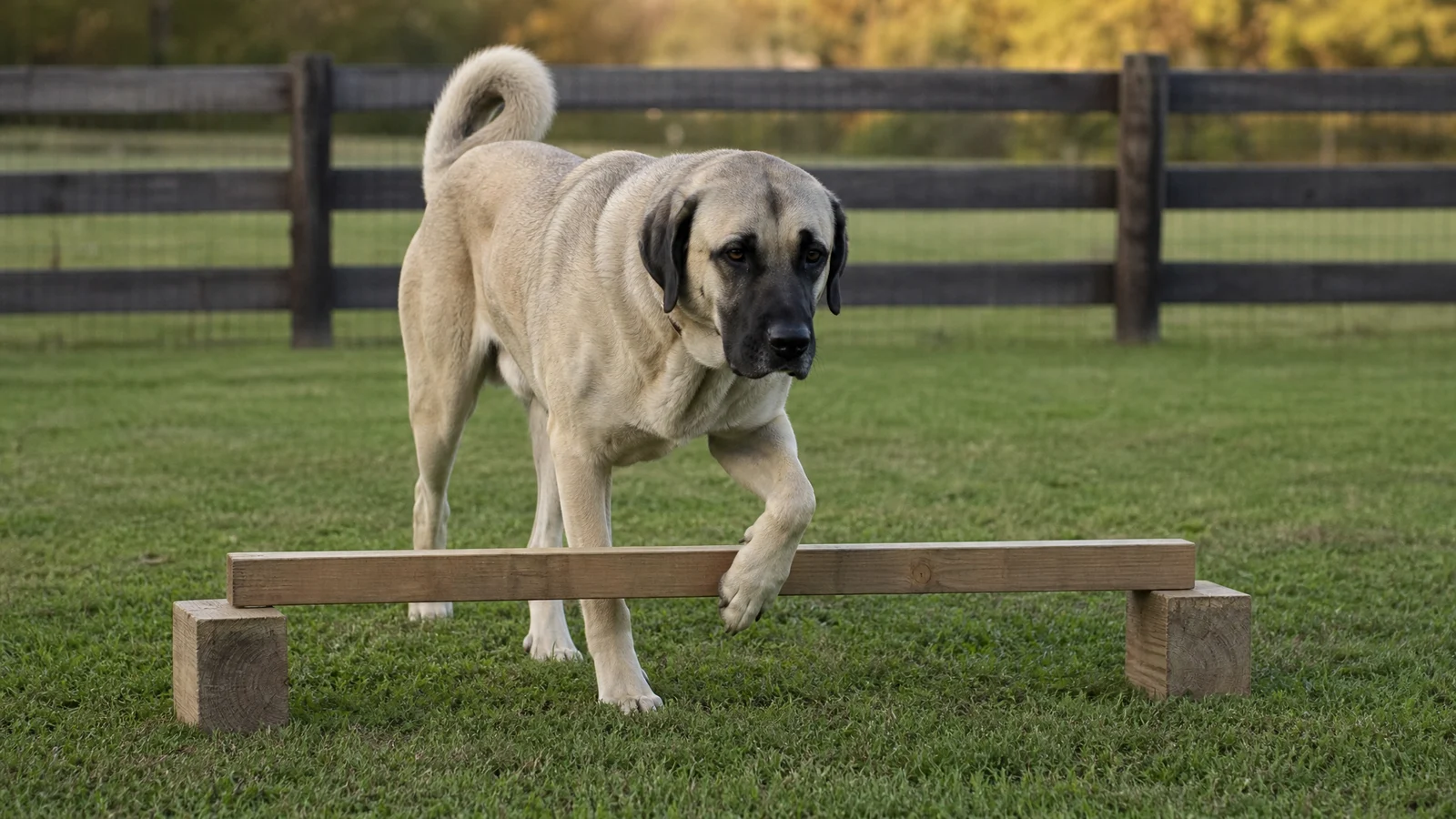
An obstacle in the yard can make the lesson look like a test of how high a dog can jump. A suitable beginner session has a narrower goal: help an Anatolian Shepherd choose one low crossing on secure footing, then reward that choice. The bar stays low and able to fall away, so success means understanding the path rather than clearing an impressive height.
Before setting out equipment, decide whether this activity suits the individual dog. Health, maturity, confidence, footing, and the quality of instruction all matter more than a birthday or a breed label. In this guide, we will make those decisions first, teach one reward-based crossing, and add its cue only after the movement is familiar.
Arrange the Right Help Before Anatolian Shepherd Jump Training
There are two decisions before the home lesson. One concerns physical suitability, which belongs with a veterinarian when there are health or maturity questions. The other concerns how the skill will be taught, including whether an instructor can adjust the setting and pace for the dog in front of them.
Individual Health and Maturity
PDSA's agility guidance explains that the activity can put pressure on joints, the heart, and breathing. It recommends discussing medical concerns with a veterinarian before training and waiting until a dog is fully grown before jumping. That general guidance is not a breed-specific starting age or automatic clearance.
Pause if the dog appears uncomfortable, and seek individual advice instead of trying to train through it. Regular veterinary care can help keep health questions in the right setting, but this article cannot decide whether a particular dog should jump. A successful attempt on one day does not settle that question for later sessions.
An Instructor Who Adjusts the Lesson
A suitable instructor uses positive methods, considers individual needs, and works at a pace that suits dog and handler. If a dog is nervous or reactive around people or dogs, discuss the environment before joining a group. A quieter one-to-one lesson may be worth considering while confidence develops.
The UKC breed standard describes Anatolian Shepherds as naturally independent, intelligent, and tractable. Those broad traits do not predict whether one dog will enjoy an obstacle, need a quieter setting, or be physically suited to the lesson. Let the individual response guide the pace.
Train One Low Anatolian Shepherd Crossing Before Adding the Cue
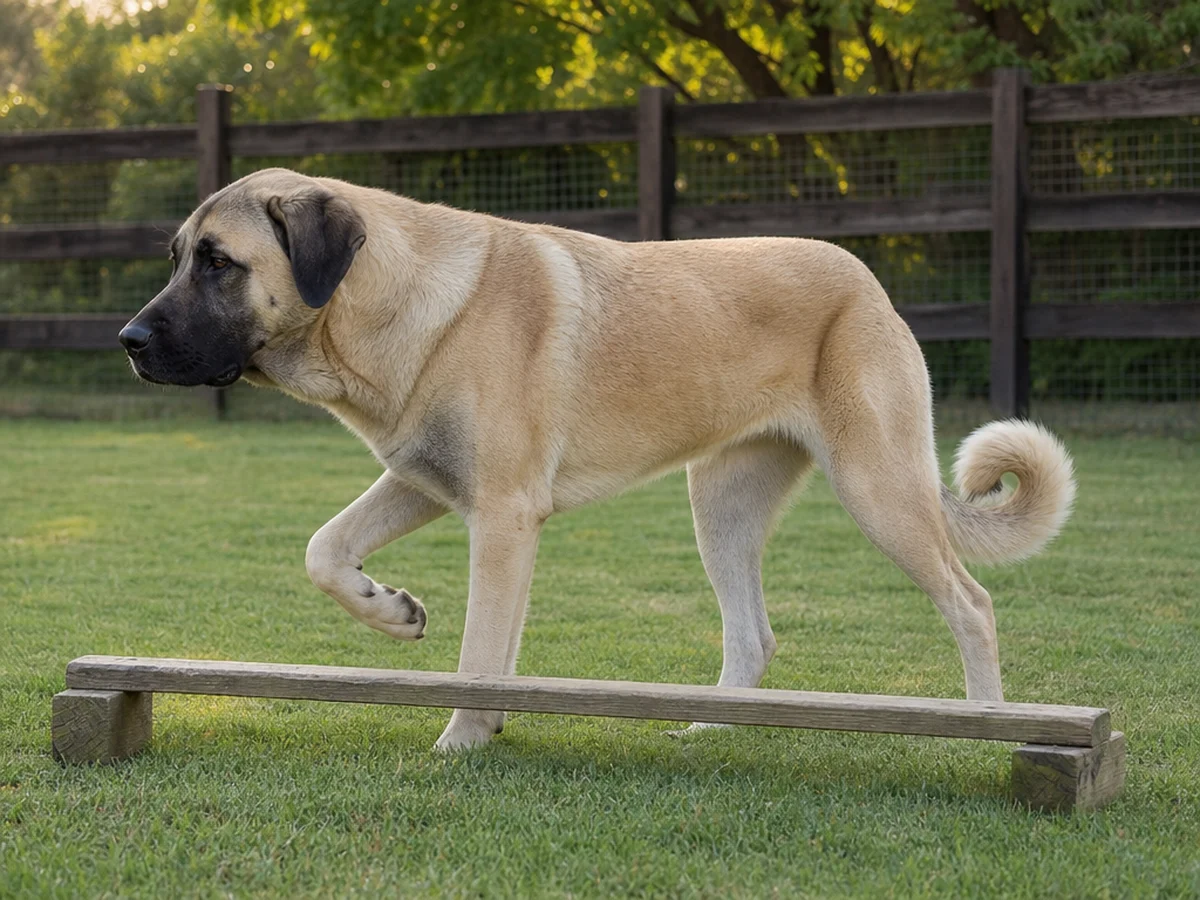
Set up for a simple choice, not a height challenge. The AKC's home agility guidance calls for a low obstacle on a nonslip surface and a pole that will fall if a dog hits it. Keep the area clear enough for a straight approach and an easy exit.
Use a favorite toy to make the path understandable, and reward the voluntary crossing. Do not pull, lift, or push the dog over the obstacle. If they stop, turn away, or choose not to cross, lower the demand and end the attempt rather than turning uncertainty into pressure.
- Place a low, fall-away bar on secure, nonslip footing.
- Stand close enough that the approach is short and uncomplicated.
- Put a favorite toy just beyond the obstacle to show the intended path.
- Reward the voluntary crossing while the successful choice is still clear.
- Add the verbal cue only after the dog understands the crossing game.
Prepare the Surface and Fall-Away Bar
A pole that can drop when touched reduces the risk created by a rigid barrier, but it does not make every setup suitable. Avoid slick flooring, fixed objects, and improvised heights. This lesson needs only enough separation to create a clear low crossing, not a standard borrowed from competition.
Keep the broader Anatolian Shepherd exercise plan separate from this skill. One careful crossing is a training task, not a workout program or a reason to add repetitions. Stop while the dog is moving willingly and the setup remains easy to understand.
Reward the Crossing and Introduce Its Cue
The AKC's getting-started lesson places a favorite toy beyond a low obstacle and adds the verbal cue after the dog understands the game. That order keeps the word attached to a known action. It avoids repeating an unfamiliar cue while the dog is still solving the route.
RSPCA training guidance supports reward-based teaching and notes that food, toys, or praise can make a behavior more likely to happen again. Reward the completed crossing promptly. If it stays comfortable and clear, distance can increase gradually and the approach can be practiced from either side without raising the bar.
Questions About Anatolian Shepherd Jump Training
Once the setup and teaching sequence are clear, a few boundaries still deserve direct answers. These questions keep the low crossing in its proper role and avoid turning a small training choice into a claim about exercise needs, breed predictability, or future obstacle height.
Can this crossing replace regular exercise? No. It is a brief learning task, not a complete physical or mental activity plan. Treat it as an optional skill within the dog's individually appropriate routine, and do not use successful crossings to set a repetition target.
Does an independent temperament prevent learning the cue? No breed description can predict one dog's response to this lesson. The broader discussion of Anatolian Shepherd temperament can provide context, but observation still matters. Adjust the pace to the individual rather than assuming independence guarantees refusal or success.
Can food or praise reward the crossing? Yes, if the dog values that reward and the timing makes the successful choice clear. A toy has a useful second job in this method because its position shows the route beyond the obstacle. Food or praise can follow the crossing without being used to pull the dog through it.
Keep Jump Training Separate From Raising the Bar
A dog who crosses comfortably has learned the path you arranged. They have not demonstrated a safe maximum height or earned an automatic progression to a harder obstacle. Keep the bar low, the surface secure, and participation optional so the cue remains attached to a clear, low-demand choice.
If comfort, maturity, health, or confidence is uncertain, return to individual assessment instead of testing the dog. The useful milestone is a calm, voluntary crossing that the dog understands. There is no need to raise the bar for the lesson to count.
 Training basicsTraining an Older or Adopted Anatolian Shepherd
 Training basicsHow to Teach an Anatolian Shepherd to Leave It
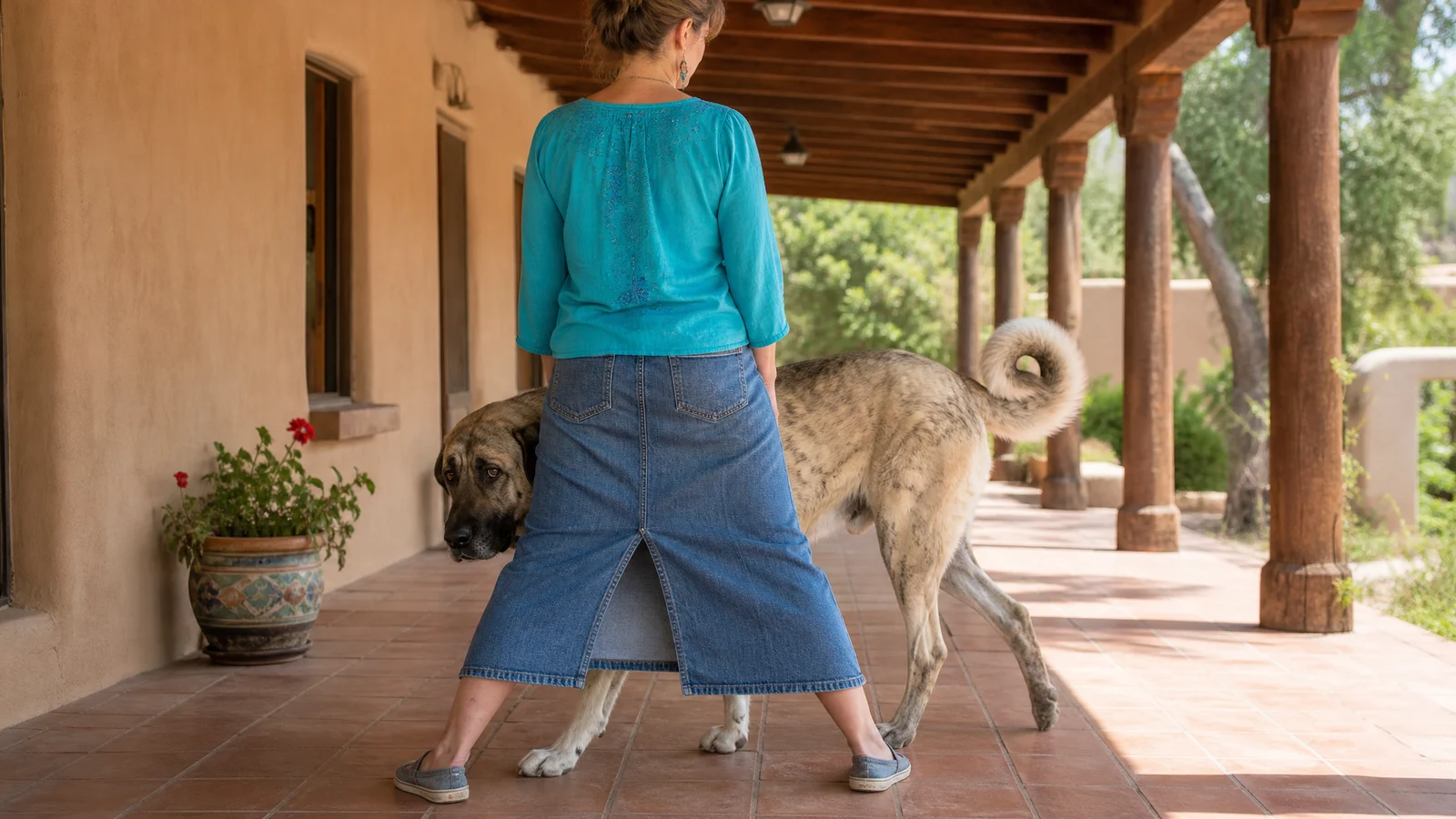 Exercise and jobsHow to Teach an Anatolian Shepherd to Weave Through Your Legs