
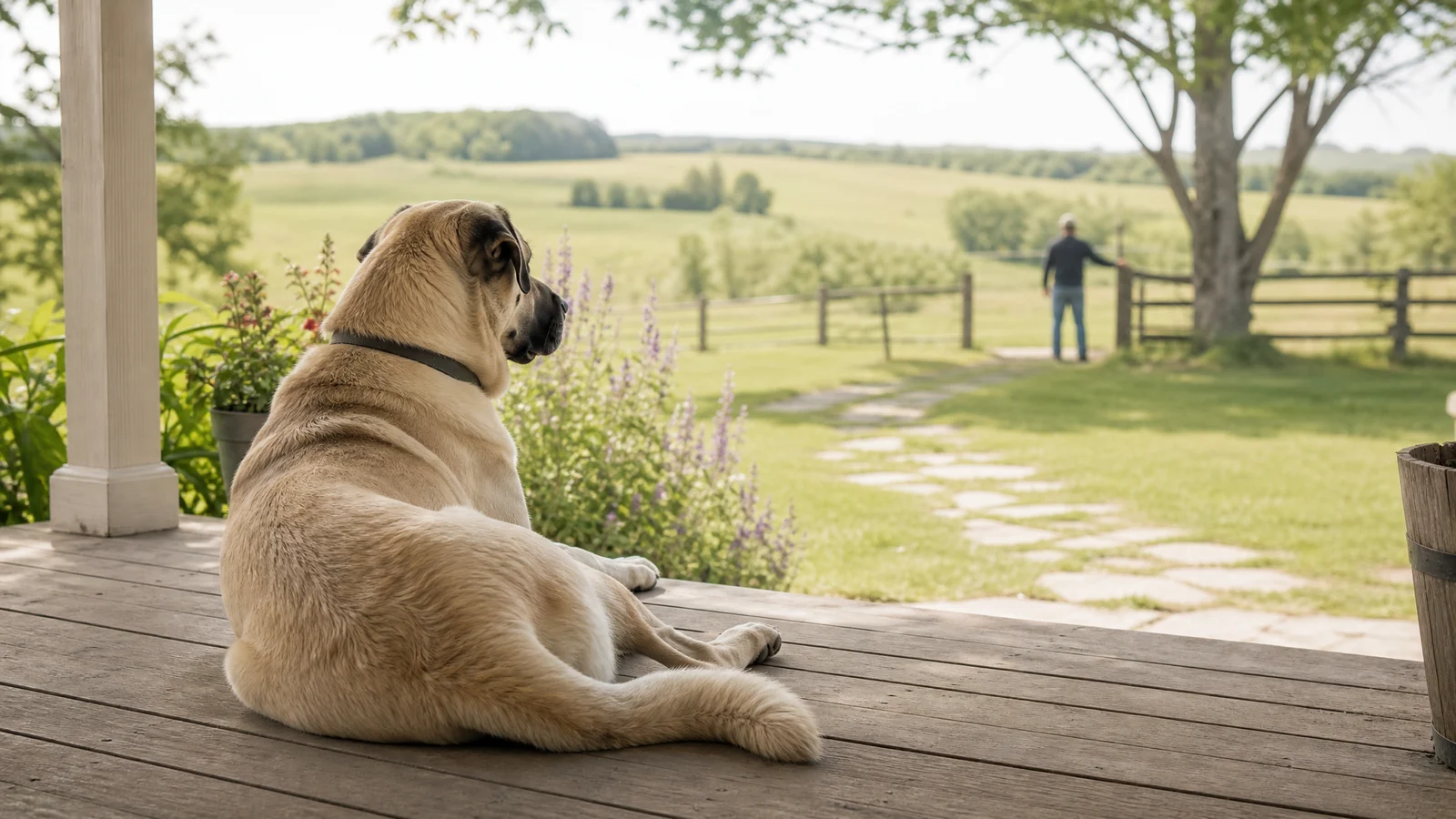
A typical afternoon might look like this. Your Anatolian Shepherd lies on the porch for an hour, head up and perfectly quiet, following a delivery driver from the gate to the door and back to the truck. Then someone calls a cheerful recall cue from the yard, and the dog glances over, seems to consider it, and stays right where they are.
That is not defiance. It is guardian temperament doing the work that generations of selection built into this breed, and understanding it changes how you train, how you host visitors, and whether this dog belongs in your home at all. Handled badly, a large and territorial dog with no direction becomes a risk. Handled well, the same traits give you a calm, deeply loyal companion.
In this article, we'll go through the working history behind the temperament, how reserve and independence show up at home, an honest answer on trainability, and the signs that tell you training is on track or needs a professional.
Where Anatolian Shepherd Temperament Comes From
These ancient guardian dogs were bred for millennia to protect flocks. They are livestock guardian dogs, a term worth defining. A livestock guardian lives alongside the animals they protect and handles threats on their own, while a herding dog moves stock under a handler's direction. That one difference explains most of what follows.
Anatolian authorities describe a breed shaped for millennia to use independent judgment when danger appeared, whether the threat walked on four legs or two. Consider the working conditions. A shepherd could be far away or asleep, so a guardian who waited for instructions would have been too slow, and the dogs who judged well were the ones whose lines continued.
The reputation that grew from this work is consistent wherever the breed is described. The breed standard calls the Anatolian instinctively protective, courageous and highly adaptable, and also highly territorial and a natural guard. Those are the traits a flock owner needed, and they are the same ones you will live with.
Today the job has changed, but the dog has not. Your Anatolian arrives with a job description they never read: watch, assess, decide. Good training starts from that instinct and gives it a safe outlet, instead of pretending it is not there.
Why a Guardian Temperament Watches Before Acting
The first thing to understand about these dogs is that their calm is deliberate. The breed standard describes them as alert and intelligent, calm and observant, and the calm is part of the design. A lifeguard is a useful comparison. They sit still in the chair for hours, scanning the water, and spend almost no energy until something actually needs a response.
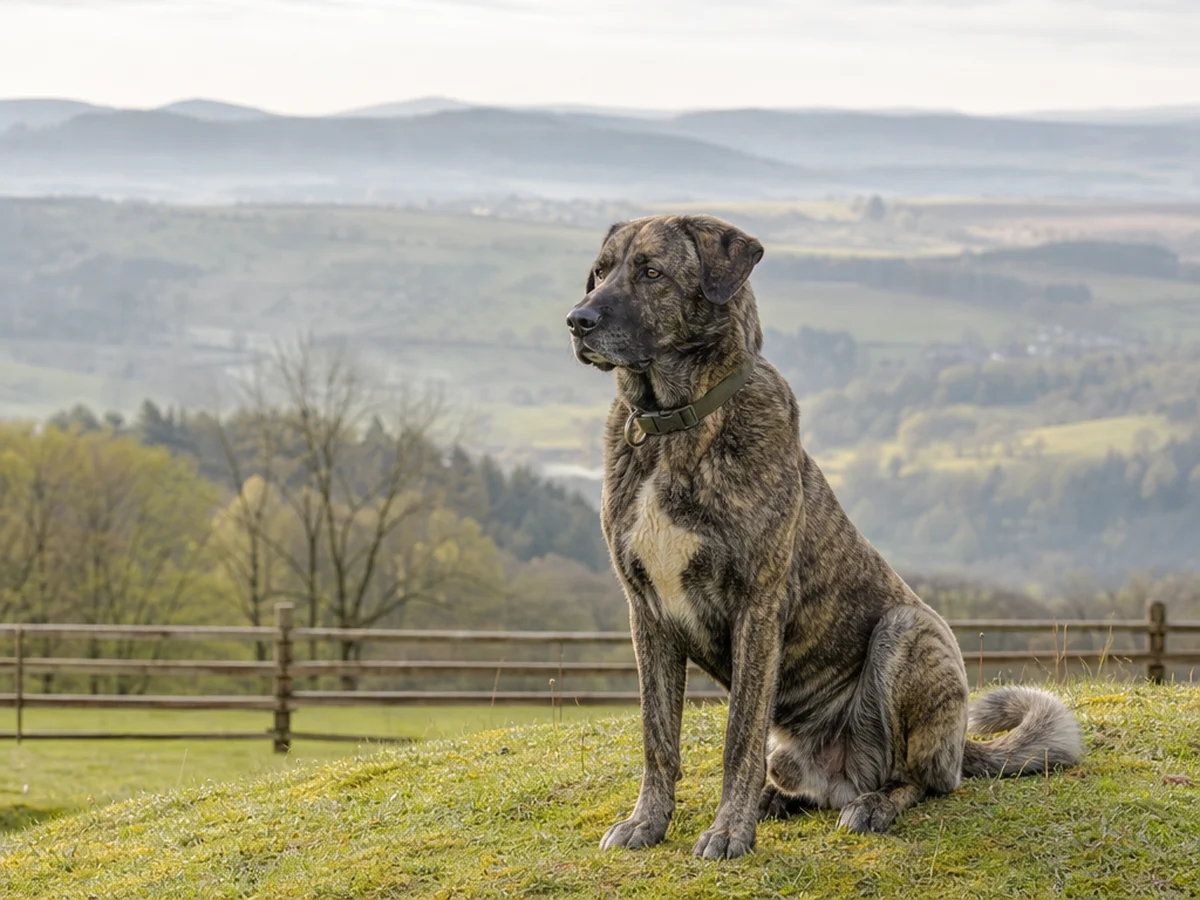
Behaviorists use the word threshold for the point at which a dog decides something deserves a reaction. The standard's "calm and observant" wording suggests a dog who takes their time gathering information before reacting, and the likely reason is that a guardian who watches first judges a situation better. The standard also notes that responsiveness with animation is not characteristic of the breed, so do not expect bouncy enthusiasm for everything you ask.
This is why the dog on the porch ignored the recall cue. They were in the middle of an assessment, and your cue was competing with a job they take seriously. Energy is rated moderate at 3 out of 5, and barking also sits in the middle at 3 out of 5, so expect a dog who is not frantic but does speak up about what they notice.
Work with the watching rather than against it. Give your dog a spot with a view, and when they notice something and then look back at you, mark that moment with a word and pay with a treat. You are rewarding the pause between noticing and reacting, which is exactly the habit a guardian should have. Practice calling them away from things only in quiet moments first.
Reserved Temperament Around Strangers and Guests
Reserve is a neutral, unhurried stance toward people the dog does not know, with no rush to greet and no urgency to make friends. The standard accepts reserve around strangers and off the dog's own territory, and the UKC standard says these dogs are loyal and affectionate to their owners but are wary of strangers when mature. On the breed's trait ratings, openness to strangers scores 1 out of 5, labeled reserved.
This is what Anatolian authorities mean when they say the breed is not a "pet" in the conventional sense. A conventional pet is expected to welcome everyone and fit around the household, while an Anatolian has opinions about who comes in. Yet the same authorities agree these dogs can make superb, deeply bonded companions with proper and consistent socialization, and with the people they live with the breed is calm, friendly and affectionate.
Socialization, in practice, means many calm, positive experiences with people, places, sounds and other animals while the dog is young, so that the ordinary world registers as safe. Early socialization is extremely important for this breed because it helps produce a secure and confident adult. The goal is a neutral, settled dog, not one who adores every stranger.
Common advice says every visitor should pet and feed a puppy so they learn to love people. We would not do that with this breed. The standard says overhandling would be discouraged, and a reserved dog learns more from watching at a distance and approaching by choice. Settle your dog in another room with a chew before guests arrive, then let them watch from a distance once everyone is calm.
Independent Temperament and the Trainability Question
So, are Anatolian Shepherds easy to train? Not if easy means eager. Trainability scores 2 out of 5, where 1 is self-willed and 3 is agreeable, and natural independence can make them slower to respond to commands. Obedience training is considered a must for exactly that reason.
Slow, however, is not the same as dull. Another breed standard calls them naturally independent, very intelligent and tractable, and an experienced owner will find them trainable, smart and extremely loyal. We have trained this breed for many years, and we would drop the word stubborn. A stubborn dog refuses to think, while an Anatolian thinks about everything and cooperates when the reason is clear.
So make the reason clear. Pay well with food your dog truly loves, keep sessions short and varied, practice each cue in several places, and release with a marker word so finishing a cue feels like a win. Repeating a cue over and over only teaches that the first one was optional. Our complete Anatolian Shepherd training guide lays out the stages.
Leash manners are a good test of the same ideas, because a dog who stops to assess every sight will pull toward or away from it. Our guide to leash training an Anatolian Shepherd shows how to pay for attention instead. Expect progress to build over months and years rather than weeks.
Anatolian Shepherd Temperament Pros and Cons for Real Homes
Owners and would-be owners weigh the same handful of traits, and each can be a pro or a con depending on the home. Here is the balanced view, starting with what people value most.
- Calm, observant behavior indoors, with moderate energy rather than a constant demand for activity.
- Deep loyalty and real affection toward the people they live with.
- Intelligence and adaptability, so they learn the routine of a household and settle into it.
- Light upkeep, with drooling rated 1 out of 5, coat grooming 2 out of 5 and shedding a moderate 3 out of 5.
The other side matters just as much, and it is where most mismatches begin.
- Wariness of strangers when mature, which makes visitors, repair workers and neighbors a constant management task.
- A highly territorial nature, shown by a watchdog and protective rating of 5 out of 5.
- Independent judgment and slower responses to cues, so obedience is built over a long time.
- Ratings of 3 out of 5 for both young children and other dogs, which means supervision with each.
- A habit of barking about what they notice, rated 3 out of 5.
Nearly every con is a pro viewed from a different angle. The same wariness that makes a dog watchful at the fence makes them awkward at a barbecue. Decide which side of each trait you want to live with every day, not which one reads better on paper.
Homes Where an Anatolian Shepherd Fits
The best homes share a few qualities. The owner has experience with large, independent dogs, because an experienced owner is the one who finds this breed trainable, smart and extremely loyal. There is also space and secure fencing, since a territorial dog does best with a clearly bounded area.
Patience matters as much as space. Early socialization takes months of deliberate outings and calm exposure, and training is a long project in which the dog decides each cue is worth honoring. Households with predictable routines and adults available to supervise suit a moderate-energy, observant dog well.
Look elsewhere if you want a dog who greets every visitor, if you want quick obedience from a first dog, or if your home sees constant unplanned guests. Those dogs exist in other breeds, and choosing one is not a failure. If an Anatolian does fit, build early skills like settling calmly, starting with our article on crate training and separation anxiety.
A good fit is about matching what the dog was built to do with the life you can offer. When it matches, the breed can be a superb, deeply bonded companion, provided socialization is proper and consistent. When it does not, the dog's instincts find their own outlets, usually the ones you like least.
Temperament Progress Versus Signs to Call a Behaviorist
Progress with this breed is quiet, so it helps to know what to look for. You are not measuring tricks or speed. You are measuring how settled the dog is and how quickly they recover. These signs say things are going well:
- Relaxed watching, with a loose body, a soft face and the occasional glance back at you.
- Quick recovery after a noise, a delivery or a passerby, with a return to rest in a short time.
- Accepting guests on cue after settling, such as lying on a mat while visitors sit down.
- Responding to familiar cues in busier places, not only in the quiet yard.
Other signs mean it is time to bring in a qualified reward-based behaviorist, and sooner is better. We specialize in this breed's behavior, and early calls are much easier on both dog and family. Keep up regular veterinary visits too, and have a sudden change in behavior checked in case something physical is behind it.
- Stiff, fixed staring at people or animals, with a frozen body that does not soften when you move away.
- Guarding family members from other people, such as blocking guests or tensing whenever someone approaches.
- Sudden aggression, especially with little warning or no clear trigger.
- Staying keyed up long after a visitor has left.
This breed was made to decide for themselves, so the aim is not obedience at any cost but a dog whose decisions you can trust: socialized early, trained with patience and good pay, managed with fencing and planning, and watched for the signs above. Do that, and the calm, loyal guardian is what you get back.
 BehaviorAnatolian Shepherd Behavior Problems and the Instincts Behind Them
 Training basicsCrate Training an Anatolian Shepherd and Preventing Separation Anxiety
 Training basicsHow to Potty Train an Anatolian Shepherd Puppy