
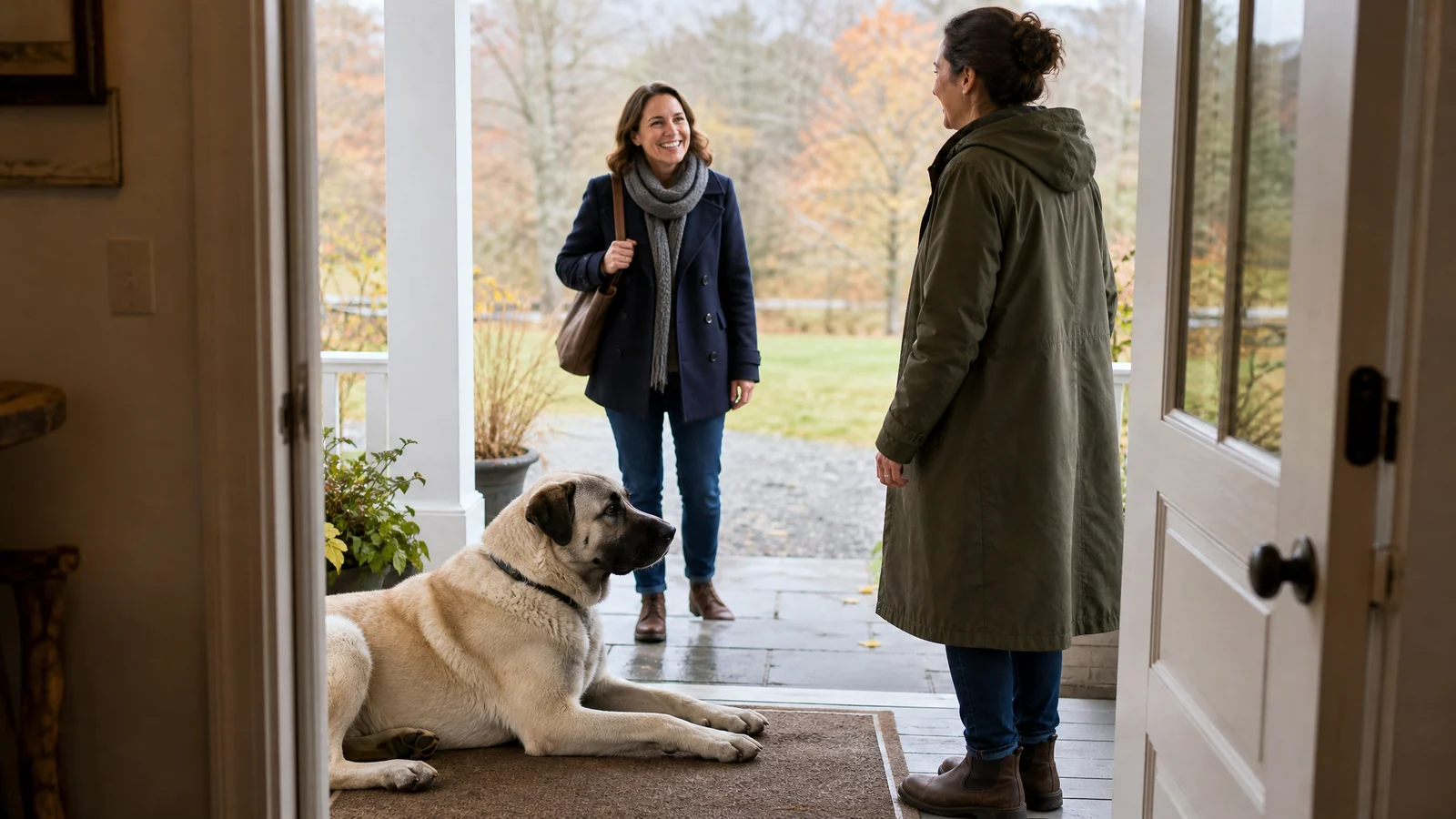
The standard calls the Anatolian Shepherd highly territorial and a natural guard. The breed page rates watchdog and protective nature 5 of 5 and openness to strangers 1 of 5. The parent club adds that these dogs are not pets in the conventional sense. Read quickly, that sounds like a dog who barks at the mail carrier. At the front door it looks bigger: a large, usually calm dog who steps between you and whoever just knocked, without waiting for your opinion.
This matters because a dog bred to judge danger alone will judge your guests too. Handled badly, a doorbell produces a rattled visitor, a risky moment, or a dog banished to a back room whenever company comes. Handled well, you get a steady guardian who looks, decides nothing is wrong, and settles. Read on for how your household shapes guarding, why visitors set it off, door manners, calm greetings, the body signals worth watching, and a two-week set of door drills.
A Household Built Around Guarding
Start with the house, not the dog. A territorial guardian reads your home as a perimeter, and every window, gate and door is a place where something can arrive. Adaptability for the breed sits at a moderate 3 of 5, which means they cope with change but do not shrug it off.
A household with a predictable pattern of who comes, when, and through which door gives them far less to judge than one full of surprises. A calm, consistent entry likely leaves a guardian with less to react to.
Common advice says to take the dog everywhere and let everyone pet them so they learn that people are fine. For this breed we think that is backwards. Early socialization is extremely important, and the goal is a secure, confident adult, but confident does not mean eager to be touched. Calm exposure to many new sights and people, at a distance the dog can handle, builds a guardian who stays relaxed. Forced friendliness builds pressure.
A few layout choices make daily life easier. Set up the space before you rehearse a visitor routine.
- Choose one door for guests and use it every time, so the dog learns where visitors appear and what routine follows.
- Give the dog a resting place with a view of the room rather than the street, so they can be off duty without losing sight of the family.
- Put a gate or pen between the entry and the living space, so you can separate the dog before the door opens.
- Keep regular visitors and deliveries on a schedule when you can, because a familiar pattern is easier to ignore.
None of this suppresses the instinct. It simply gives the instinct less to do.
Daily Life With an Anatolian Shepherd Guard
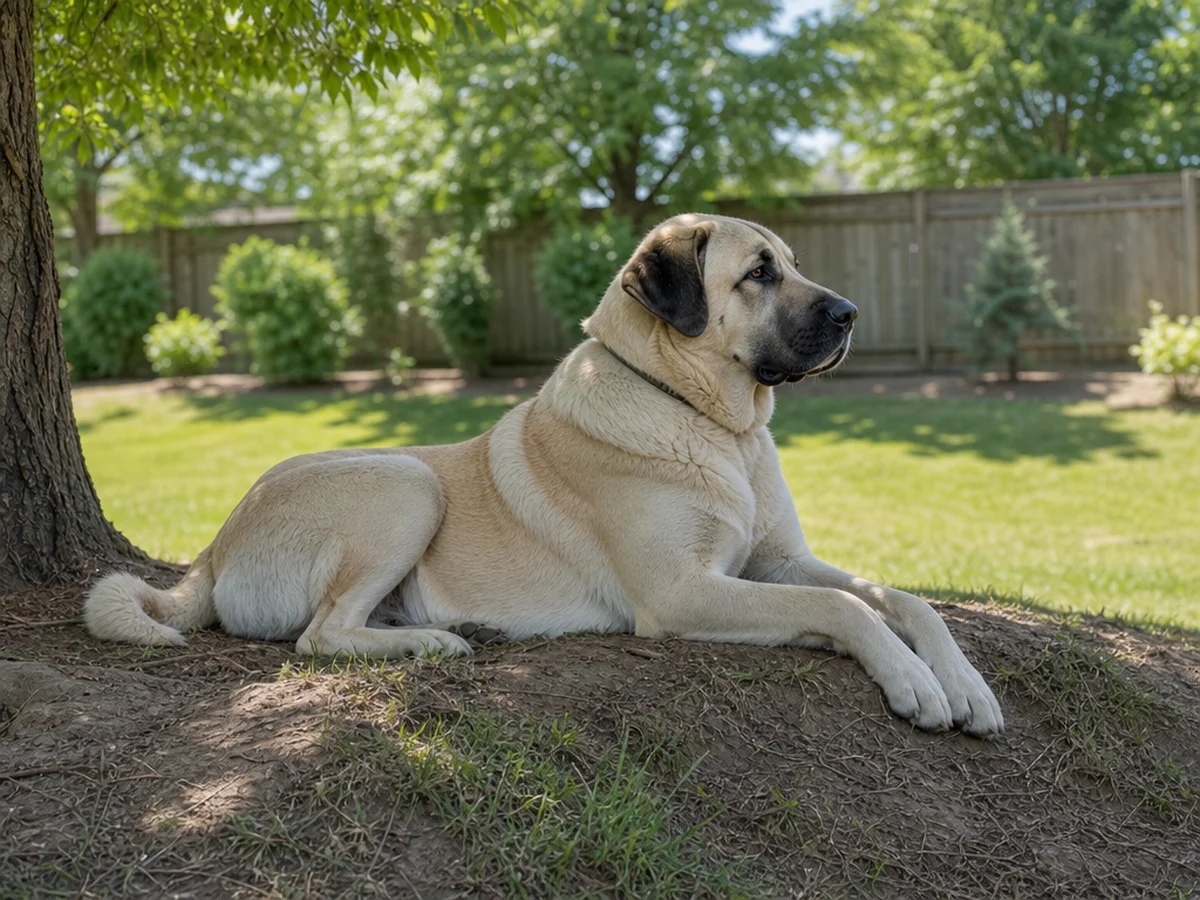
The breed standard describes a large, powerfully built livestock guarding dog capable of great speed, with size and stamina imperative. That does not mean a dog racing laps around your living room. The temperament is described as alert, calm and observant, and the general impression is bold but calm unless challenged. Expect a dog who rests a lot and watches constantly, and who treats the boundaries of your property as theirs to keep an eye on.
Patrol, Rest and Watching
Energy is moderate at 3 of 5, and so is the need for mental stimulation. Most days look like long stretches of lying where they can see things, broken up by a walk along the boundaries. Barking rates 3 of 5, which is occasional rather than constant. Watchfulness is the job, so a resting guardian who lifts their head at every sound is working, not misbehaving. Our verdict: judge the dog by what they do after they look, not by the fact that they looked.
Where the Instinct Shows Up
Guarding appears in small ways long before a stranger arrives. The dog shadows you to the door, stations themselves at a window, or parks their body between you and a newcomer. Those are signs of a dog who has taken a post. With the family they are calm, friendly and affectionate, yet the affection is independent rather than clingy, and the breed scores only 1 of 5 on affection with family for a reason.
Trainability sits at 2 of 5, so expect a dog who weighs your request before agreeing to it. Our guide to kids, dogs and strangers goes deeper on the wider household side.
Why Does Guarding Turn Visitors Into Events?
Because a visitor is exactly what this dog was built to evaluate. The breed was developed over millennia to exercise independent judgment in response to perceived danger, from four-legged or two-legged threats, and these guardians will protect. A knock on the door lands squarely in the middle of that history, so do not expect a shrug.
The standard says they are loyal and affectionate to their owners but wary of strangers when mature. Reserve around strangers and off their own territory is acceptable, which is why a friendly puppy is no promise of a friendly adult.
Is that aggression? We say no, and the standard agrees. It disqualifies viciousness, and it disqualifies extreme shyness too. The ideal is a confident dog who sizes up a stranger and stays composed. Trouble starts when the household turns a knock into an alarm. Hurried steps, a raised voice and a fast grab for the door all tell the dog that something is happening. They respond to what you signal as much as to the person outside.
That is why early, structured exposure matters, and why it should aim at neutrality rather than affection. Our guide to socializing an Anatolian Shepherd puppy shows how to build it. For an adult the logic is the same. Make arrivals boring, and the dog stops treating each one as an event.
Anatolian Shepherd Door Manners
Door manners work because the threshold is the dog's checkpoint. Reliable cues are hard to count on, since natural independence can make this breed slower to respond, so build the routine mostly from management and treat cues as a bonus. The routine has three stages, and each one lowers the pressure on the next.
Before Arrival
Prepare the dog and the guests before anyone knocks. Settle the dog behind the gate or in their pen with a chew or a food puzzle, so the first thing they link to a visit is something good. Brief your guests in advance: hands in pockets, eyes on you instead of the dog, voices low, and no cooing. The visitor who makes a fuss over the dog is the one who gets evaluated hardest.
At the Door
Run the same sequence every time, so the sequence itself becomes the signal. Keep the order simple enough for every adult to follow.
- The dog is already behind the barrier before the door opens.
- You greet the guest first, in an ordinary voice, and keep the chat on the threshold short.
- The moment the dog pauses barking or glances away, mark it with a word you always use and hand over a treat.
- If barking carries on, calmly lead the dog farther from the door, then reward the first quiet moment.
When Guests Are Inside
Ask the guest to sit and ignore the dog. Let the dog decide whether to approach, sniff or stay away. The standard notes that overhandling would be discouraged, and that applies to guests as well. If the dog stiffens or shadows a visitor, offer a time-out in the pen with a chew. That is a rest, not a penalty, and it ends the visit on a calm note.
Calm Greetings Without Encouraging Guarding
A greeting for this breed begins with distance, not contact. Meet a stranger outdoors, at a range where the dog notices them but stays relaxed. Reward calm looking, then reward looking away. Let the person walk past or stand still, and shrink the distance only while the dog stays loose. The same approach helps on walks, as we explain in Anatolian Shepherd leash training for pulling and lunging.
One piece of common advice deserves pushback: that the guest should hand over a treat to win the dog over. With openness to strangers at 1 of 5, a stranger's outstretched hand is pressure, not kindness. You deliver the rewards. If a guest takes part at all, they toss a treat to the side without eye contact and then look away.
Equally important is what you never reward. Cheering a bark, using an excited tone when someone approaches, or praising a standoff all teach the dog that standing guard earns your attention. Instead, thank them quietly and redirect to something that pays for calm. Keep food, bones and toys away from guests too.
The research on guarding behind this point covers resource guarding of food and toys, not territorial guarding of visitors, and it finds that behavior is typically based in anxiety. Apply it to guests at mealtimes and chew time: lowering the pressure around a bone or bowl works better than a confrontation. The aim is a dog who relaxes more, not one who guards harder.
What Does the Dog's Body Say Before Guarding Turns Reactive?
The closest detail is the body itself. Since the standard describes a dog who is bold but calm unless challenged, the shift from relaxed to still is your cue. Learn the early signs:
- The body goes rigid and movement stops, even though the dog was loose a moment ago.
- A hard, fixed stare settles on the visitor and does not drift away.
- The ears point forward and the tail rises and stiffens.
- The mouth closes, and weight shifts onto the front legs.
- The dog plants themselves between you and the guest, which says they have taken the post.
Act at the first sign, not the last. Add distance calmly, block the line of sight with your own body, and walk the dog to the pen or another room. Growls are warnings, and calmly moving away shows a guardian that escalating is unnecessary. A growl is useful information, and a dog who gives one is a dog you can still help.
When you read the signs early, you rarely have to do much. A few steps back and a treat for a loosening posture is often enough. Dogs who learn that you notice and respond come to lean less on their own judgment at the door.
A Safer Anatolian Shepherd Visit in Fourteen Days
A managed visitor routine keeps a guardian safe and relaxed, because a rehearsed visit leaves nothing for them to guess about. Practice it as drills, one stage at a time, and move on only when the dog stays loose at the current stage. Over the next two weeks, work through these rehearsals:
- First few days: Ring the bell and knock with no guest present. Reward the dog on their mat or behind the gate for any pause, and repeat until the sounds turn dull.
- Late week one: Open the door with the dog behind the barrier, step out and back in, and reward calm. Still no visitor.
- Early week two: A familiar helper stands in the entry while the dog stays behind the gate. Reward calm, and lengthen the helper's time slowly.
- Midweek two: The helper comes in, sits and ignores the dog. The dog chooses to approach or stay away, and rests with a chew in the pen after a short visit.
- End of week two: Repeat with a less familiar visitor for a brief stay, and end the visit at the first stiff posture.
This breed is built to guard, and no routine will change that. What a routine changes is whether the guarding is calm and predictable or tense and risky. Meet the instinct with structure, distance and rewards, and your Anatolian Shepherd learns that the door is not an emergency. Keep up regular vet visits, and teach handling early with our guide to accepting the vet and handling, so a clinic doorway does not become one more threshold to guard.
 Puppy trainingMouthing and Chewing in a Fast-Growing Anatolian Puppy
 HealthTeaching an Anatolian Shepherd to Accept the Vet and Handling
 Exercise and jobsHow Much Exercise Does an Anatolian Shepherd Need? Plus Brain Games