
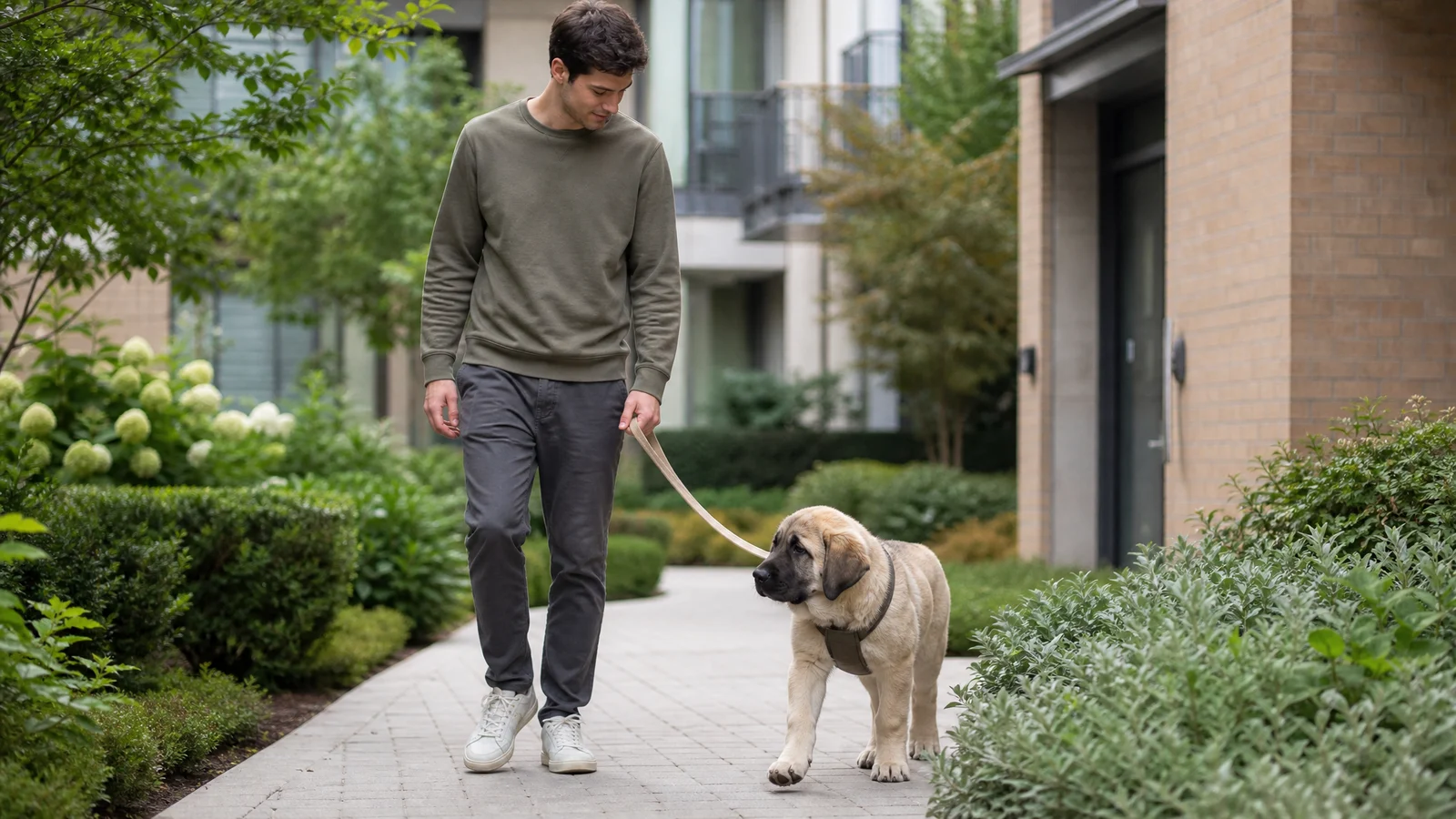
Leash habits are best started young, while your Anatolian Shepherd puppy is still small and easy to manage. A mature male can reach 110 to 150 pounds, and a dog that size has real opinions about where a walk goes. Teaching a loose leash while the stakes are low is the whole strategy.
Below, you'll find the gear, a reward-based plan for building a loose leash, route planning around triggers and what to do when a stranger sets off a lunge, including how each step changes as your dog grows. Your own puppy may move faster or slower, and that is fine, whether they come from a breeder who follows the standard or from a line outside it.
A Ten-Week Anatolian Shepherd Puppy in a Two-Bedroom Apartment
A worked example makes the timing concrete, so here is the setup we will follow. A ten-week Anatolian Shepherd puppy lives in a two-bedroom apartment on an upper floor, with an elevator, a shared lobby and a small strip of grass outside. The owner is home mornings and evenings and wants a dog who passes neighbors on a slack leash at full size.
Apartment life raises the stakes for this breed. Anatolians were bred for millennia to work independently and judge danger for themselves, and the breed standard accepts reserve around strangers and off their own territory. A lobby and a sidewalk are full of strangers. So the plan has two jobs: teach the mechanics early, and limit how many surprises each walk contains.
The table shows how the example divides, and the sections after it take each stage in turn.
| Stage | Focus | What gets rewarded |
|---|---|---|
| Weeks one to two | Harness and leash at home | Wearing the gear, staying near you |
| Weeks three to eight | Short walks near the building | Slack-leash steps, calm looks at new sights |
| Six to twelve months | Size, strength, gear that scales | Loose leash through distractions |
Measurements in the standard apply at age 2 or older, so this puppy keeps growing long after the first leash lesson. Keep the order of the stages and move the dates to fit your own dog.
Dragging a Light Leash Around the Apartment
Weeks one to two have nothing to do with walking. The goal is for the harness and leash to predict food, so a puppy who has never worn gear learns it is harmless before any pulling starts. If you use a marker word or a clicker, pair it with food first in a quiet room: make the sound, then hand over a treat within 3 seconds, and repeat that many times before the sound has to mean anything outdoors.
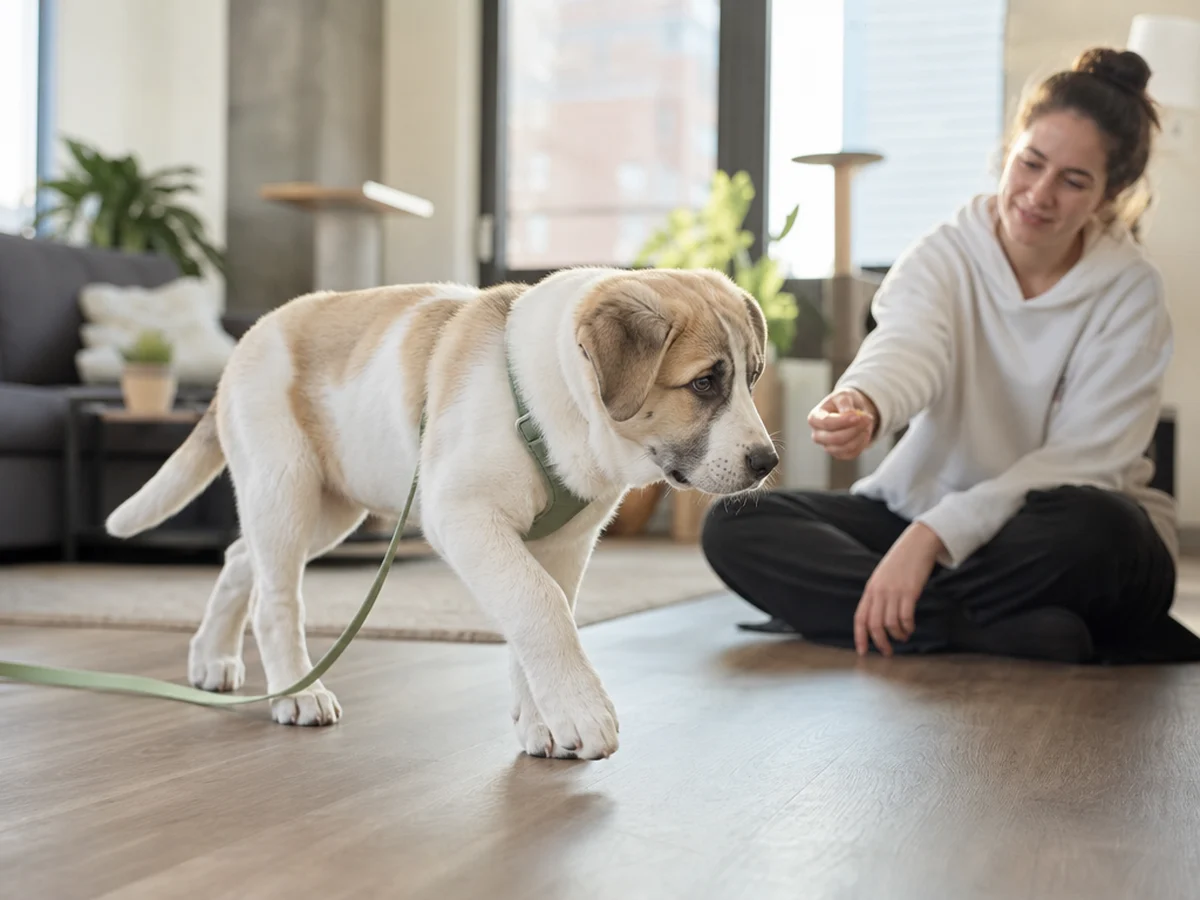
Then work through the gear in small steps, a few short sessions a day:
- Show the harness, feed a treat, and lift the harness away. Repeat until the puppy leans toward it.
- Slip the harness on, feed several treats in a row, and take it off before the puppy starts to fuss.
- Clip on a light leash and let it trail while you watch closely, feeding whenever the puppy chooses to stay near you.
- Pick up the end and follow the puppy around the living room, rewarding every time they turn toward you.
- Remove the gear and end the session while the puppy is still keen.
Read the puppy's response and adjust. If they freeze or flop, you moved too fast, so go back a step and pay more. If they chew the leash, trade a chew toy for it and reward the swap. A trailing leash is only for supervised moments.
Expect slower responses than you may have seen in other breeds. Independence shows early here, and patient repetition builds the habit faster than any amount of pressure. The standard also discourages overhandling, so keep your touch calm and brief when you fit and adjust the gear.
Use the hallway and elevator as extra practice rooms before you ever go outside. A puppy who can wear the harness, ride down a floor and stay close to your leg has already learned more than the first walk requires.
Rewarding Calm on Anatolian Shepherd Leash Walks
Weeks three to eight carry the same skills outside, and the first outdoor sessions are short on purpose. In the example, the owner carries the puppy through the lobby and sets them down on the grass just outside the entrance. Starting there beats a busy street, because everything outdoors competes with the treat and a young guardian dog is already busy taking in the neighborhood.
Freeze First, Then Pay for Slack
Treat a taut leash as a signal to become a statue. Standing still when tight is the core rule, and it needs no force at all. The moment the line sags, even slightly, mark and treat at your hip, then walk on. If the puppy glances back at you, that look is the behavior to pay best.
If freezing fails because the puppy leans into the harness and stays there, try turning the other way. Reverse course, and give praise and a treat when the puppy swings around to follow. A big dog who learns early that following pays will keep checking where you are.
Paying for Calm, Not Just Position
Slack-leash steps are not the only moments worth paying for. When the puppy notices a person, a stroller or a bicycle and then looks at you or simply stays loose, mark and treat. That builds the habit of checking in instead of fixating, which matters later for a breed bred to watch first and decide alone.
Keep each walk short enough to end while the puppy is still eating and interested. We have trained this breed for many years, and a session that ends on a win beats a long one nearly every time. If they stop taking treats, you have gone on too long or too close to something, so retreat and finish with an easy success.
These walks also do double duty. Broad early exposure to ordinary sights from a comfortable distance helps produce a secure, confident adult, so let the puppy watch the world without having to meet it.
Can a Full-Size Anatolian Shepherd Still Walk on a Loose Leash?
Yes, but the method has to stop depending on your strength. As the example puppy grows from the early weeks toward full size, the leash has to work against far more weight. The breed standard puts mature males at 29 to 32 inches at the withers and 110 to 143 pounds, and another major standard allows up to 150. An adult at that weight who decides to leave cannot be stopped by holding on, which is why the early rules matter.
Plenty of Anatolians have a coat, color or build the standard does not list, and they are every bit as much the breed. Many owners love these dogs, and everything here applies to them equally. Only the weight at the other end of the leash changes.
If your dog already stops when the leash tightens, the same rule scales up unchanged. If they do not, no gear will rescue the walk. Use these if-then checks to find where the habit is breaking down:
- If the dog walks well at home but pulls in new places, drop back to a quieter spot and raise the treat value until slack walking returns there, then add distractions again.
- If they pull everywhere, your rewards have become too sparse, so pay for every few slack steps again as in the puppy weeks.
- If they pull toward a person or dog, the gap is too small, and the fix is more distance rather than a tighter grip.
- If the harness rides up or shifts, refit it, because a harness that can slip is a real risk on a dog this strong.
For gear, a well-fitted front-clip harness turns a pulling dog toward you instead of forward, and a sturdy fixed-length leash gives you a predictable feel. Adolescents change shape fast, so ask your veterinarian to check the fit at regular visits.
Do not read a setback at this age as failure. The breed is described as naturally independent, very intelligent and tractable, and that combination responds well to a plan that pays generously. Some dogs are still polishing the skill when they reach mature size at age 2.
Planning Leash Walks Around Triggers
In the example, the owner maps the building before choosing a route. Triggers for a reserved guardian dog are predictable: people entering the lobby, strangers approaching the front door, other dogs on the same sidewalk and anyone who moves quickly toward the dog. Write down where and when each one shows up.
Then arrange the day around that map. If the lobby is busiest at commute hours, use a side door or go earlier or later. If a street is narrow and dogs pass at close range, take the wider one, where you can cross to the far side. Choose routes with room to turn, because distance is your most useful tool.
Reserve is normal here. Adults are loyal and affectionate with their families and wary of strangers, and given how territorial the breed is, that wariness is likely to run strongest near home. A dog who is relaxed in a park may be tenser at the building entrance, so judge the right distance by the dog's reaction on the day, not by a fixed number.
Strangers who want to say hello count as triggers too. You may politely say no thanks, and you should, because a well-socialized adult does not need to be petted by everyone. Success is a dog who sees a stranger at a comfortable distance, stays loose and earns a treat.
Update the map as the dog grows. A distance that felt comfortable for a puppy can be too close for an adolescent with a deeper bark and stronger instincts.
What If the Anatolian Shepherd Lunges at a Stranger?
In the example, the dog is now an adolescent and lunges when a stranger steps through the building door. This is a guardian reacting to someone entering their space, so start from the assumption that the walk put them too close, not that something is wrong with the dog. Handle it in this order:
- Stay quiet, use a cheerful voice and curve away in a wide, calm arc, walking off until the dog can see the person without reacting.
- At the distance where they can take a treat again, mark and feed for any look at you or any softening of their body.
- Let the stranger pass, praise the calm, and keep feeding while the person is in view.
- Once the dog is relaxed, continue on a different route rather than going back to the same spot.
- Afterward, note what went wrong: the door, the time of day, the distance. Adjust the map.
Just as important is what you leave out. Do not move closer to prove the person is harmless, do not ask the stranger to offer food, and do not insist on a greeting. Each of those asks a reserved dog to accept something they have already declined.
Call for help if lunges become frequent, if the dog growls or snaps, or if they will not eat at a distance where they used to. Start with your veterinarian to check for pain or illness, then ask for a qualified reward-based behavior professional. Do not wait until the dog is full size to ask.
Leash Questions Anatolian Shepherd Owners Ask Next
One idea runs through every stage. This is a large, independent guardian who watches before acting, so you build the leash habit early with rewards for calm and plan walks so triggers appear at a manageable distance. Do that and the adult's size stops being something you manage with strength. When the leash is going well, owners usually move on to questions like these:
- If you want the whole training picture, start with the complete training guide.
- If lunging is one of several worries, common Anatolian Shepherd behavior problems explains the instinct behind each.
- If strangers, kids or other dogs are the real trigger, read about socializing an Anatolian Shepherd.
- If you wonder whether slow progress is normal, see the temperament and trainability FAQ.
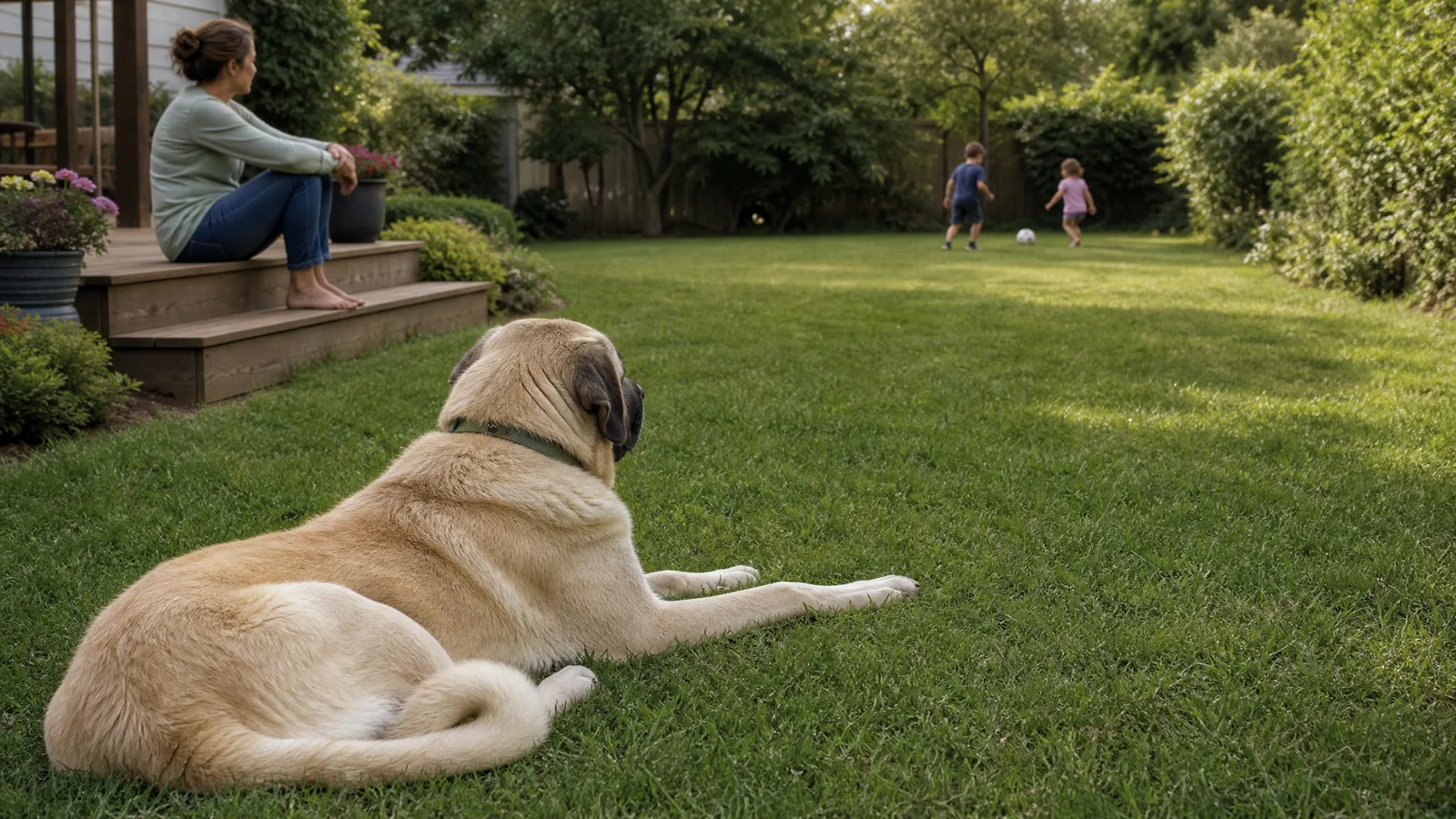 BehaviorSocializing an Anatolian Shepherd With Kids, Dogs and Strangers
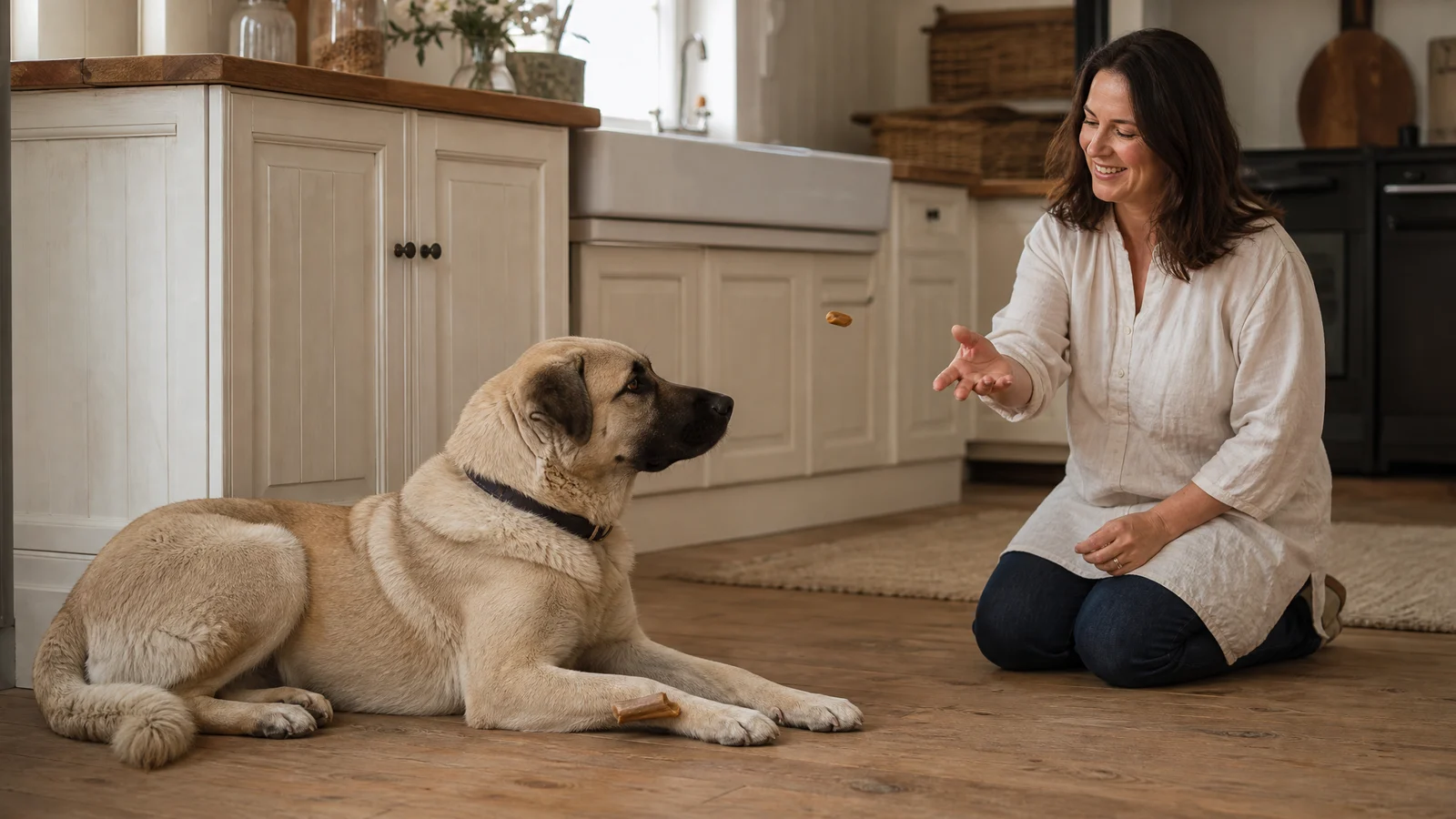 BehaviorAnatolian Shepherd: Guarding food and space
 Training basicsRecall and Off-Leash Safety With an Anatolian Shepherd