
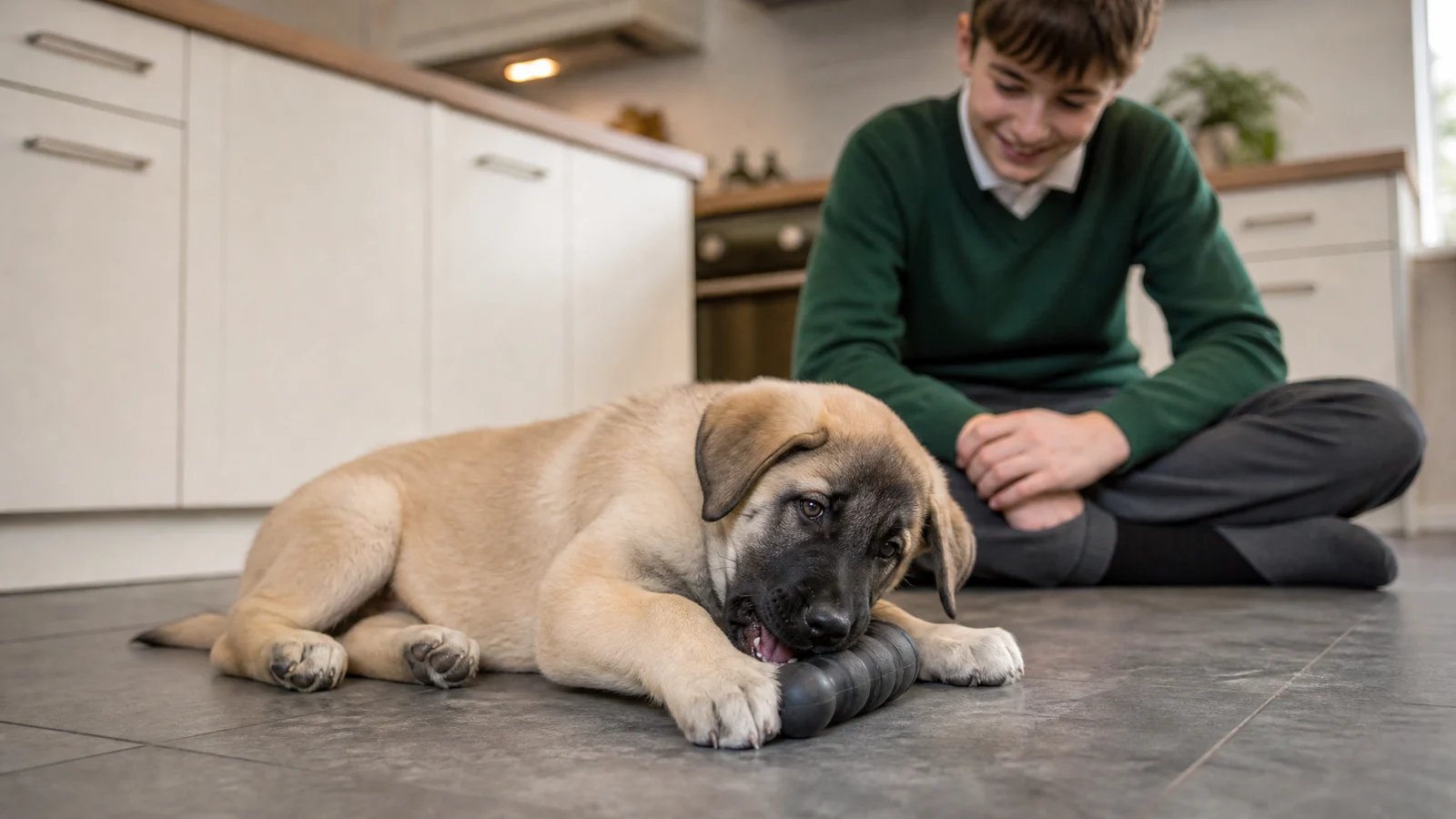
Will this puppy grow out of it? That is the question behind nearly every search about an Anatolian Shepherd puppy biting, and the usual reply, "it's just teething," falls short here. Teething ends, but a puppy heading for 80 to 150 pounds keeps growing into the jaws and keeps rehearsing whatever works today.
Our work focuses on this breed's behavior and training, and calm redirection costs almost nothing with a small puppy and a great deal with a big one. We'll walk you through mouthing versus real biting, then the chew outlets that suit a heavy jaw, calm play rules, how fast the window for easy fixes closes, and why everyone at home must respond the same way.
Anatolian Shepherd Puppy Mouthing
Mouthing and real biting are different problems, and telling them apart decides how you respond. Our verdict: nearly everything you see in the early months is ordinary mouthing, and it still needs a plan from day one. The three parts below cover what is normal, what deserves a closer look, and what to do about it.
What Is Normal
Young dogs use their mouths as hands. Mouthing has many causes, including exploring, play, sore gums, and trying to get out of handling they dislike. Expect fingers, sleeves, and ankles to get tested, and do not read it as aggression.
This breed adds a twist. Their natural independence can make them slower to answer cues, and they are observant enough to notice exactly which behaviors pay off. Plan on many repetitions rather than one lesson, and expect your puppy to check tomorrow whether today's rule still holds.
What to Watch For
Mouthing tends to climb when a puppy is overtired, overexcited, or overwhelmed. If the biting spikes at the end of a busy day or after company leaves, your puppy needs a quiet pen and a chew, not more interaction. Note the time of day when it peaks and you can often head it off.
A different picture deserves a different response. A puppy who stiffens, freezes over an object, or clamps down to make your hand go away is asking for space, not play. Back off, stop reaching in, and bring it up with your vet and a qualified trainer if it repeats, because a protective breed deserves early attention.
Verdict on Early Redirection
Redirect from the first day, and do it calmly. Keep a chew in every room your puppy uses. When teeth touch skin, move your hand away, offer the chew, say your marker word the instant your puppy takes it, then praise.
That is our pushback on waiting for teething to finish. Waiting lets the habit be practiced daily while the jaw gets stronger, and the habit outlasts the sore gums.
Puppy Training Chew Toolkit
Dogs chew for life, so the goal is good outlets rather than zero chewing, and chewing is natural at every age. The Anatolian Shepherd falls in the extra-large size category, so shop for the jaw your puppy is growing into. Here is our verdict on three options.
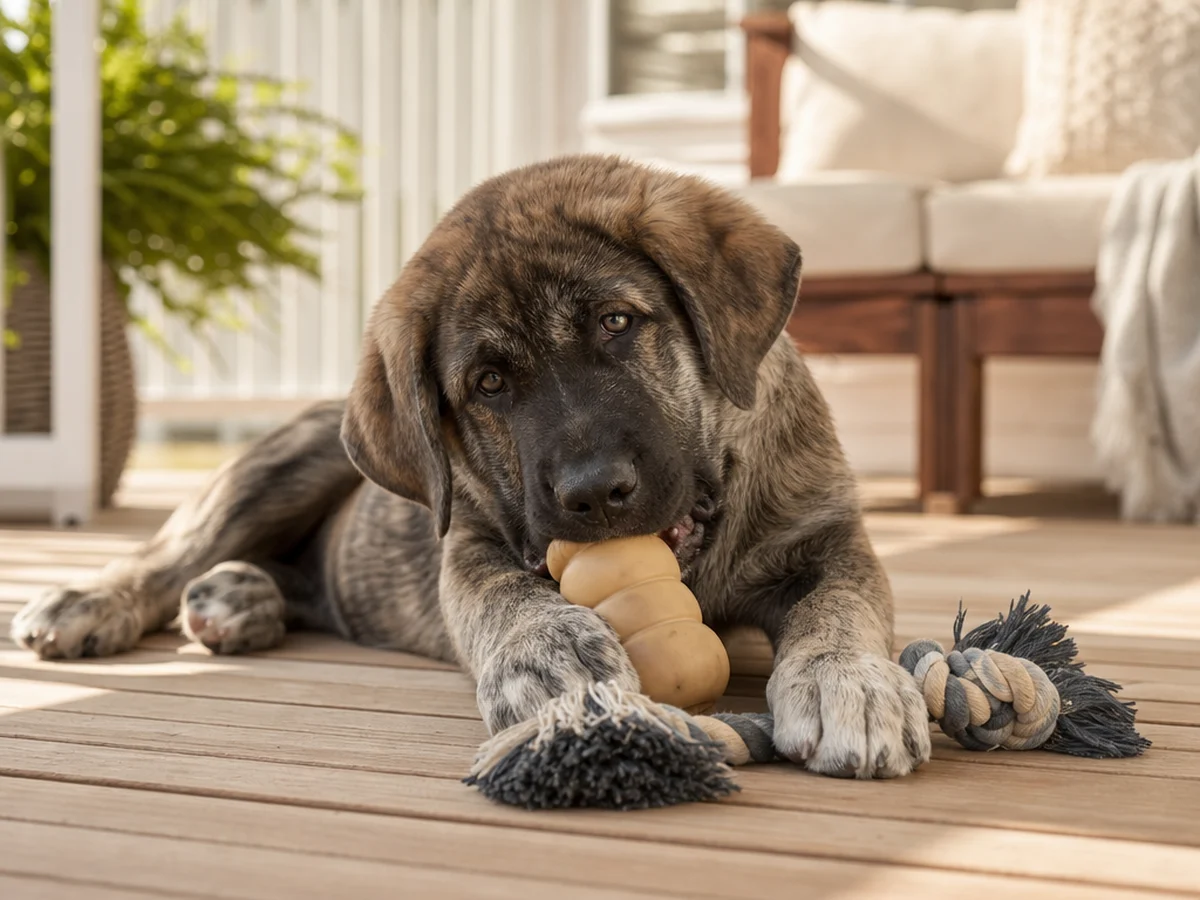
Frozen Chews
Verdict: excellent for sore gums, best in short sessions. Freeze a wet knotted washcloth or a hollow rubber toy stuffed with a treat, and hand it over when your puppy turns restless or before a rest.
Use frozen chews as a planned wind-down in a pen or quiet corner, not an all-day supply. They also give you a ready swap the moment your hands start to look tempting.
Rope Chews
Verdict: useful with limits. Rope is gentle to gnaw on, but loose strands can be swallowed, so stay close, treat it as a chew and not a tug toy, and toss it once it starts to fray.
Rough tug games rev a puppy up, and an excited puppy mouths harder. Keep rope in the calm-chew category.
Safe-Size Chews
Verdict: the best choice for daily use. Pick sturdy rubber chews made for extra-large breeds, too big to be swallowed whole, because small puppy toys disappear fast in these jaws. Inspect each one daily and replace any that crack or wear thin.
Rotate what you offer. Set out a few chews, keep the rest out of sight, and swap them every day or so, so last week's ignored toy feels new. Keep shoes, cords, and table legs out of reach, so the right option is always the easiest one to find.
Play Rules in Puppy Training
Play is where mouthing gets rehearsed, so the rules matter more than the games. The breed standard describes a calm, observant dog, and frantic, animated play does not suit them. Our verdict is to allow short, toy-based play with a loose body and skip rough games entirely.
- Play with toys, never hands, so skin never becomes part of the game.
- Stop while your puppy is still interested, before they get frantic or worn out.
- Pay with a treat or praise when your puppy plays with a loose body and all feet on the ground.
- Skip wrestling, chasing your hands, and any game where your puppy hangs on to sleeves.
End play early, on your terms. Pick a calm cue such as all done, say it once, stand up, hand over a chew, and walk away. Finishing every session this way teaches your puppy that play has a predictable, rather dull ending.
If teeth land on skin or the energy spikes, pause right then. Step back, stay quiet, and offer a chew or a short rest in the pen. A pause is not a punishment. It lets an overtired puppy settle and shows that biting makes the fun stop while calm keeps it going.
Anatolian Shepherd Growth Speed
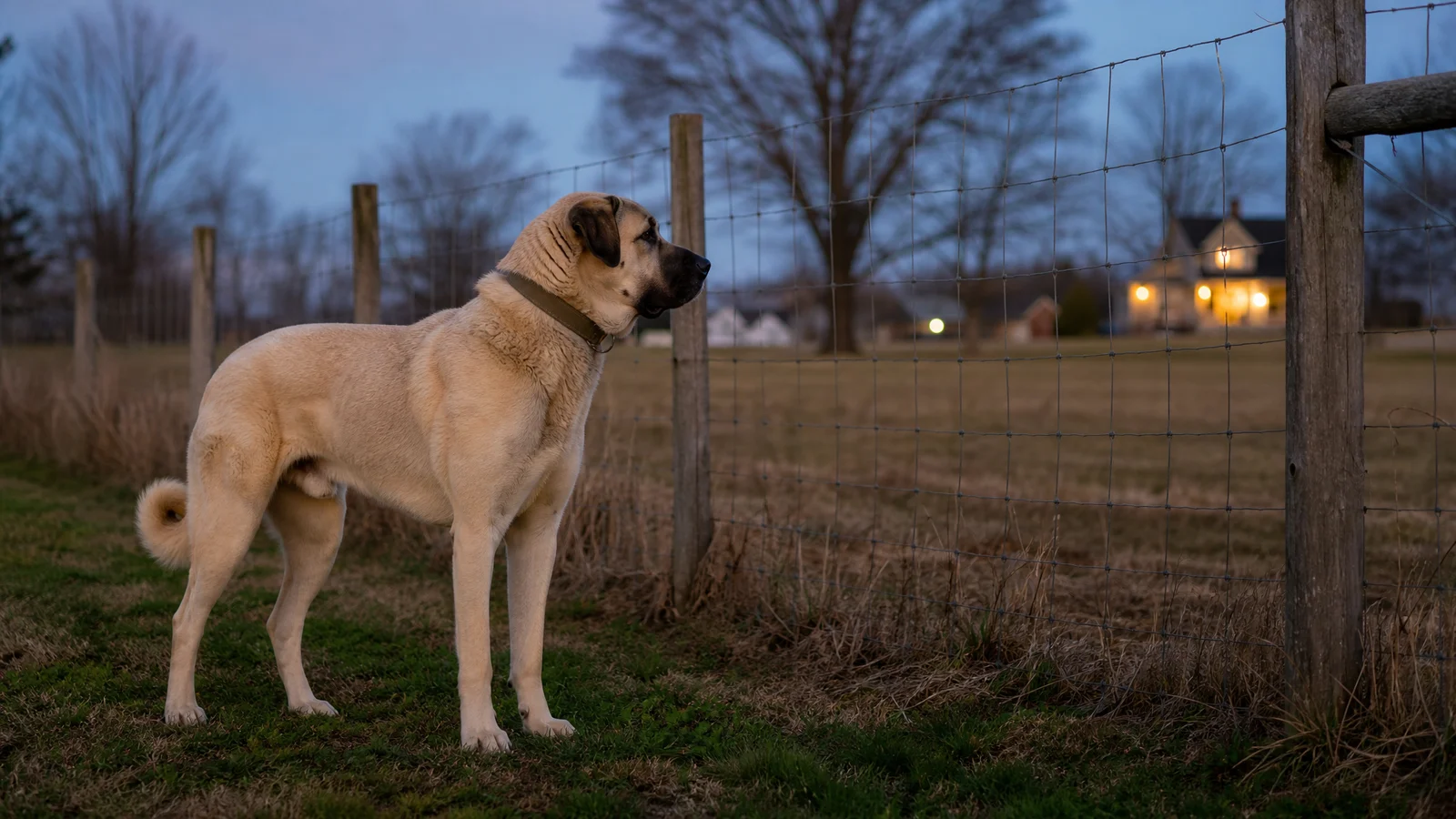
The size on the way explains why early habits matter. The breed standard lists males at 110 to 150 pounds and bitches at 80 to 120 pounds, and mature males can reach 29 to 32 inches at the shoulder. Those measurements apply at age 2 or older, but your puppy will not wait that long to become a handful.
A grabby habit that feels harmless on a small puppy turns bruising well before adulthood. This is also an instinctively protective, territorial breed that grows wary of strangers when mature, so a big dog who mouths at visitors is a far larger problem than a puppy doing the same thing. Regular vet visits let you track growth and check the mouth as new teeth come in.
Our verdict is that the window for easy redirection closes while your dog still looks like a puppy. Habits settle faster than bodies finish growing, so teach the soft mouth, the chew habit, and the calm settle now, while a mistake costs you very little.
Household Consistency in Puppy Training
An observant puppy reads the whole household, not just you. If one person plays with hands, another hands over a chew, and a third lets it slide, your puppy learns that the rule depends on who is standing there. Our verdict is that shared rules matter more than perfect technique.
Agree on the marker word, the chew that gets offered, and the cue that ends play, then use them every time. Keep chews in the same spots in each room so anyone can grab one without thinking. Because this breed is independent and can be slow to respond, uneven rules cost you extra weeks.
Children need an adult nearby and a simple script: stand still, hand over a chew, and let the grown-up step in. Ask guests to follow the same plan and to skip roughhousing with your puppy. Tape the rules to the fridge so nobody has to guess.
Puppy Training Now, Before Size Decides
Mouthing is normal, but a puppy heading for 80 to 150 pounds cannot be left to sort it out alone. If you want to keep going, these related guides continue the work.
- How does the biting change as teeth come in and your puppy grows? The Anatolian Shepherd puppy training timeline maps it out stage by stage.
- How do visitors and children fit into your puppy's days? Read about socializing an Anatolian Shepherd guardian puppy before the guardian grows up.
- What comes after the first cues? Our full Anatolian Shepherd guide lays out the path from there.
Everything above comes down to one idea. An independent, watchful, fast-growing breed will not drift out of a habit that keeps paying off, so make the chew the better deal, keep play calm and short, and have everyone at home answer the same way. Do that while your puppy is small and you will have a big, gentle-mouthed adult who learned early that teeth belong on chews and not on hands.
 HealthTeaching an Anatolian Shepherd to Accept the Vet and Handling
 Exercise and jobsHow Much Exercise Does an Anatolian Shepherd Need? Plus Brain Games
 BehaviorRewarding Quiet: Anatolian Shepherd Barking and the Neighbors