
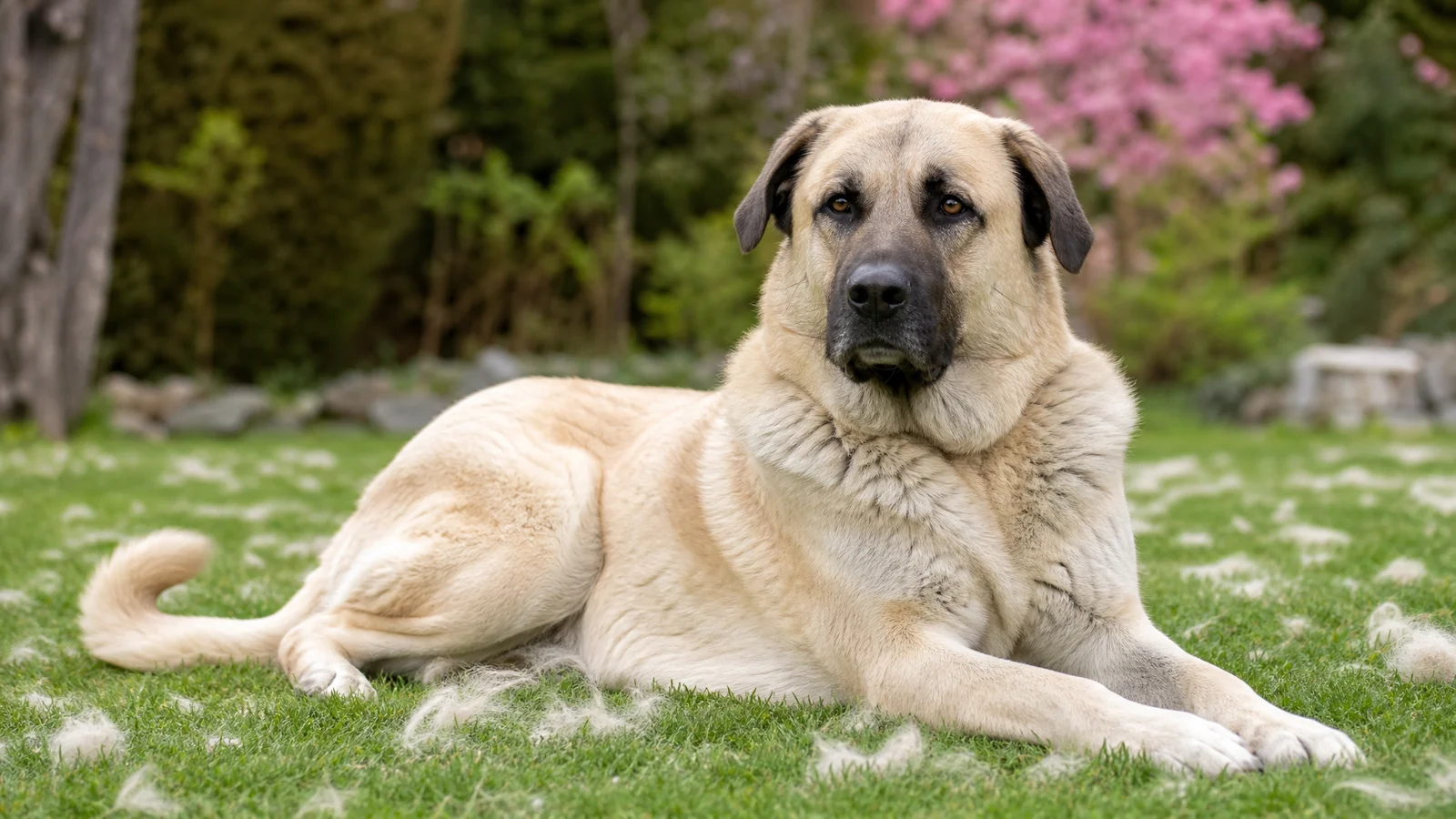
On the first warm morning of spring, your Anatolian Shepherd lies calm in the yard while tufts of pale undercoat drift across the floor. You bring out the brush, and they stand up and walk away.
That is a seasonal coat blow in a dog built for weather and independence. The thick undercoat that kept a working guardian warm is letting go, and a dog who was never bred to please you has little reason to stand for it.
This guide covers grooming through the whole shedding year, from how the double coat developed and what a normal blow looks like to brushing methods, bath limits, handling manners and safe vet visits. Done badly, a giant dog turns brushing into a standoff. Done well, the same short sessions make exams and nail trims routine.
Anatolian Shepherd Double Coat and Grooming
The breed standard describes a livestock guarding dog who is large, powerfully built and capable of great speed. Dogs like this worked outdoors beside flocks, so the coat had to handle harsh weather without any help from a person.
That job explains nearly everything about grooming today. A coat made to shed weather also sheds hair, and a dog made to work alone does not wait for your brush.
The Outer Coat
The longer, coarser top layer sheds rain and dirt and shields the skin from sun and brush. It drops a few hairs at a time all year.
Shaving is common advice for a shedding giant, but it removes that protection and does not stop the blow. Brush the outer coat smooth and leave its length alone.
The Undercoat
Beneath it lies a dense, soft layer that traps warmth against the body. This is the layer that comes out in clumps and sheets during a blow.
When the weather warms, the dog no longer needs that insulation, so the body releases it together. Loose undercoat left in place packs against the skin, which is why a blow needs your help.
Coat Length Variations
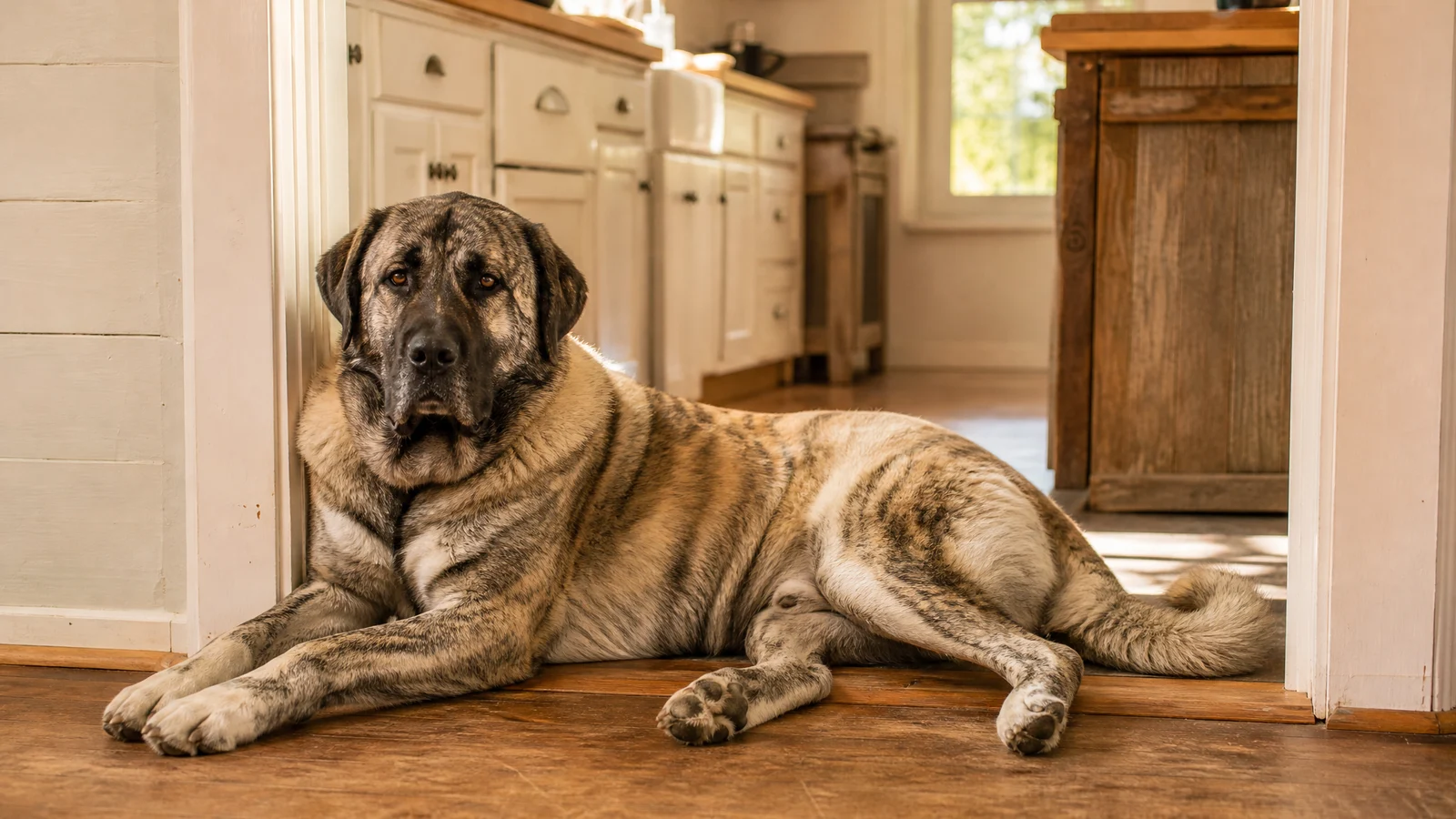
Coat length and density differ from dog to dog. Some Anatolian Shepherds carry a shorter coat, and others carry a plusher one with fuller britches and a thicker neck.
Longer coats hold more loose undercoat and tangle more easily. Shorter coats still blow, just with less volume, so judge your own dog by how much comes out in your hands.
Anatolian Shepherd Shedding Seasons
The AKC rates shedding 3 of 5, a moderate load, and rates drooling at 1 of 5. Hair, not slobber, is the mess to plan for.
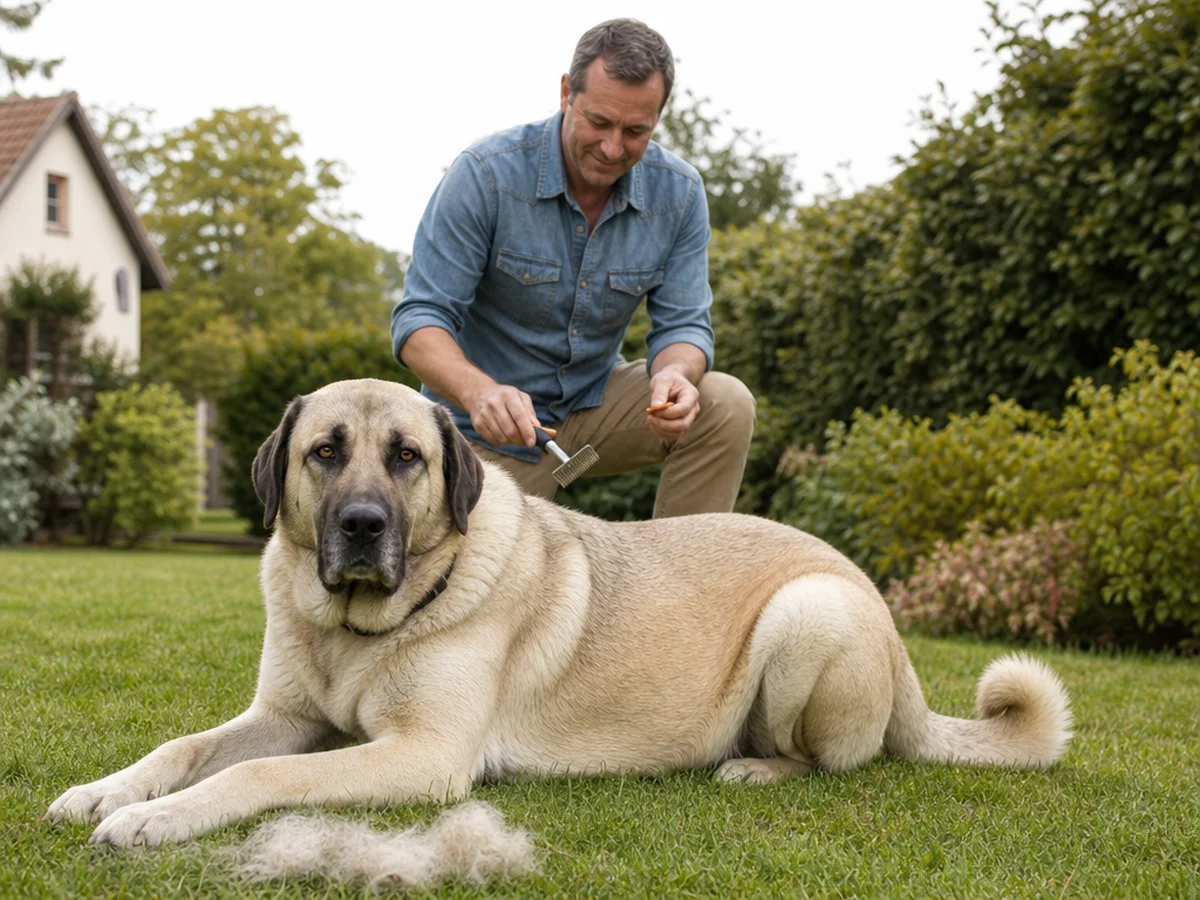
Timing and volume vary from dog to dog, and a moderate rating can still leave a lot of hair on the floor during a heavy shed. Know what to expect before the first tufts appear.
Spring Versus Fall Blows
The likely pattern is a heavier release when the winter undercoat is no longer needed, though the exact timing differs by dog. Some dogs shed in one big burst, while others let go of hair more gradually.
Changes in temperature and daylight are the usual triggers. Climate, age and the individual dog all shift the timing, so watch the coat instead of the calendar.
Daily Hair Between Blows
Between blows, the guard hairs drop a few at a time, and a weekly pass with a brush keeps the house manageable. That is the easy end of a grooming need rated 2 of 5.
Use these quiet weeks for practice. A dog who already accepts the brush on easy days is far simpler to work on when the coat comes out in sheets.
When Shedding Looks Abnormal
A normal blow thins the coat evenly and leaves healthy skin underneath. This comparison helps you sort what you see.
| What you see | Likely meaning |
|---|---|
| Clumps of soft undercoat on the sides and thighs, with calm skin underneath | A normal seasonal blow |
| A steady scatter of coarse hairs on furniture all year | Ordinary daily shedding |
| Bald patches or uneven thinning | Call your veterinarian |
| Red, scabbed or smelly skin under the coat, or constant scratching | Call your veterinarian |
| Heavy loss outside the usual seasons, or loss with low energy | Call your veterinarian |
Grooming Through a Coat Blow
A blow is the one time grooming effort jumps, so method matters. Brush every day or two while the undercoat is coming out, outdoors if you can, since loose fur floats everywhere.
We focus on how this breed behaves and learns, and a predictable order settles an independent dog faster than any gadget. Rake the sections, smooth with the slicker, then check the trouble spots, every time.
Undercoat Raking
Work with the lie of the hair, one section at a time, starting at the shoulders and moving back. Part the coat with your free hand so the teeth reach the soft layer instead of skimming the top.
Lift the fur, don't dig. If the rake meets resistance, that undercoat isn't ready yet, so move on and return in a day or two.
Trouble Spots
Mats form where hair rubs or stays damp: behind the ears, under the collar, in the armpits and along the britches at the back of the thighs. Check these areas with your fingers at the start of each session.
Ease a tangle apart from the tip of the hair toward the skin, holding the base so nothing tugs. A mat you cannot loosen in a minute or two is a job for a groomer or your vet team.
Keeping Sessions Short
An independent giant gives you a limited window of cooperation, so stop while they are still comfortable. Do one side of the body, or one region, per session.
Several brief sessions remove more undercoat than one long standoff. They also keep the brush something the dog agrees to.
Grooming Tools and Bath Limits
Grooming needs sit at 2 of 5, between monthly and weekly brushing, so a short kit does the work. Buy sizes made for large dogs, because a small brush on a giant frame stretches every session.
- A large undercoat rake does the heavy lifting in a blow, because its long teeth reach through the guard hairs to the loose layer.
- A slicker or pin brush finishes the job by smoothing the outer coat and finding small tangles around the ears and elbows.
- A wide-toothed comb checks the trouble spots, and if it glides to the skin, that area is clear.
- A rubber-backed mat steadies a heavy dog on tile and wood, and a treat pouch at your waist keeps rewards instant.
Introduce each tool gradually, since reward-based training can get a dog used to grooming equipment before it touches the coat. A few tools used often beat a closet full of gadgets.
Baths stay occasional. Bathe only when the dog is truly dirty or smells, because brushing, not washing, is how you manage a blow.
Brush out the loose undercoat first, since water packs it into dense mats close to the skin. Rinse until the water runs clear, then towel well and use a fan or a dryer on a cool setting, because the dense undercoat stays damp long after the outer coat feels dry.
Anatolian Shepherd Grooming by Season
Let the coat set the schedule instead of forcing the same routine all year. The moderate everyday coat needs a light routine, while an active coat blow needs more frequent work until the loose undercoat is gone.
| Coat stage | What to do | What tells you to change |
|---|---|---|
| Everyday coat | Brush between monthly and weekly, using the shorter interval when more hair lifts. | The comb starts collecting more loose undercoat. |
| Coat loosening | Part the hair behind the ears, under the collar and along the britches during each check. | Loose undercoat begins lifting in visible tufts. |
| Active coat blow | Use the undercoat rake every day or two, then smooth the outer coat with the slicker or pin brush. | The rake brings out less hair and the comb reaches the skin easily. |
| After the blow | Return gradually to the lighter routine and keep baths occasional. | The coat stays clear between checks without daily raking. |
Track the Coat, Not a Fixed Calendar
Keep a brief note after each session: the date, which tool you used, how much undercoat lifted and where the comb caught. Add one line about whether your dog stayed loose, needed more treats or chose to leave early.
The record prevents two opposite mistakes. You will not keep raking a coat that is already clear, and you will notice when loose hair begins building faster than the everyday routine can handle.
Compare the notes from week to week instead of expecting every Anatolian Shepherd to shed on the same dates. The useful pattern is the one your own dog's coat repeats, because that tells you when to move from a light brush to active coat-blow care.
The goal is a clean coat and comfortable skin, not a fixed number of brushing sessions. Adjust when the undercoat changes, and stop adding work once the coat is clear again.
Watch Your Anatolian Shepherd While Brushing
An independent dog is easier to groom when staying pays and leaving remains possible. The marker-word and reward basics in the complete Anatolian Shepherd training guide apply here, with food paying for calm contact with the brush.
Watch for head turns, lip licking, a stiff body or a hard stare, and finish before the dog walks away. Use the same finish word each time and follow it with a final treat, so the end of the session stays predictable.
Begin on the shoulder or chest, where touch is usually easiest, and widen the brushed area only while the body remains loose. If stiffness or staring keeps returning, stop increasing the difficulty and ask a qualified behavior professional for help.
When Anatolian Shepherd Grooming Needs Help
Call your veterinarian when a coat check finds skin that looks wrong or a mat you cannot ease apart without pulling. Keep regular vet visits on the calendar as well, because grooming is useful for noticing a change but cannot explain its cause.
If clinic handling itself is difficult, use the separate Anatolian Shepherd vet and handling routine instead of turning a coat session into an exam rehearsal. That keeps this job simple: clear loose undercoat, keep the skin comfortable and end before tension appears.
A seasonal coat becomes manageable when the routine follows what is happening under the guard hairs. Check the coat, use the smallest tool kit that works and let comfort decide when the session is finished.
 BehaviorAnatolian Shepherd Leash Reactivity: What Helps
 Training basicsHow to Teach an Anatolian Shepherd to Stay
 Training basicsIs an Anatolian Shepherd the Right Dog for You? What Training Takes