
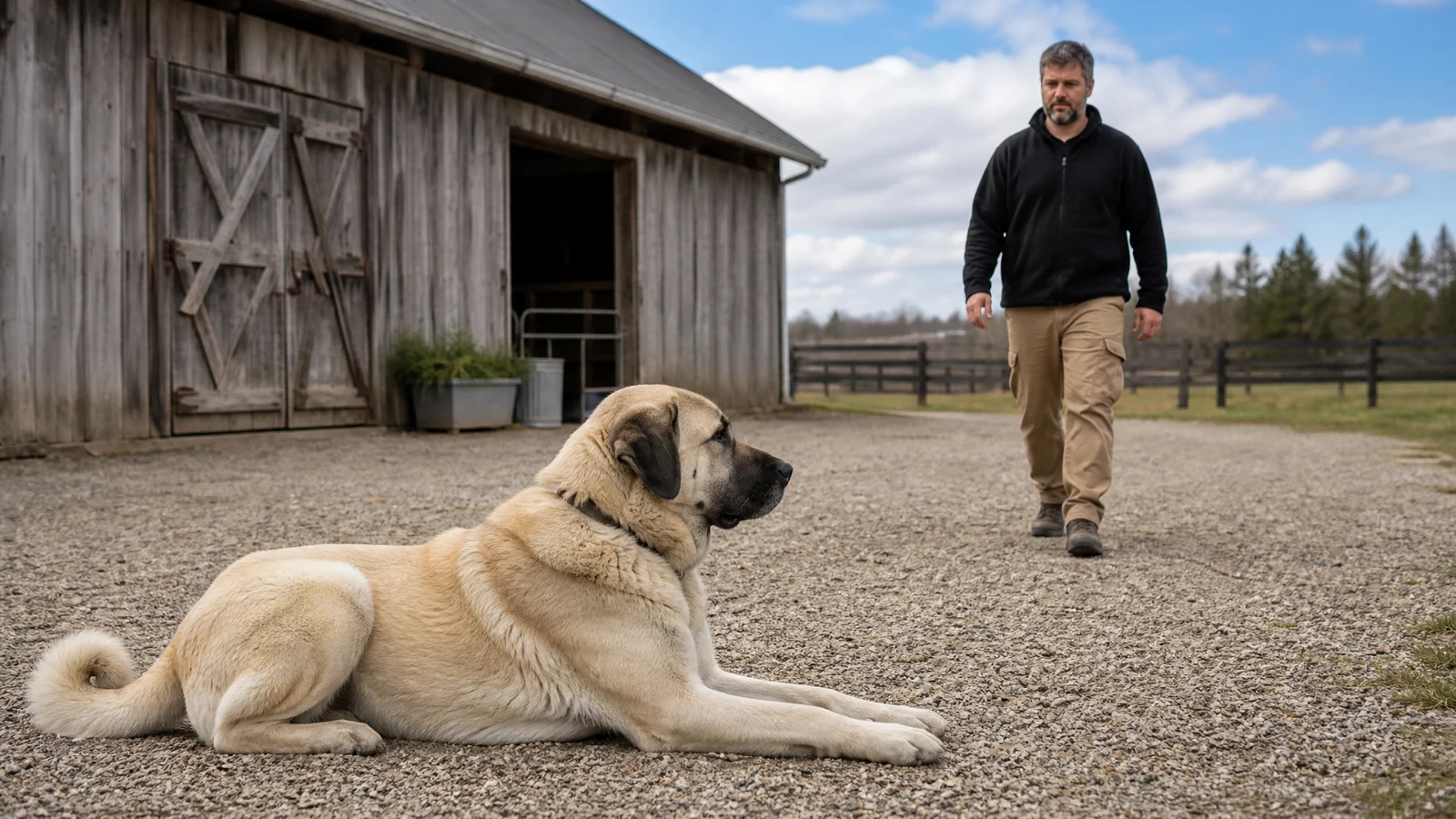
Teach an Anatolian Shepherd to stay by starting with a hold short enough for the dog to complete, then reward while they remain in position and clearly allow movement. If the dog gets up early, reduce one demand. That response does not prove that independence, boredom or any single motive caused the hold to end.
Elapsed time, total session length and handler movement are separate parts of the task. In this guide, we will identify which request may be too large, rebuild beside the dog, add a small movement only after the short hold is clear and then repeat the basics in an easier new setting. Each change should leave the requested behavior easy to identify.
When an Anatolian Shepherd Stay Ends Before the Reward
A broken hold is information about that attempt. Dogs Trust lists several possibilities, including a hold that was too long or a session extended enough for tiredness or boredom. Those are possible explanations, not a way to identify the cause. The useful response is to make the next request smaller or take a break.
Use the table to choose a supported reduction without claiming that it identifies the cause. Shortening a stay is not punishment, and ending a session does not erase what the dog has already learned.
| Possible Excess Demand | Smaller Next Step | What Remains Unknown |
|---|---|---|
| The hold lasted longer than the successful version | Return to a shorter hold beside the dog | Time alone may not explain the movement |
| The session continued after useful participation faded | Take a break and begin fresh later | One attempt cannot establish tiredness or boredom |
| The handler moved while time also increased | Restore the short hold before adding one small movement | The changed demand has not been isolated |
The Anatolian Shepherd Dog Club of America notes that natural independence can make puppies slower to respond to commands. That general observation does not explain why one stay ended. Observe the setup and reduce the request instead of turning the breed description into a verdict.
Teaching a Short Stay Beside the Dog
Begin from a comfortable sit or down that the dog already knows. The American Veterinary Society of Animal Behavior distinguishes the cue, marker and reward in reward-based training. For the initial stay, keep the handler beside the dog and use this general four-step method:
- Ask for the familiar comfortable position, then provide a reward there. Do not add a new position lesson to the stay task.
- Allow a very brief pause while remaining beside the dog. Mark the held position when the dog is still there.
- Reward in that position rather than calling the dog toward you to collect it. The reward belongs to the behavior you just marked.
- Give a clear permission to move so the dog can distinguish the completed hold from the next ordinary action.
Add the word stay only after the short hold is becoming understandable. Source examples of seconds illustrate brief starting points, not a required schedule or deadline. Avoid arbitrary repetition quotas. A clean short hold with a clear end is more informative than extending the request until it breaks.
The RSPCA training guidance supports short, regular sessions that do not overwhelm the dog. Keep that session limit separate from the length of one hold. A dog can complete a short stay and still be ready for the lesson itself to finish.
Handler Movement Changes the Anatolian Shepherd Stay
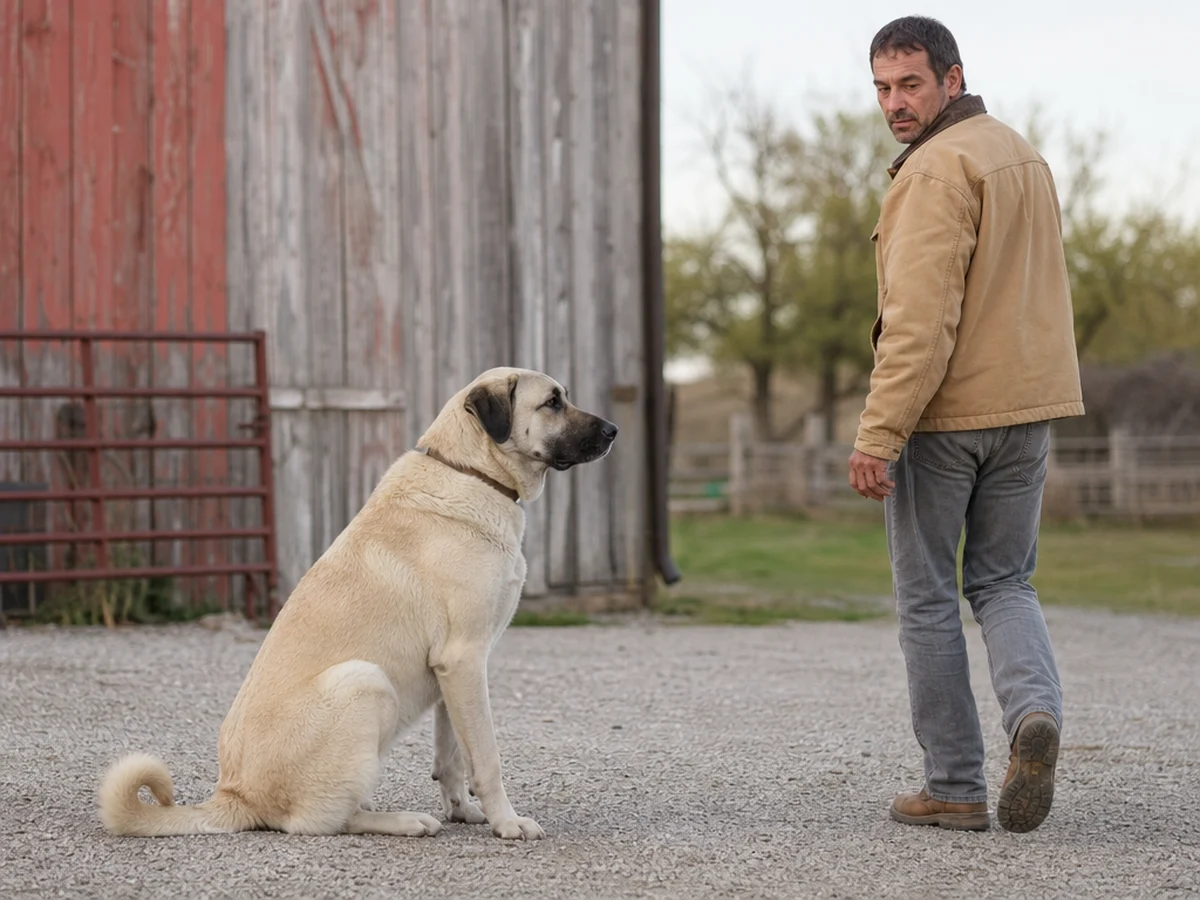
Leaning away or taking one step adds a different demand from waiting longer. Change only one feature while the hold remains brief. Return to the dog before delivering the reward, and give it while the dog remains in the held position. Calling the dog out to you would reward a different action and blur the endpoint.
A Step Away Still Ends With a Return
Begin with a small lean, return to the original place and reward the held position. A later single step follows the same pattern. If the dog moves, reduce the movement rather than increasing time, distance and session load together. The stay should remain understandable from the dog’s starting position through the clear permission to move.
Ordinary safety management remains in place throughout practice. A stay is not a reason to test an open gate, traffic edge or unsecured area. Use the Anatolian Shepherd check-ins guide for its separate attention topic, not as proof that this stationary hold is ready for hazards.
Remaining Anatolian Shepherd Stay Details
The main body has separated hold length, session load and handler movement, then kept the reward in position. Three narrower gaps remain about naming the behavior, interpreting an early rise and locating the reward without repeating the full method or the later setting transfer.
When should you add the word stay? Add it only after the very short hold is becoming understandable. The word should request a behavior the dog can perform in that setup, not fill the pause while they are still learning what produces the reward. Continue to mark the held position and end it clearly.
Does standing up mean an Anatolian Shepherd is refusing? No single attempt establishes that motive. The hold, session or handler movement may have added too much demand, but the article cannot determine which explanation applies. Reduce one feature and observe the next attempt without attaching a breed explanation.
Should the dog come to you for the stay reward? No. Return to the dog and reward while they remain in the held position. Then use the clear permission to move. Calling them out before the reward changes the action being reinforced and makes the stay endpoint less distinct.
Teaching Anatolian Shepherd Stay in Another Setting
A new place changes the context, so rebuild the easy mechanics rather than assuming the home version transfers intact. Keep the starting position comfortable, the hold brief, the handler close and the reward delivered after your return. Do not add a busy environment merely to prove reliability.
Use a late setting choice only after the home version is clear. These are practical boundaries, not a graded exposure program or a guarantee of distracted performance.
- Choose a quiet, familiar place where ordinary safety management is already secure.
- Make the first new-location hold easier than the strongest version practiced at home.
- Change the setting without also adding distance, duration or a long session.
- Exclude open gates, traffic edges and other hazards from any stay test.
Spontaneous relaxation remains a different reader job. The Anatolian Shepherd settling guide owns the off-switch topic. A stationary cue can end successfully without claiming that the dog is relaxed, confined for longer or ready for every environment.
Teaching Stay Ends With Permission to Move
A complete stay has a clear beginning, a hold the dog can perform, a reward delivered in position and a clear end. If the attempt breaks, shorten one part or finish the session. Do not turn the response into proof of independence or a reason to make the next request harder.
Maintain regular veterinary care and seek individual guidance when comfortable movement is uncertain. Stay is a discrete training task, not extended confinement, an answer to distress or a substitute for physical safety. End with permission to move so the dog knows exactly when the task has finished.
 Training basicsIs an Anatolian Shepherd the Right Dog for You? What Training Takes
 Exercise and jobsHow to Teach an Anatolian Shepherd to Spin
 Training basicsHow to Teach an Anatolian Shepherd to Lie Down