
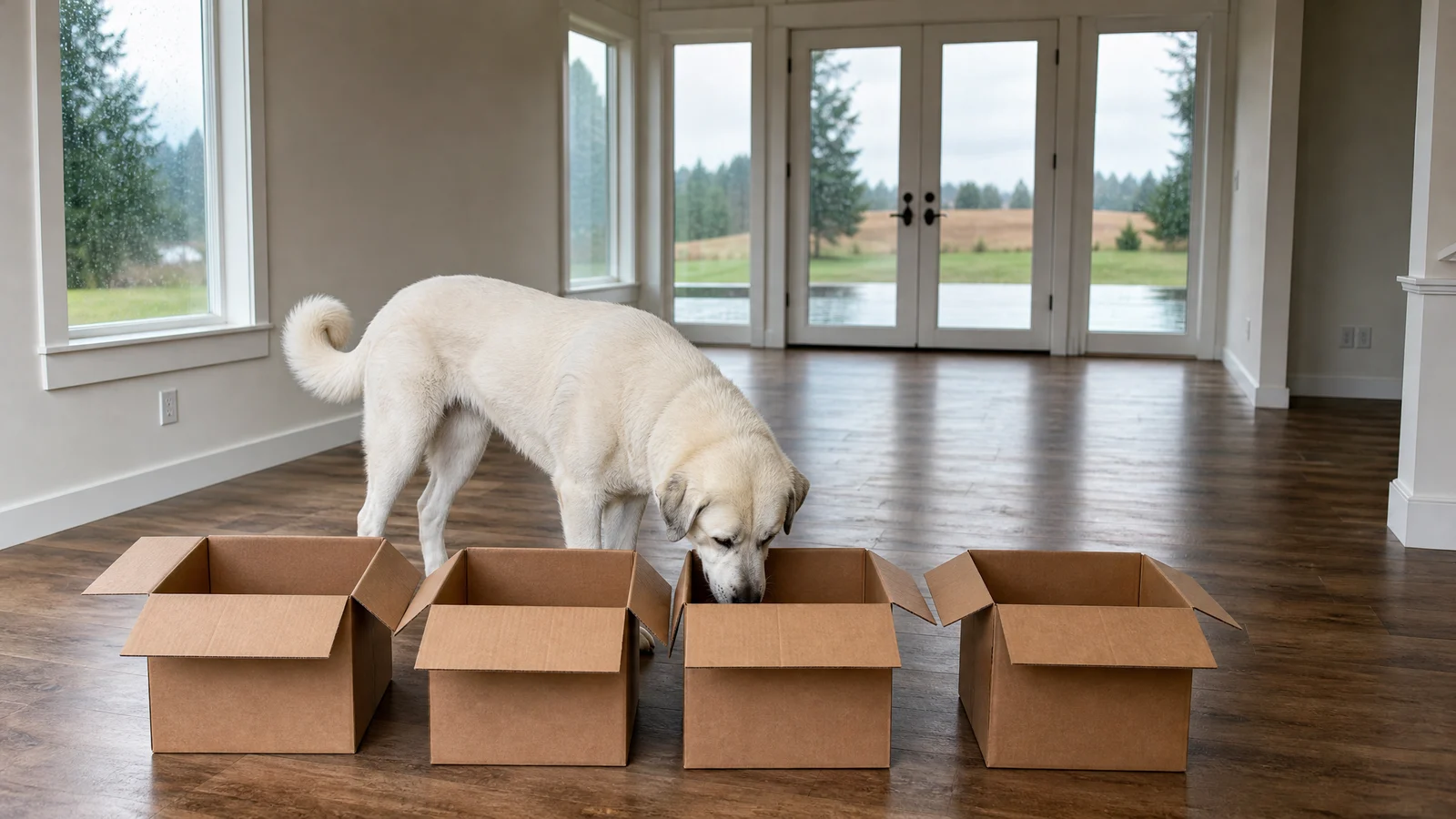
The ASPCA's home enrichment guide makes a plain point: dogs who don't receive stimulation find ways to enrich themselves, and the result shows up as unwanted behaviors. It adds that sniffing can be stimulating and calming, and that it lets a dog gather information about their surroundings. That makes the hours an Anatolian Shepherd spends indoors worth planning, not just waiting out.
Below, we cover four activities that need only household items and a few treats: a familiar cue, meal puzzles, find it and a calm finish. Each one gives the dog's nose or brain a job, and none of them calls for a special room, a purchase or a long block of time. We start with what the published ratings say about this breed.
What the Ratings Mean for Indoor Anatolian Shepherd Time
On the AKC breed page, the Anatolian Shepherd scores 3 of 5 for energy level, 3 of 5 for mental stimulation needs and 3 of 5 for playfulness, each labeled moderate. The top of those scales reads "High Energy," "Needs a Job or Activity" and "Non-Stop," so these are middle-of-the-road numbers. The size category is XLarge, which matters when you pick a spot for the games.
Trainability is the lower score at 2 of 5, where 1 means "Self-Willed" and 5 means "Eager to Please." We read that mix as a case for indoor games that are varied, rewarding and brief, and our Anatolian Shepherd trainability guide covers the score in depth. Daily movement belongs to the Anatolian Shepherd exercise guide, so this page does not repeat it.
A Familiar Cue Opens Every Indoor Game
We start each game by asking for one cue the dog already knows from our Anatolian Shepherd obedience guide, such as a sit, before the bowl goes down or the first treat is tossed. It costs a few seconds, and two published sources explain why the habit is worth having.
- PDSA's exercise advice calls training an essential part of every dog's daily routine, because it keeps the mind active, reinforces commands, prevents boredom and is a great way to bond.
- The RSPCA asks for all training to be reward based, using something the dog really likes, such as food, toys or praise, because a rewarded behavior is more likely to be repeated. It also recommends short but regular sessions so the dog isn't overwhelmed.
Reward each answer with the treat or the start of the game itself. How many requests to make is our call to adjust by the day, and the moment the dog seems to be done is the moment to move on to the puzzle.
Indoor Meals Make Easy Anatolian Shepherd Brain Games
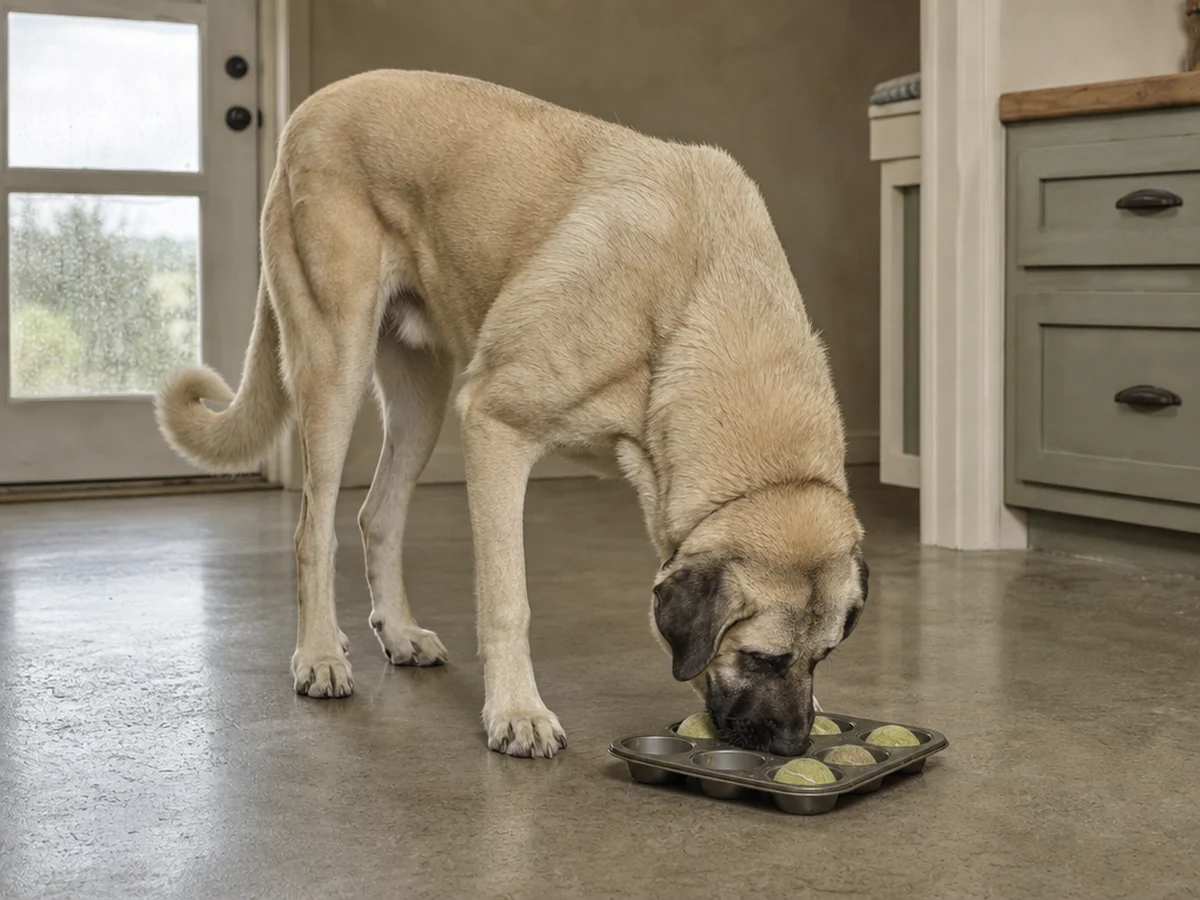
Every meal is a chance for enrichment, and a food puzzle slows down eating while giving the dog something to work out. The same guide that opened this page describes four puzzles built from things most homes already have. Watch closely while any of them is on the floor, and end the game if a dog starts trying to swallow part of the puzzle. If a dog who normally enjoys these puzzles loses interest, mention it at their next regular veterinary visit.
- A muffin tin with kibble spread across several cups and tennis balls or other toys set on top of the food.
- Three boxes nested inside one another, with a smelly treat in the smallest box and its top folded closed.
- A toilet paper or paper towel roll with a treat inside and both ends folded shut.
- A snuffle mat made from a high-pile bathroom mat, or from fleece strips tied to a rubber mat, with kibble hidden throughout.
Because the breed page lists the size category as XLarge, we set these on a clear patch of floor instead of a crowded corner. The meal still counts as a meal, so the game costs no extra time in the day.
Find It Indoors, From One Toss to a Row of Boxes
Find it puts the dog's nose to work, which is why we use it as the anchor game of an indoor day. It begins with a single toss and grows only as fast as the dog succeeds. Each stage below is a small step up from the one before it.
- Say "find it," toss one treat close to the dog, and praise when they get it.
- Repeat until the game is familiar, then start making the search slowly harder.
- Once the dog knows the game, hide treats around the room for them to find.
- Move to boxes: lay several open boxes on the floor and bait at least half of them with smelly treats, so the dog finds food and rewards themselves.
The Best Friends nose work guide keeps each session small: three to five rounds of a minute or two, about 15 minutes in all, with at least six sessions before the search gets harder. It also says almost any dog can do this kind of work, including dogs who can't manage vigorous exercise, and that it helps high-energy dogs learn to focus.
Ending Indoor Play So the House Settles
A find it search has a natural last moment: the final box is empty and the nose has done its job. In our experience that is the best time to let the room go quiet, so we close a game while the dog is still interested instead of playing it out.
Our Anatolian Shepherd off switch lesson teaches settling on purpose, which gives every game a clear end and makes the stretch after it calmer. The quiet that follows is part of the activity, and it is the part the dog carries into the rest of the evening.
 BehaviorHow to Stop an Anatolian Shepherd Pulling on the Leash
 Training basicsAre Anatolian Shepherds Easy to Train? Smart or Stubborn
 Puppy trainingAnatolian Shepherd at 6 to 12 Months: Adolescence Begins