
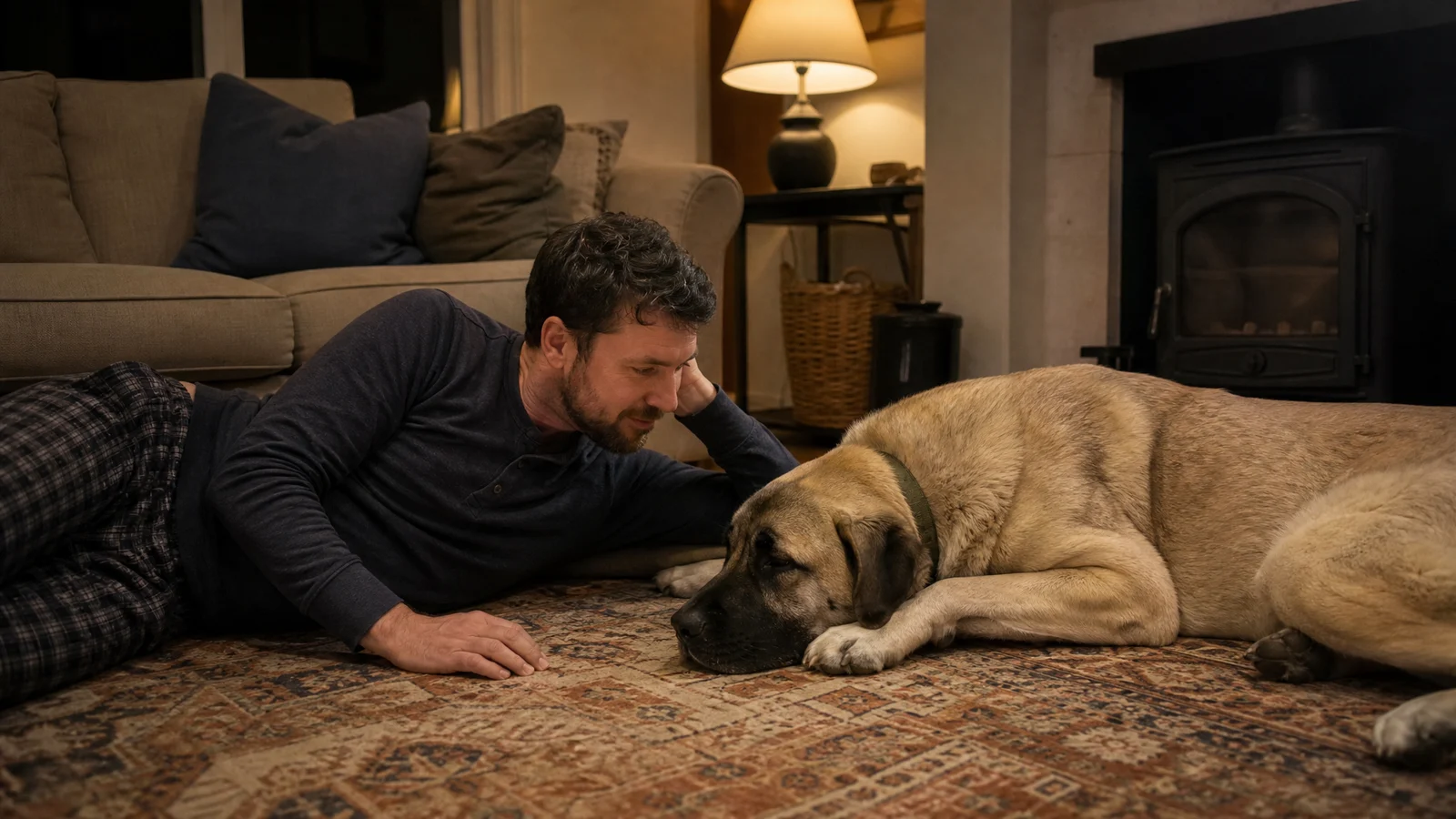
By nine at night, your dog has followed you from the living room window to the kitchen window to the front door and back, and they have not lain down once. A truck rumbles past and they are on their feet. A branch taps the siding and they jolt out of the half-sleep they had finally found.
Nothing is wrong with this dog. An Anatolian Shepherd comes from guardians bred to stay alert, so watchfulness is the job and relaxing is something you teach. A giant dog who never rests wears out the whole household, and the strain shows up as pacing, barking and a dog who can't enjoy their own home.
Done well, settling gives you a guardian who watches from a sprawl instead of a crouch. Read on for how to cut triggers, what a realistic off switch looks like, how to reward calm, where to put the spot, a step-by-step plan and what the coming years bring.
Anatolian Shepherd Settling Must Be Taught
Many dogs drift toward calm once they are tired and fed. An Anatolian Shepherd doesn't follow that script, because the work they were bred for runs on attention. For millennia the breed exercised independent judgment about perceived danger, yet the written standard calls the temperament alert, intelligent, calm and observant. Both halves are true. This is a calm dog by nature whose attention won't clock out until someone shows them it can.
That is why settling is a skill and not a personality trait. The breed is calm, friendly, and affectionate with the immediate family, so the raw material is good. What a restless dog is missing is the lesson that the watch has an end.
Their independence also makes them slower to respond to commands, so asking for calm in the moment often fails. Paying for calm when it shows up on its own works far better. If your basic routines are still taking shape, our complete Anatolian Shepherd training guide covers the foundation that settling sits on.
Can an Anatolian Shepherd Truly Switch Off?
Yes, though the off switch looks different from what you'd see in a retriever or a lap dog. Realistic off-switch behavior is a dog who lies down in the same room as the family, breathes slowly, rests their head and lifts an ear at a noise without getting up. The watching never stops entirely. What changes is the cost, because a relaxed dog watches from a sprawl and a keyed-up one watches from a crouch.
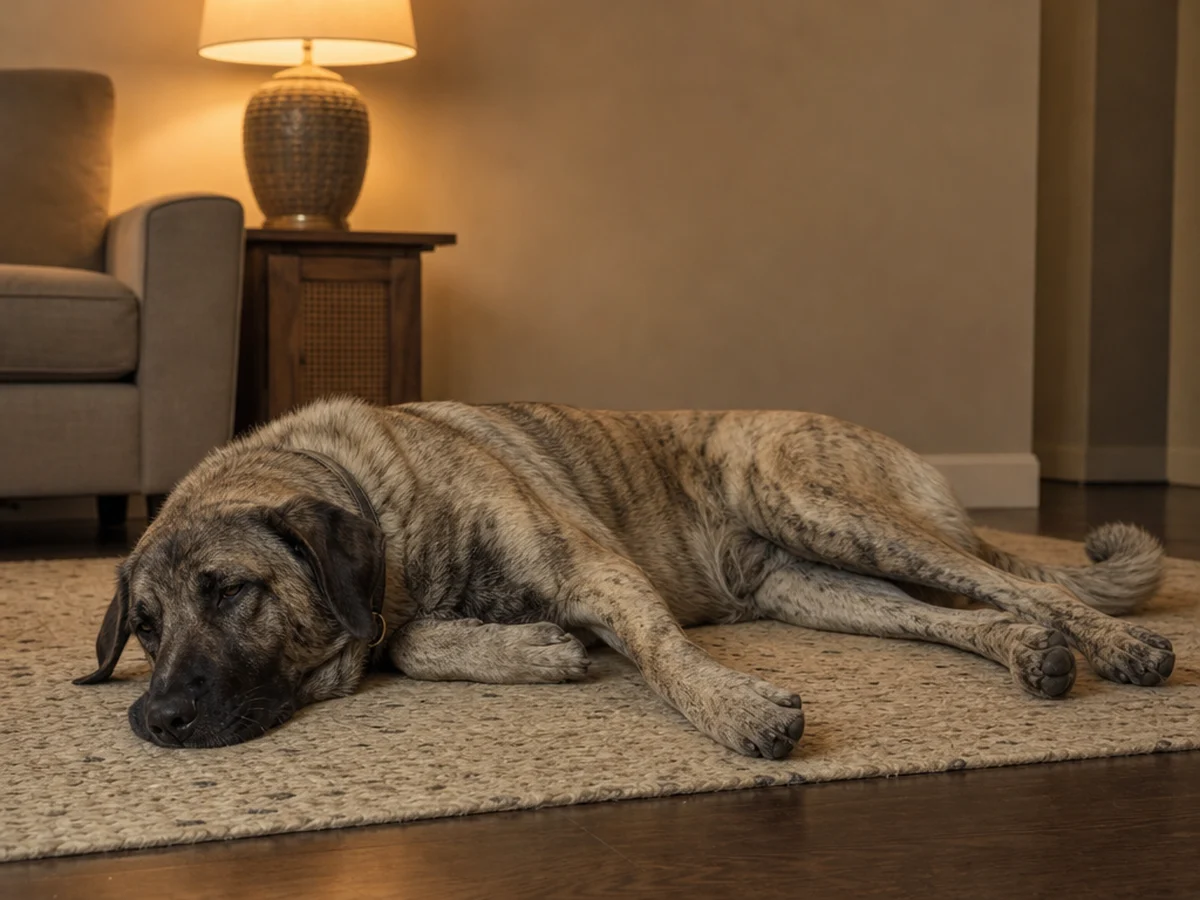
That fits the work. Anatolians have guarded everything from sheep and goats to horses, llamas and ostriches, and dogs like them have kept carnivores away largely through presence, with actual battle rarely required. A dog built to deter by simply being there doesn't need to stay on their feet to do the job. Some Anatolians even make wonderful therapy dogs because of their calm temperaments.
Expect Different Timelines
Expect variation. Some dogs relax within days and others take months, and nearly every dog has a spot where they won't fully let go, such as beside the front door. The standard accepts reserve around strangers, so you are not aiming for a dog who sleeps through everything. You are aiming for fast recovery, where they notice, decide it is nothing and return to rest without your help.
Keep regular vet visits on the calendar, and call sooner if a dog who used to rest suddenly can't, paces at night or seems uncomfortable. A health check can separate discomfort from a training setback. A health check can separate discomfort from a training setback.
Reward Settling Before Your Dog Asks
The fastest way to build a relaxed dog is to catch them being relaxed and pay for it before they ask for anything. Walk past while your dog is lying quietly and drop a treat between their paws without a word. Do it again when they sigh, when they shift onto a hip, when they glance at a sound and put their head back down. You are teaching that stillness is where the good things happen.
Current guidance supports reward-based methods only, and this breed shows why. A dog bred to decide things alone has little reason to cooperate with pressure but plenty of reason to repeat what pays.
Marker Words and Treats
Choose a short marker word and say it in a low voice the instant you see the calm behavior, then deliver the treat. Small, soft treats work best because you can deliver them without the dog needing to get up. Keep your tone quiet. The standard says animated responsiveness isn't characteristic of the breed and that overhandling is discouraged, so a murmured word suits these dogs better than a lively party or constant petting.
Chews That Keep Calm Going
Chews give calm a longer runway. A stuffed chew or a smeared lick mat keeps a dog lying in place for a good while, and that time lets the body wind down. Offer one when the household gets busy, then reward the dog again at the end for staying put.
Build Settling in Small Steps
Now stitch the pieces together. Keep sessions short and run them after a walk or play, when your dog is already a little spent. Advance to the next step only once the current one looks effortless. If your dog stands up and wanders, drop to the previous step. That isn't failure. It tells you the step was too big.
- Reward any contact with the mat, such as a paw or a sniff, then reward a full lie-down on it.
- Pay for staying down, starting with a few seconds and stretching the gap between treats a little at a time.
- Teach a release cue so the mat job has a clear finish and your dog knows when they may get up.
- Take a step away, return and pay, then add distance gradually until you can cross the room.
- Introduce mild distractions such as a dropped spoon, a chair sliding or you picking up your keys, and pay for staying put.
- Practice while you eat, talk on the phone or tidy up, so the mat holds through ordinary life.
- Take the mat to new rooms and then new places, starting easy each time.
Rehearse the harder moments before they matter. Play a doorbell recording quietly and pay your dog for heading to the mat, then raise the volume over many days. When real guests arrive, send your dog to the bed or the pen before you open the door, and ask visitors to ignore them. The goal is a dog who watches calmly, not one who greets everyone. Our Anatolian Shepherd puppy socialization guide shows how to bring in new people and places without pushing.
Signs You Are Making Progress
Look for the small things. Your dog lies down without being asked, lets out a long sigh, recovers faster after a noise and needs fewer treats to stay put. Compare this week with last week, never with another dog, because an independent thinker can look stuck and then jump ahead.
When to Ask for Help
If settling stalls, or you see growling, stiffening or fear around visitors, begin with your veterinarian. The safest approach to these problems is a qualified professional guiding behavior modification that rewards good behavior. Ask about a board-certified veterinary behaviorist or another professional who uses rewards, and reach out early, because early help turns problems around more easily.
Where Should the Settling Spot Be?
The right spot lets your dog stay near you without owning the doorway. A guardian can't relax if every approach to the house runs past their nose, so choose a place with some cover and a calm view of the family. This is an extra-large breed, so make sure the spot fits a full-grown dog stretched out. Males run from 29 inches and 110 to 150 pounds, and females from 27 inches and 80 to 120 pounds.
A Mat for Anywhere
A thin, washable mat is the most portable option. Use it only for settling so it comes to mean one thing, then carry it to the kitchen, a friend's house or the vet's waiting room. The mat is the skill that travels, which makes it the one to build first.
A Bed in the Family Room
A large, supportive bed against a wall gives your dog a home base within sight of the family. Place it off to one side, well clear of the front door and the biggest window. Dogs usually relax more when their back is covered and the approach to the house isn't in view.
Crate or Pen for Rest Periods
A roomy crate or exercise pen gives complete rest when the house is busy, and a cover over part of it cuts the view. Build a happy association with tasty treats and long-lasting chews, so your dog sees it as a good place and never as a punishment. A big dog needs room to stretch, so size it for the adult they will become.
How Location Shapes Calm
Close to you but away from entrances is the sweet spot, because it satisfies a loyal dog's wish to be near their people without handing them the lookout post. If your dog keeps drifting to the window, move the spot. That is easier than fighting the pull.
Prevent Overstimulation Before Settling Practice
Start with the house, not the dog. Each time your Anatolian Shepherd patrols a window and barks at a passerby, they rehearse being on duty, and a few minutes of mat practice can't outweigh hours of that rehearsal. Changing the setup is the quickest improvement available, and it costs almost nothing.
Take Away the Easy Triggers
Look at the sightlines from wherever your dog spends the evening. Frost the lower half of street-facing windows, lower the blinds at dusk and turn the couch so it no longer faces the front door. Outside, a solid panel along the road side of the fence blocks the parade of joggers and dogs who keep a guardian wound up.
Sound is harder to remove, but a fan or soft background audio takes the edge off slamming doors and deliveries. When you know a noisy stretch is coming, such as workers next door, move your dog to an interior room with a chew before the first bang, not after the barking starts. Dogs vary, so watch which sights and sounds actually set yours off and fix those first.
Schedule Rest Like You Schedule Meals
Put quiet time on the calendar. After play, a walk or any visitor, give your dog a stretch in a calm room, a pen or behind a gate. A big guardian with no downtime tends to spiral, and a dog who is tired but wired is a poor learner.
You may hear that the cure for a restless dog is to exhaust them. For this breed we'd push back. Exercise matters, and our guide to Anatolian Shepherd exercise needs covers it, but a dog who is already keyed up usually needs less stimulation, not more. Pair modest outings with planned quiet and you will see the difference.
Settling Over the Years in an Anatolian Shepherd
Settling in this breed grows over months and years. The early weeks bring small wins, like a sigh or a lie-down by your chair. Through adolescence you will probably see backsliding, with more alert spells, more testing and a dog who seems to have forgotten the mat.
Handling Adolescent Setbacks
Handling Adolescent Setbacks
This is normal. Drop back to easy steps, restore the gate and the quiet room, and pay generously for lying down. A dip is a signal to rebuild the routine, and it doesn't undo what came before.
Rebuilding Settling After Change
Change brings setbacks too. A move, a new baby, a new pet or a shifted schedule can unsettle a steady dog, and a guardian takes changes to their territory seriously. Tighten your management and reward calm more often until things feel familiar again.
Maturity helps. The standard's measurements apply at age 2 or older, and a dog of 110 to 150 pounds who can't switch off is a lot to live with, so it pays to keep building. The adult you are working toward checks the door when it rings, goes to the mat within moments, lies down and watches the yard from a relaxed sprawl.
So plan on calmer evenings that develop slowly, with predictable setbacks in adolescence and during change, and treat settling as upkeep and not a finished course. Your Anatolian Shepherd will stay watchful, because that is who they are and you wouldn't want it any other way. What they can learn from you is that watchful and relaxed fit in the same dog, and that the mat, the quiet room and the calm rewards are worth keeping in your routine for life.
 BehaviorAnatolian Shepherd Guard Dog: Visitors and Strangers at Home
 Puppy trainingMouthing and Chewing in a Fast-Growing Anatolian Puppy
 HealthTeaching an Anatolian Shepherd to Accept the Vet and Handling