
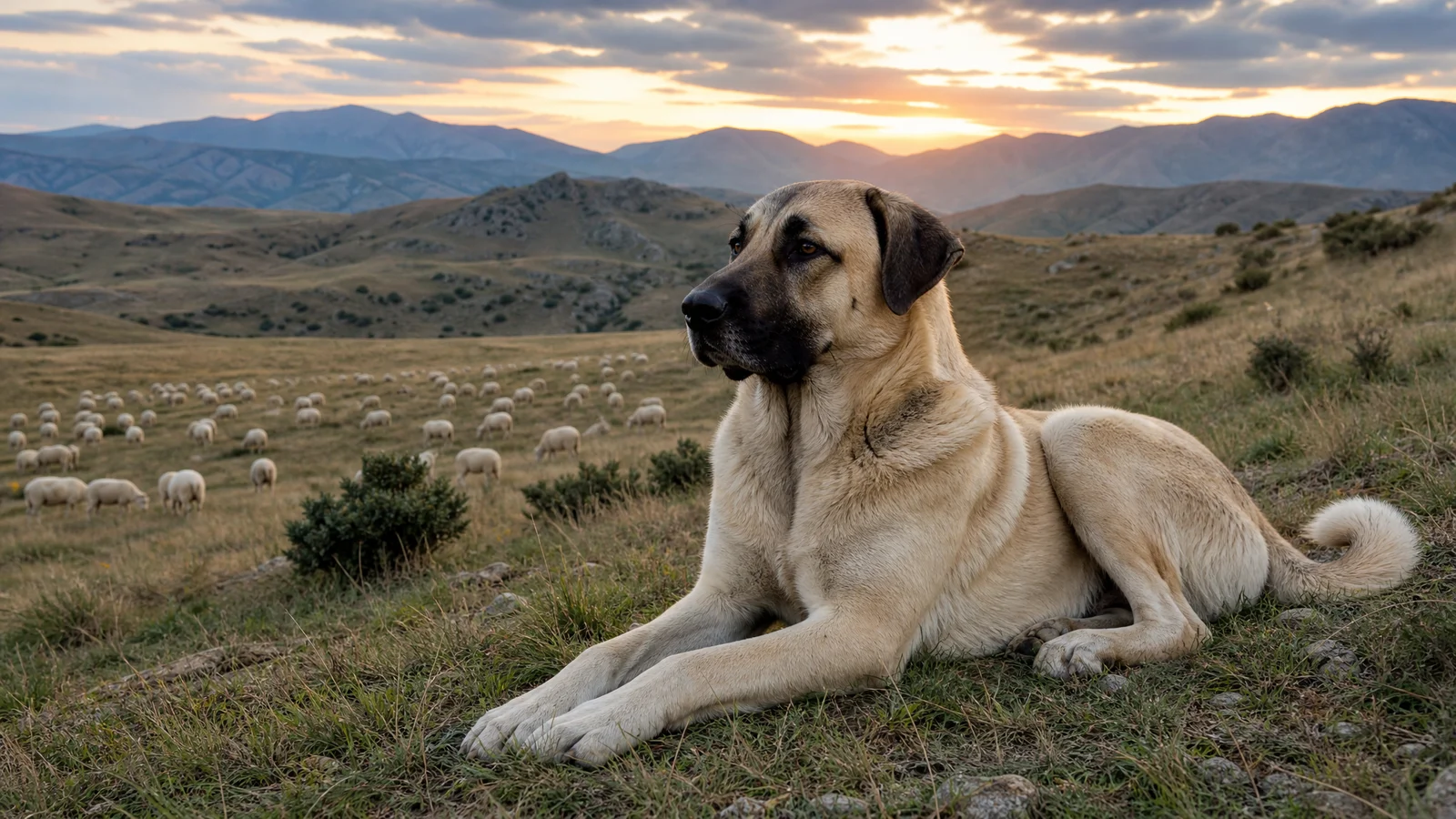
The reviewed sources do not establish a birthday when an Anatolian Shepherd calms down. One source describes the breed as calm and observant, while another gives a broad end range for adolescence in dogs generally. Neither tells you when one dog will act settled in every household situation.
Start by deciding what calm means in the moment you care about. Then keep age evidence in its proper category and continue a modest, predictable training routine. In this guide, we will define the term, compare two age statements, retain one familiar teaching sequence and mark where general guidance stops. We will also separate quiet behavior from proof of comfort and keep individual concerns outside a calendar promise.
What Does Calm Mean for Your Anatolian Shepherd?
The AKC official standard describes the Anatolian Shepherd temperament as alert and intelligent, calm and observant. That wording identifies a breed-standard quality. It does not say that every individual will remain quiet, relaxed or responsive in every setting after reaching a particular age.
A household question needs a visible context. Settling while dinner is prepared, pausing before a doorway and resting after ordinary activity are different events. Name the event you hope to see instead of treating calm as a single permanent condition that the calendar will eventually deliver.
Silence alone is not a complete answer. A dog can be quiet while watching something closely, resting comfortably or avoiding interaction, and the standard cannot determine which description fits. Use the behavior you can observe and the surrounding situation without turning either into a temperament test.
After One Year, Two Age Statements Are Not a Deadline
Age appears in the reviewed material in two different ways. The breed standard qualifies when its measurements apply, while general veterinary guidance describes a possible range for the end of adolescence. Reading those statements separately prevents size language from becoming a behavioral deadline.
Measurements in the Breed Standard
The AKC standard says general balance matters more than absolute size and that its measurements and weights apply at age two or older. This is a condition on conformation measurements. It does not state that physical growth finishes on the second birthday or that an Anatolian Shepherd becomes calm, trained or behaviorally mature then.
That distinction matters at one year and beyond. A measurement qualifier can help a reader interpret the standard, but it cannot predict the outcome of a lesson or explain why a familiar response looks different in a particular room. Keep the age-two wording attached to the measurements it actually qualifies.
Adolescence in General Development Guidance
Cornell’s general guidance says adolescence usually ends around 18 months and can continue until age two depending on the breed or individual dog. This is an all-dogs development range, not a breed-specific calm-down schedule for an Anatolian Shepherd.
The range also does not turn its endpoints into guarantees. A dog can continue learning before, during and after those ages, and a difficult response cannot be assigned to adolescence from the date alone. The broader Anatolian Shepherd training timeline owns the sequence of earlier and later stages.
Build a Predictable Anatolian Shepherd Training Routine
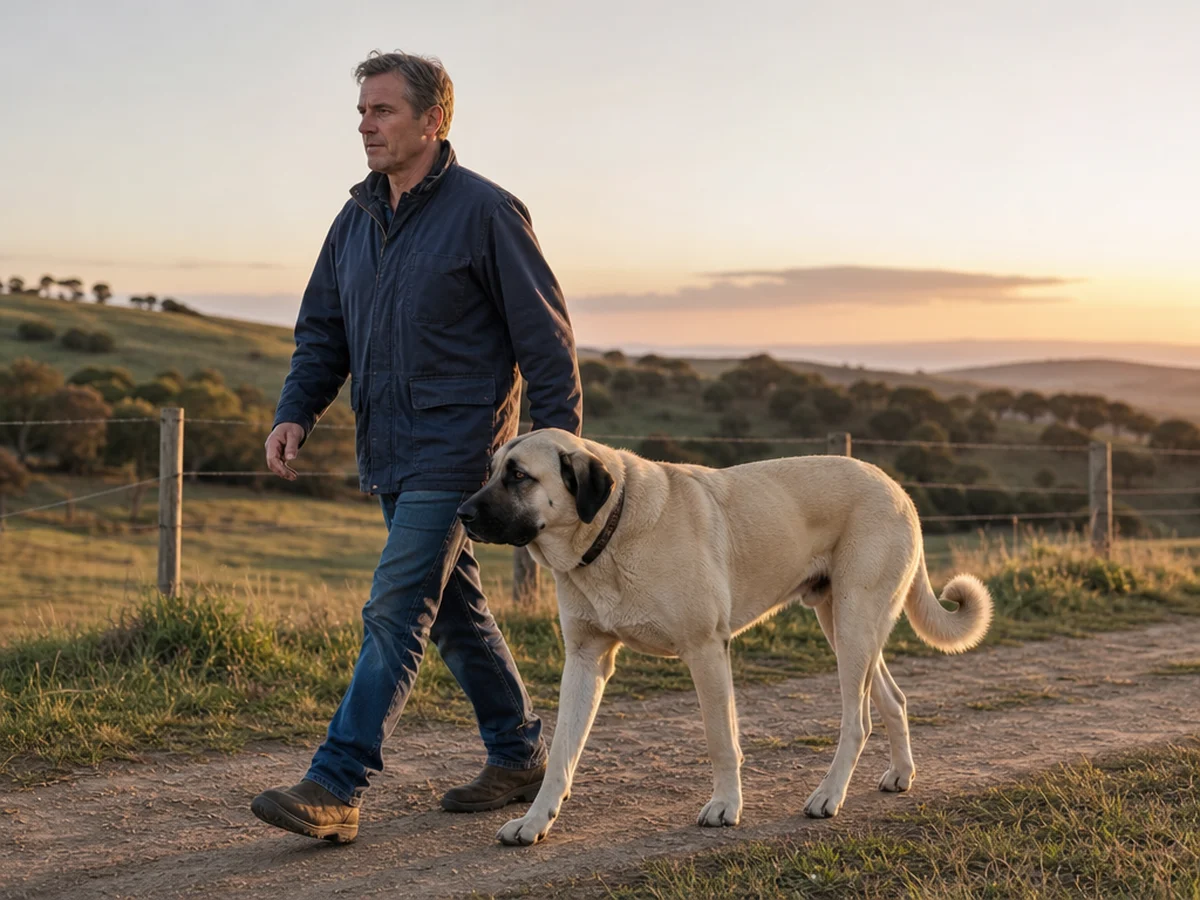
The AVSAB position statement supports clear routines and reward-led guidance rather than fear, intimidation or pain. It also describes a sequence in which a cue requests a behavior, a marker identifies it and an appropriate reinforcer follows.
Use that sequence for one behavior the dog already knows. This page does not set an all-day obedience schedule or teach a new cue from the beginning. This general method has three steps and keeps familiar teaching clear without making a birthday responsible for the result.
- Request one familiar response in a setting where the dog can participate. Give the established cue once and allow enough time to observe what actually happens.
- Mark the wanted response at the moment it occurs. Keep the marker consistent so it identifies the action rather than merely filling the pause before a reward.
- Deliver an appropriate reward, then finish or repeat only while the brief practice remains useful. The selected short-session guidance supports brief, regular training that avoids overwhelming the dog.
Structure does not require adding difficulty because the dog is older. If the familiar response is unclear, make the ordinary setup easier rather than using age as proof that the dog should cope. The routine teaches the requested action in that session. It does not manufacture a permanent state called calm.
Keep the reward claim equally narrow. Food, a toy or another suitable reinforcer can follow the marked response, but the reward does not reveal why the dog acted differently before. It helps maintain useful learning without converting one successful repetition into evidence that adolescence has ended.
Where the One-Year Guide Stops
This page owns age expectations and the decision to keep learning. It does not own a complete method for recall, leash walking, settling, visitor behavior or another individual skill. Use the relevant cue or behavior guide when the question is how to teach that specific response.
It also does not turn social reserve, exposure or household access into evidence that a dog has or has not calmed down. The Anatolian Shepherd puppy socialization guide retains the exposure topic. Do not expand a birthday question into forced greetings or a visitor-management test.
Individual concerns stay individual. A general article cannot determine the cause of a marked change, discomfort or a behavior problem, and waiting for another birthday is not an assessment. Keep routine veterinary care current and seek appropriate individual advice when the concern calls for it.
Practical Questions After an Anatolian Shepherd’s First Year
The main body has defined calm, separated the two age statements and retained one modest routine. Three narrower gaps remain about quiet behavior, later learning and household expectations without repeating the calm-down claim or creating a new training program.
Does a quiet Anatolian Shepherd prove that the dog is calm? No. Quietness is an observation, but it does not by itself establish comfort, attention or a lasting temperament state. Look at the situation and the other behavior you can see, and ask for individual help when a meaningful concern cannot be answered from observation alone.
Is two years old the end of Anatolian Shepherd training? No reviewed source sets age two as the end of learning. The standard uses that age to qualify measurements, and the Cornell range describes general adolescence rather than a training deadline. Continue clear reward-based teaching when a useful behavior still needs practice.
Should every household expectation become harder after age one? No age statement here supports raising difficulty across the household on the first birthday. Preserve clear guidelines and choose practice from the response available in the current setting. A familiar routine can remain valuable without becoming longer, farther away or more distracting.
Keep Learning After One Year Separate From a Maturity Label
An Anatolian Shepherd does not need a declared calm-down date for useful learning to continue. Describe the situation you care about, keep measurement language separate from general development guidance and reward a familiar response within a brief, predictable routine.
Continue regular veterinary care and bring individual concerns to an appropriate professional rather than waiting for a maturity label to solve them. The honest endpoint is not a promise that the dog is finished developing. It is a clear next lesson, a clear topic boundary and a willingness to seek help when general guidance is not enough.
 BehaviorAnatolian Shepherds With Cats and Other Dogs
 Training basicsHow to Teach an Anatolian Shepherd to Sit
 Puppy trainingAnatolian Shepherd Puppy at 4 to 6 Months: What Changes