
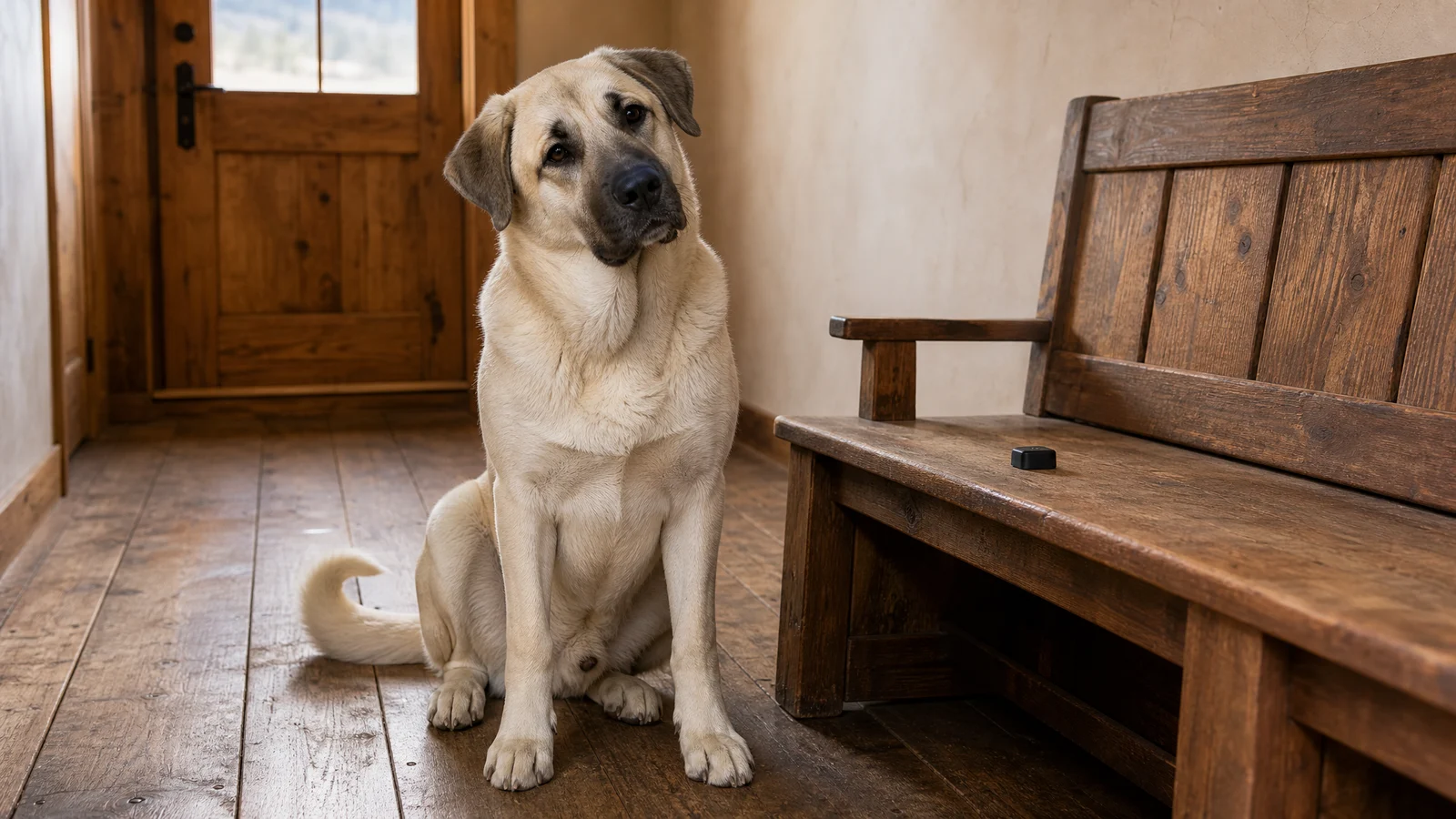
Clicker training an Anatolian Shepherd starts with a promise the handler must keep: every click predicts a reward, including a click made by mistake. Reward the accidental sound, reset calmly and improve the timing on the next attempt. Do not make the dog guess which clicks count.
The click identifies one precise instant. It is not the cue and it is not the reward itself. This guide covers sound comfort, handler-only timing practice, calm click-and-reward pairing, one familiar response and the later removal of visible food from the guidance. We begin with the handler’s mechanics so the dog enters a lesson whose sounds and consequences are already clear for everyone involved.
An Accidental Click Still Earns an Anatolian Shepherd Reward
Battersea's clicker-training guidance says an accidental click should still be followed by a reward. That consistency protects the meaning of the marker. The handler can note the timing error without withdrawing the consequence the dog has learned to expect.
Hold the clicker at the handler's side rather than aiming it at the dog. Keep the reward ready in a separate hand or container, and deliver it only after the sound. These mechanics reduce extra movement around the dog's face and make the marked moment easier to see.
Choose a Marker the Dog Can Hear Comfortably
A clicker is optional. The AVSAB humane training statement describes clickers or verbal markers within reward-based training. Choose one sound the dog notices without startling, then keep that marker consistent during the lesson.
If the click worries the dog, muffle it before trying again or use a familiar verbal marker instead. Do not keep sounding it to test tolerance. Keep regular veterinary visits part of the dog's care, and pause for individual veterinary guidance if a new sensory or comfort concern appears.
Practice Clicker Timing Before Training the Dog
Rehearse the handler's timing without asking the Anatolian Shepherd to perform anything. Drop a ball from a low, controlled position and click when it contacts the floor. This is a human observation exercise, not a fetch lesson for the dog.
Use this short timing checklist while the dog rests elsewhere. Keep the exercise about one visible instant rather than the speed or direction of the ball:
- Watch the ball's movement without moving the clicker toward it.
- Choose floor contact as the single observable event.
- Click at contact, then notice whether the sound came early or late.
- Reset the ball and the handler's hand before another attempt.
The goal is not a score or a promised level of proficiency. The exercise simply reveals whether the handler can mark the chosen instant. When timing feels orderly, put the ball away before bringing the dog into the training area.
Build Clicker Training Before a Familiar Response
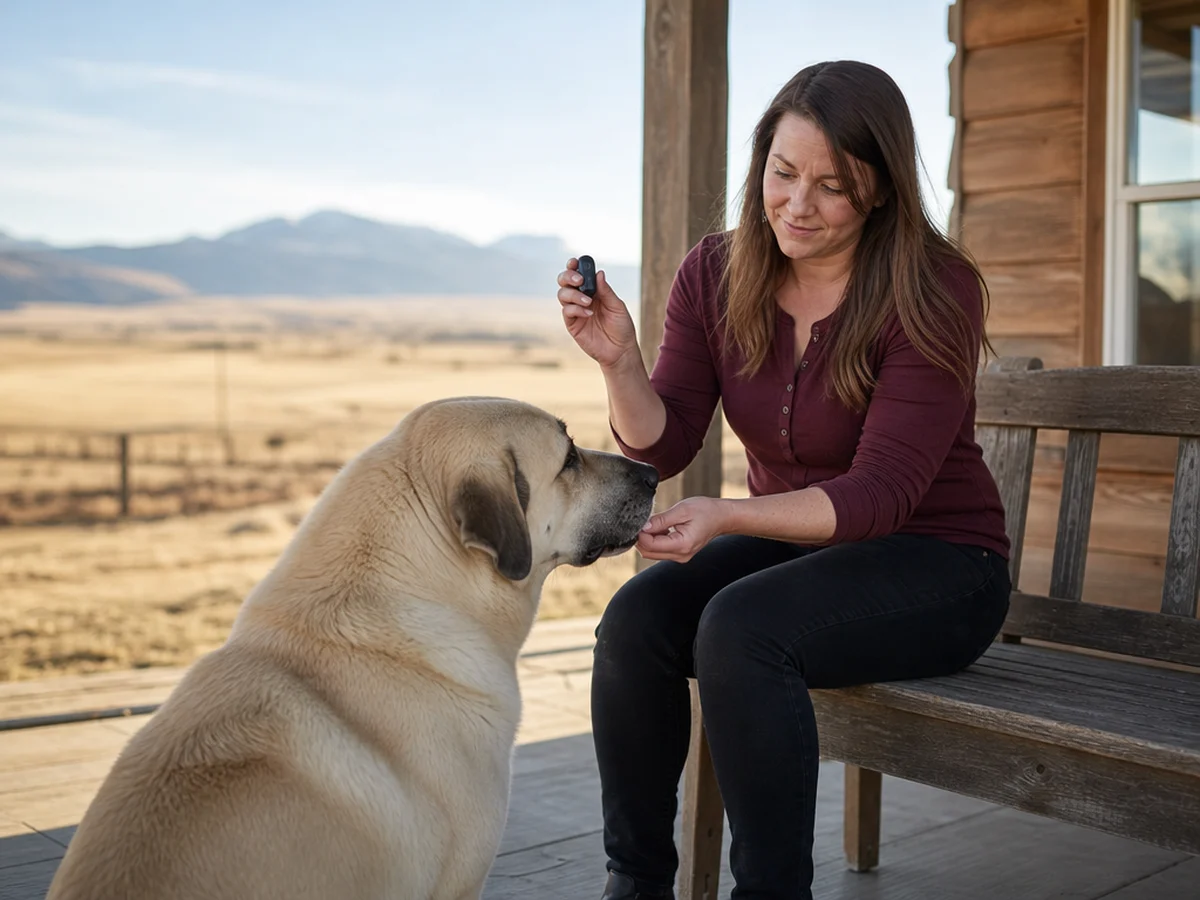
Choose a calm place and prepare small suitable rewards before the dog enters. The UKC Anatolian Shepherd standard describes the breed as naturally independent and intelligent, but those general traits do not change the marker sequence. This individual still needs a clear sound-and-reward association.
Use this general pairing method without asking for a new behavior. Prepare the reward first so nothing delays the consequence after the sound:
- Wait until the Anatolian Shepherd is comfortable in the quiet setup.
- Click once without pointing the device at the dog.
- Deliver the reward promptly after the sound.
- Pause before another brief pairing so each click remains distinct.
- Stop while the setup remains calm and predictable.
Move From Pairing to a Familiar Action
Once the dog expects a reward after the marker, use one response they already know in this setting. Give the familiar cue, click the exact completed movement and deliver the reward. Do not add a new skill while the handler is still learning where the marker belongs.
The Anatolian Shepherd training overview owns the broader cue plan. Clicker practice here owns only the marker mechanics. If the familiar response is unavailable, make the setup easier rather than clicking an approximation the handler did not intend to teach.
Separate Visible Food From Clicker Training
A visible food guide, the click and the delivered reward have different jobs. The AKC guidance on fading food lures supports moving from visible food to an empty-hand guide while producing the reward afterward. Fading the guide does not cancel payment after a click.
| Training Element | Its Job | What Happens Next |
|---|---|---|
| Visible food guide | Helps show a movement during an early teaching stage | Fade toward an empty hand as the movement becomes familiar |
| Click or verbal marker | Identifies the exact response that earned reinforcement | Follow every marker with its promised reward |
| Delivered reward | Reinforces the marked response | Produce it after the marker rather than displaying it throughout |
Keep handling practice on the Anatolian Shepherd handling page. A clicker can mark cooperation within an established plan, but this article does not turn marker mechanics into a grooming lesson.
Questions About Anatolian Shepherd Clicker Practice
Three practical gaps remain after the marker sequence is clear. These answers cover equipment position, marker choice and the lesson ending without repeating the pairing or lure method.
Where should the handler hold the clicker? Keep it at the handler's side in a comfortable hand rather than pointing it toward the dog. The position should allow a quiet, precise press without adding a large arm movement to the marked event.
Can a verbal marker replace the clicker? Yes. Use one short, consistent word that the dog can hear comfortably, then pair it with a reward just as carefully. Do not alternate several words during the same lesson and expect them to have an established meaning.
How should a clicker session end? Deliver the reward promised by the final click, use the household's clear finish word and put the equipment away. Ending after a completed reward keeps the last marker consistent and separates training from the dog's ordinary activity.
Carry Clicker Training Into One Known Lesson
Choose one familiar response in an easy setting, mark its exact completion and follow with the reward. Keep the clicker at the handler's side and preserve the dog's comfortable space. Clear timing in one known lesson is enough for the next step, and it does not certify reliable obedience or measure breed intelligence.
 Training basicsHow to Choose an Anatolian Shepherd Trainer
 Training basicsAre Anatolian Shepherds Good With Kids?
 Puppy trainingAnatolian Shepherd Puppy at 3 to 4 Months: Teething and Mouthing