
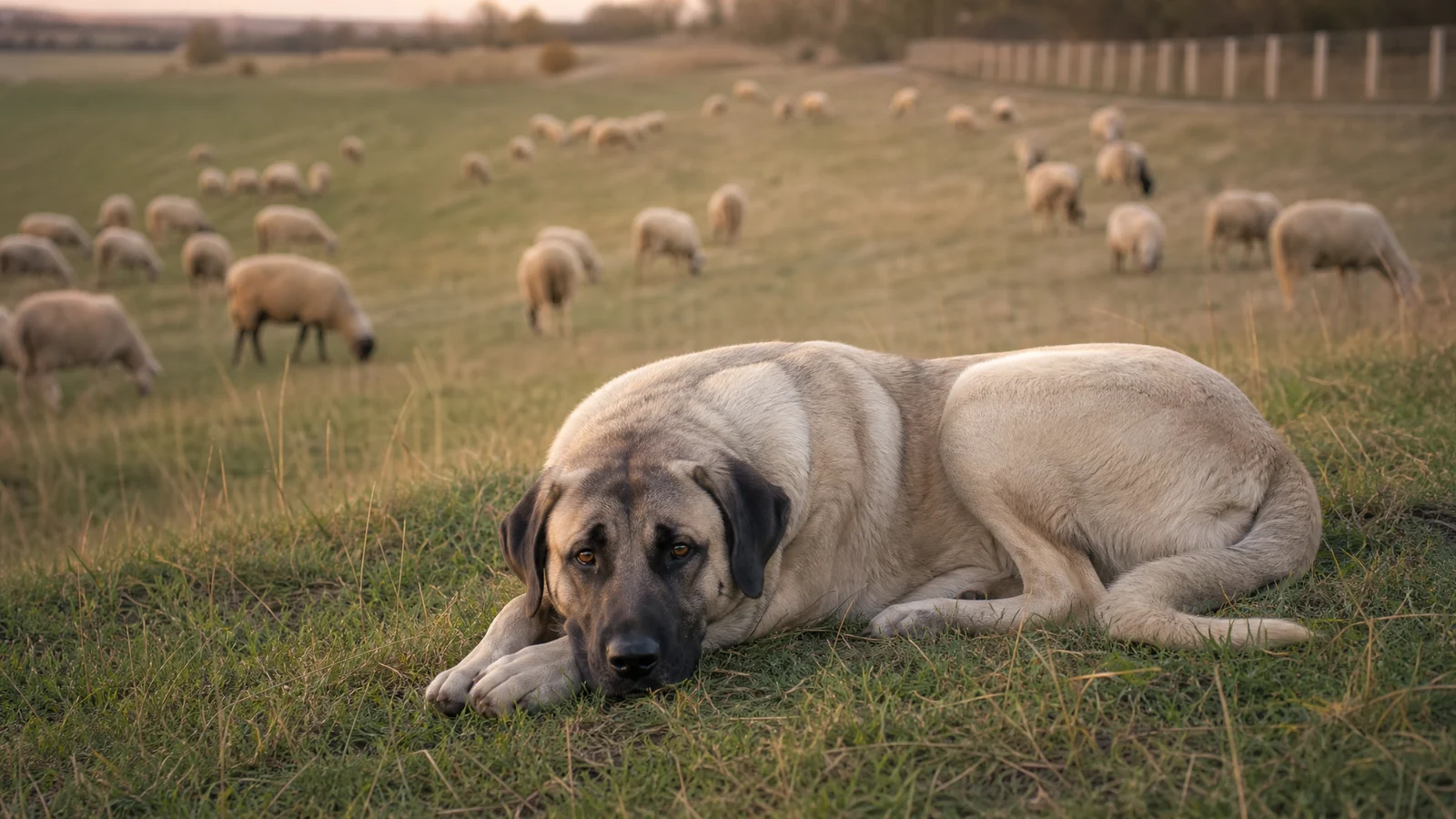
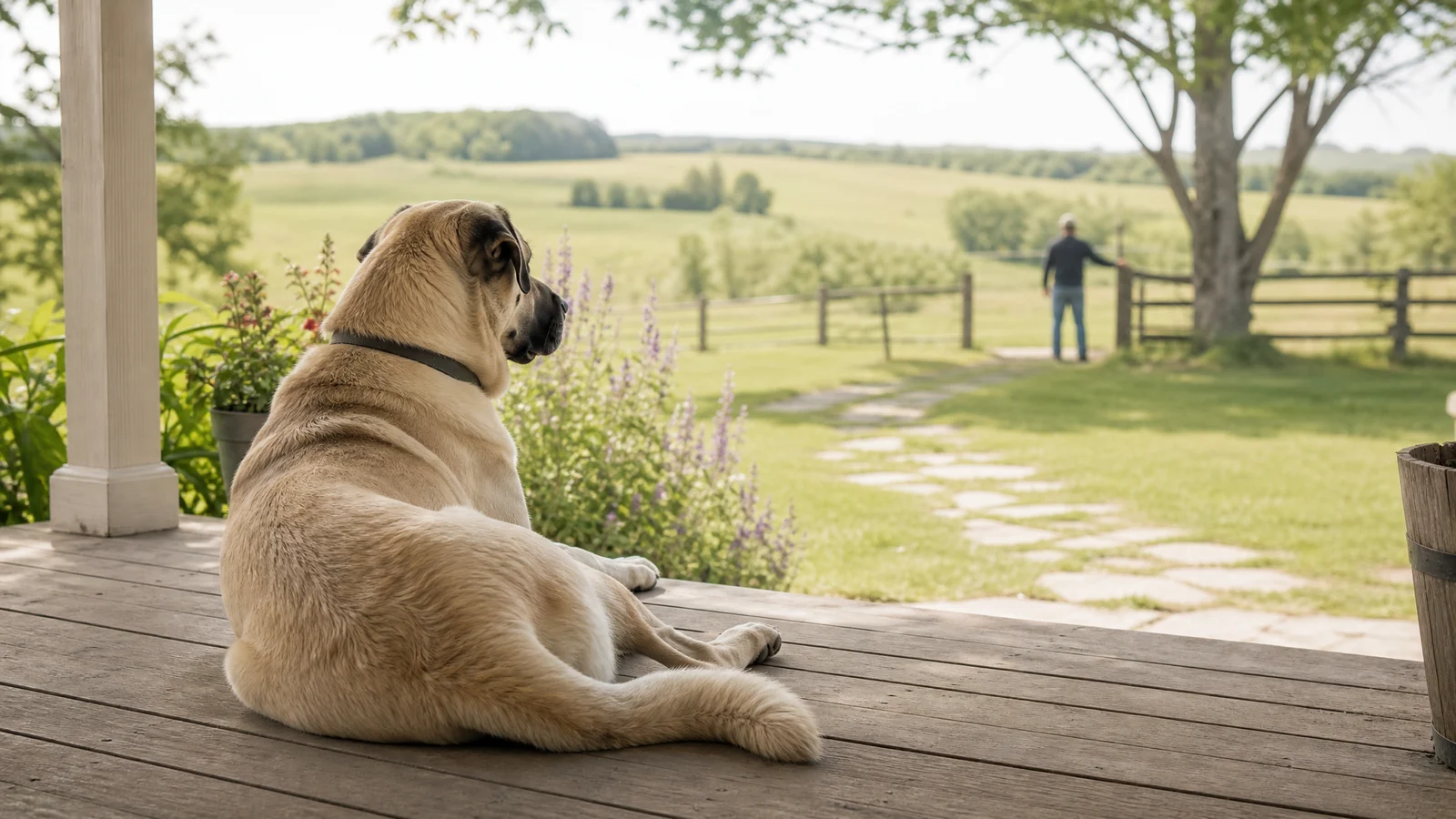
A large dog lies on a rise above the pasture, chin on paws, looking for all the world like they are napping in the sun. Along the far fence a coyote circles, stops, circles again, and finally trots off. The dog never stood up. That stillness was the work, and it is the most important thing to understand about an Anatolian Shepherd.
This guide covers guarding as this breed lives it, from the quiet presence that keeps predators away to how they pick a post, work the night shift, bond with stock, and settle into a house with no flock at all. Handled badly, a guardian turns bored and frustrated and invents jobs of their own. Handled well, you get a calm, watchful partner doing exactly what they were built to do.
Guarding Is Mostly Presence
The modern livestock guardian grew out of a practical question. In the 1970s the Endangered Species Act triggered a search for a way to control predators without killing them, and researchers found dogs like the Anatolian already guarding flocks for ranchers.
What they learned still shapes how we understand the breed: nearly always, the dogs' mere presence was enough to keep carnivores away, and actual battle was rarely required. Here is what that looks like day to day, and where the exceptions begin.
What Quiet Guarding Looks Like
Expect a dog who is calm and observant rather than busy. The breed standard describes a temperament that is alert and intelligent, bold but calm unless challenged. In practice that means long stretches on a high spot with the head up, slow walks along the fence line, and pauses to test the air at the corners. Great endurance and agility are in there, but they are held in reserve. A guardian who looks idle is usually taking in far more than you are.
Scent plays a big part too. A dog who patrols and marks the edges of their ground is advertising that the place is taken, and many intruders read the message and turn around long before anything needs to be settled.
When a Dog Escalates
These dogs were bred for millennia to exercise independent judgment in response to perceived danger, whether from four-legged or two-legged predators, and they will protect. Escalation tends to climb in steps: a fixed stare, a stiff stand, a deeper bark, then putting their body between the threat and whatever they guard.
You cannot see everything they perceive, so your job is to shape the setting so those judgment calls are rare. Secure fences, announced visitors and a predictable routine all help.
A dog who escalates at everything is telling you the setting is too busy for them. A sound guardian is confident, not frantic, and the breed standard disqualifies viciousness and extreme shyness for good reason.
Why Rehearsals Do Not Help
You do not need to teach guarding, and you cannot improve on it with practice runs. We have trained this breed for many years, and the lesson we keep returning to is that guarding arrives on its own schedule. What you add is calm. When your dog sounds an alert and then settles, mark the settling with a quiet word and a treat. That teaches them that handing the watch over to you pays well, without dulling the instinct.
The Anatolian Shepherd Picks a Guarding Post
Watch a working Anatolian for a day and you will see them make decisions: which rise to lie on, which corner to check first, which gap in the cover deserves a second look. That is the independence the breed was built around, and it is why many are still working ranch dogs protecting everything from sheep and goats to ostriches and llamas. You do not direct this dog's patrol. You manage the setting so their choices land somewhere safe.
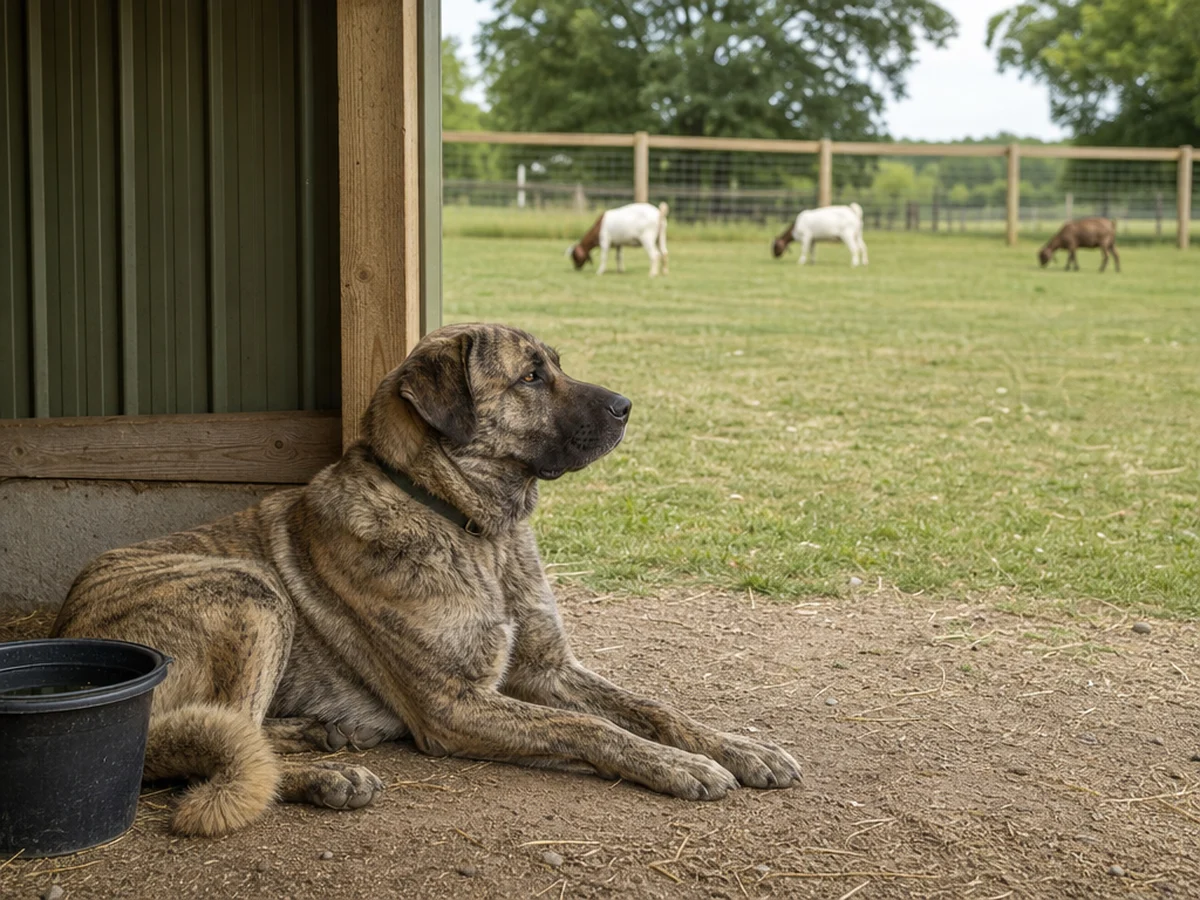
Observation Spots
Given the chance, your dog will claim a spot with a view of the boundary and the stock. A mound, a porch, the high side of a pasture or a corner beside the barn all work. Leave the choice to them and make sure each spot offers shade, water nearby and shelter from weather. If you block a favorite lookout with a pile of equipment, expect them to relocate somewhere you like less, such as the fence line nearest the road.
Spend a few mornings simply watching where they settle and which way their head points. Those habits tell you what they consider the weak points of your property, and they often show you a gate or a gap you had overlooked.
Territory Size
The breed is described as highly territorial and a natural guard, and the standard calls them a powerfully built livestock guarding dog capable of great speed, with size and stamina imperative. Put those together and you have a dog who will patrol every bit of ground they consider home. Their territory is whatever they come to treat as their own, so a strong fence defines it for them. Where the fence ends, their idea of home can quietly expand if you let it.
Night Is the Guarding Shift
Predators do not keep office hours, and neither does an Anatolian Shepherd. The breed was built to protect animals through the hours when people sleep, so the dog who dozes in the afternoon sun and prowls the fence at midnight is keeping a schedule that makes perfect sense. Expect them to be most watchful after dark, and expect them to tell you when something is out of the ordinary, because that report is a large part of what a guardian is for.
Barking at night is therefore information, not misbehavior. How you respond decides whether it stays useful or becomes a habit of alarm at every rustling leaf.
- Give your dog a sleeping place within sight of the boundary they patrol, with shelter and a comfortable bed, so the night shift does not mean wandering.
- When they sound an alert, walk out and look at what they are looking at, then thank them calmly and reward them when they settle.
- Let them rest by day, since a dog napping at noon is banking energy for the dark hours and is not being lazy.
- Tell your neighbors early that a guardian lives next door, so a nighttime bark brings a shrug and not a complaint.
Nights go worst when a dog is shut in with nothing to watch, or has a view of every passerby and no way to tell who matters. Match the dog's post to a quiet, meaningful boundary and the shift mostly takes care of itself.
If you live close to neighbors, a solid screen along the busiest stretch of fence cuts down on the endless parade of triggers. Fewer sights mean fewer alerts, and the alerts you do hear carry more meaning. Walking out to check each time, even briefly, also shows your dog that you take their reports seriously, which tends to make them calmer about handing the watch to you.
Guarding Stock Comes Before Strangers
A guardian's first loyalty is to the animals in their care, and the range is wide. Anatolians have guarded sheep, goats, horses, cattle, llamas, ostriches, chickens, ducks, pheasants and turkeys, and ranchers in Namibia are encouraged to use them to protect flocks as part of cheetah conservation. Dogs like these keep predators away, break up fights in young stock, and alert you when something is wrong. All of it depends on the bond forming first.
Set limits early and keep every introduction under close supervision. A playful puppy can be hard on chicks or lambs, so stop the play and give a calm time-out when things get rough. Reward the quiet, curious behavior you want to see more of.
- Start with a fence or pen between the puppy and the stock, so everyone can watch and sniff without contact.
- Pay with treats and a soft word for loose, curious body language, and end the session before excitement builds.
- Move to short, supervised time together only once the puppy is relaxed around the animals, and separate them at the first sign of rough play.
- Keep supervising for as long as it takes, and never leave a young dog alone with vulnerable stock until they have proven reliable.
Strangers come after that. The breed is wary of strangers when mature, and because Anatolians are instinctively protective, a puppy must be socialized. Early introductions to as many new experiences as possible help produce a secure, confident adult. Keep visitors boring, let the dog watch from a distance, and pay for calm. Never force a greeting.
An Anatolian Shepherd at Home
Without a flock, your family becomes the thing they watch over. At home the Anatolian is calm, friendly and affectionate with their immediate family, loyal and responsive without being animated.
Most Anatolian authorities agree they can be superb, deeply bonded companions with proper and consistent socialization, but they are not pets in the conventional sense. Some even make wonderful therapy dogs thanks to calm temperaments. The household version of guarding is real, and it needs good management. Expect a dog who patrols the yard, lingers by doors and windows, and settles near whoever seems most in need of watching.
Yard Limits
Fencing is the most important piece of equipment you will own. Choose something tall and strong, check it regularly, and keep gates latched, because a dog with this much size and stamina can turn a minor gap into a long walk. Visual barriers help if a busy sidewalk sets off constant alerts. Give the dog a high spot to rest on so they can survey the yard without pacing. Regular vet visits matter too, since a dog this size benefits from routine checkups.
Family Members
Teach children to leave the dog calm and unbothered, since animated responsiveness is not characteristic of the breed and overhandling is discouraged. Rough play and shrieking games may look like a threat to a guardian, so supervise them and keep it gentle.
The same goes for guarding food and treasured items. A growl is a warning, a plain request for space, so quietly step away and let your dog see they never need to escalate. Please do not make a habit of taking food away from a dog who guards, because it is unnecessary and can make guarding worse. Trade up with something better, and let meals happen in peace.
Let the Guardian Guard
Your role is to support and supervise the work, not to train it. A livestock guardian already knows how to watch, patrol and judge danger. What they need from you is a secure boundary, a stock bond built slowly, broad and calm socialization, a place to rest, and a person who rewards settling after an alert. Do those things and this breed becomes what they were always meant to be: a quiet presence that makes trouble think twice.
The questions owners ask next all lead back to that idea of presence, so here is where to look.
- If you are wondering about barking, remember that much of it is reporting, and the guide to Anatolian Shepherd behavior problems and their instincts helps you tell a useful alert from a stressed dog.
- If your dog roams, look first at a territory that has grown past the fence, because the answer is a stronger boundary and a better post, not more distance.
- For visitors, the aim is a dog who watches calmly and is never pushed, and socializing an Anatolian Shepherd with kids and strangers shows how.
- When you want to know what work suits them, see Anatolian Shepherd sports and jobs that fit, since the best outlets honor a presence-first dog.
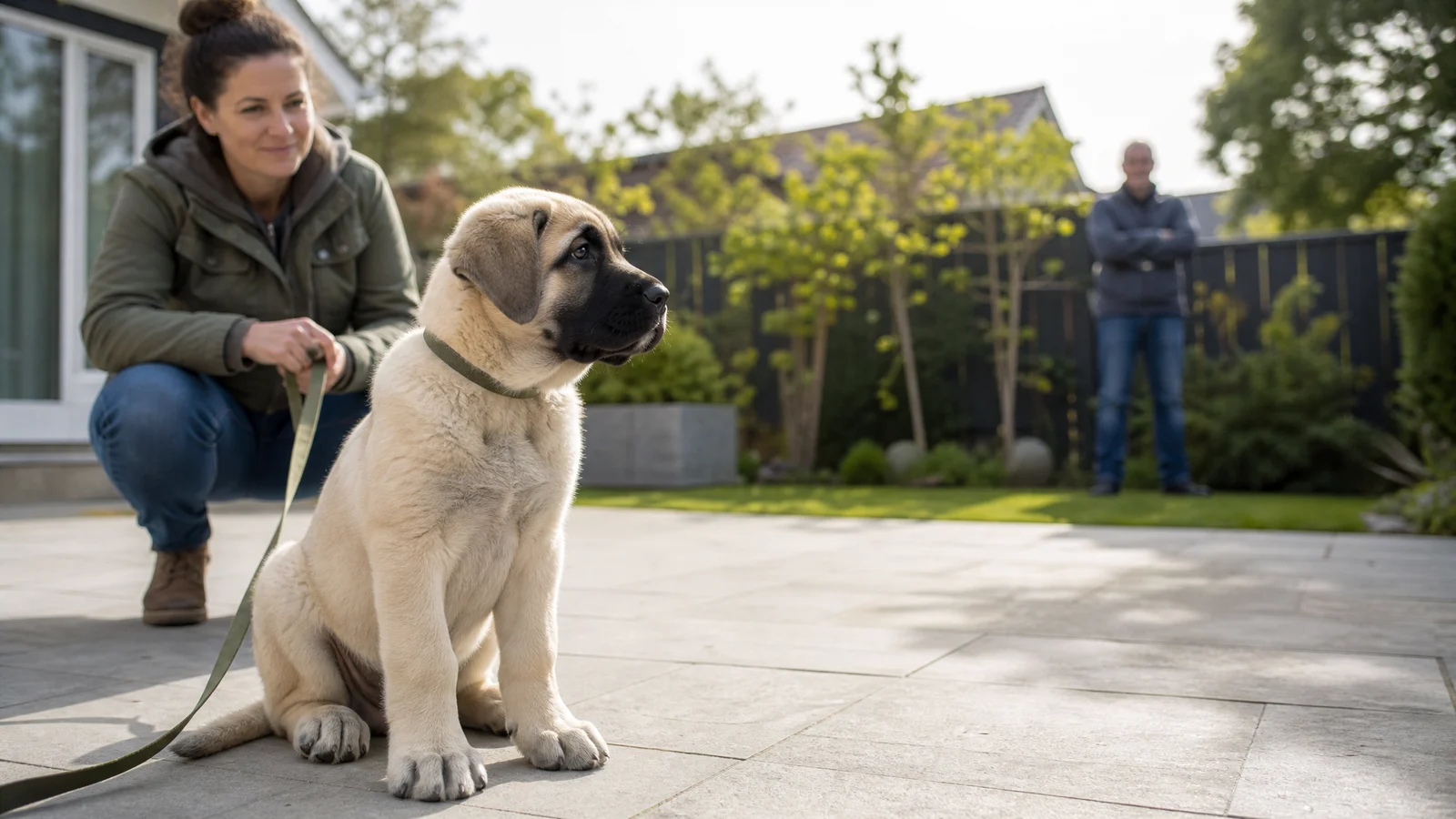 Puppy trainingSocializing an Anatolian Shepherd Puppy Before the Guardian Grows Up
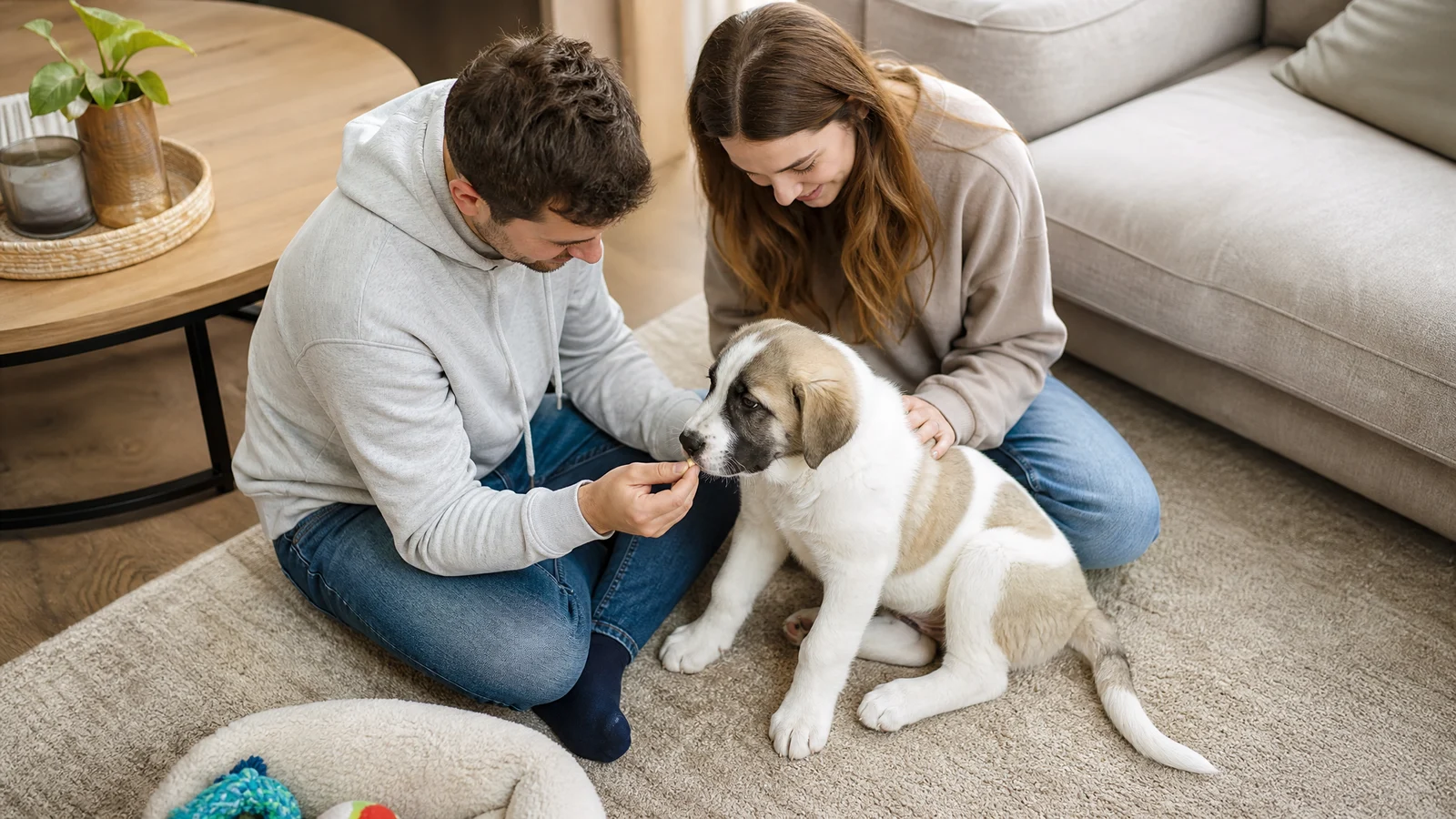 Puppy trainingAnatolian Shepherd Puppy Training Timeline: 8 Weeks to 2 Years
 Training basicsAre Anatolian Shepherds Easy to Train? Temperament Basics