
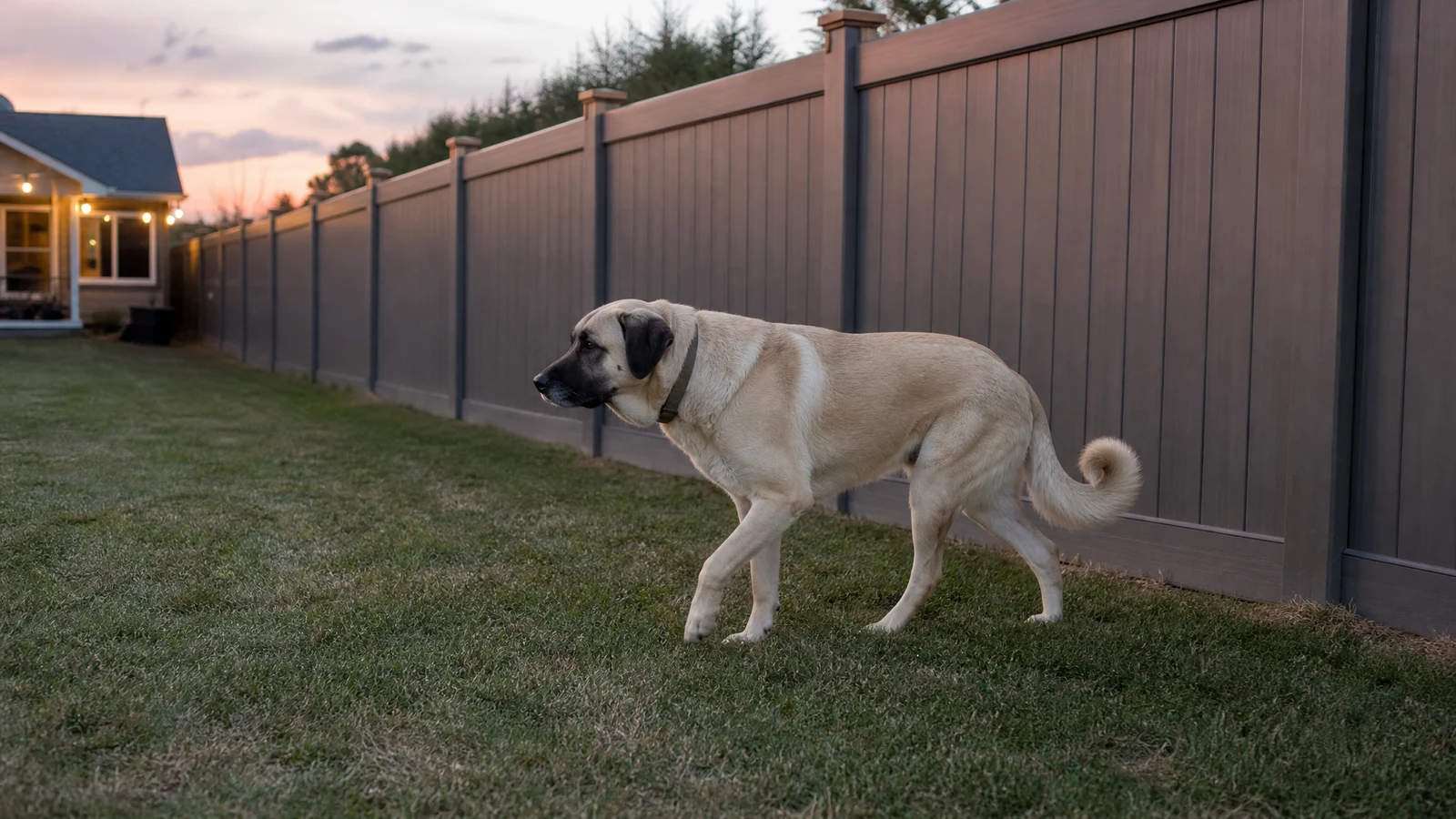
Ordinary dog advice says to tire the dog out, drill more obedience and proof the recall, and most problems fade. On an Anatolian Shepherd that advice misfires. They were bred to size up a situation and settle it alone, so a worn-out dog still walks the fence at midnight. The fix is managing the guardian's job, not winning a contest of wills.
Get this wrong and you own a dog who is a headache to neighbors, visitors and themselves. Get it right and you have a calm, watchful companion who is affectionate with the family. We have trained this breed for many years, and the patterns behind these problems trace back to the same guardian instinct.
We'll walk you through the instincts behind the classic guardian problems, then four everyday household situations: life in an apartment, toddlers and young kids, adding another dog, and hours alone while you work, and finally how the coming years tend to unfold.
Guardian Behavior Problems Explained
On a working ranch, an Anatolian looks like a dog doing nothing. They lie on a rise with their chin on their paws and their eyes moving while the stock grazes below, and nobody issues instructions because nobody is there. When something shows up, the dog reads it, decides and acts alone. That job description explains most of what the dog sprawled across your living room is doing.
The breed was bred for millennia to use independent judgment against perceived danger, whether it arrives on four legs or two. In the 1970s, a push to control predators without killing them led researchers to dogs like the Anatolian already guarding flocks. Most of the time their mere presence was enough, and actual battle was rare.
So the dog who watches, stands tall and makes noise is the design working. Your task is to set limits on where, when and how loudly the job gets done. Here are the four problems that come up most.
Barking Through the Night
The dog who erupts at a sound nobody else heard is running night patrol, and from their side the bark has a perfect record, because whatever was out there always left. Before you try to quiet them, work out what the barking is for. Alert, bored and lonely barking sound identical in the dark but need different fixes.
Alert barking at a real trigger is part of the breed, so aim to shorten it, not erase it. Thank them once, call them away from the window and pay for the quiet that follows. A dog who earns a treat for stopping learns that stopping is the profitable part.
Patrolling the Boundary
A worn path along the inside of the fence, the same loop every evening, is what patrol looks like when nobody interrupts it. More exercise does not switch the instinct off. It only changes how tired they are while doing it. The risky version is leaving the property, because a guardian who decides the territory is bigger than your lot will act on that belief.
Make the fence your first answer and recall a distant second. Then give the dog a post that is not the gate, such as a raised spot inside the fence with a view. If boundary excitement spills onto walks, our guide to Anatolian Shepherd leash training for pulling and lunging covers it.
Suspicion of Visitors
A guest walks in and the dog plants themselves between you and the door, stiff, staring and in no hurry to be won over. That is a guardian sorting friend from threat, and the breed standard accepts reserve around strangers. Because the breed tends to be wary and instinctively protective, a puppy must be socialized, so the adult can tell ordinary from alarming.
Socialization will not make them love strangers, and you shouldn't make that the goal. Aim for a dog who sees a visitor and settles, with no blocking, lunging or shadowing you. Start early and broad, as in our guide to socializing an Anatolian puppy.
Ignoring Cues and Deciding Alone
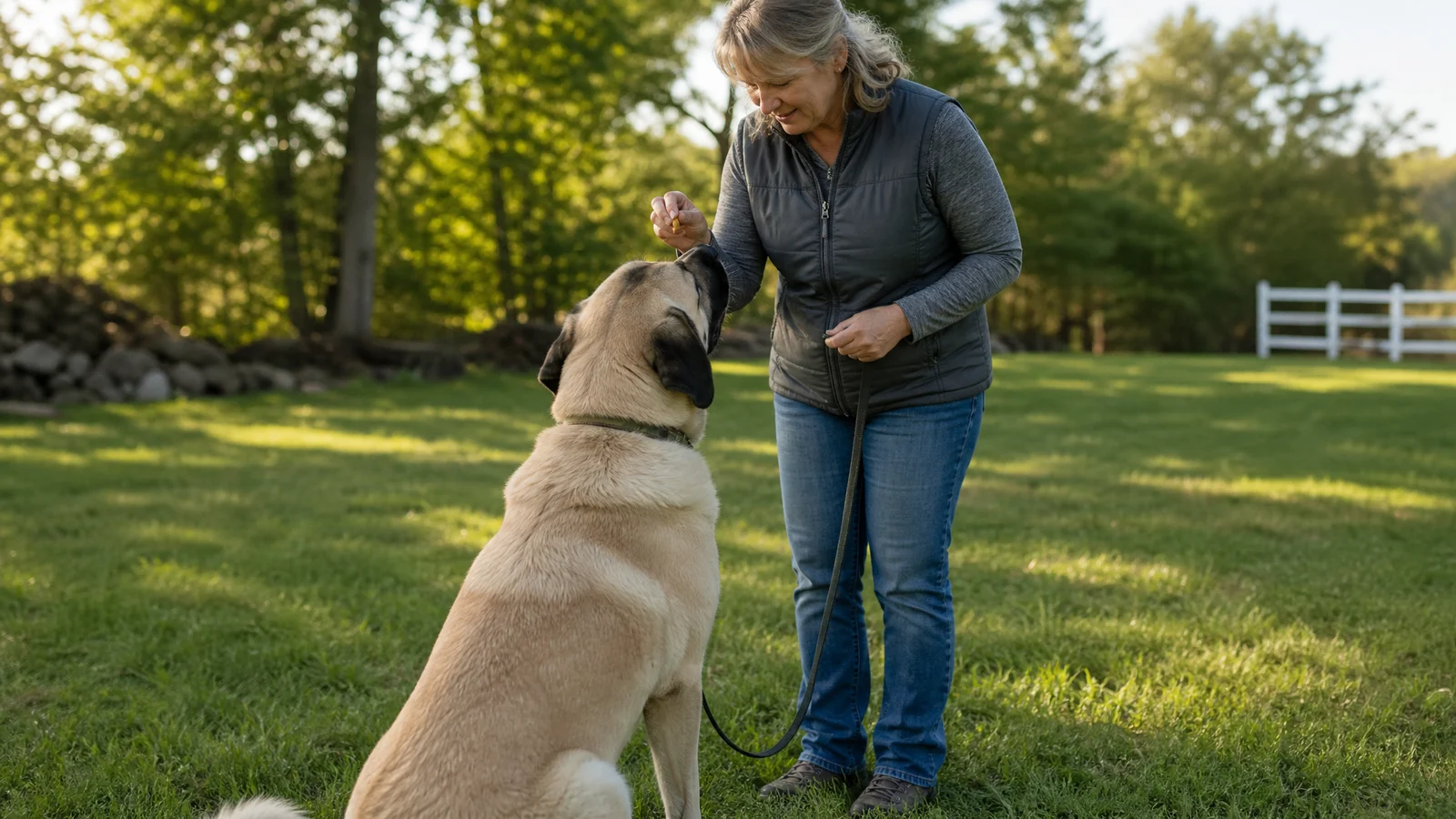
You ask for a sit, they look at you, consider the proposal, then go back to watching the road. That is selection, not spite. The breed works independently and makes its own decisions, so obedience training is a must and answering commands can still be a challenge. A cue that competes with movement past the fence loses unless you make it the best offer on the table.
Mark the right response with a word, pay well, then ask once and wait instead of repeating yourself into background noise. Our complete Anatolian Shepherd training guide covers the foundation cues in order.
Apartment Barking Behavior Problems
The elevator dings, a neighbor's keys jangle outside the door, and the dog answers each one with a bark that travels straight through the drywall. In an apartment, an Anatolian hears a steady stream of unconfirmed intruders and has nowhere to patrol, so the alarm has to go somewhere. It is also your neighbors' evening, which raises the stakes.
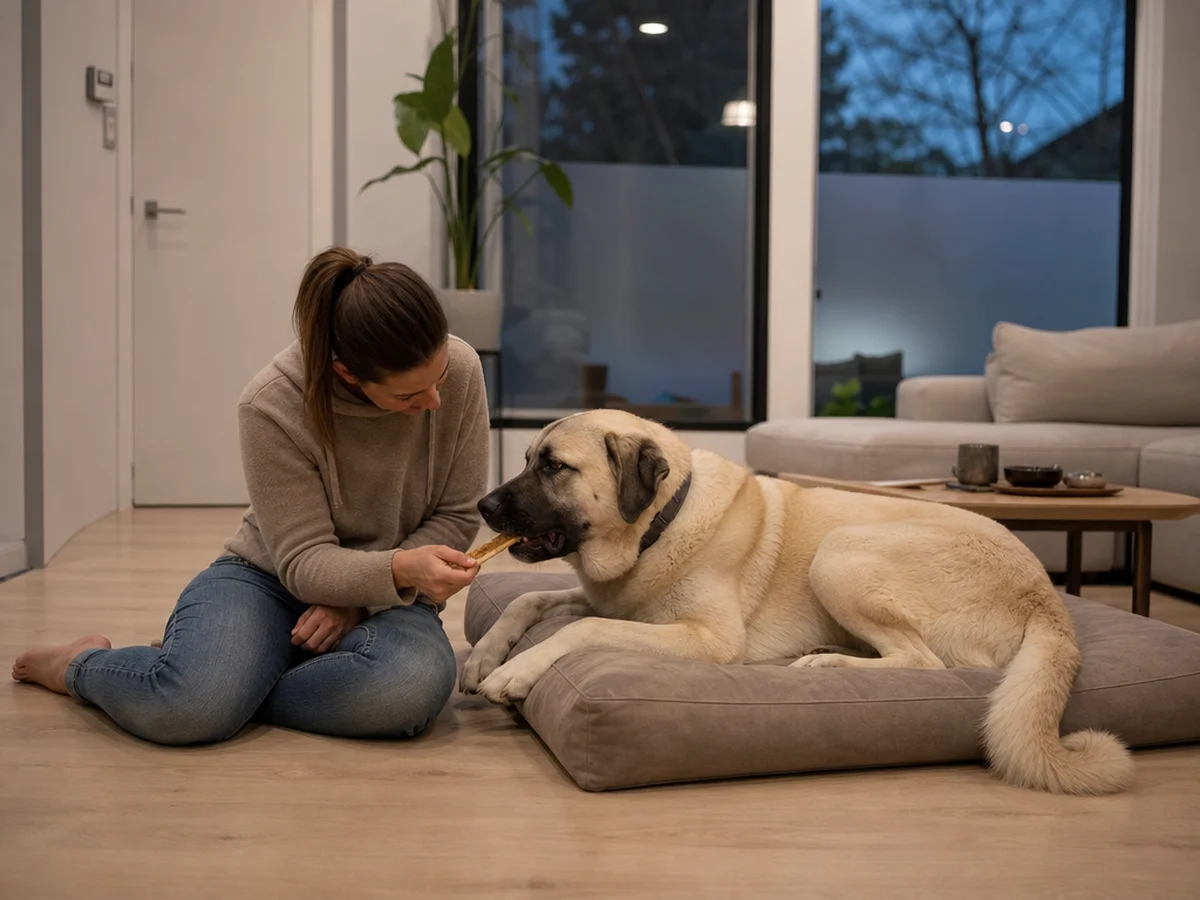
Change the space and the routine and the volume drops, though a guardian will still announce the occasional visitor. Expect a shorter announcement, not silence.
Night Alerting
After lights-out the building gets quiet, which makes every thump in the stairwell sound important. Move the bed away from the front door and shared walls, run white noise, and block the lower part of any window with a view. Build a bedtime routine around a chew and a settled spot, and reward quiet even when it lasts only a minute.
With a new puppy, comfort is fine. Comforting an upset puppy is not spoiling them, since ignoring distress can leave a young dog feeling isolated and more frightened.
Daytime Hallway Sounds
Daytime barking is a repetition problem. Every time a door bangs, the dog barks and the sound goes away, so the bark gets credit for the win. Break the pattern by paying a treat the moment you hear the noise, before the barking starts, then sending the dog to a mat set well back from the door.
Over time the hallway noise predicts a snack instead of an emergency. Keep their lookout spot away from the entry and give them something to do while you are home, such as a stuffed chew.
Anatolian Shepherd With Young Kids
Kids shriek, sprint and tumble into a pile, and the dog stands up and walks toward the noise, stiff and serious. They aren't plotting anything. They are working out whether the noise is play or an emergency, and a guardian bred to decide alone will sometimes decide wrong.
The breed is calm, friendly and affectionate with the immediate family, which includes your children on a good day. Trouble starts with visiting friends, who count as strangers, arrive in a rush and play at a volume that sounds like trouble. Expect a watchful dog who positions between your kids and the newcomers. Set the house up so supervision is easy:
- Keep the dog behind a gate or in another room with a chew when play dates begin, and bring them in once the noise has settled.
- Give the dog a bed or mat that children never approach, so they always have a place to retreat.
- Teach the kids no hugging, climbing on or chasing the dog, as a general safety rule for any large dog.
- Keep an adult in the room whenever dog and kids share space, including your own kids.
- Pay the dog for staying relaxed while children play at a distance.
Loud, fast games call for extra care, since a guardian can read that kind of play as a threat to their family. To go deeper on introductions, read about socializing an Anatolian Shepherd with kids, dogs and strangers.
Two-Dog Home Behavior Problems
One good chew, one bed in the sunny spot and two dogs who both noticed: that is how most tension starts, with no drama beyond a stare and a stiff-legged walk. Resource tension and boundary tension are the two flavors, and a guardian tends to take both seriously. Dogs vary, but plan for it.
Management does most of the work. Feed in separate rooms, pick up high-value chews when you are done, don't leave toys scattered across the floor and provide more than one bed. Doorways and hallways are boundaries too, so don't let two dogs squeeze through at once.
Who Patrols and Who Follows
A second dog may join the fence run, and the barking can double. An Anatolian who decides something is worth investigating may set off the other dog, so keep an eye on whether one dog is making the call and the other is amplifying it.
Train them apart at first. Reward the follower for coming away from the fence, reward the Anatolian for settling, then bring them back together for short, calm sessions.
When to Separate
Freezing, a hard stare, a stiff walk or a growl over a spot are your cues to step in. Do it calmly with a gate, hand each dog a chew in a different room and let everyone cool off. A quiet separation does the job without a lecture.
A sudden change in how the dogs get along deserves a call to your veterinarian. Dogs in pain may expect even a loved person's touch to hurt and respond defensively, and the same goes for a housemate who bumps into them. If the tension keeps returning, bring in a reward-based trainer.
An Anatolian Shepherd Home Alone
The car pulls out, the house goes quiet, and the dog spends the workday with the fence, the street and their own judgment for company. For a dog bred to work unsupervised, that is not an alien setup. It is also the setup that lets small habits grow into big ones with nobody there to interrupt them.
The question is not whether they can be alone but what they will do with the job while you are gone.
The Unsupervised Yard
Leaving the dog in the yard all day gives them hours to patrol, bark at every passerby and test the fence for weak spots. A gap that works once becomes a habit within days.
Check the fence line often, remove anything climbable, keep water and shade available and give them a lookout that does not face the sidewalk. Better still, keep them inside for part of the day, where they cannot rehearse the whole routine.
Boredom Versus Guarding
Guarding barking is aimed at something, usually a person or animal, and comes with a fixed posture and a hard stare. Boredom shows up as digging, chewing, pacing and endless random barking.
Boredom responds to brain work, and scent games and puzzle feeders are good choices. Guarding barking needs something different: a smaller view of the street, not more toys.
A Workable Daily Routine
A routine does not need to be elaborate, only predictable. A dog who knows what the day looks like worries less about managing it alone.
- Start with exercise and a few minutes of cue practice before you leave, using ideas from our guide to Anatolian Shepherd exercise and brain games.
- Scatter part of their meal or fill a puzzle feeder so the first hour alone has something to do.
- Leave them in a space with a bed and a view away from the street.
- If you can, arrange a midday visit from a neighbor or walker so the day has a break in it.
- Greet them calmly when you return and finish with an evening walk on leash.
Behavior Problems Over the Years
Years from now, the evening patrol will be as predictable as the weather report. They walk the fence, bark once at the same gate, check the road and lie down. That is what success looks like with this breed. The instinct never leaves, but the problems settle into routines you can plan around.
Some things soften. A dog who has learned what normal looks like in your neighborhood spends less energy on false alarms, and an adult with solid groundwork can be remarkably steady. Some Anatolians even make wonderful therapy dogs because of their calm temperaments.
Other things stay for life, including independence, territorial watchfulness and wariness of strangers once the dog is mature. Keep socializing and training through the teenage months and beyond, and keep regular vet visits so a medical issue doesn't pass as a behavior issue.
These problems are managed, not cured. This is a working guardian and not an easygoing house pet, and no program will change that. Give them a solid fence, boring routines, clear structure and rewards for the calm choices, and the problems shrink while the dog stays exactly who they are. If aggression ever appears, call a reward-based trainer or a veterinary behaviorist early.
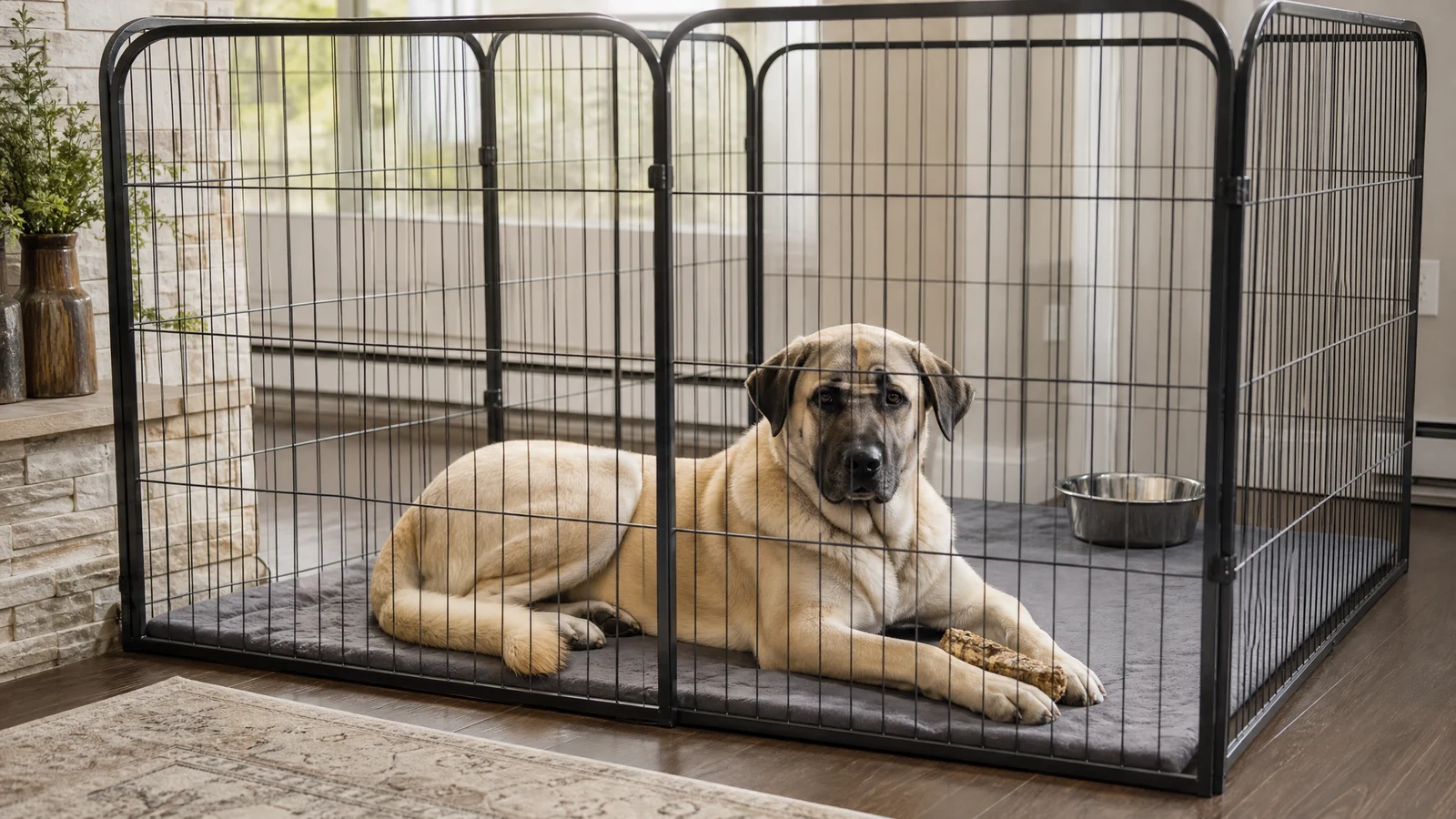 Training basicsCrate Training an Anatolian Shepherd and Preventing Separation Anxiety
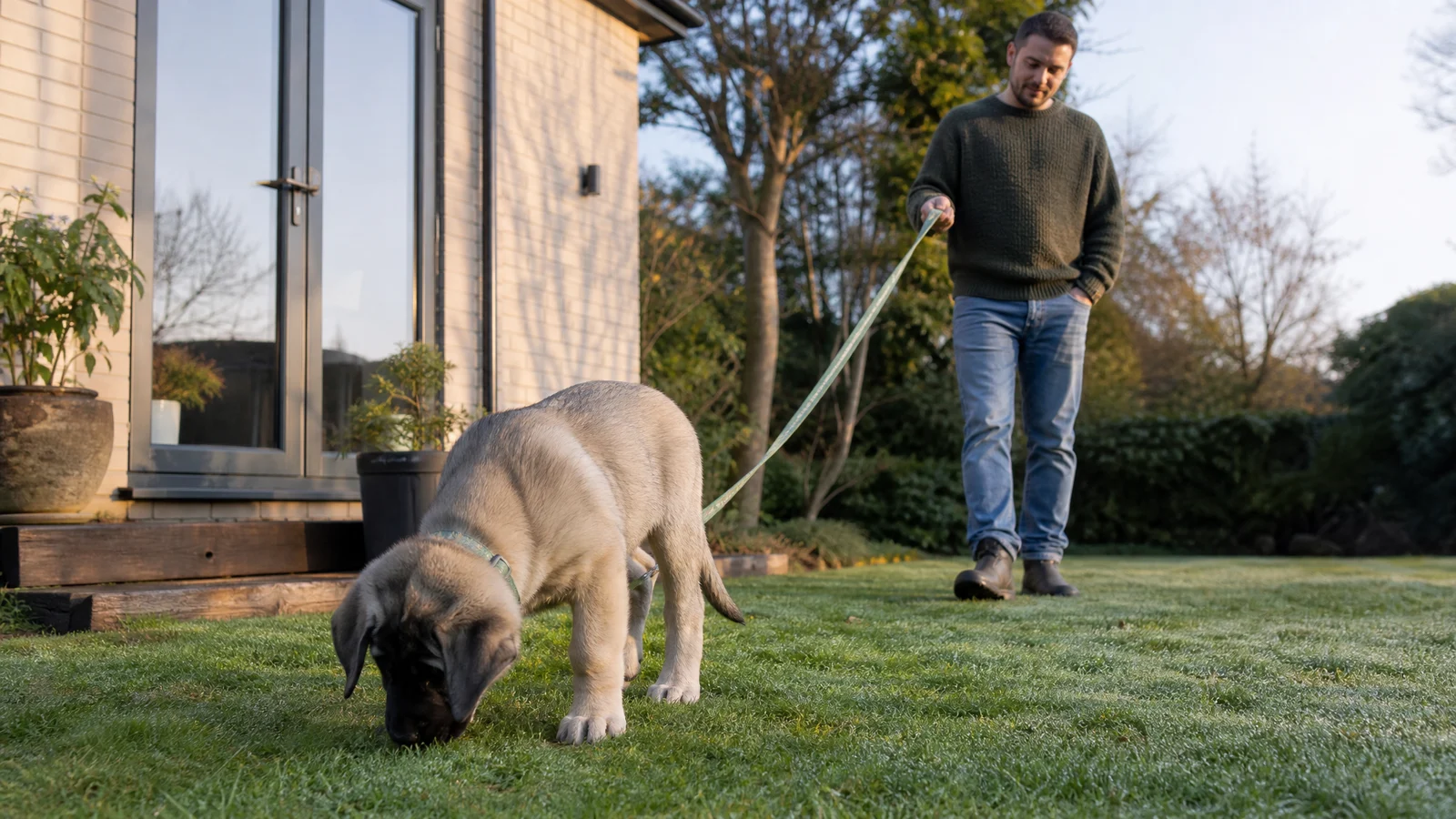 Training basicsHow to Potty Train an Anatolian Shepherd Puppy
 Training basicsHow to Train an Anatolian Shepherd: The Complete Guide