
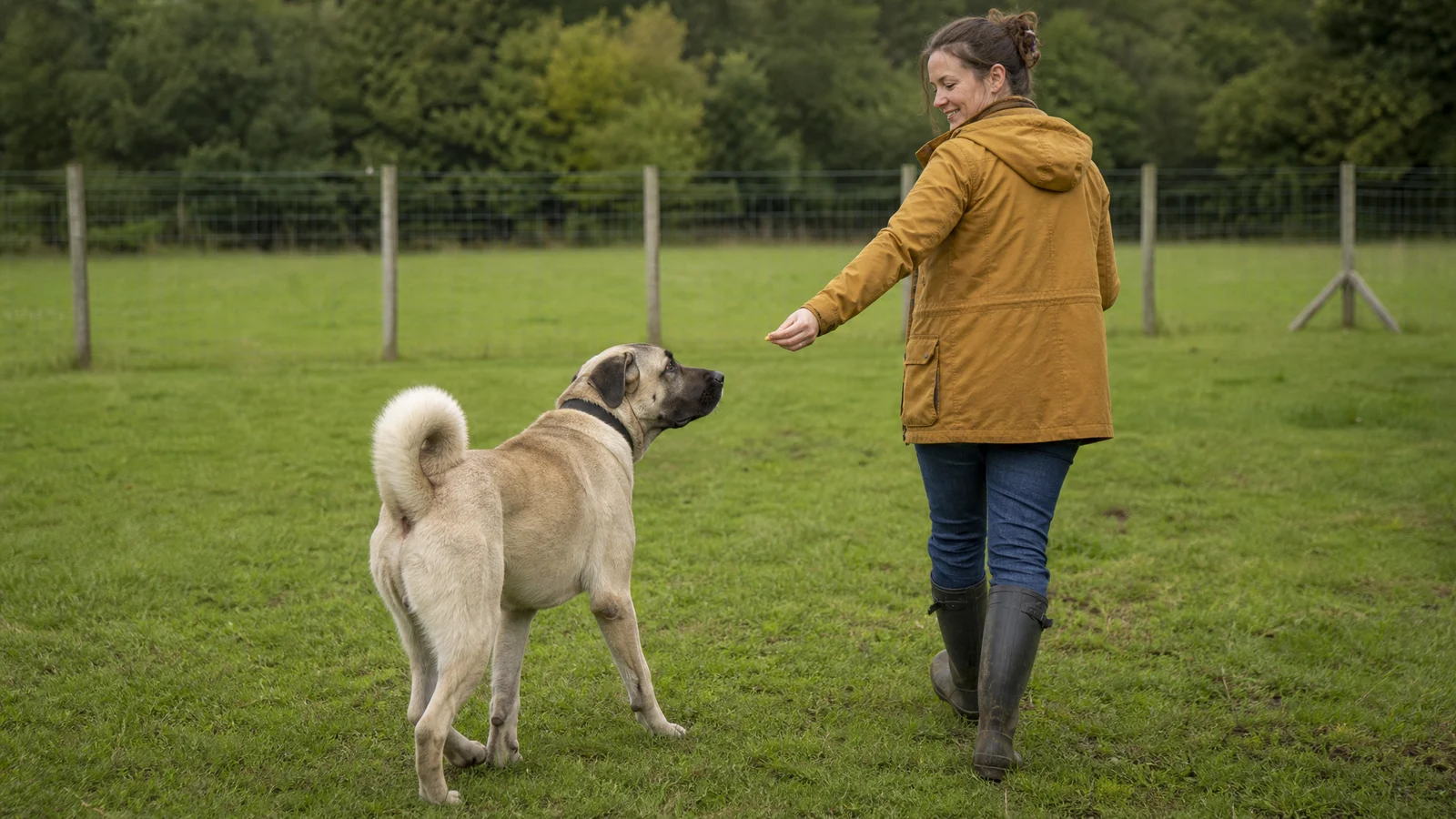
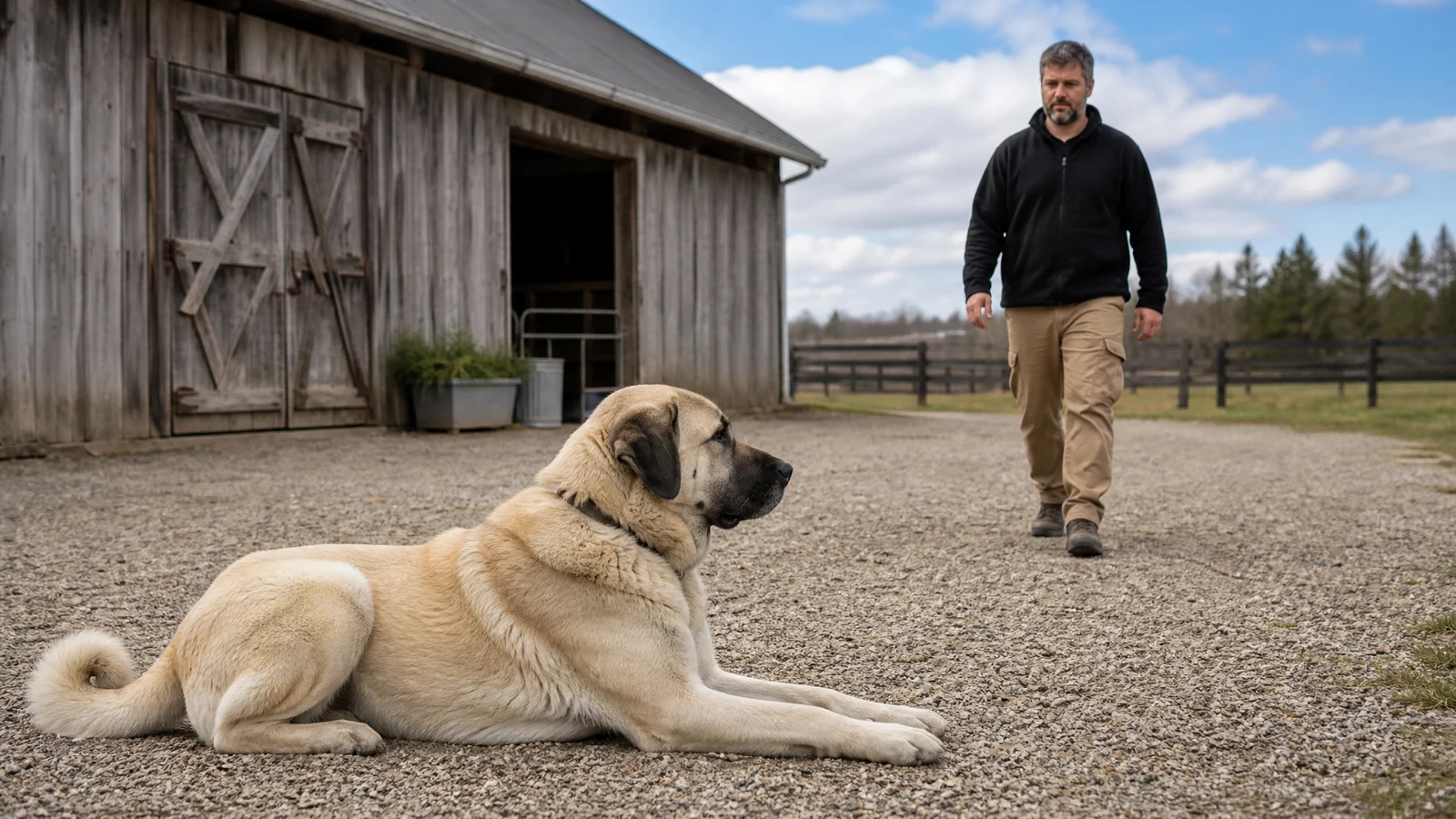
From puppyhood to full maturity, an Anatolian Shepherd's off-leash freedom changes shape several times, and at most of those stages the honest answer is less freedom than you hoped.
These dogs were bred for millennia to exercise independent judgment when they sense danger, so a weak recall is a trait to plan around, not a flaw to fix. Our work with this breed's behavior and training goes back many years, and the better plan is to stop chasing a perfect come when called and build a dog who keeps choosing to check in.
Below, you'll find a setup for the days before your puppy arrives, the daily routine for the first weeks, a look at what a weak recall means at each age, and the places an adult can safely run. We finish with a starter plan of two weeks that you can begin this evening.
Before Your Anatolian Shepherd Puppy Comes Home
The easiest time to build a habit is before the puppy has any opinions about the yard, so the first job is to get the space and the rules ready. A secure fenced area comes first, because everything else here depends on having a place where a wandering guardian cannot get into trouble. Our article on fencing, roaming and digging covers what a fence has to withstand with this breed.
Next, gather the supplies so a reward is always within reach, and agree on the rules with everyone in the house. A habit built by one person and ignored by another stays weak, because the puppy learns that checking in only pays off sometimes and with certain people.
- Buy a well-fitted harness and a light long line, and let the puppy drag the line indoors under your eye until it feels like nothing at all.
- Keep a treat pouch or a small container of soft treats by every door, so a reward is never more than a step away.
- Choose one marker word, such as yes, and make sure every person says it at the instant the puppy looks back at them.
- Decide what counts as a check-in: any glance, head turn or step toward you that the puppy offers without being asked.
- Agree that nobody calls the puppy over to end the fun or to start something unpleasant, so coming close to you stays a good bet.
Rewarding Every Check-In to Offset Weak Recall
Watch a young puppy in the yard for a few minutes and you will see them lift their head, scan the fence line, and now and then glance back at you before returning to their sniffing. That glance is the whole habit in its smallest form, and most people let it pass without a word. In these first weeks your job is to notice it every time and pay for it.
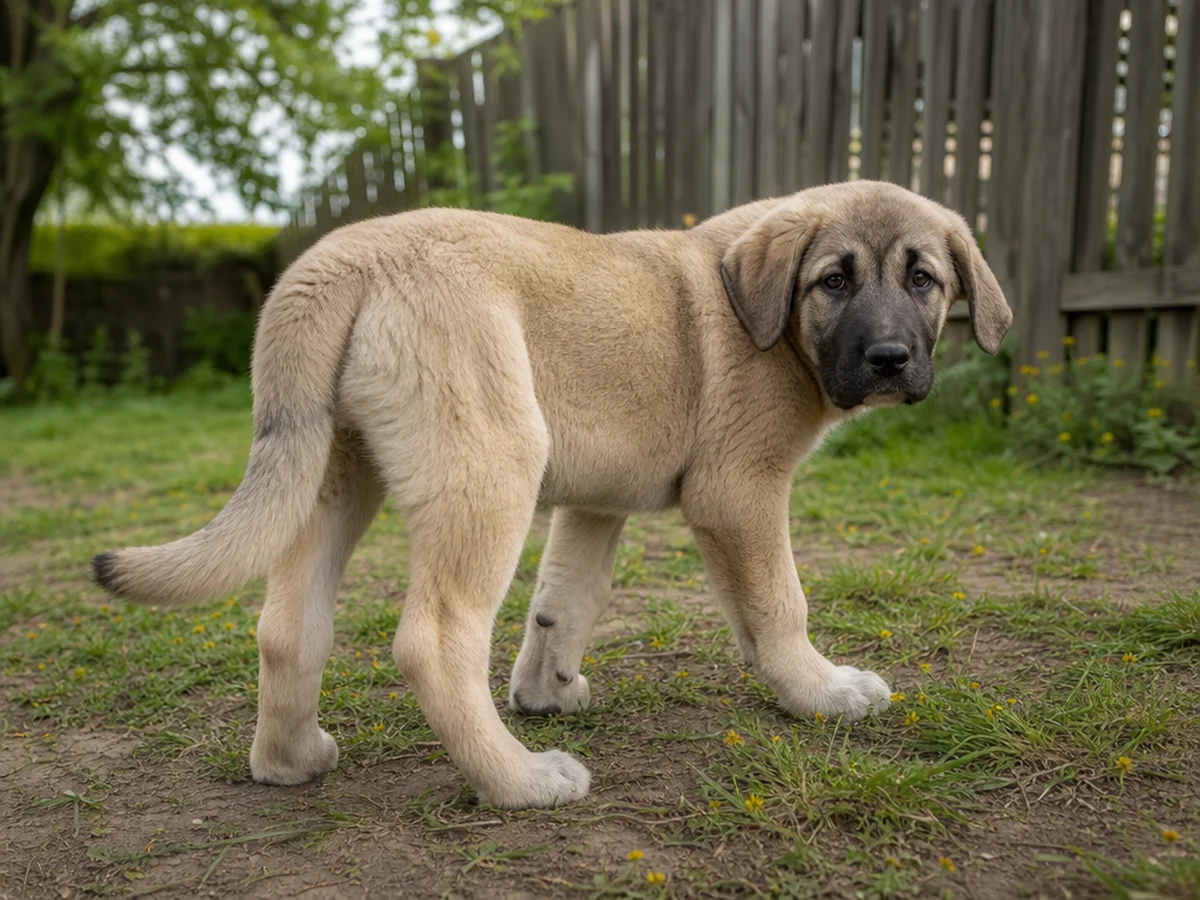
Begin indoors in a quiet room with no distractions, then move to the fenced yard once the puppy is doing well. Keep every session brief and end it while the puppy is still keen to continue.
- Stand or sit quietly and say nothing. Do not call the puppy's name or use a cue.
- The moment the puppy looks at you, say your marker word.
- Deliver a treat right at your leg or hand, so the reward happens beside you and not out in front of you.
- Release the puppy back to sniffing with a cheerful word. Going back to the yard is itself a reward, and the puppy learns that checking in never ends the fun.
- Once glances are frequent, wait for a longer look, then for a step toward you, and pay for those instead.
Vary the rewards so the habit stays interesting. A treat is the workhorse, but a quick game, praise, or opening the door to the yard also count as pay. Never grab the puppy's collar after a check-in, since that turns a good choice into a bad deal.
Is Weak Recall Normal in Anatolian Shepherd Puppies?
A puppy hears their name, turns toward you, studies you for a moment, and then goes back to what they were doing. Owners of other breeds read that as disobedience, but in this breed it is closer to a decision being made. Separating normal independence from a real problem keeps you from either worrying too much or ignoring something that needs help.
What Is Typical
Slower responses than you would see in other breeds are expected. The AKC notes that the breed was bred to work independently and make decisions alone, so training them to respond to commands can be a challenge, yet obedience work is still a must. Expect to repeat rewarded practice many times, and expect the dog to weigh your request against whatever else is going on.
Pausing to scan the surroundings before coming, drifting off at the end of a long line, and favoring a good sniff over a treat are all ordinary at this stage. A dog who looks at you on their own is already doing the harder part, even if they do not trot over on request.
When to Ask for Help
Ask a qualified trainer or behaviorist for help when practice stops moving forward over several weeks, when the puppy seems unable to take food in quiet places, or when they stiffen and fixate on people or animals beyond the fence instead of glancing back at you. Mention any sudden change in how they respond to you at your next regular vet visit, so everyday causes can be ruled out. Early help is far cheaper than repairing a pattern that has set.
The First Year and Weak Recall That Slips
As the puppy moves into adolescence, the dog who checked in so sweetly may start looking at the horizon instead. They are not forgetting what you taught. Growing confidence and a stronger pull toward patrolling make the world more interesting than your pocket, and the check-ins that came so easily start to fade.
Keep the long line on for every outing in this stretch, because it lets you practice without letting the habit of ignoring you build. Slow your pace and raise your pay when the dog is distracted, rewarding a glance with something better than the usual treat. Move rewards from constant to occasional only after check-ins are steady in a given place.
Walking on a line also teaches you patience, and training a dog not to pull can be a very long process, so treat a loose line as a goal you reward moment by moment. A dog who already knows how to settle is easier here, which is why teaching an off switch pairs well with check-in practice.
When Can an Adult Anatolian Shepherd Go Off Leash?
The honest answer depends on three things working together: how old the dog is, how well the check-in habit has been proven, and what the ground around them looks like. Miss any one and the answer stays no, however sweet the dog is at home.
Age
Treat adolescence as off limits for any unfenced freedom. Many dogs do not feel dependable until they are fully mature, and the breed standard describes a mature dog as wary of strangers, which is the reason maturity matters so much here. Until then, the long line and the fenced space are your off leash.
Proven Habit
Proven means the dog has checked in without being asked, many times, in several different places, for weeks at a stretch. Test it on the long line first. If your dog rarely looks back, or you are calling and hoping, the habit is not ready, and the line stays on.
Terrain
Even a great habit can fail where the terrain works against it. A guardian who sees something worth investigating may simply go, and judging the risk is their job, not yours. Choose ground where a long wander cannot reach a road, a neighbor's animals or strangers, and treat any place you cannot see across as a leash place.
Safe Off-Leash Places for an Anatolian Shepherd
The best off-leash place for an adult Anatolian Shepherd is usually dull to look at: an enclosed field with a sturdy fence, no gaps, and nobody else in it. A dog with a wandering instinct does not need a wild landscape, only a big, secure one where their patrol can happen without consequences.
Good options are enclosed fields, a large fenced yard, and private land with fencing you have checked yourself. Walk the perimeter first, look for spots to dig under or climb, and keep gates latched. Our guide to rewarding quiet helps if the dog patrols the fence and barks at passersby.
These settings stay on leash or on the long line for this breed. The risk is too high for an unprotected test:
- Anywhere near a road, since a dog who investigates a distant movement may not weigh traffic the way you do.
- Dog parks and crowded trails, where a protective, territorial dog meets unfamiliar people and dogs and has to decide alone what to do.
- Open land with no fence, however remote it feels, because wandering is exactly what this breed does best.
- Areas with livestock or wildlife nearby, where the dog's drive to patrol and protect can lead them away from you.
- Any new place, until the dog has checked in there reliably on the line.
Why Check-Ins Beat Fixing Weak Recall
A flawless come when called asks a dog bred for independent judgment to drop that judgment on command, and that is the one thing this breed was built not to do. A check-in habit works with them instead. A dog who looks back every few moments stays connected to you even when they are across a field, and you will see the glance long before you need a recall.
The plan below gives you two weeks of short daily sessions. Keep each one to a few minutes, and carry your best treats.
- Days one and two: practice in the house and in the fenced yard, marking and paying for every glance.
- Days three and four: wait for longer looks and for steps toward you, still inside the fence.
- Days five and six: add the long line in the yard, letting it trail, and reward check-ins at the end of its length.
- Day seven: rest day. Offer easy rewards in the yard and no formal practice.
- Days eight and nine: take the long line to a quiet spot you know, with no one else around, and pay every glance.
- Days ten and eleven: let the dog explore the full length of the line, rewarding each time they turn back on their own.
- Days twelve and thirteen: visit a quiet, enclosed field with the line attached and repeat, adding a little more distance.
- Day fourteen: review. Note how often the dog checked in, and repeat the weeks that felt hardest before you add anything new.
The main point is that a guardian who wants to patrol will always wander a little, and your best protection is a habit of them returning on their own terms. Build it on the long line, protect it with fences, keep the leash on wherever the stakes are high, and the day will come when they look back at you across a field because it is simply what they do.
 CareAnatolian Shepherd Shedding, Coat Blowing and Handling
 BehaviorAnatolian Shepherd Leash Reactivity: What Helps
 Training basicsHow to Teach an Anatolian Shepherd to Stay