
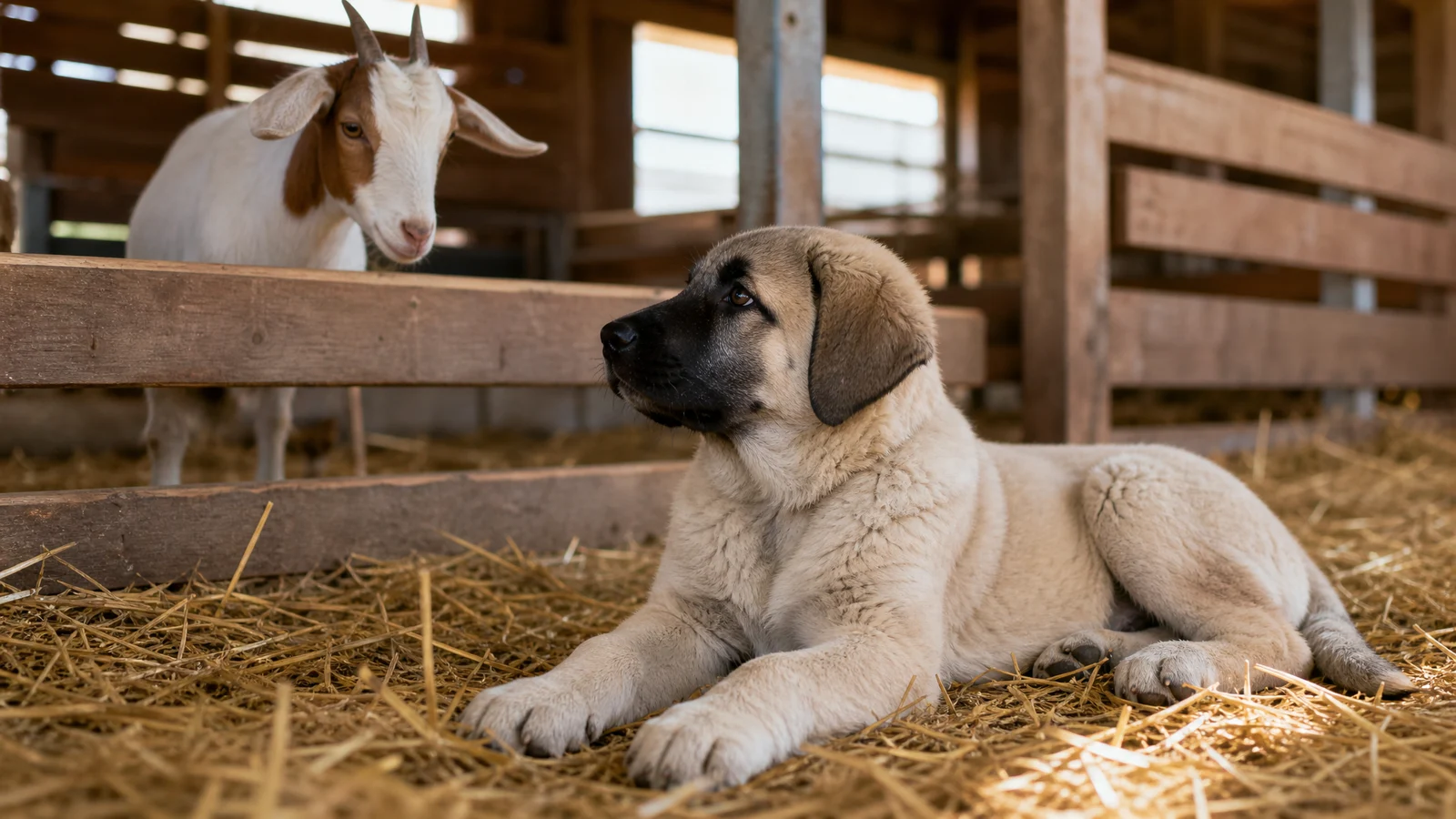
An Anatolian Shepherd puppy at 8 to 12 weeks needs a predictable home routine, rewarding learning opportunities and introductions they can comfortably leave. The first month gives the household a chance to make those experiences familiar. It does not require a polished set of commands, and a puppy who pauses during a lesson has not revealed their adult temperament.
Start by making a small exchange with a person easy to understand. Then arrange visitors and everyday care so neither becomes another demand on the puppy. In this guide, we separate general puppy development from Anatolian breed descriptions, explain a simple teaching sequence and bring the pieces together in an agreement the household can actually follow. A shared approach matters more here than an ambitious list of things to finish before the next birthday.
The Anatolian Shepherd Puppy’s First Month Is Not an Obedience Test
Independence describes a breed tendency, not a reason to dismiss a young puppy’s response. Read their behavior in the situation where it happens instead of deciding they are deliberately refusing to learn.
The UKC breed standard describes Anatolian Shepherds as independent, intelligent and tractable. Those words belong together: independence does not cancel the possibility of learning. The standard also places wariness of strangers in mature dogs, so it cannot tell you when this puppy will become cautious or how they should respond to a guest today.
For puppies generally, the UC Davis socialization handout identifies an approximate social development period from 3 to 14 weeks. That is a reason to arrange positive experiences now, not to rush through a quota. Keep the wider age sequence in the Anatolian Shepherd training timeline separate from the practical work of this first month.
Build One Predictable Puppy Training Exchange
A useful early lesson lets the puppy connect an action with a clear response from you. The AVSAB training statement describes cues, a marker and a suitable reward as parts of reward-based teaching. The following general method organizes those parts without trying to teach every command at once.
- Choose an easy action to notice, such as a voluntary glance toward you. Use a familiar cue if that action already has one, rather than asking the puppy to understand a new word immediately.
- Mark the action when it occurs, using your chosen verbal marker or clicker. Let that signal identify the response you meant to reward, rather than adding a string of unrelated instructions.
- Follow the marker with a suitable reward, such as a treat, play or another reinforcer the puppy welcomes. Give them room to finish the exchange before deciding whether to invite another.
Starting an Exchange
Set up the lesson where you can notice the puppy’s action clearly. If everyone is calling or reaching toward them, simplify the scene before asking for attention. A familiar person and an uncomplicated request give you something specific to observe, rather than a collection of competing demands.
Choose the response you will mark before you begin. For an offered glance, that means noticing the look itself, not waiting for an extra behavior that was never part of the invitation. This keeps the practice tied to an observable action instead of a vague judgment that the puppy was being good.
Ending Without Adding Difficulty
A finished exchange can simply remain finished. Let the puppy return to a comfortable activity rather than immediately asking for a longer response or bringing another person into the lesson. There is no need to turn a successful moment into a test of how much more they can manage.
If the puppy withdraws, give them that option and reconsider the setting. Do not use the next attempt to prove that they can handle the original demand. An easier invitation later is consistent with working at the puppy’s pace, while repeated requests in the same difficult scene tell you little about what they understand.
Give an Anatolian Puppy a Choice Around New People
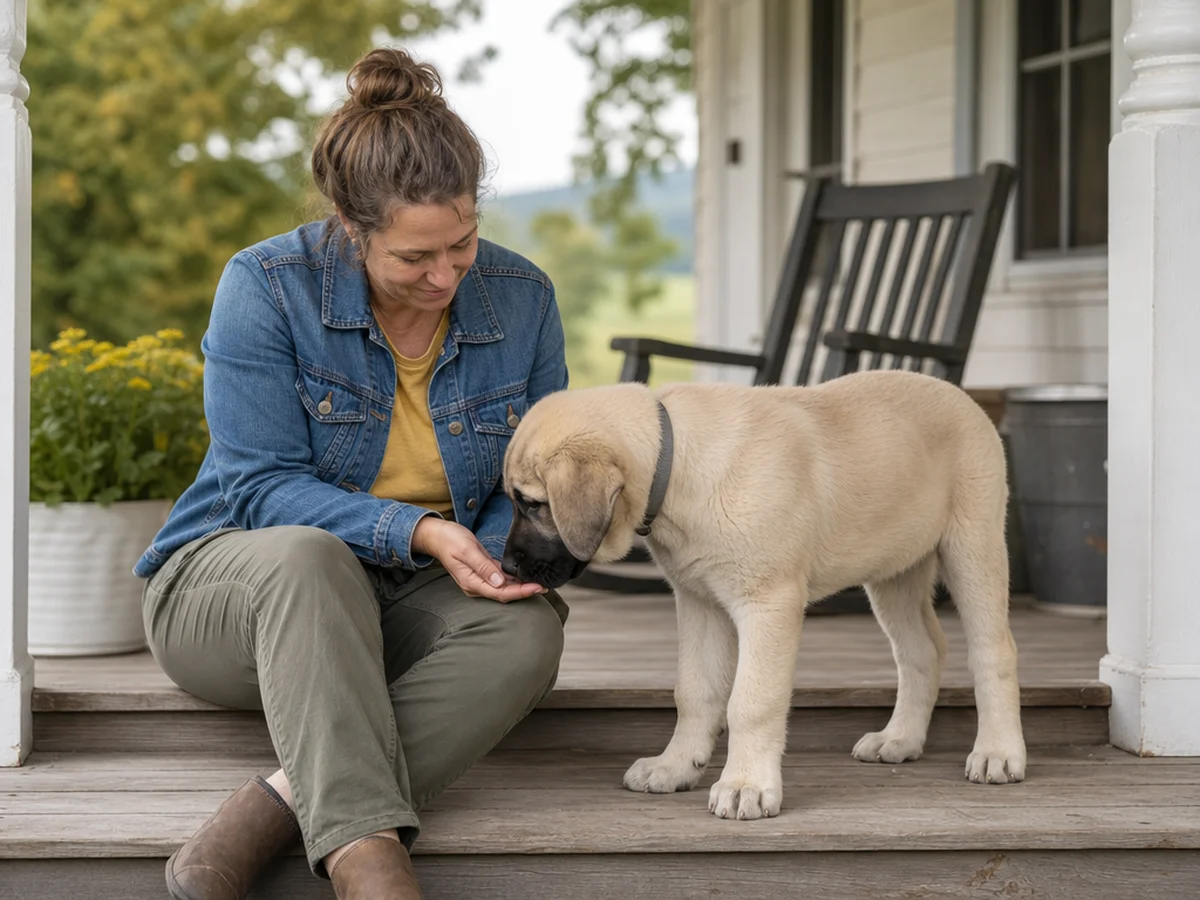
A visitor’s arrival can be a social experience without becoming a greeting lesson. The AVMA socialization guidance pairs rewards for neutral or positive participation with freedom to leave an uncomfortable situation. For this age group, watching without approaching can be part of the experience you support.
Ask visitors to fit into that arrangement before they meet the puppy. A person can remain occupied with their host while the puppy chooses whether to come closer. If the puppy leaves, the encounter has supplied information about their comfort, not a reason to follow them or insist on contact.
Agree on the human boundaries in advance so the puppy does not have to negotiate them. These visitor rules keep the introduction voluntary:
- Let the puppy approach or stay apart without having several people call for their attention.
- Keep a route away from the interaction available, and let the puppy use it without pursuit.
- End contact when the puppy moves away rather than extending the visit to obtain a particular response.
Use the existing Anatolian Shepherd puppy socialization guide for the broader topic. This first-month arrangement is about participation and choice, not completing a separate schedule of introductions.
Fit Puppy Care Around the Learning Routine
Household care and a cue lesson have different jobs. Make space for toilet opportunities, rest and comfortable handling without treating every interruption as a training problem.
Keep detailed house-training and handling instruction in their dedicated guides. Here, the useful question is whether the household has allowed those needs to fit around a short learning opportunity. A puppy who is being moved between care tasks and visitors does not also need a new lesson attached to every transition.
Early handling should be a positive experience, and the puppy’s comfort still matters. If they appear uncomfortable, pause the interaction rather than pressing through to finish the task. Arrange regular veterinary visits and discuss concerns about comfort with the veterinarian, instead of using an obedience exercise to investigate them.
Record the setting as well as the response when something is difficult. “Moved away while a guest reached toward them” is more useful than “would not cooperate.” It preserves what happened without claiming a motive, and gives the next caregiver something concrete to consider when arranging the environment.
Questions About the Anatolian Shepherd’s First Weeks
The practical details below concern how people share the puppy’s early learning. They complement the routine without adding new developmental targets or requiring the puppy to demonstrate adult behavior.
- Should a New Caregiver Use the Puppy’s Existing Cue Words?
Share the cue together with a description of the action it requests. A written word alone leaves the next person guessing about the response to mark and the reward to offer. If nobody can explain what the puppy has learned, begin with an easy action to observe rather than assuming that a familiar-sounding word already has meaning for them.
- What Information Helps a Reward-Based Puppy-Class Instructor?
Bring brief descriptions of the settings where the puppy has practiced, the signals used and the rewards they accepted. Include an example of an interaction they chose to leave, without attaching a personality label to it. Ask the instructor how those observations will inform a comfortable introduction to the class, and discuss the puppy’s health needs with the veterinarian before attendance.
- Can Family Members Take Turns Giving a Familiar Easy Lesson?
They can share the teaching role without turning one lesson into a round of requests from everyone present. Let the current interaction finish before another person offers a separate opportunity, and agree beforehand on the action, marker and reward. If the puppy does not participate with the next person, simplify that invitation instead of treating the earlier response as a promise to repeat it.
End the Puppy’s First Month With a Usable Household Agreement
Put the people’s responsibilities into words: who arranges visitor access, who handles the next care task and where useful observations are kept. Keep that agreement specific enough that a caregiver can follow it without guessing what another person meant by a good training day.
Review the arrangement when it becomes difficult to use. The first month is a foundation for living and learning together, not proof that an Anatolian Shepherd’s future temperament has been settled. Leave the puppy with manageable experiences and the household with a clear way to organize the next ones.
 Training basicsHow to Teach an Anatolian Shepherd to Heel
 Training basicsClicker Training an Anatolian Shepherd
 Training basicsHow to Choose an Anatolian Shepherd Trainer