
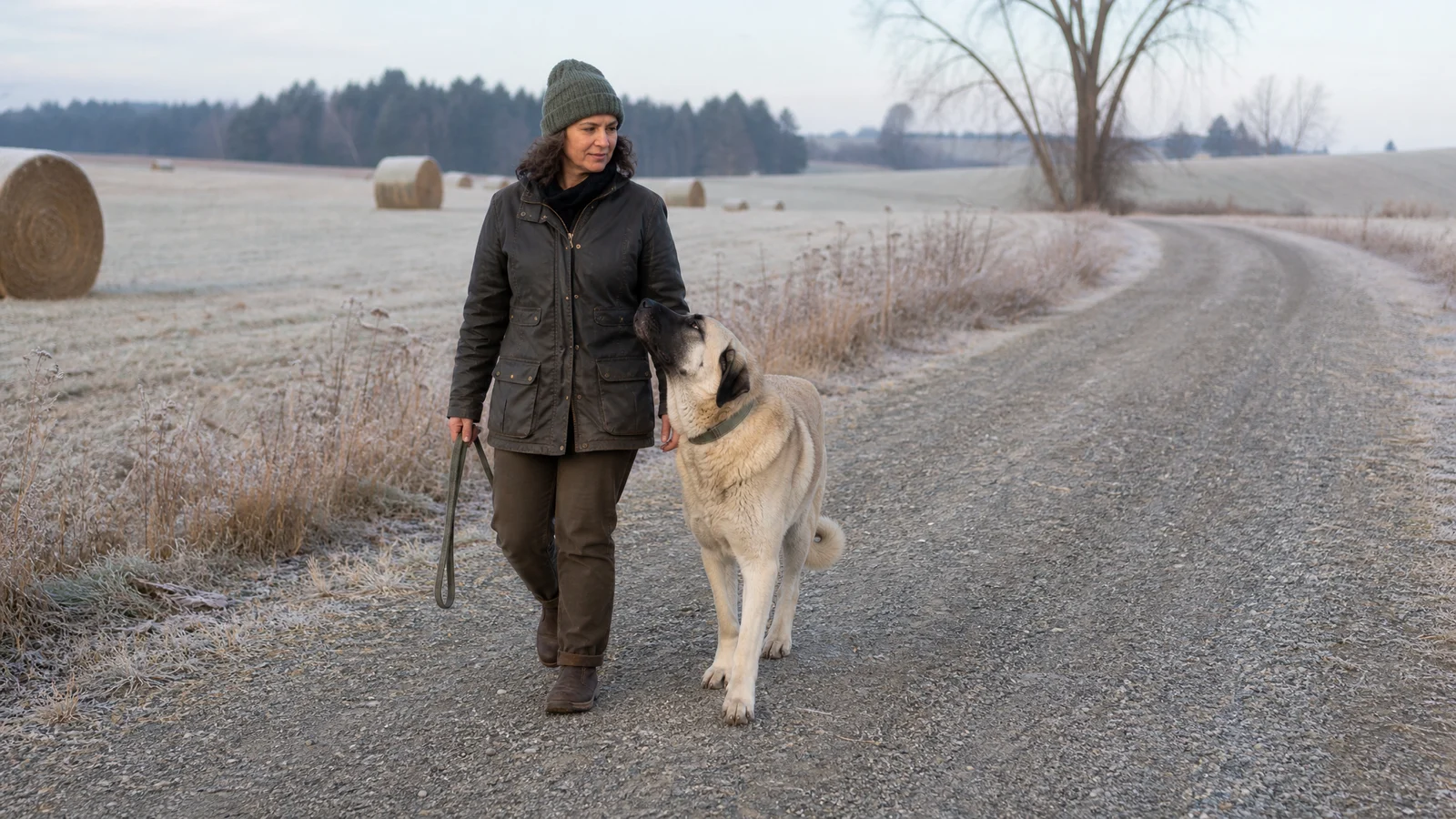
A useful heel starts with the reward arriving beside the leg where you want the dog to stay. If your hand reaches across your body, the Anatolian Shepherd may follow the food across your path even when they began in the right place.
Heel is a short precision exercise, not the position a dog must hold for an entire outing. Begin in a spacious, quiet area, choose one side, and make the payment location consistent before asking for more steps.
In this guide, we will correct the reward path, separate heel from loose-leash walking, build voluntary returns alongside and add movement only after the position is clear.
Anatolian Shepherd Heel Teaching With Clear Rewards
The AKC heel method advises rewarding with the hand next to the dog. That delivery keeps the food on the chosen side instead of inviting the dog to cross in front of you. It supports the setup, but it does not explain every crossing movement or cure pulling by itself.
| Chosen Position | Reward Hand | Delivery Point |
|---|---|---|
| Dog beside your left leg | Left hand | Next to your left leg, close to the seam of your clothing |
| Dog beside your right leg | Right hand | Next to your right leg, close to the seam of your clothing |
Practice the hand movement without the dog first if you keep switching sides or reaching across. Hold the leash securely with enough freedom for a comfortable stance, then bring the reward straight to the selected delivery point. The table describes a household lesson, not a rule that every dog must heel on the left.
Heel Teaching or Loose-Leash Walking
Use heel when you need a few deliberate steps beside one leg, such as moving through a doorway or passing a small obstacle with room to work. Release the dog from that position when the precision segment ends. A clear start and finish keep the exercise from becoming an all-walk demand.
Ordinary relaxed travel has a different goal. The Anatolian Shepherd leash walking guide owns sustained tension, everyday equipment and the larger walking plan. Do not turn a pulling problem into repeated heel drills or use heel to force a close pass around a distraction.
Choose a quiet indoor or fenced practice area with secure footing. If the dog looks uncomfortable turning, standing or moving beside you, pause the lesson and seek individual veterinary advice. Regular veterinary visits remain part of the care plan even when movement looks ordinary.
The Anatolian Shepherd Heel Position
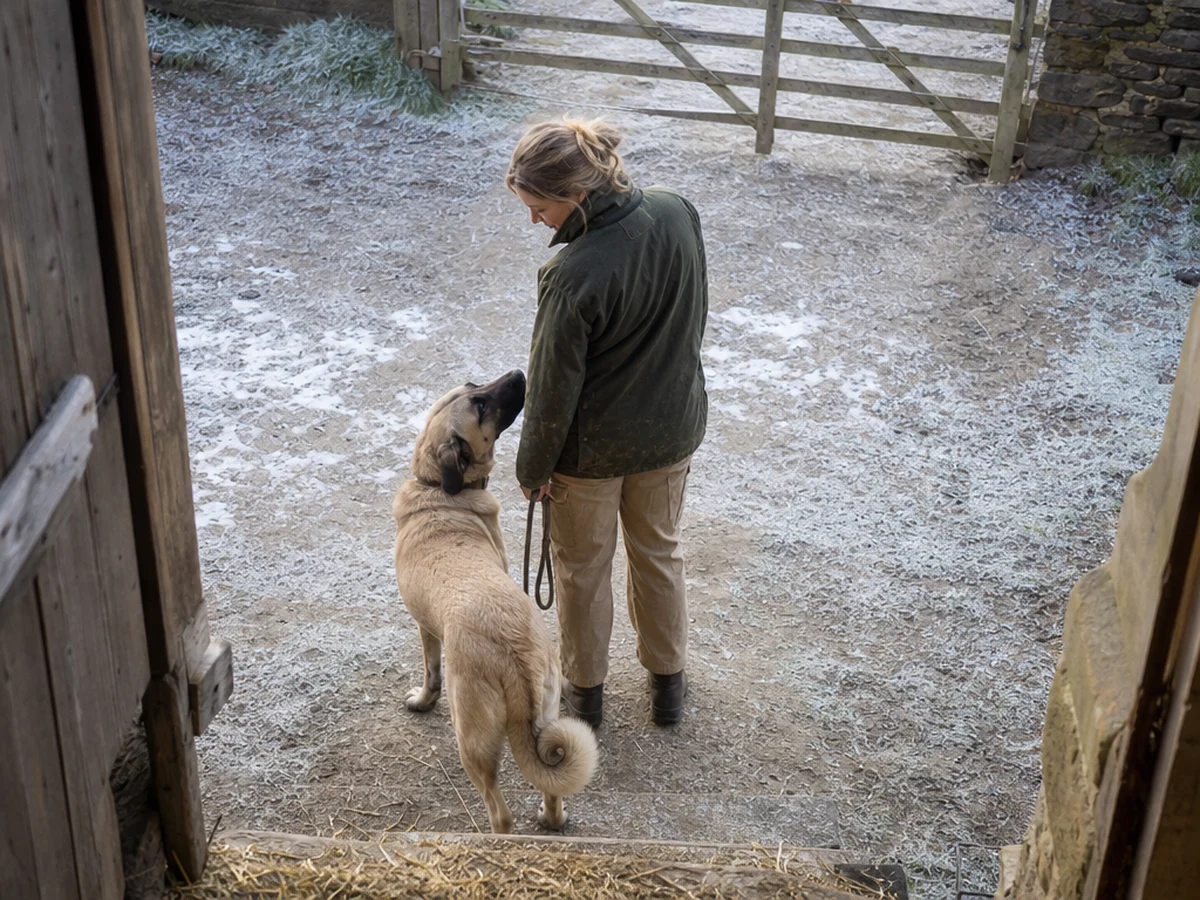
Start with the dog free to move into the selected side rather than placing their body by hand. Mark the moment their shoulder arrives near your leg, then pay from the near hand. The Battersea clicker guide emphasizes marking the wanted behavior precisely and following the click promptly with a reward.
Use this general approach for the first lesson. Keep the space easy enough that the position, not the environment, is the main task.
- Invite the position. Take a small step or use an open hand target to make space beside the chosen leg.
- Mark alongside. Mark when the dog's shoulder reaches the useful position, before they travel across your path.
- Pay on the near side. Deliver the reward beside the selected leg without reaching across your body.
- Notice offered returns. Reset calmly, then mark when the dog chooses that same position again.
Repeat only while the dog can rejoin the position without being pulled or physically arranged. The RSPCA training guidance recommends short, regular sessions so the dog is not overwhelmed. End after a few clear returns rather than extending the lesson until accuracy falls apart.
The Anatolian Shepherd Dog Club of America notes that training an Anatolian Shepherd puppy can differ from training other breeds and that natural independence can make responses to commands slower. Keep that observation puppy-scoped and general. It supports patient repetition, not a prediction about one dog's motive or learning speed.
When the response varies, check the setup before repeating the cue. Your delivery hand, body angle, available floor space and timing can all change the picture. The Anatolian Shepherd temperament guide provides the broader breed context without turning this lesson into a character test.
Add Pace Changes After Position Is Understood
Add one or two forward steps after the dog is returning alongside reliably in the quiet setup. Mark while the shoulder remains near your leg and pay on the same side. If the dog crosses, forges ahead or drifts away, shorten the movement and restore the stationary return.
Change only one feature at a time. Try a slower step, a slightly quicker step or a broad turn in separate repetitions, then release the dog before beginning again. Direction and pace changes are later practice, not proof that the dog should maintain heel through every distraction.
Questions for Teaching a Clear Heel
The main lesson covers reward placement, the task boundary and the first movement changes. These three remaining details help keep later practice precise without turning heel into a full-walk requirement.
When should the word heel be added? Add the cue after the dog is repeatedly choosing the position in the easy setup. Say it once just before the familiar invitation, then mark and reward the same response. If the word does not predict a clear movement yet, return to the uncued setup instead of repeating it.
Does heel need to end with an automatic sit? No. A sit is a separate behavior unless you deliberately choose to teach that finish. Mark a comfortable stand beside you, release the dog, and keep the position goal clear rather than pressing the dog into a second action.
What if the dog can stand alongside but loses the position at a stop? Treat stopping as one new feature. Take a single step, stop smoothly, and mark while the shoulder is still near your leg. If the dog moves past you, shorten the approach and practice the stop before adding another pace change.
Anatolian Shepherd Heel Practice and the Next Walk
Finish by naming what comes next. Another brief precision lesson is appropriate when the dog is returning comfortably to the chosen side and the handler can reward there consistently. Otherwise, release the heel and switch to ordinary managed walking or end the session.
A finished lesson does not require a long distance or an off-leash test. Keep the chosen side clear, mark the position you can actually see and let a short successful return be enough for today.
 Training basicsClicker Training an Anatolian Shepherd
 Training basicsHow to Choose an Anatolian Shepherd Trainer
 Training basicsAre Anatolian Shepherds Good With Kids?