
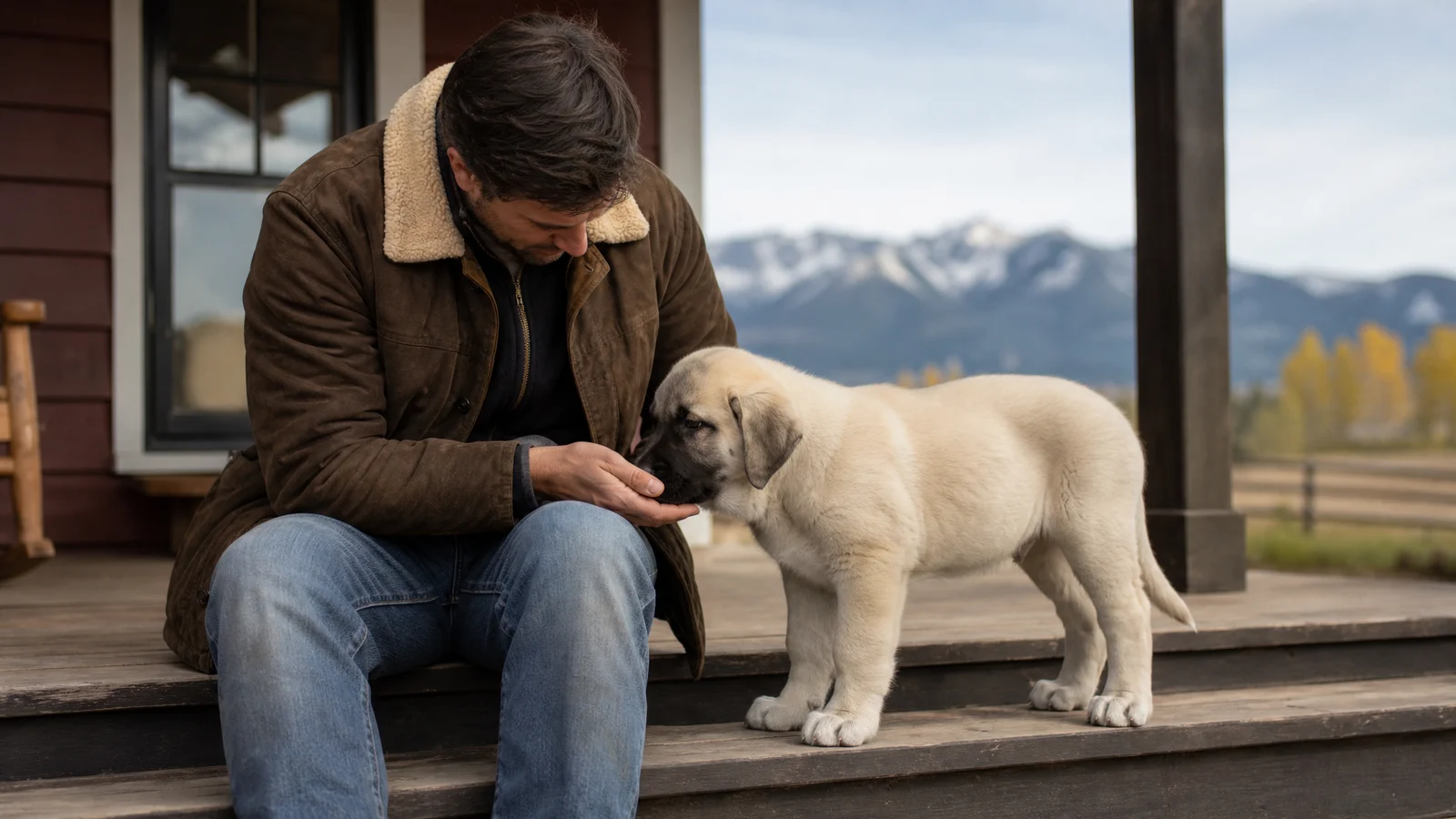
A small puppy will not stay small. The AKC breed page places the Anatolian Shepherd Dog in the XLarge size category, which means every habit allowed now is one the household will live with at full size. That makes the early weeks less about tricks and more about what a puppy learns from ordinary days: where to rest, how visitors arrive, and what happens when something goes well.
Reward-based training suits that long view, and the breed's sources are clear that a planned start matters. We wrote this page for the first stretch with a new puppy. Read on for the routines, first skills, socialization and handling that fit an independent livestock guardian breed. We keep the advice to what the sources support, so you will not find fixed ages or promised timelines.
What an Anatolian Shepherd Puppy Is Growing Into
The Anatolian Shepherd Dog Club of America says training an Anatolian puppy can be very different from training other breeds. The breed page and the club return to a handful of themes, and each one changes how the first weeks should look.
- An Anatolian puppy must be socialized, according to the breed page, because the breed tends to be wary toward others and instinctively protective.
- The club calls early socialization extremely important, with introductions to as many new experiences as possible, to help produce a secure and confident adult.
- The breed page rates trainability 2 of 5, with 1 labeled Self-Willed and 5 labeled Eager to Please, and says training the breed to respond to commands can be a challenge.
- It also rates openness to strangers 1 of 5, labeled Reserved, so a quiet response to new people is part of the breed description.
Why the Working Past Matters at Home
The breed page explains that sheep and goat herders in Anatolia developed this livestock guardian, and that the dogs were bred to work independently and make decisions on their own. A puppy from that background may not look to you for every answer.
None of this calls for harsh handling. It calls for patience, early good experiences and rewards the puppy actually wants. The same page describes the adult as calm, friendly and affectionate with the immediate family, which is the relationship the first weeks are building toward.
The breed page also rates watchdog and protective nature 5 of 5, labeled Vigilant, which matches that working history. For a new owner, the practical meaning is simple. The early weeks should build trust with people and comfort with ordinary household sights and sounds, and we leave guarding itself out of training altogether.
Household Routines That Teach a Puppy Before Any Lesson
Before a single cue gets practiced, the household is already teaching. Calm, repeatable days tell a puppy what to expect, which is a form of safety, and a few decisions made before arrival are easier to keep than rules invented in the middle of a busy evening.
Agree on House Rules Early
PDSA advises deciding before the puppy comes home whether they may use the sofa or the bed and which rooms stay off limits, then making sure everyone follows the same rules, because it is harder to break a habit than to make one. With a breed in the XLarge category, we would ask of every rule whether it still works for a very large dog.
PDSA also suggests picking a bed or resting area where the puppy can nap and have time alone, and making sure the whole family knows to leave them undisturbed there. Food and water belong somewhere the puppy can reach easily, ideally near that quiet spot.
Write the rules down if that helps, and share them with everyone who will help care for the puppy, including children and visitors who come around once the quiet first days are over.
Toilet Spot First, Then Small Spaces
On arrival, the same PDSA advice is to take the puppy to their toilet area first and reward them for going in the right place, then show them their own space. Giving the puppy the whole house on day one is discouraged, since too much too soon can overexcite or stress a young puppy. Baby gates can widen the territory slowly as the puppy settles.
The full methods have their own pages. Our Anatolian Shepherd puppy potty guide covers house training, and the Anatolian Shepherd crate guide covers the resting space.
Quiet Days and Calm Nights
PDSA recommends keeping the household calm when a puppy first arrives and avoiding visitors for a few days while the puppy adjusts. It also suggests keeping to the food times the puppy already knows, offering regular toilet breaks, and allowing short play sessions, because puppies tire quickly and nap a great deal.
For the first few nights, PDSA suggests sleeping in the same room while the puppy adjusts, and it says comforting an upset puppy is fine because ignoring them can leave them feeling isolated and more frightened. A set bedtime and a night toilet trip, kept calm, round out the routine.
Three First Anatolian Shepherd Puppy Training Skills
With sources saying responses can come slowly, the starter list stays short. The RSPCA training advice says all training should be reward based, and that giving a dog something they really like for a behavior makes the behavior more likely again. Each skill below rewards something the puppy already does on their own.
- Name response. Say the puppy's name once in a quiet room, and the moment they glance toward you, reward with a small treat or calm praise. Repeat in different rooms before expecting it anywhere else, and keep the rewards small enough that the puppy stays hungry for more.
- Coming toward you. In a small, safe space, crouch down and reward the puppy for any step in your direction. A cue word can be added once the movement shows up reliably, so the word is attached to something the puppy already knows how to do.
- Settling in their own space. Reward the puppy for lying down on their bed or in their pen, even briefly. This gives the resting place a good association and fits the PDSA idea of a safe area for naps and downtime.
The RSPCA also recommends finding out what your dog really likes, since a better reward makes training more enjoyable. It suggests short but regular sessions so a puppy is not overwhelmed. A few minutes at a time, ended while the puppy is still interested, suits these skills well.
Anatolian Shepherd Puppy Socialization Without Pressure
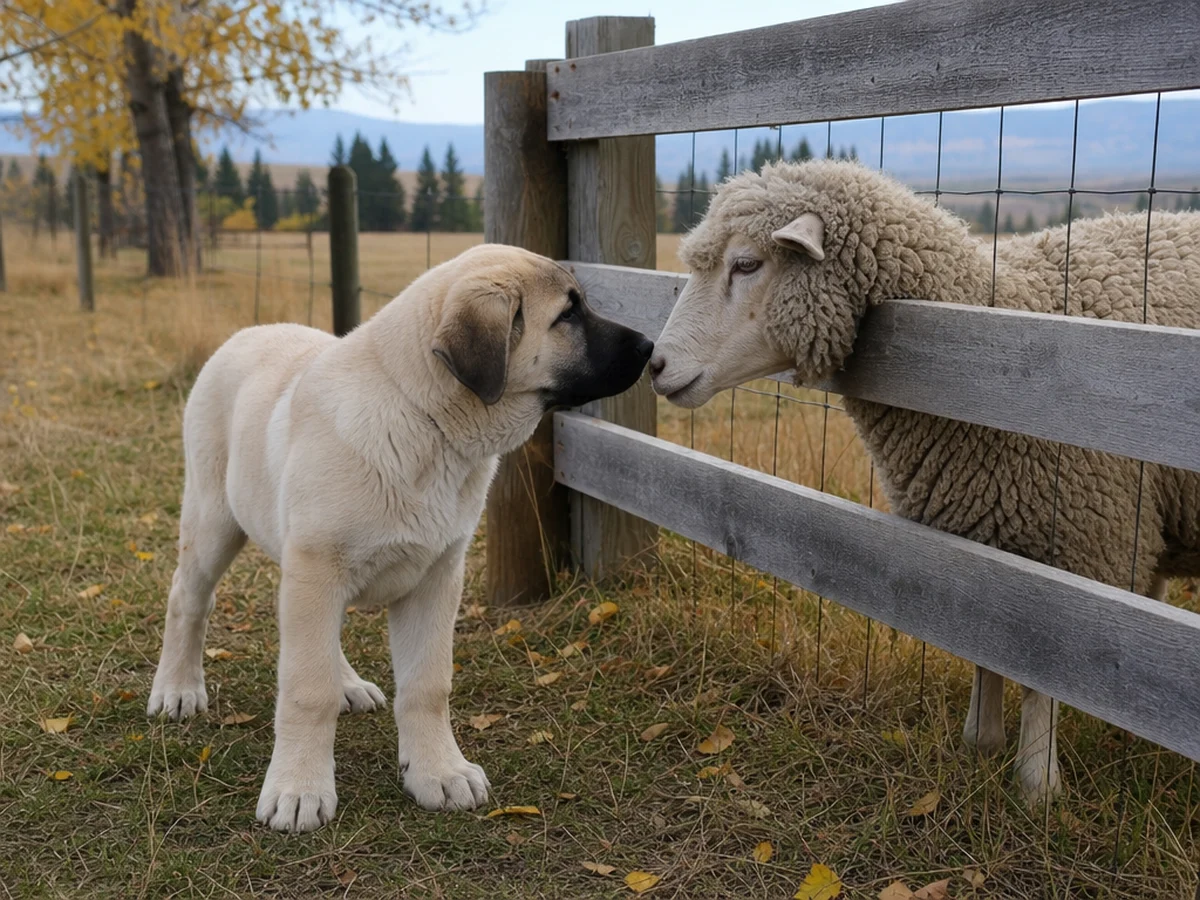
The American Veterinary Medical Association says the best time to start socialization is between 3 and 14 weeks of age, when puppies are most open to learning about their surroundings. A broad range of positive experiences in that window can help prevent fearful, reactive or aggressive responses later.
For this breed, that advice carries extra weight. The breed page describes a dog wary toward others, so we aim for calm comfort around new people and places rather than eager greetings. Pair new sights and sounds with praise, play or treats, and keep each introduction brief and easy to leave.
Let the Puppy Step Back
The same veterinary guidance says to reward positive or neutral engagement, allow the puppy to withdraw if they seem uncomfortable, and move at a pace that suits their personality. A puppy who hangs back and watches is still taking in the experience. Our Anatolian Shepherd puppy socialization guide builds this out in detail.
The AVMA also suggests asking the person you got the puppy from for any socialization already done, and working with your veterinarian on a gradual plan. Ask your veterinary team when your puppy is ready to meet other dogs and visit places other dogs have been, and plan outings with them rather than guessing.
The AVMA also mentions well-managed puppy socialization classes, which expose young dogs to new experiences in a safe, controlled setting, and it recommends continuing to reward calm or playful responses to social situations throughout the dog's life. Socialization does not end when the early window closes.
Gentle Handling While the Puppy Is Still Small
An XLarge adult will need to be examined, groomed and handled by people who are not family. Practicing gentle touch now makes that easier later, and it fits the same reward-based approach as everything else on this page.
Best Friends Animal Society suggests starting on the chest or shoulder, touching for only a few seconds while the dog eats treats, and stopping when the treats are gone. It adds that most dogs do not enjoy being touched on the face or paws at first, so those areas come later, once touch all over is welcome.
If the puppy shows stress signals such as lip licking or yawning, go back to an easier step. The same source recommends happy visits to a clinic lobby with no procedure, just treats, which pairs well with regular veterinary visits for checkups. It also notes that progress varies widely, from a few days to many months, so there is no deadline to hit.
Once touch all over is welcome, the next step is lifting and holding an ear, a lip, a paw and the tail. For anything the puppy must go through at the clinic or groomer, Best Friends suggests asking staff to use minimal restraint and low-stress handling, which protects the trust you have built.
Realistic Anatolian Shepherd Puppy Training Expectations
Breed sources set modest expectations for speed. The club says natural independence can make Anatolian puppies slower to respond to commands, and the breed page describes training the breed to respond as a challenge. Neither source gives a timetable, so we do not offer one either. What both do give is a direction: start early, stay patient and make every early experience a good one.
Slower Answers Are Expected
Give the puppy a moment after each request, reward whichever answer arrives, and keep requests easy enough to succeed. Repeating a cue over and over only muddies the lesson, so ask once and wait a few quiet seconds before helping the puppy find the answer with a lure or a gesture. If the puppy does not respond, make the exercise simpler or move closer rather than adding pressure.
The breed page also rates energy and mental stimulation needs at 3 of 5, which it labels moderate, so short, easy training games fit comfortably into a young puppy's day.
Short Sessions Over Long Ones
Short, regular practice fits the RSPCA advice above and a growing puppy's attention. Our Anatolian Shepherd puppy timeline lays out stage order without inventing milestones, and the Anatolian puppy mouthing guide covers chewing and mouthing in full.
Reading Progress Without a Calendar
Progress usually shows up in small signs first: a quicker glance when you say their name, a calmer response to a new sound, a longer rest in their own space. We would watch for those signs rather than for any particular age, because the sources describe a breed whose responses can be slow and do not offer a milestone chart. If something seems off, such as a sudden change in behavior, mention it at a regular veterinary visit rather than assuming it is only training.
The Next Quiet Hour With Your Anatolian Puppy
None of this needs a perfect setup. A puppy who is rewarded for small good choices, introduced to the world gently and handled with patience learns that people are predictable and safe, which is the base everything else grows from. On a hectic day, the three basics still hold: a predictable routine, a calm welcome for new people and a reward for whatever the puppy gets right.
Pick the one house rule your household has not yet agreed on, settle it before the next meal, and let the first reward-based exercise start only once everyone follows the same plan.
 Exercise and jobsHow to Teach an Anatolian Shepherd to Roll Over
 BehaviorHow to Fix Anatolian Shepherd Separation Anxiety
 BehaviorHow to Teach an Anatolian Shepherd to Jump Over Obstacles