
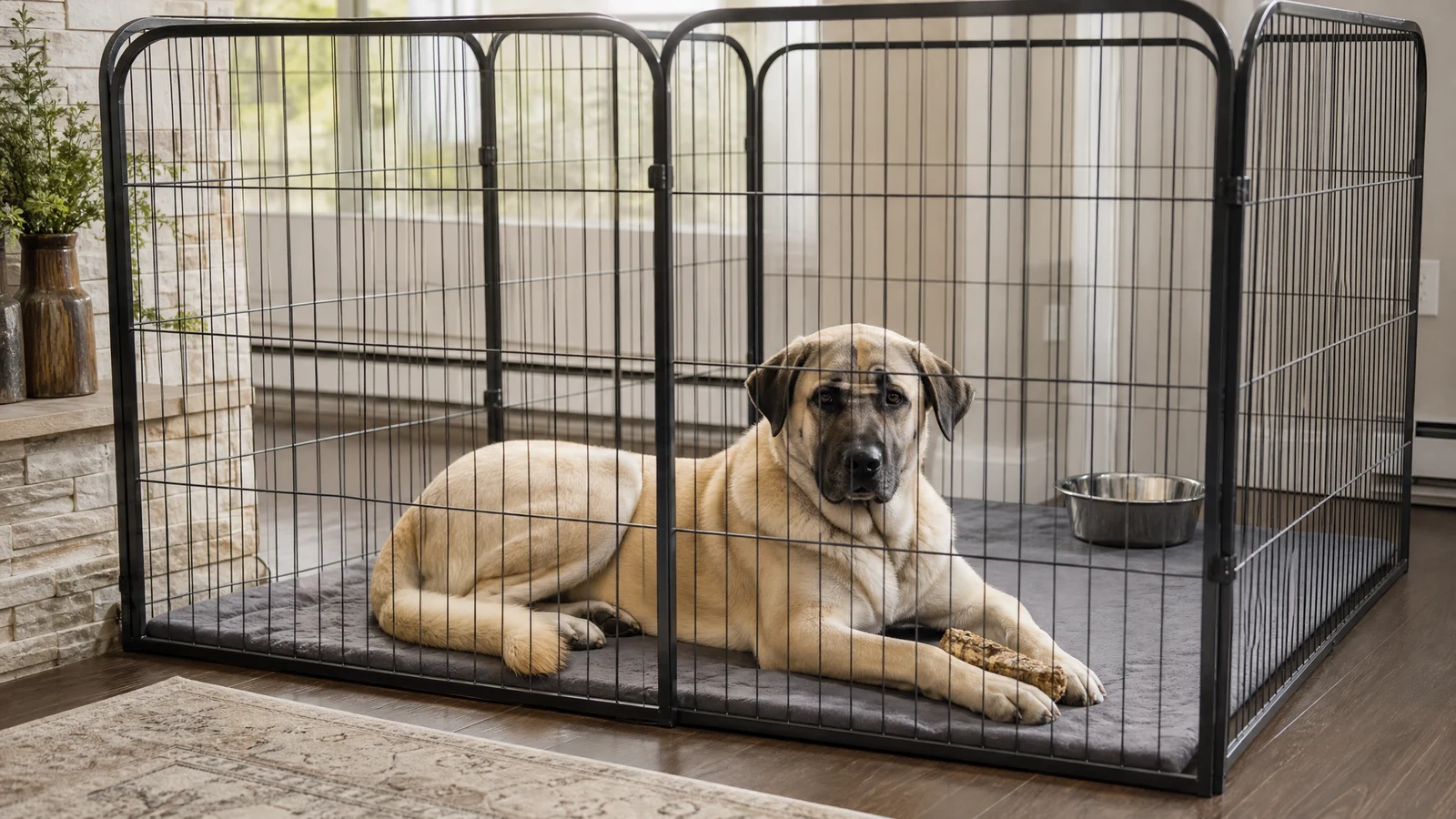
Some Anatolian Shepherds walk into a crate or pen when the family heads out, sigh, and sleep until someone returns. Others panic, bend the wire, dig at the door or tear up the room. We think the gap between them often starts with decisions made in the first days, long before anyone asks the dog to stay alone, rather than with stubbornness or bad luck.
That matters more for this breed than most. An XLarge livestock guardian, bred for millennia to judge danger independently, will not simply accept a setup that feels wrong to them, and a big dog in a panic can hurt themself and wreck a room. Read on for the decisions in the order you will face them: whether you need a crate at all, which setup to use, the right size, a gentle introduction, realistic alone time and a written progression.
Deciding Whether an Anatolian Shepherd Needs a Crate
Some Anatolian Shepherds spend part of their lives outdoors with stock. For those dogs a crate looks like a gadget with no job. The trouble comes on the day a vet visit, a long drive or a sore leg demands confinement from an XLarge dog who has never been shut in anything.
The common claim is that every dog needs a crate. That overstates it. Specializing in this breed's behavior and training as we do, we see the crate as a tool for specific jobs: safe travel, waiting at the clinic, rest after a procedure, calm while visitors come and go, and practice at being apart from you. A dog on duty with the flock should not be crated out of habit, because their shelter is their workplace.
Visitors deserve a note of their own. The breed standard accepts reserve around strangers and describes the dog as highly territorial. A retreat they already trust gives a watchful dog somewhere to be while guests arrive, instead of leaving you managing a large guardian at the door with no plan.
Verdict: if your dog lives indoors with you for any part of the day, or you can foresee travel, guests or a procedure, the answer is yes. Read our complete Anatolian Shepherd training guide alongside this article. A dog who lives entirely with stock and is rarely handled can skip daily crate use, though a gentle introduction before any planned procedure still beats improvising.
Choosing Between Crate, Pen and Safe Yard
A crate with bent wires, a soiled tray and a panting dog behind it looks like failed training. Usually it is a mismatch. A dog with separation anxiety stays anxious inside a crate and may soil, howl or injure themself trying to escape, and the advice is a safe room instead. A breed built to watch a whole horizon does not always cope with a box.
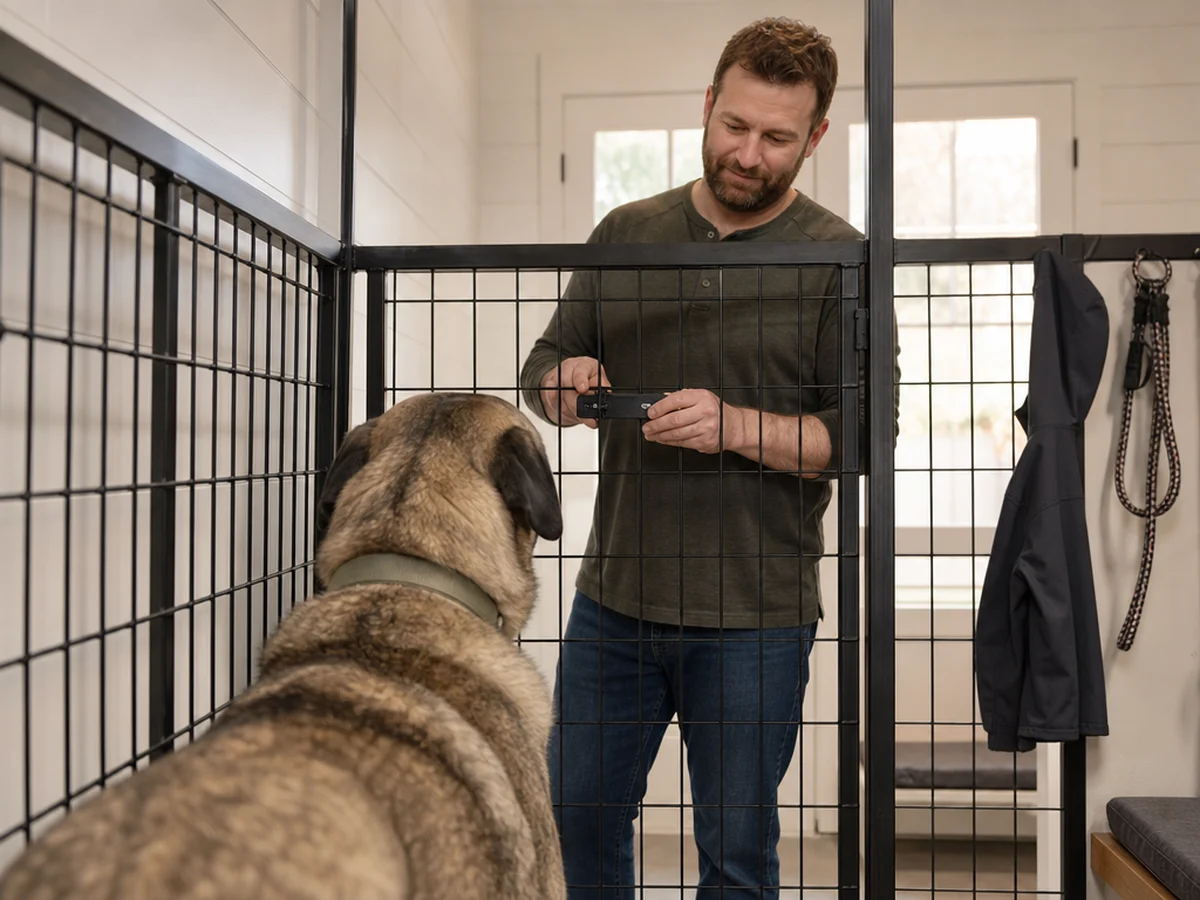
Here is how the three options compare for a dog of this size and temperament.
| Setup | Works best for | Watch for |
|---|---|---|
| Crate | Travel, clinic waits, guests, recovery rest | A frame that is too light for the dog, and long stretches of confinement |
| Exercise pen | Time apart at home, puppies, supervised rest | A heavy dog leaning on, climbing or shoving the panels, so choose a tall, sturdy pen and anchor it |
| Safe yard | Dogs who live outdoors with stock, daytime breaks | Barking at every passerby, weak fencing, and a lack of shade and shelter |
The yard deserves some skepticism. It is tempting to assume a big guardian breed is happiest left outside. But a dog described as a natural guard can spend hours escalating at every sound beyond the fence, and space does not cure loneliness. A tired dog settles more easily in any of these, so a walk first helps, and our guide to Anatolian Shepherd loose-leash walking makes that walk pleasant.
Verdict: for time alone indoors, make an exercise pen or a dog-proofed room the primary setup, and keep the crate as the backup you practice for travel, clinic visits and recovery. If your dog lives with stock, the secure yard and shelter stay primary and the crate is the backup. Teach both the same way.
Which Crate Size Fits a Full-Grown Anatolian Shepherd?
A puppy rattling around in an adult-sized crate looks silly, but the adult they become is the dog the crate has to fit. The breed standard gives dogs from 29 inches and 110 to 150 pounds, and bitches from 27 inches and 80 to 120 pounds, with those measurements applying at age 2 or older. A second standard runs males at 29 to 32 inches and bitches at 27.5 to 31 inches.
Sources differ a little, so plan for the top of the range: a male near 32 inches and 150 pounds. General balance matters more than absolute size, so measure your own dog standing and lying rather than trusting a label. A crate fits when a full-grown dog can stand with their head up, lie fully stretched and turn around without bumping the walls. Check the maker's weight rating, and look for solid latches and a stable frame.
You will hear that you should buy the biggest crate and let the puppy grow into it. Without a divider that is poor advice, because a puppy given the whole space will use a far corner as a toilet. Our Anatolian Shepherd potty training guide explains why the space must stay small and clean.
Verdict: buy the adult-sized crate rated for a dog at the top of the range, and fit a divider while the puppy is small. Buying a puppy-sized crate first means paying twice for a dog who outgrows it fast.
Introducing the Crate Without Forcing the Door
Put a new object in front of a young Anatolian Shepherd and watch. They stop, look it over and decide. That is the breed doing what they were bred for, since these dogs were bred to work independently and make decisions on their own. The parent club adds that this independence can make them slower to respond to commands, and that early socialization is extremely important. Pushing a dog into a box fights the trait you need on your side.
The Open-Door Sequence
This order leaves the choice with the dog, and each step waits until the one before is relaxed:
- Tie the door open in a quiet spot where the family spends time, then drop treats near the entrance, inside, and toward the back, letting the dog walk out freely each time.
- Serve meals at the crate and move the bowl farther in over many meals, until the dog eats comfortably at the back.
- Add a chew or stuffed toy and let the dog lie inside with the door open while you sit nearby.
- Choose a cue word, say it as the dog steps in, and have the whole family use the same word.
- Only after the dog enters and settles on their own, close the door briefly while you stay close, reward calm, and open it before they ask.
Keeping the Space a Safe One
The crate should be a safe haven, never a punishment and never a way to stop behavior such as chewing furniture. If the box ever means trouble, the whole introduction is undone. For what slow responses look like in this breed, see our Anatolian Shepherd temperament and trainability FAQ.
Commit to this pacing: the door stays open until your dog eats a full meal and naps in the space by choice. Every later step waits for loose, relaxed body language at the current one.
How Long Can an Anatolian Shepherd Be Left Alone?
Owners are often told that an adult dog can be shut in a crate through a whole workday. We doubt it, and the breed is part of the reason. Independent judgment about danger is not the same as comfort when the family disappears. The same dog is described as calm, friendly and affectionate with their immediate family, and a deep bond can make the empty house the hardest part of their day.
There is no universal number of hours. We have trained this breed for many years, and the limit that holds up is how long your dog stays relaxed. Young puppies need frequent toilet breaks, so early sessions are measured by calm, not the clock. The breed standard applies its measurements at age 2 or older, so a young Anatolian may look adult well before they are. We would judge by behavior rather than size.
A crate is for part of the day. If your schedule means long absences, arrange a midday break, a person at home, or a dog-proofed room with chews, rather than leaning on a box. Time alone is a skill you build, not a setting you switch on.
Verdict: set your first target as the time a single chew keeps your dog busy while you are in the next room, and end the session before the chew runs out.
Stretching Crate Alone Time in Small Steps
A dog who cries the first time the door closes behind you has rarely failed. The step was too big. Absences should grow like a staircase with landings, and the landings matter more than the climbs. Write the plan down so you cannot talk yourself into skipping ahead. A workable version:
- Your dog settles in the pen or crate with a chew while you sit beside them, and you reward calm.
- You walk across the room and return with no fuss in either direction.
- You step out of sight and come back before the chew is finished.
- You go out an exterior door and return, then lengthen gradually, mixing short and long absences rather than always going longer.
- After any session where your dog showed distress, you drop back to an easier step next time.
Early Signs of Distress
Learn to read these before the howling starts. A watchful, independent guardian may not be loud at first. Because the breed is described as alert and observant, early distress can look like fixed watching of the door or an inability to settle, so notice quiet signs as well as noise:
- Panting, pacing or drooling that begins as you get ready to leave.
- Refusing treats or a meal when they sense you are about to go.
- Frantic scratching or chewing at the door, tray or panels.
- Accidents in the space from a dog who is normally clean.
- Escape attempts that bend wire or cause sore paws or gums.
A single sign does not prove anxiety, since a bored dog or one who needs the toilet can do the same. A repeating pattern, or any injury, means slow down.
When to Ask a Professional
If signs repeat, stop treating it as a crate problem. Leaning on a crate to handle separation anxiety is a poor idea without professional guidance, so speak to your vet or a certified behaviorist. Regular vet visits belong in this routine anyway.
Guidance on treating separation anxiety says the dog should not be left alone beyond training sessions, and that most dogs with it are fine as long as someone, not necessarily you, is with them. The fix is arranging a person, not buying a bigger box. Your written progression is the choice: date each session and advance only when calm sessions repeat.
The One Crate Step for Your Anatolian Shepherd Tonight
A dog eating dinner beside an open crate door and then wandering off is dull to watch. It is also where every calm setup begins, and where the dogs who panic often never got to start.
The breed explains why. An XLarge guardian, bred for millennia to exercise independent judgment, cannot be forced into calm. They accept confinement they chose, built in steps small enough that nothing alarming happens. Loyal to family, reserved with strangers and slow to respond, they repay patience with a settled dog.
So do one thing today. Pick the space you chose, whether pen, crate or room, set it up where the family gathers, and feed one meal with the door open. Then stop. No closing the door, no cue, nothing extra. Tomorrow, repeat it.
 Training basicsHow to Potty Train an Anatolian Shepherd Puppy
 Training basicsHow to Train an Anatolian Shepherd: The Complete Guide
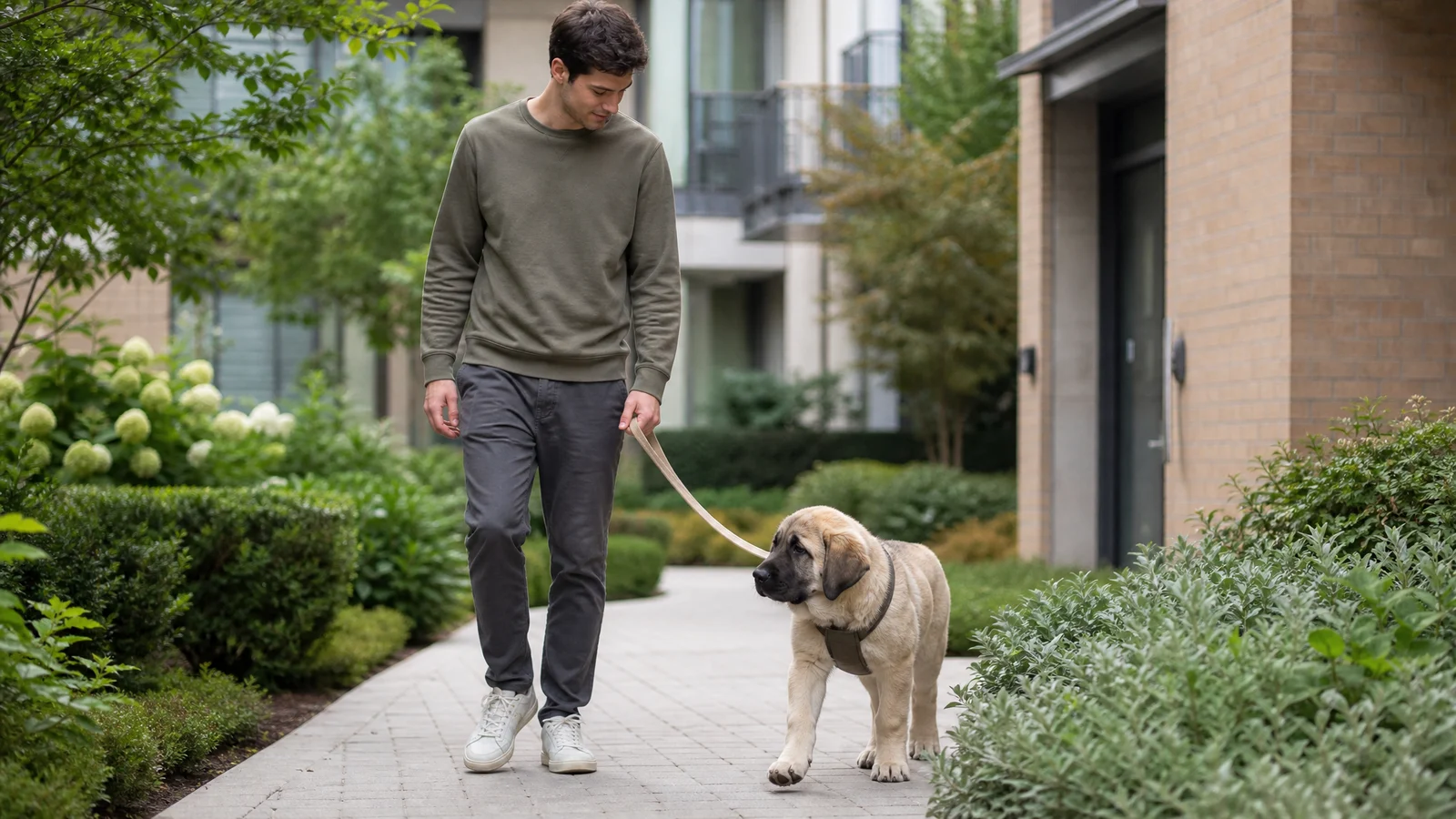 Training basicsLeash Training an Anatolian Shepherd Who Pulls and Lunges