
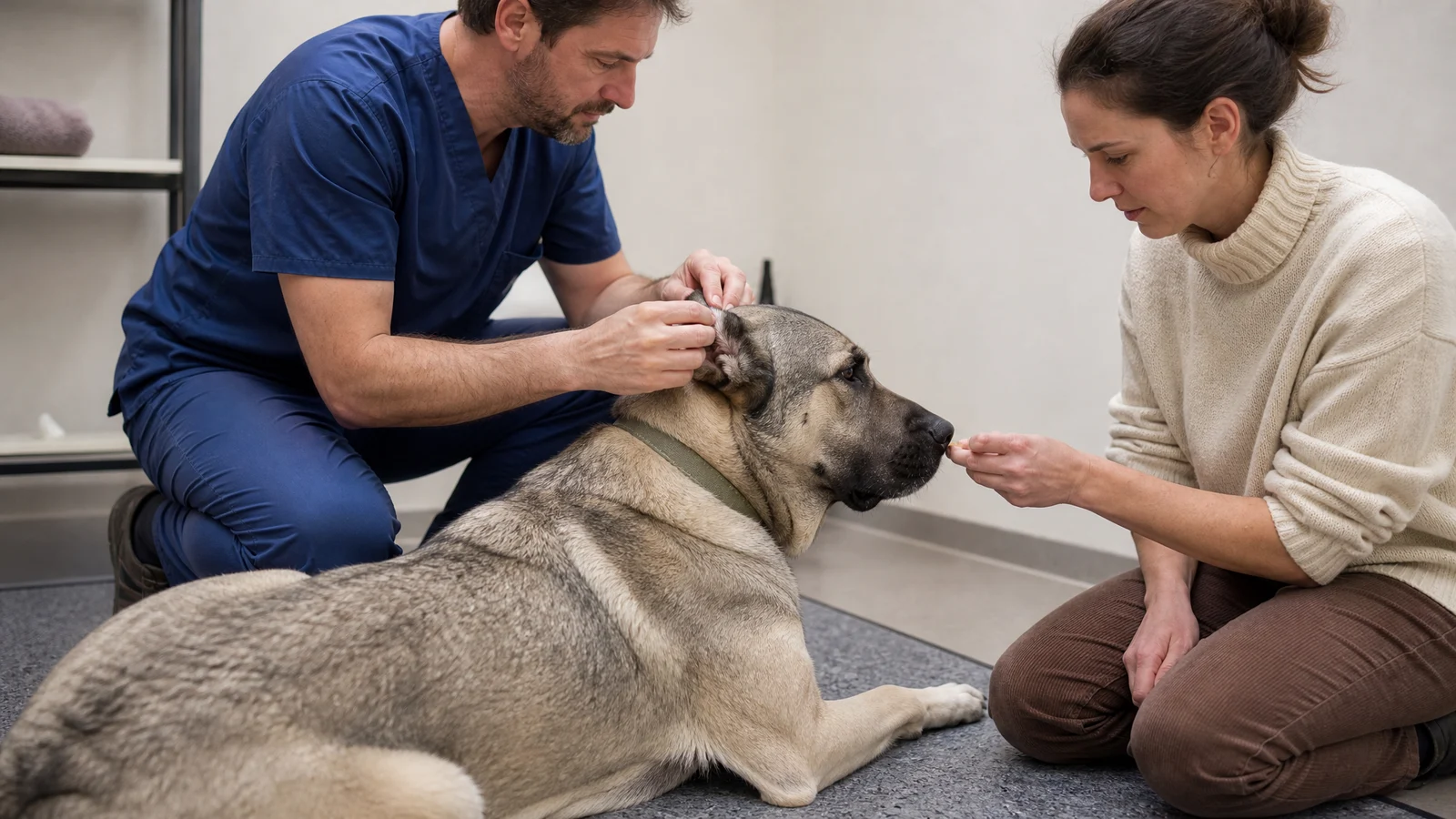
The standard puppy advice is to handle every part of the dog constantly until nothing feels strange. A reserved Anatolian Shepherd changes that: they need consent-based, reward-first handling in small doses. The breed standard describes a dog who appears bold but calm unless challenged, and says overhandling would be discouraged. A hand that keeps grabbing teaches suspicion, not tolerance.
The dog still needs nail trims, coat care and vet exams for life, and a male who can weigh 110 to 150 pounds cannot be held still by anyone. Cooperation is the only method that holds up, and it pays back at every appointment. Our team has worked with this breed's handling for a long time, and what follows is how we teach it.
Below, you'll find the rewards that suit a self-directed giant and the gear worth buying, including muzzle comfort in stages, calm grooming spaces, a vet visit routine, a weekly coat plan and a two-week schedule.
Anatolian Shepherd Clinic Handling
A calm visit starts weeks before the appointment. The exam asks a stranger to put hands on a dog who is wary of strangers when mature, so rehearse the exam at home and then with a helper. Regular vet visits are part of good care for a dog this size, so make the routine one the dog can live with.
Practice at Home First
Rehearse what a vet does: lift the lips, look in the ears, hold each paw, run your hands along the belly and legs, and touch the base of the tail. Pay for each one. Then ask a calm friend the dog knows to repeat it while you feed, and move to a less familiar helper over time. If the dog tenses when the helper changes, return to the easier version.
Teach a relaxed stand on a mat as well, since many exams are done on the floor. For a young dog, build clinic stops into your Anatolian Shepherd puppy socialization plan so the building is already familiar.
From Waiting Room to Exam
Call ahead and ask for a quiet time, and wait in the car or a side room until the exam room is ready. Bring high-value treats and hold back part of the meal so the dog arrives interested in food. A guardian who watches every stranger in a waiting room will stop eating, so use distance first: more space, then treat.
In the exam room, let the dog sniff around, then feed while the vet works, and tell the staff which handling you have practiced. If the dog is too stressed to eat, say so early. Short happy visits where nothing happens but treats and a greeting keep the clinic from becoming a place that only means trouble.
This is general information, not medical advice. Ask your veterinarian about muzzle fit, any medication or sedation for stressful visits, and what suits your individual dog.
Handling Practice Across Two Weeks
This plan gives each small skill a few days. If the dog struggles at any point, repeat the previous stage before moving on, because the schedule serves the dog and not the calendar.
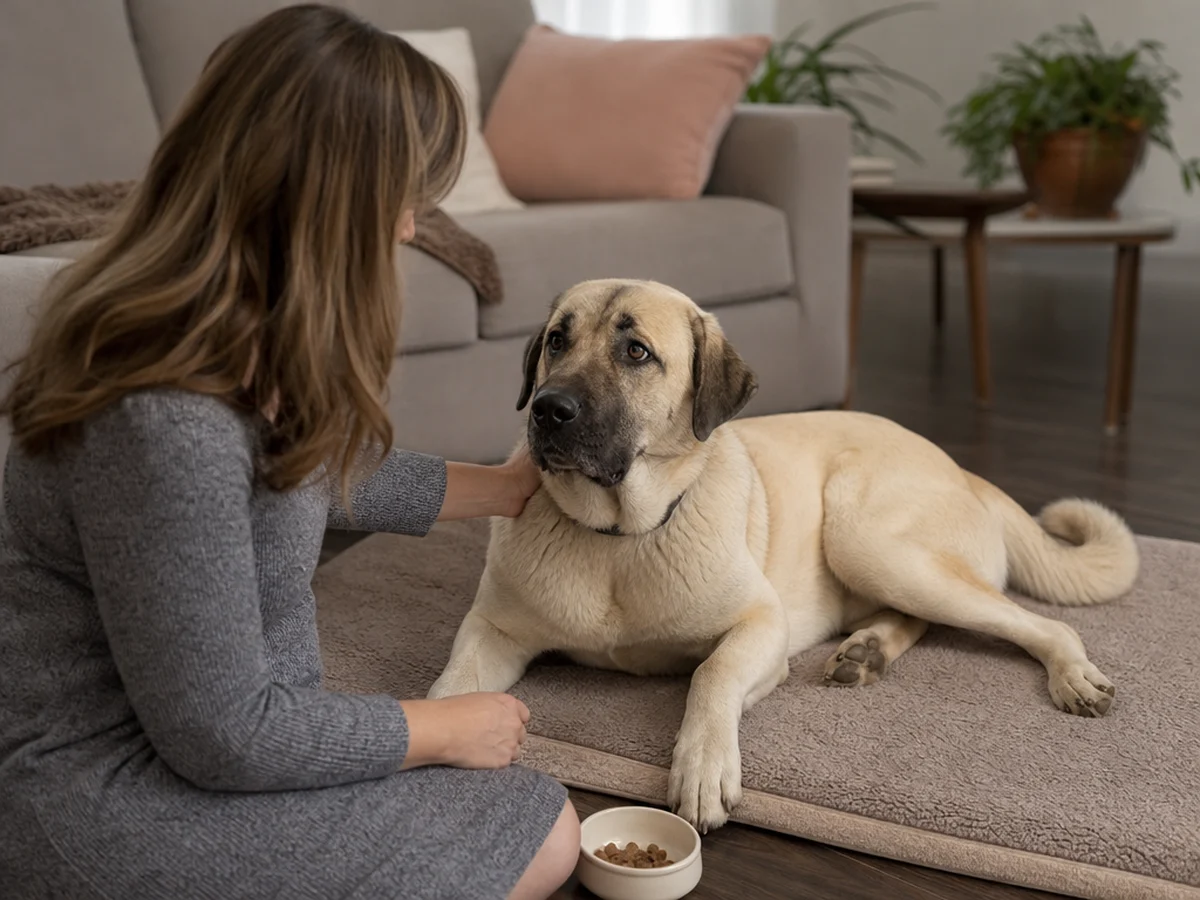
- The first few days: set up the quiet, non-slip spot and pay for touch on the shoulder and back, ending while the dog is still relaxed.
- The next few days: add paws, ears and lips one at a time with a marker word and a treat, and begin the daily foot massage.
- Late in the first week: introduce the brush and the first stage of muzzle training, and run the grinder across the room during meals.
- Start of the second week: touch a tool to a nail and pay, trimming or pretending to trim one nail a day, and move the muzzle on to a brief fastening.
- Midweek of the second week: rehearse the full exam with a familiar helper, then a less familiar one, while you feed, and practice the relaxed stand on the mat.
- The last days: make a practice vet visit with a stop in the waiting room, treats from the staff and a weigh-in, then go home with no exam at all.
The pattern across all of it is the same. Tiny, rewarded steps beat forced handling, especially with a reserved guardian who was bred to judge for themselves, and every calm, paid session makes the next appointment easier. Keep the weekly routine going after the two weeks end, keep up regular vet visits, and use our complete Anatolian Shepherd training guide to build the cues that make handling smoother still.
Anatolian Shepherd Muzzle Handling
An untrained dog who has a muzzle simply put on them is likely to be scared, and muzzle training with rewards avoids that by making each later attempt easier, not harder. A guardian who is wary of strangers may someday need a muzzle at an emergency visit, so teach it as a happy game long before then. Choose a roomy basket-style muzzle that lets the dog pant and take treats, and have the fit checked.
Take these stages one at a time, and advance only once the dog looks eager at the current step. Drop back whenever the body becomes tense. Drop back whenever the body becomes tense.
- Show the muzzle, mark and treat as the dog looks at it, then put it away.
- Hold the muzzle out with a treat inside the basket and let the dog decide whether to nose into it, free to back away whenever they like.
- Feed several treats through the front while the nose is inside, so the muzzle predicts a stream of food.
- Slip the strap loosely behind the head for a moment while you keep feeding, then take it off before any worry shows.
- Fasten it briefly and feed continuously, then lengthen the time gradually and add easy activities such as wandering the yard.
- Wear it during the home handling exercises, so it belongs to calm touching and not only to emergencies.
If the dog pulls away, paws at the muzzle or stops eating, you moved too fast. Go back one stage and make it easier. Take the muzzle off while the dog is still calm so the last memory of each session is a good one. Taught this way, the muzzle becomes one more routine the dog agrees to.
Low-Distraction Handling Spaces
This is a territorial, alert breed, so the place matters as much as the technique. A dog scanning the fence line or listening for a gate latch cannot relax into a nail trim. If your dog stiffens, stares past you or stops taking treats, check what is in view and earshot before blaming the handling.
Pick a quiet room away from windows, doors and the yard, and shut out other pets. Use a non-slip mat or rubber-backed rug. A giant on slick flooring tenses from the fear of falling, and tense muscles make every touch feel bigger.
Leave the doorway open so the dog can walk away, and treat a walk-off as information, not defiance. Pause, wait, and reward the return. Keep children and visitors out of the room during practice, and build those introductions separately, as covered in our guide to kids, dogs and strangers.
Calm space comes first, followed by calm touch. The room should make cooperation easier before handling begins.
Handling Tools for Coat, Feet and Nails
Size sets the shopping list. A dog who can stand up to 32 inches tall at the shoulder and carries a thick coat needs tools built for large dogs. Flimsy ones snap or pull, and a single painful tug can make the dog dread the next brushing.
Brushes and Combs
Choose a brush with a comfortable grip and a wide comb for the thick coat, and test both on your own forearm first. If either tugs or scratches you, it will bother the dog. Introduce each tool in the same order: let the dog sniff it, mark and treat, rest it on a shoulder, mark and treat, then make one stroke and stop.
Clippers and Grinders
A giant who is wary of new things, as the Anatolian Shepherd often is, usually needs extra time before clippers or a grinder feel normal. Begin by touching the tool to a paw and rewarding right away, and count even a pretend trim as a win. Working on one nail a day, then giving a treat and praise, builds toward fuss-free trims.
Run a grinder across the room during meals so the sound becomes background to food, then bring it closer over several days. If the dog flinches at the noise, return to the distance where they were still eating and stay there longer. A grinder suits many dogs better than clippers because the touch is light, but if your dog hates the vibration, clippers with a sharp blade and one nail per session are a fair alternative.
A Mat Beats a Table
A grooming table suits small dogs. For a dog this size, lay a rubber-backed mat over the floor and work there. The dog can step away whenever they need to, which makes staying their own decision, and that decision is what builds cooperation in a breed bred to make choices alone.
Rewards That Keep Handling Voluntary
A breed developed to judge danger alone, and described as naturally independent, does not work for approval the way some breeds do. In grooming, that means the pay has to be worth the dog's attention. Start with the best food you have, cut small enough to swallow at once, and save dull biscuits for other jobs.
Diagnose by what the dog does with the food. If they sniff a treat and turn away, either the food is too ordinary or the room is too tense, so fix the setup before you push. If they eat happily but go rigid when you touch a paw, the food is fine and your request is too large, so drop back to touching a shoulder and build up again.
Paying for Tolerated Touch
Pay for the touch, not just the finish. Say a marker word the moment your hand lands on a leg, ear or paw, then deliver the treat while the hand is still resting there. Lift your hand away a beat after the food arrives, so the dog learns that touch comes first and calm earns the food. Once that is steady, stretch the gap between touches and treats.
Rewards That Are Not Food
Life rewards matter for a dog whose job is watching. The end of a session can be the reward: release to a favorite resting spot, a walk to the gate, or a stroll around the yard. Quiet praise suits this breed better than a party, because animated responsiveness is not characteristic of them, and a loud voice adds the excitement you are trying to lower.
Pay early, pay often, and quit while the dog is still comfortable. Short successful repetitions build willingness for the next session. Short successful repetitions build willingness for the next session.
Weekly Anatolian Shepherd Handling
Short, predictable sessions suit a dog who dislikes surprises. A weekly rhythm keeps the thick coat tidy and gives every part of the body regular practice, and the table below sets it out.
| Part of the week | Task | How it ends |
|---|---|---|
| Early week | Brush the back and sides, marking and treating after each stroke | Release to a favorite resting spot |
| Midweek | Check ears and lips, then massage each leg and press each toe | A treat for every toe |
| Late week | Touch a tool to a nail, or trim a single nail | Treat, praise and stop |
| Weekend | Brush behind the ears and under the collar, then look over the skin | A walk or a game |
Start the foot work by running a hand down each leg and gently pressing every toe, then follow with a treat and a happy voice. Once you have done brief daily foot handling across several sessions, your dog should find a nail trim much less bothersome.
If you find a tangle, work on it a little each day instead of fighting it in one sitting. If you find a lump, a sore or a smell, call your veterinarian rather than grooming through it.
Brief and boring is the goal. Leave while the dog is still composed and able to take a reward. Leave while the dog is still composed and able to take a reward.
 Exercise and jobsHow Much Exercise Does an Anatolian Shepherd Need? Plus Brain Games
 BehaviorRewarding Quiet: Anatolian Shepherd Barking and the Neighbors
 Exercise and jobsWhen an Anatolian Shepherd Clears the Fence: Gates and Boundaries