
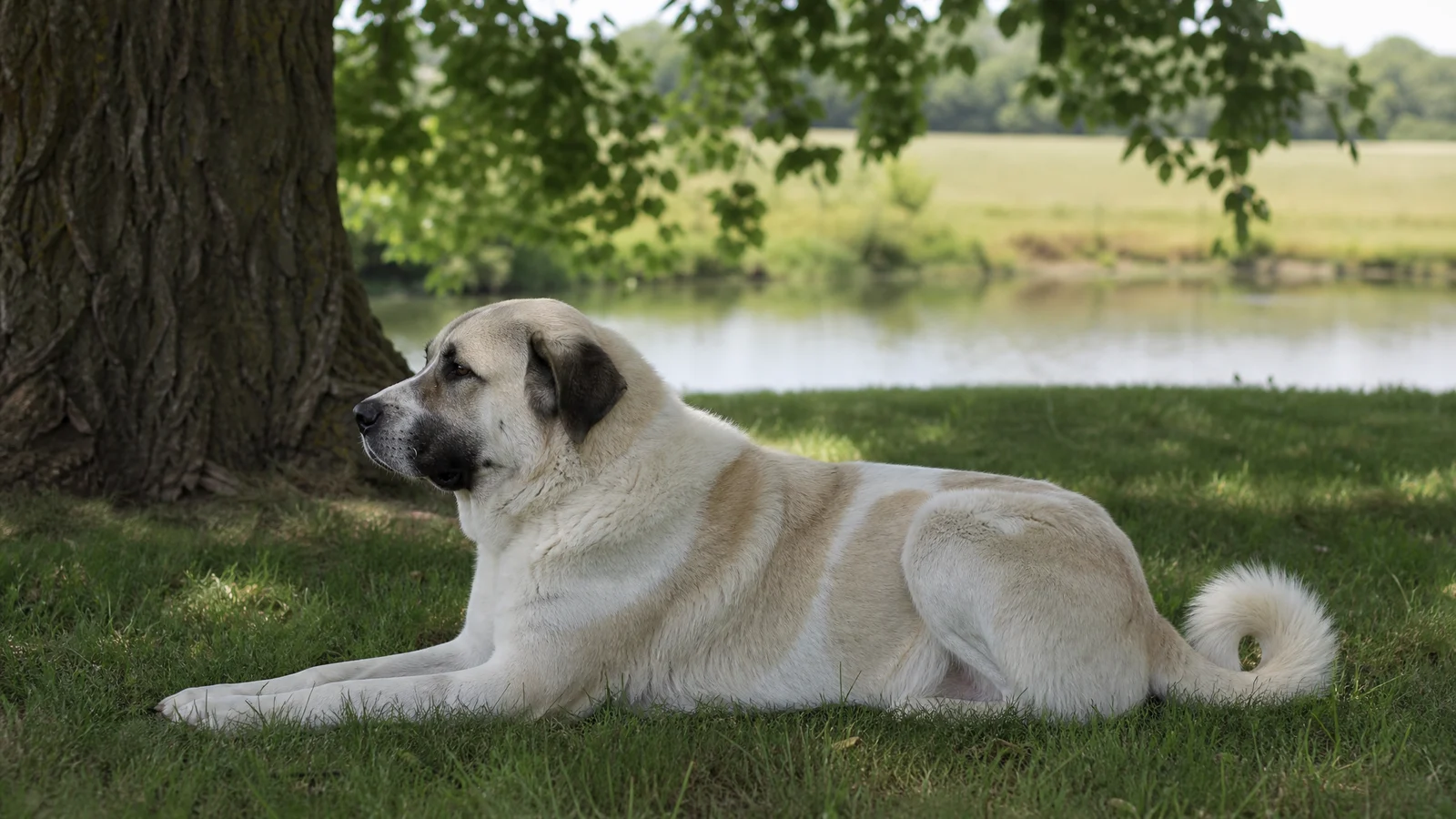
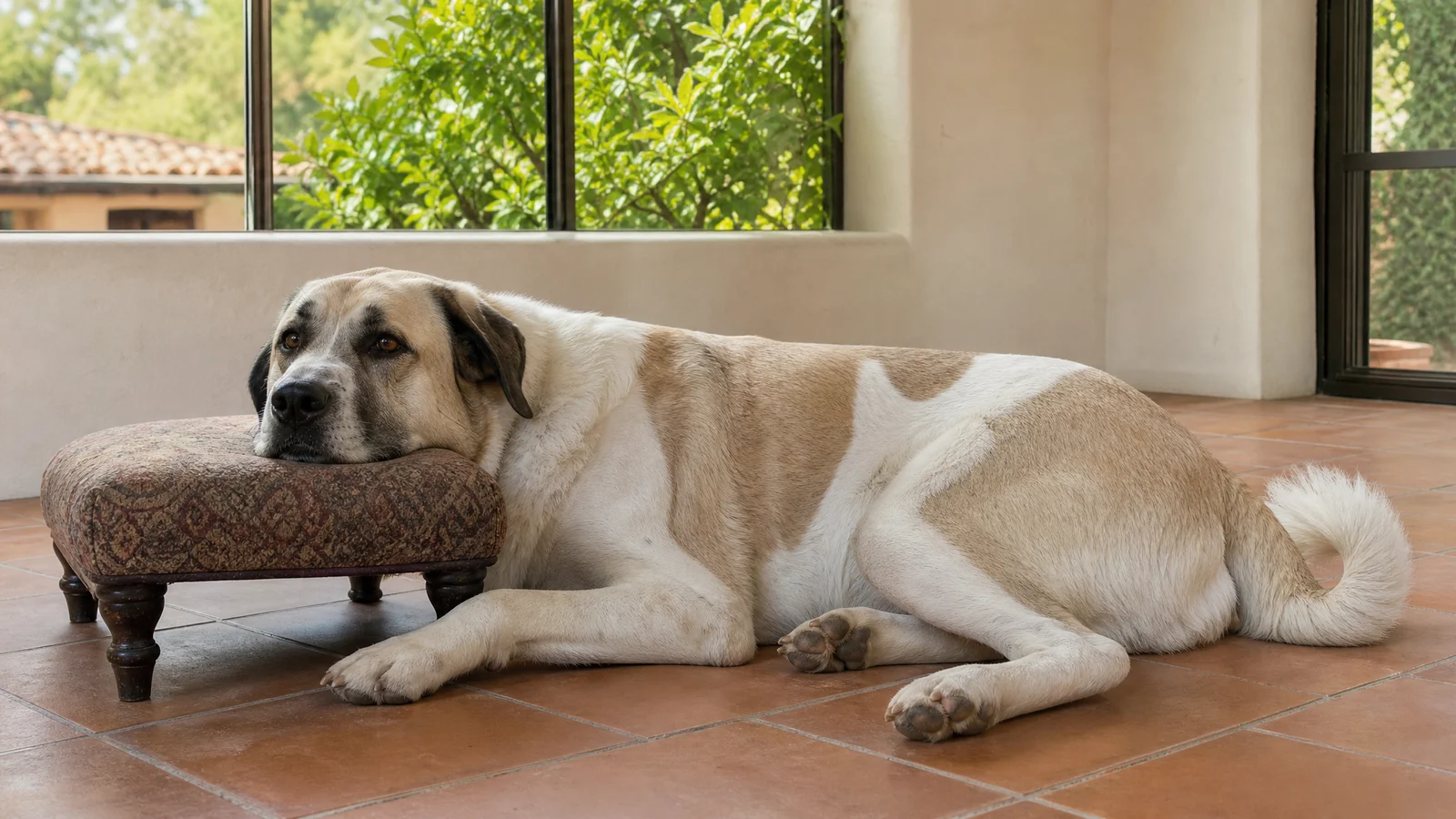
Teach an Anatolian Shepherd to lie down by beginning on a surface where lowering looks comfortable, then reward a voluntary movement toward the lying position. Use either a small food guide or capture a down the dog offers. Do not press on the dog, pull their legs or treat a slow response as proof of stubbornness.
The first choice is about the setup, not a judgment about motivation. Check the surface and starting position, select one voluntary route, then reduce the guiding signal after the movement is predictable. This lesson ends when the dog reaches the down position. Holding that position and relaxing there belong to separate training jobs.
Make Lying Down Comfortable for Your Anatolian Shepherd
The Battersea down guide recommends a comfortable surface and notes that a dog may begin from standing if sitting looks uncomfortable. Choose a non-slip area with room to lower naturally. Before presenting a cue, observe whether the dog can make the movement without being physically placed.
If lowering repeatedly looks uncomfortable, pause the lesson and seek individual veterinary advice. Training cannot identify the reason, and this article does not prescribe an exercise for a dog who may be uncomfortable. Maintain regular veterinary care and use the Anatolian Shepherd handling guide for its separate cooperative-care topic.
The United Kennel Club breed standard describes the breed as naturally independent, intelligent and tractable. That broad description does not explain one dog's movement or comfort. Make decisions from the setup in front of you instead of using a breed adjective as a diagnosis or a reason to force the position.
Two Ways to Find a Voluntary Down
Both routes look for the same endpoint: the dog's chest, elbows and body lower into a comfortable lying position by their own movement. Begin with one route rather than alternating rapidly. The general guided approach has three parts before the details differ:
- Present the guide close to the nose and move it gradually toward the floor, leaving the dog room to follow without pressure.
- Mark and reward comfortable progress when the dog lowers. If the movement stops, reset instead of pushing the body farther.
- Mark the completed down and deliver the reward low, where the finished position occurred.
Guide a Comfortable Movement
Start with a small guide rather than a sweeping motion. Lower the food close to the dog's nose, then move only far enough to invite the chest and elbows toward the floor. Some dogs may lower in stages. Reward useful voluntary progress, and begin again if the dog stands, turns away or cannot continue comfortably.
Keep the path clear so the dog does not need to crawl under furniture or squeeze through a barrier. The guide is information, not leverage. If the dog follows the hand but does not reach the floor, change the surface or starting position before making the gesture larger. A completed down should come from the dog's own movement.
Capture a Down the Dog Offers
Capturing is an alternative when the dog already lies down comfortably during an ordinary calm moment and understands a marker. Wait without repeatedly saying down. When the dog begins the natural movement, mark the completed position and place the reward where they are lying. The marker identifies the action without a food guide.
Do not turn rest into constant surveillance or repeatedly interrupt the dog after they settle. Capture a suitable offered movement during a brief training opportunity, then finish. This route teaches the same position as the guided route, but it depends on a marker the dog already understands and on an appropriate voluntary down to appear.
Give the Anatolian Shepherd Down Cue a Smaller Signal
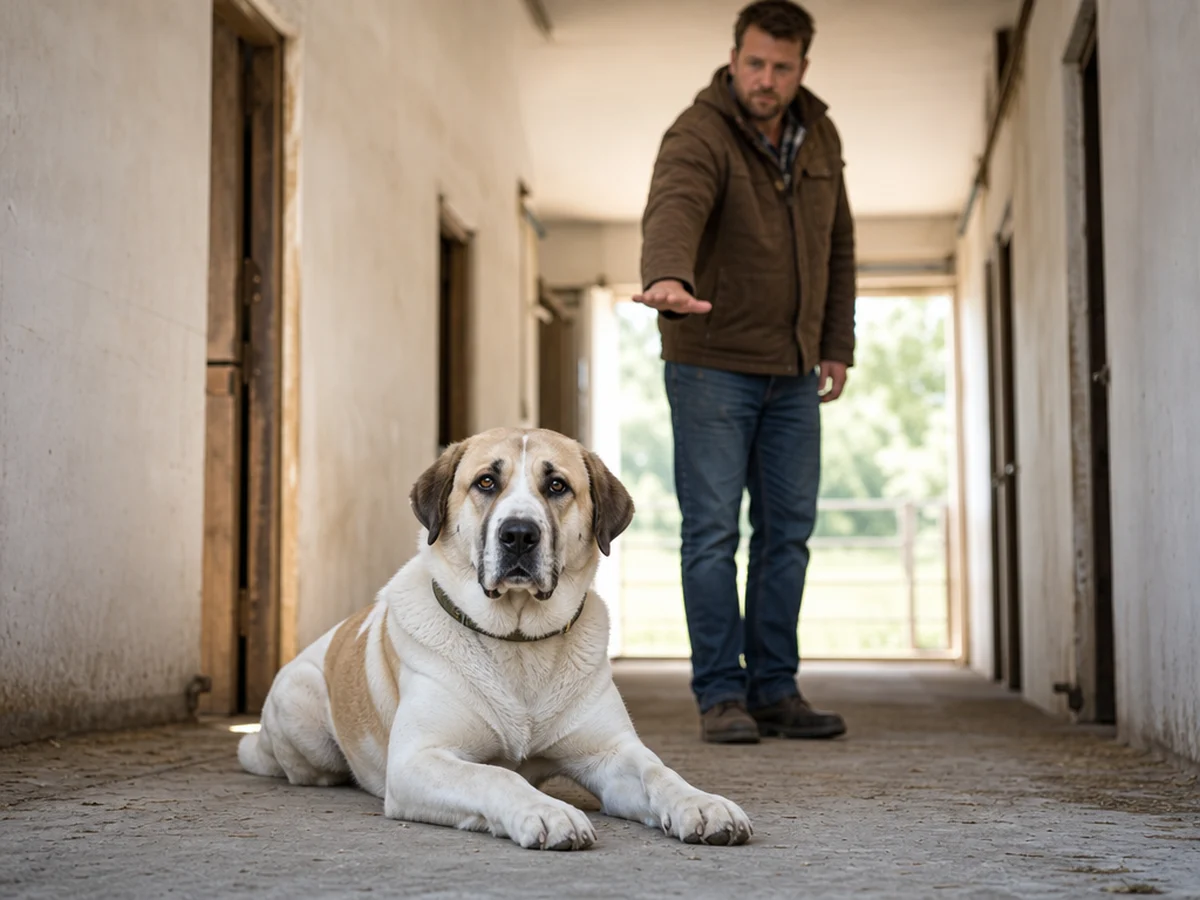
Once the dog follows the guided route predictably, begin removing food from the guiding hand. Battersea's sequence supports rewarding from the other hand, adding the verbal cue and gradually reducing the gesture. Say down before the familiar small signal, mark the completed position, then reward. The word should predict the movement rather than compete with an unfamiliar hand motion.
The American Veterinary Society of Animal Behavior distinguishes a cue, a marker and a reinforcer in reward-based training. Keep those jobs separate while the signal gets smaller. A word or hand signal requests the down, the marker identifies the completed movement and the reward follows it.
The RSPCA training guidance recommends short, regular sessions so a dog is not overwhelmed. Short sessions do not create a breed-specific deadline. End while the setup remains clear, and return later rather than repeating the cue or enlarging the gesture until the dog responds.
Questions Left About Teaching Down
The useful body has established a comfortable setup, two voluntary routes and a smaller signal. Three narrower gaps remain about partial lowering, keeping a visual cue and the endpoint of the position. These answers do not add duration or turn the lesson into a relaxation program.
What if the Anatolian Shepherd lowers only their front half? Treat that as information about the current route. If the movement remains comfortable, mark useful progress and reset for another short attempt. If the dog cannot continue or repeatedly looks uncomfortable, stop and seek individual veterinary advice rather than pushing the hips or legs into place.
Can you keep a hand signal for down? Yes. A clear, smaller hand signal can remain the cue if that is the signal you choose. Remove food from the guiding hand and avoid making the motion larger each time. Keep the marker and reward separate so the dog is not simply following visible food.
Should a down include staying on the floor? Not in this position lesson. Mark and reward reaching the down, then use a clear release for the completed attempt. A separate stay lesson can build duration after the position itself is understood. Do not withhold the reward until an untrained hold has also occurred.
A Down Is Not an Anatolian Shepherd Off Switch
A down cue asks for a position change. It does not establish that the dog feels relaxed, and it does not require the dog to remain there indefinitely. Mark the completed movement, reward it and end the attempt clearly. The Anatolian Shepherd settling guide owns voluntary relaxation and the separate off-switch reader job.
Keep the training question narrow. Check comfort first, invite one voluntary route and reduce the signal only after the movement is predictable. If lowering is uncertain, pause and seek individual guidance. A useful down lesson finishes with a comfortable position the dog can identify, not a promise about calmness, duration or instant obedience.
 Exercise and jobsHow to Teach an Anatolian Shepherd to Shake and High Five
 Training basicsHow to Teach an Anatolian Shepherd to Focus on You
 Exercise and jobsEasy Tricks to Teach an Anatolian Shepherd