
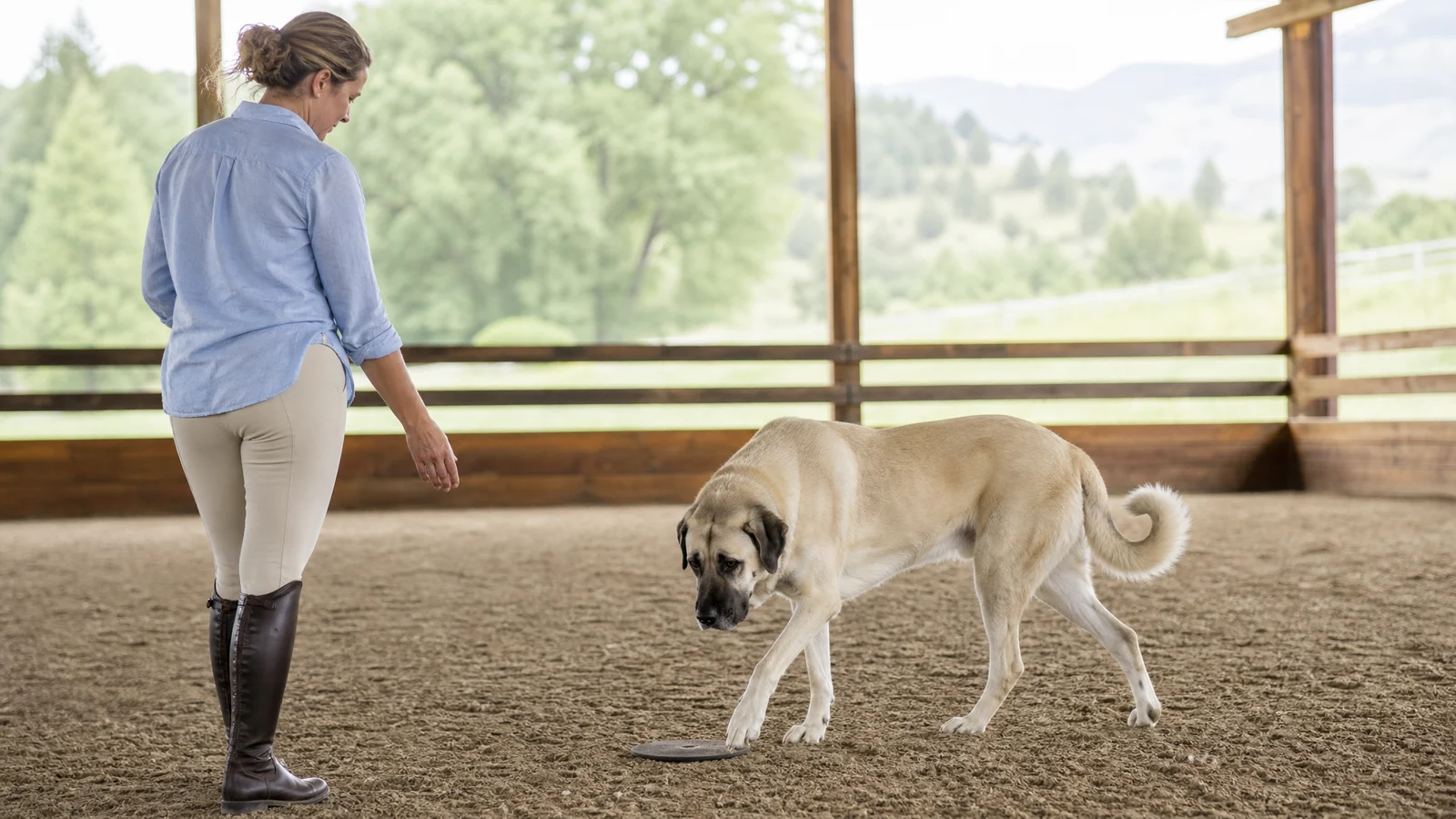
An Anatolian Shepherd can learn one slow spin when a controlled turn is comfortable for that individual dog. The trick is optional, and it should never be used to prove intelligence, meet an exercise target, or push through hesitation.
In this guide, we check suitability first, choose one direction, and guide a single unhurried circle. We then remove food from the guiding hand, reduce the hand signal, and add the spoken cue only after the movement is familiar.
Use secure open space and a level nonslip surface. Stop if the dog looks uncomfortable, loses balance, or declines to follow, because changing to a stationary activity is a valid training choice.
Before You Teach an Anatolian Shepherd to Spin
The Battersea spin guide begins with individual suitability and excludes dogs whose existing health or joint concerns could be aggravated by turning. If suitability is uncertain, ask a veterinarian before using this lesson.
Watch the dog walk and turn naturally in the practice area before presenting food. A comfortable candidate can follow your hand without slipping, crowding furniture, or twisting sharply to stay with the guide.
Plan the route before asking the dog to move. Stand far enough from walls and furniture for a broad circle, decide where the turn will end, and keep the starting area consistent so one smooth path remains easier to recognize than a moving target.
The UKC Anatolian Shepherd standard describes the breed as independent and intelligent, but those broad descriptors do not make a physical trick necessary. Keep the fuller discussion of reward choice and independence with Anatolian Shepherd temperament.
Teach One Slow Spin Without Naming It
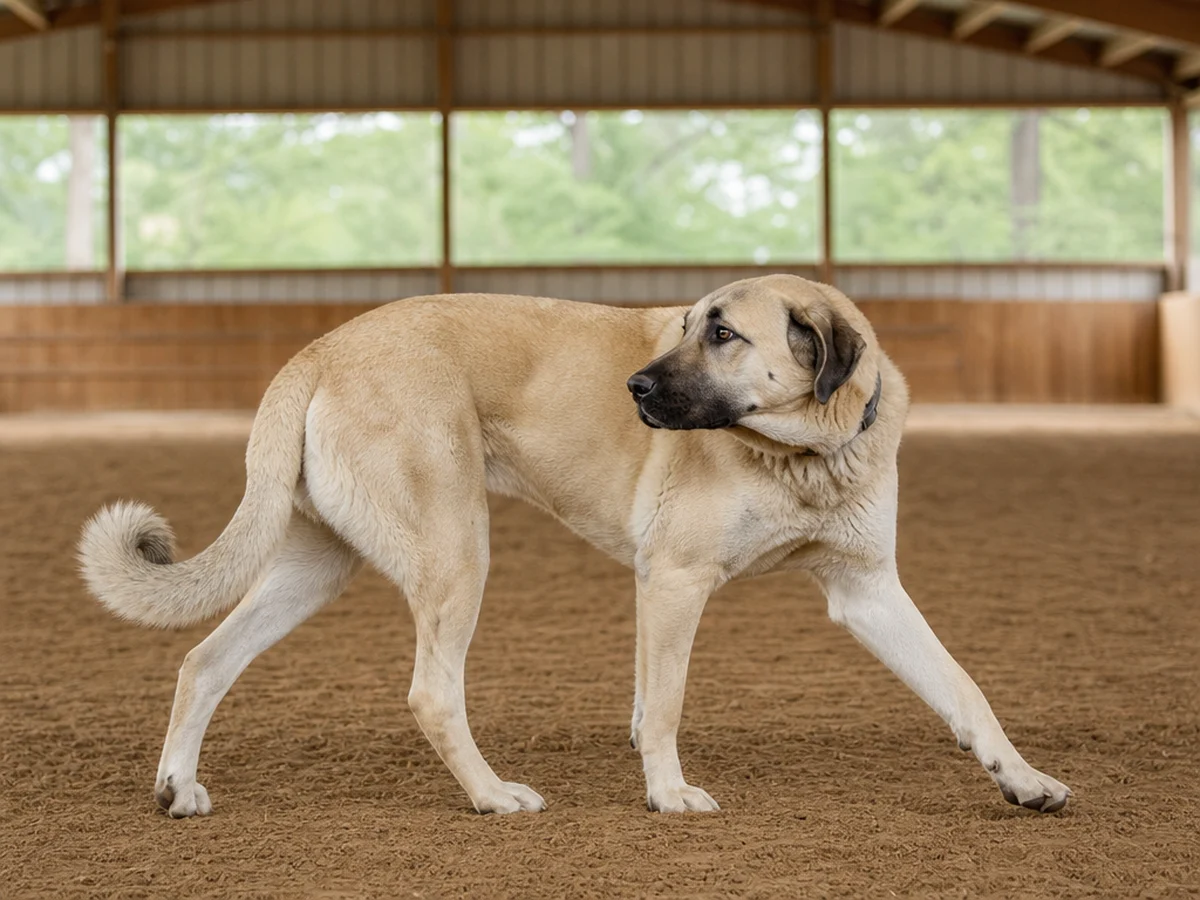
Choose one direction and keep the food close to the dog's nose without pressing it against the face. The general spin method below asks for one comfortable circle, rewards completion, and stops before speed or repeated rotations become a goal.
- Stand with enough open space for the dog to turn without brushing obstacles. Hold the reward where the dog can notice it while keeping their head in a natural position.
- Move the guiding hand slowly toward one shoulder and around the dog's body. Let the feet follow in a broad comfortable path rather than drawing a tight pivot.
- Complete one circle in the chosen direction and bring the dog back to the starting orientation. Stop the guide if the dog stalls, backs away, or loses balance.
- Mark the completed turn and deliver the reward. Reset calmly, and end the lesson if another turn would ask for less comfort or attention.
Reward placement helps define the finish. Deliver the reward where the circle ends instead of drawing the dog directly into another rotation, then allow a neutral pause in which the head and body can settle before deciding whether practice is over.
Do not add the word yet, because the food and hand movement are already the clearest information. First make the path easy to follow, then change only one part of that guidance at a time.
From a Food Guide to an Anatolian Shepherd Spin Cue
The RSPCA training guidance supports reward-based practice in short sessions with something the dog values. Use that reward after the turn while changing the signal gradually rather than testing how quickly food can disappear.
| Training stage | Signal change | Success to notice |
|---|---|---|
| Food guide | Food stays in the hand that traces one slow circle. | The dog follows comfortably and finishes facing the starting direction. |
| Empty hand | The same hand traces the path without holding food. | The dog follows the familiar movement and receives the reward from the other hand. |
| Smaller signal | The empty-hand circle becomes a compact gesture. | The dog completes the turn without needing the hand beside the nose. |
| Spoken cue | The word comes before the familiar small gesture. | The dog begins to connect the word with the already understood turn. |
The Empty Hand Still Gives Information
Removing food from the guiding hand does not remove the hand signal. Trace the known path with the empty hand, reward from the other hand, and make the gesture smaller only while the dog continues to turn comfortably.
The AVSAB humane training statement describes reward-based work with cues, markers, and reinforcers. That framework keeps the spoken cue separate from the marker that confirms the completed movement.
Questions About Teaching Spin
Can a spoken marker replace a clicker during spin practice? Yes, a consistent spoken marker can identify the completed turn before the reward arrives. Use a short distinct word, and keep it separate from the cue that asks the dog to begin spinning.
What if an Anatolian Shepherd walks away before practice? Let the dog leave and review the setting, reward, and current comfort before trying again. Choose a stationary activity if the dog does not rejoin willingly, rather than using food to pursue or corner them.
Does the spin trick replace planned exercise? No, one controlled turn is a training activity rather than a complete physical plan. Keep daily movement and enrichment decisions with the broader Anatolian Shepherd exercise guide.
One Comfortable Turn Can Finish Teaching Spin
A successful lesson can finish after one smooth circle and a reward. There is no required speed, repetition count, second direction, or date by which the dog must respond to the spoken cue.
Keep regular veterinary visits part of your dog's care, and pause this movement if comfort or mobility changes. A single voluntary turn on a clear cue is enough for this article's job, while any other tricks remain separate lessons.
 Training basicsHow to Teach an Anatolian Shepherd to Lie Down
 Exercise and jobsHow to Teach an Anatolian Shepherd to Shake and High Five
 Training basicsHow to Teach an Anatolian Shepherd to Focus on You