
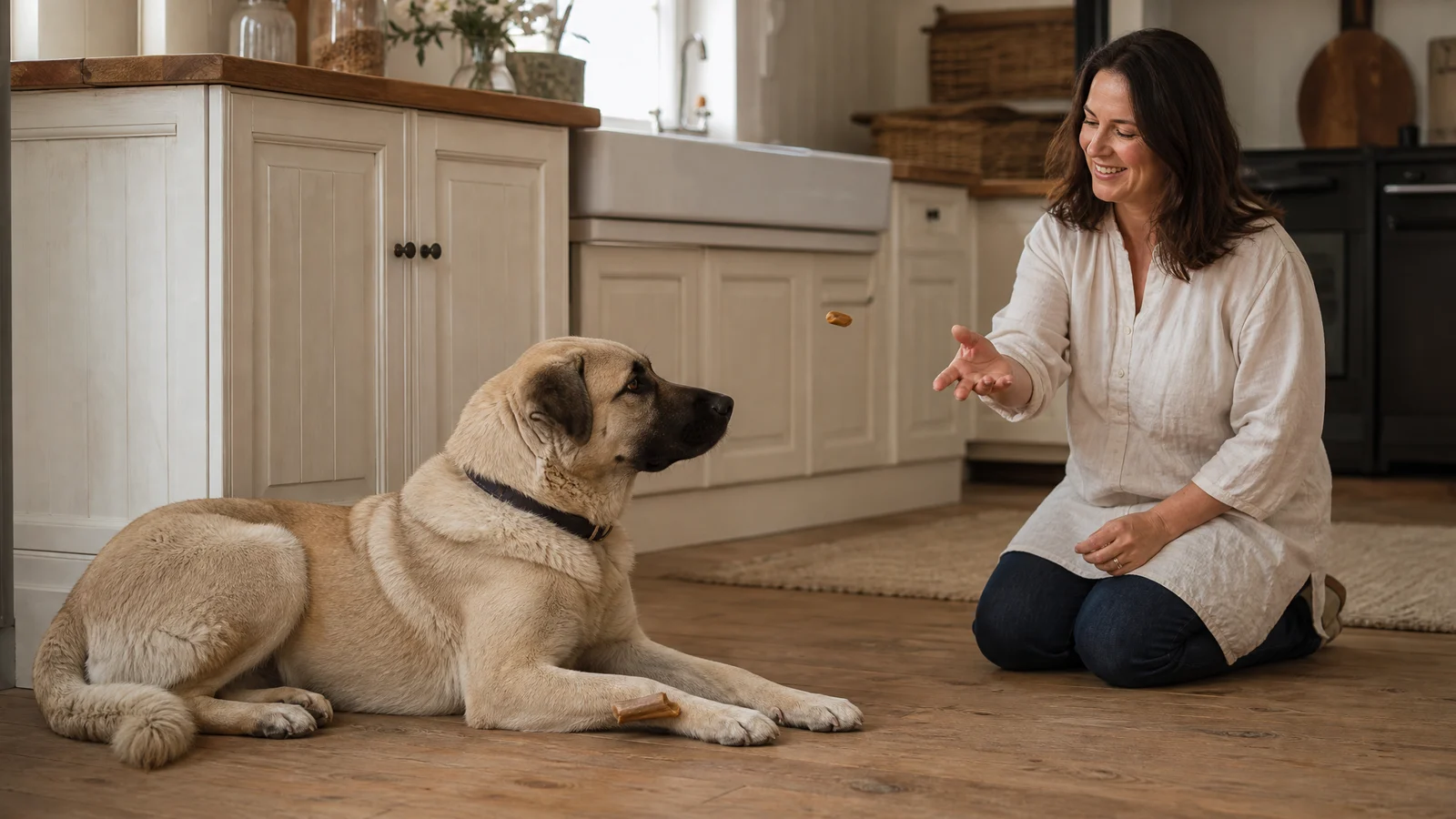
Yes, you can reduce resource guarding in an Anatolian Shepherd. Start with management that stops the dog from practicing it, then teach rewarded trades so giving things up pays. The habit has a clear source. These dogs were developed to hold what is in their care and to make independent decisions when danger appears. In the home, a bowl, a chew or a couch can register as property worth keeping.
Size raises the stakes. The standard calls for a large, powerfully built dog, and the breed's protective rating is 5 of 5. We have trained this breed for many years, and the order of the work matters more than any single drill. The sections below explain why the instinct exists, the management that stops rehearsal, the trading skill, staged practice for bowls and resting spots, and the body-language markers of real progress.
Resource Guarding Starts as Anatolian Shepherd Instinct
Guarding a bowl is the working trait pointed at household objects. Two things matter here: why valued items get held, and what the first signals look like.
Why Valued Things Get Held
The original function of this livestock guarding dog was protecting flocks of sheep. Since then the breed has guarded goats, horses, cattle, llamas, ostriches and poultry. A dog with that history learns that whatever is in their care stays in their care. A bowl, a chew or a warm bed fits the pattern easily.
Independence adds to it. Breed ratings put trainability at 2 of 5 and openness to strangers at 1 of 5. The standard calls the dog highly territorial. A vigilant, reserved, self-directed dog does not hand things over just because someone asks. Not every Anatolian guards food, and dogs vary, but plan for it before it appears.
Early Signals Before a Growl
Guarding starts quietly. Look for a body that goes still, a head lowered over the bowl, eating that speeds up, a hard stare, a closed mouth, a body curved around the item, or a sideways glance that shows the whites of the eyes. The usual escalation runs freezing, growling, snapping, biting. Each step asks for more distance.
The standard describes a dog who is bold but calm unless challenged. For this breed, stillness is often the loudest signal. A growl is information too. Stop, add distance, and change the setup so the dog is not put there again. Answer the early signals and you rarely meet the late ones.
Management That Prevents Resource Guarding Now
Every time guarding works, the dog learns that it works. Management ends those rehearsals while skills come in, and it costs almost nothing. Put these changes in place before the first training session.
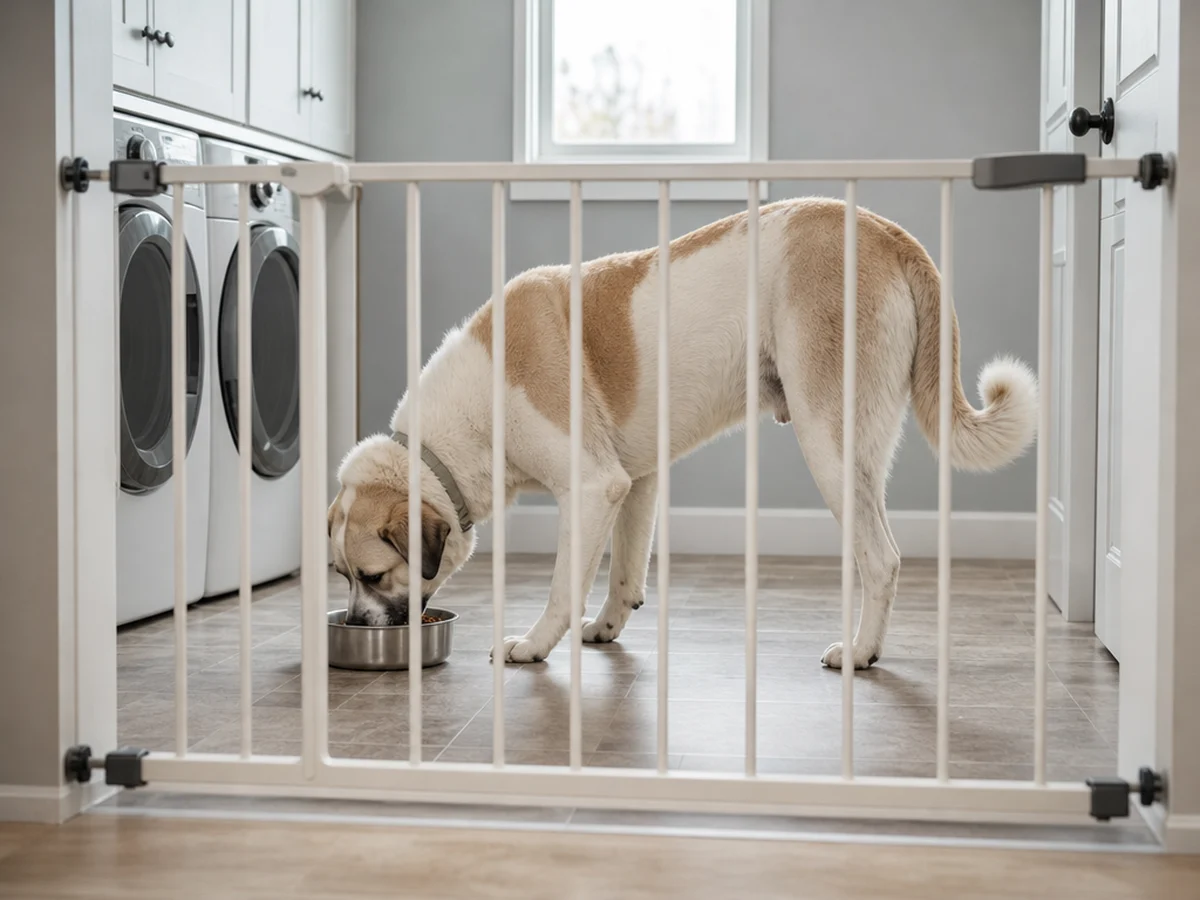
- Feed in a closed room or behind a solid barrier, and let the dog finish with nobody walking in.
- Pick up the empty bowl only after the dog has wandered off by choice, so no leftover crumbs become something to defend.
- Give high-value chews only in a room where the dog is alone, and collect them later by trading, not by reaching in.
- Keep children out of the room during meals, chews and naps. Ratings put the breed at 3 of 5 with young children, meaning supervised only, and guarding is a reason to be stricter.
- Feed other pets in a different room and keep them away from the dog's bed and bowl.
- Scan the floor for socks, tissues, bones and kids' toys before the dog finds them.
- Move beds out of doorways and hallways, so the dog is not defending a route as well as a spot.
Choose sturdy over flimsy. A grown, powerfully built guardian will not respect a light baby gate, so use a real door or a tall, firm barrier. Keep the feeding spot out of the household's walking route, on a non-slip floor, in the same place on the same schedule every day.
Never walk up to a dog who is holding something. Call them to a treat in another spot and trade when they arrive. Feed and hand out chews before visitors come, then keep the dog away from food while guests are in the house. Wider guidance on visitors, children and other dogs is in the household socialization guide for Anatolian Shepherds.
Teaching Trades for Resource Guarding Without Taking the Bowl
The trade is the first skill, and it has one purpose: your approach should predict something better than what the dog holds. A guardian bred to keep what they are responsible for must learn that releasing an item pays more than clinging to it. This is reward-based training at work, since dogs tend to repeat actions that bring rewards they value.
- Start by pairing a marker with food in a calm room. Say the word, then give a treat within 3 seconds. Repeat until the dog turns toward you at the sound.
- Pick a low-value item, such as a worn toy or a plain chew, and a treat that is clearly better, such as cooked chicken. Close the door so no children or animals can wander in.
- Show the treat at nose level. The instant the dog opens their mouth or steps away from the item, say the marker and pay.
- Hand the item back whenever it is safe. A trade that always ends in loss teaches the dog to grip harder.
- Repeat until the dog lets go as soon as you reach for the treat pouch. Only then raise the item's value one step.
Expect a long run of easy repetitions. A breed built for independent judgment answers slowly. The basic marker and cue work appears in the complete Anatolian Shepherd training guide. If the body goes still or curls around the item, step down to a cheaper object.
Common advice says to reach into the bowl and take food away often, so the dog gets used to it. For a guardian, that rehearses loss and teaches them to tighten up. Trade instead, and keep bowl contact for the staged practice below.
Building Anatolian Shepherd Bowl Comfort in Small Stages
Bowl comfort grows from stages that change one thing at a time. Run them at ordinary mealtimes, alone, with a door closed behind you. Each stage may take many meals. The table lists the stages in order, each named for what you do and paired with the sign that lets you advance.
| Stage | What you do | Advance when |
|---|---|---|
| Passing | Cross the room at a distance where the dog keeps eating loosely, drop a treat near the bowl and keep walking. | The dog looks up with a soft face when you appear. |
| Pausing | Stop for a moment at that edge, drop the treat, then leave. | The dog turns toward you instead of curving over the bowl. |
| Approaching | Shorten the distance a step at a time on later meals, using the same drop and leave. | The body stays loose at the closer spot. |
| Adding | Walk up and drop better food into the bowl while the dog eats, then step away. | The dog keeps eating or glances up happily. |
| Touching | Rest a hand on the rim, add food and step back. | No stiffening and no speeding up. |
| Lifting | Raise the bowl, add something special and return it at once. | The dog watches calmly. |
Reading the Result
Go back a stage when you see a stiff body, a hard stare, faster eating or a lowered head. That is feedback about the size of the step, not a verdict on the dog. Change the distance or the food value in a session, never both.
Practice alone. Other adults join only after the dog is loose with you. Children never take part, because a large guardian who is still learning should not rehearse near a child. Schedule regular veterinary visits too, since pain can lower a dog's tolerance.
This is general information, not veterinary advice. Ask your veterinarian what and how much to feed, how to fit training treats into meals, and what to make of any abrupt change in appetite or guarding, since pain or illness can make a dog hold on harder.
An Anatolian Shepherd Learns to Share Space
The same staged logic covers beds, couches, doorways and gateways, but each place needs its own practice. Because the breed is highly territorial, a dog may treat a threshold as ground they are responsible for, even when they share a bowl easily. Comfort on the bed does not carry over to the couch.
Manage first. Put a bed in a calm corner where nobody steps over it, and shut the gate to rooms that start trouble. Never loom over a resting dog or reach to push them aside. Walk around, or call them by name from a distance.
Then practice. Stay at a distance where the dog remains loose. Walk past the bed, then drop a treat several steps away so leaving the spot pays. Mark the moment they stand and reward them away from the spot. Over many days, close the distance and slow your pace.
For doorways, ask for a pause and pay calm waiting before you walk through. Offer a clear alternate route, so passing never forces a squeeze past a dog who is lying in the opening. Work each place separately and note which ones are done. Reserve and watchfulness are normal for the breed, and the instincts behind other habits that can travel with guarding are covered in our look at Anatolian Shepherd behavior problems.
How Do You Know Resource Guarding Is Improving?
Progress shows in the body long before it shows in anything you can count. Compare the same four signals at each practice and write down what you see. The table pairs what a struggling dog shows with what an improving dog shows.
| Signal | Still struggling | Improving |
|---|---|---|
| Body when you appear | Freezes, stares, curls around the item. | Stays loose with a soft face and an easy gait. |
| Eating | Gulps faster or lowers the head over the bowl. | Keeps a steady pace while you pass. |
| Trades | Stiffens, refuses or needs coaxing. | Drops the item at the marker and takes the treat gently. |
| Recovery | Stays tense long after you leave. | Settles quickly and goes back to eating or resting. |
A bad day does not erase the work. If old signs return, drop back to the last easy stage and rebuild. Slow is normal for an independent breed rated 2 of 5 for trainability, so judge progress over weeks of practice, not single sessions.
Resource Guarding Eases With Patience and Help
Safe sharing is built over time. It is working when the body is loose near the bowl, trades are quick and easy, and the dog stays calm as family members move past their food, bed and doorway. Keep rewarding those moments even after they feel routine.
Ask a professional for help when you see any of these. Use the list as the threshold for bringing in outside support.
- Stiffening with a hard stare that continues even at distances where practice used to go well.
- Growling that gets louder, longer or more frequent as practice goes on.
- Snapping or lunging at a hand, a person or another pet.
- Any bite, however small.
- An abrupt shift away from how the dog normally acts. Book a veterinary exam first.
The ASPCA calls behavior modification the safest, most effective treatment and says it works by rewarding good behavior. Look for a credentialed reward-based professional, and bring your practice notes.
Guarding food and space is the guardian's job pointed at the wrong target. The instinct stays, and it does not need to go. Your task is to make sharing the safe, rewarding choice.
Manage meals and rest spots so the dog never has to defend them, let your approach keep bringing good things, and advance only as fast as their body says they are ready. A breed that spent millennia judging threats alone relaxes when your presence keeps paying, and you get a calm, loyal dog who trusts the people near their bowl, bed and doorway.
 Training basicsRecall and Off-Leash Safety With an Anatolian Shepherd
 Training basicsObedience Training for an Independent Anatolian Shepherd
 BehaviorWhy Anatolian Shepherds Bark at Night, and What Owners Can Do