
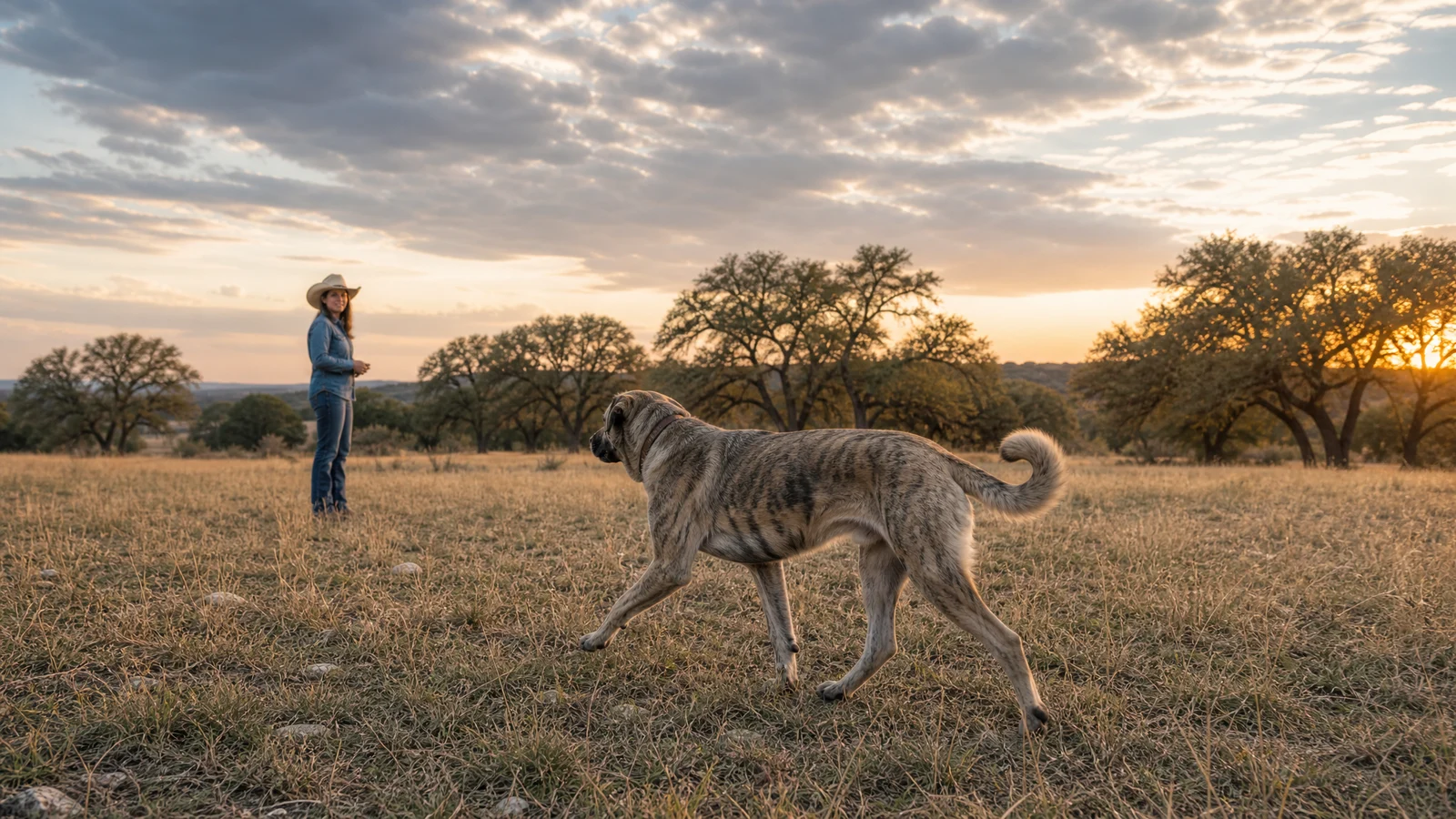
An Anatolian Shepherd from 6 to 12 months may be within adolescence, but the calendar cannot explain every change you notice. General veterinary and welfare sources use overlapping age ranges, and neither range is a breed-specific timetable. Treat age as context for observation, not proof that a missed response, a new concern or a difficult day is simply adolescence.
This guide separates those general age labels from the behavior in front of you. We will compare what the ranges mean, keep the breed description in its proper place, identify when individual help matters and outline one short reward-based practice. The goal is not to pass a birthday test. It is to choose between an ordinary familiar lesson and timely individual advice.
What the Six-to-Twelve-Month Window Can Tell You
The RSPCA’s adolescent puppy guidance says adolescence can begin between 6 and 12 months and may end between 18 and 24 months. Texas A&M’s puppy timeline describes the adolescent stage as spanning approximately 6 to 18 months. These ranges overlap, but they answer slightly different questions and should not be combined into a promised start or finish date.
| Source Range | What It Helps Describe | What It Does Not Establish |
|---|---|---|
| Possible onset between 6 and 12 months, with a later possible end | A broad general window in which adolescence may begin and continue | The month when an individual Anatolian Shepherd changes or settles |
| Adolescent puppy stage from about 6 to 18 months | Another general frame for discussing puppy development | A breed-specific schedule or the cause of a particular behavior |
The practical limit is as important as the range. A nine-month-old dog can be described as being within both windows, but that fact does not tell you why a response changed today. Likewise, reaching 12 months does not mean adolescence has ended or that training should suddenly look finished.
Use the Anatolian Shepherd training timeline for the wider sequence of stages. On this page, the age range only sets the background for deciding what you can observe, what remains uncertain and what kind of next step is supported.
Independence Does Not Explain Every Adolescent Anatolian Shepherd
The UKC breed standard describes the Anatolian Shepherd as naturally independent, intelligent and tractable. That is a breed description, not a diagnosis of an individual dog’s missed response. It does not establish that adolescence, independence or a guardian role caused what happened in a particular lesson.
A Breed Description Is Not an Observation
Begin with what you could actually see. A dog looking toward the doorway while a person speaks is an observable event. Calling the same event deliberate disregard adds a motive that neither the action nor the breed standard proves. Keeping those statements separate makes the next training choice smaller and clearer.
This distinction also protects the full temperament topic. The existing breed and training guides can discuss broad tendencies in their proper context. A stage article should not turn one standard phrase into an explanation for distraction, distress, discomfort or any other individual response.
A Missed Response Is Not a Motive
A response that does not occur gives you a result, not the reason for it. You can note the cue, the setting and the action that followed without inventing an intention. If you decide to practice again, simplify the ordinary lesson rather than trying to prove that the dog was stubborn, testing you or entering a fixed adolescent phase.
Do not use an age label to dismiss a sudden or serious concern. Age and breed context may be useful information to share with a professional, but they do not replace an individual assessment. The decision to seek help should follow the concern itself, not a theory about what this stage is supposed to look like. Broader exposure planning remains with the Anatolian Shepherd puppy socialization guide.
When a Six-to-Twelve-Month Concern Needs Help
The PDSA’s adolescent dog guidance advises seeking help early for ongoing or serious problems because behavior difficulties can worsen over time. That supports a clear boundary: do not wait for an Anatolian Shepherd to grow out of a significant concern merely because the dog is within a broad adolescent range.
Contact your veterinarian when health, pain or another medical issue may be involved. For a behavior concern, ask about an appropriately qualified, reward-based behavior professional. These routes answer individual questions that a general age-stage article cannot resolve, and seeking help does not require you to complete an observation project first.
Ordinary training difficulty and an urgent individual concern should not be forced into the same plan. A familiar response that becomes less clear in a busy room may call for an easier ordinary setup. A serious, persistent or rapidly changing problem calls for professional advice rather than a longer home test.
This article offers general age-stage and training information. Keep regular veterinary visits on schedule, ask your veterinarian about health, discomfort or a marked individual change, and seek qualified behavior support for ongoing or serious behavior concerns.
Keep Anatolian Shepherd Practice Short and Rewarding
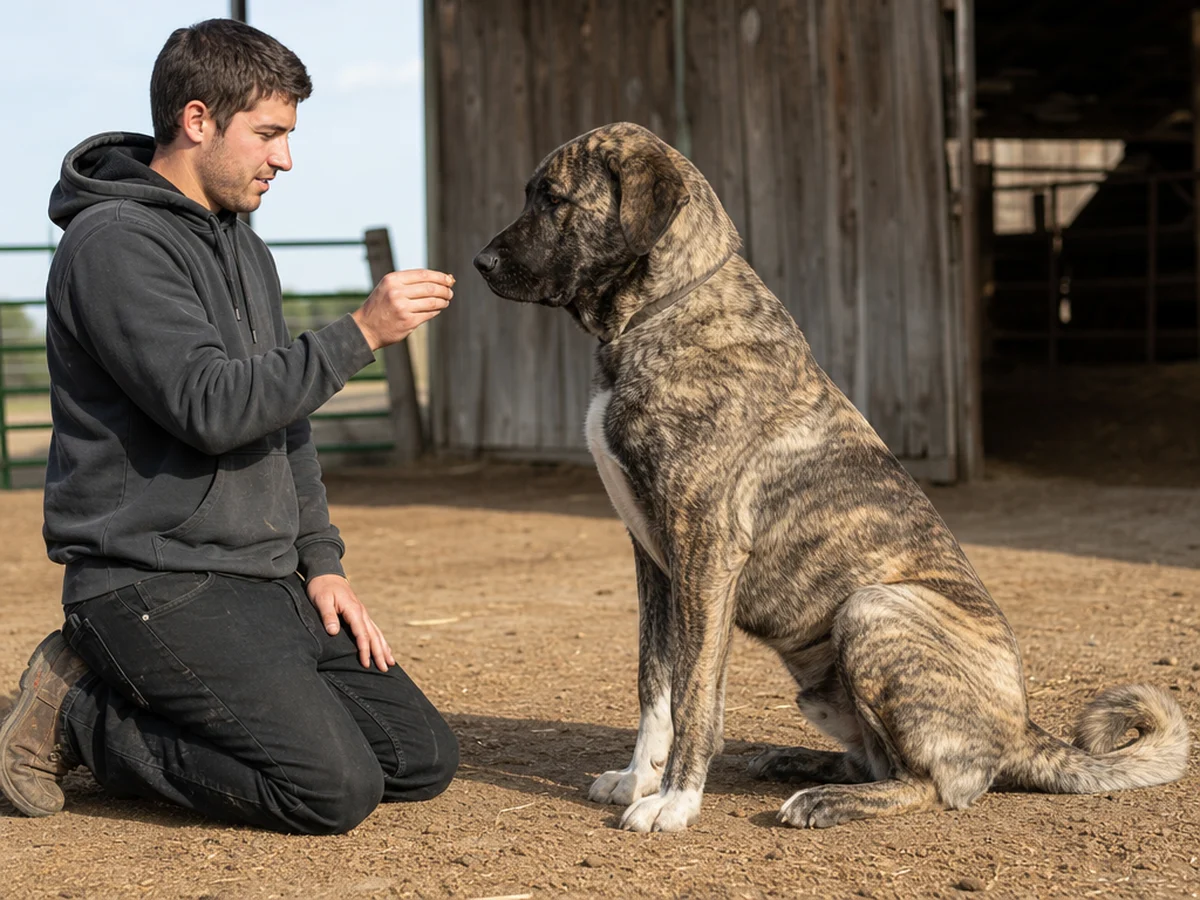
The selected reward-based training guidance favors brief lessons repeated over time, with the stated aim of avoiding overload. For this stage, use that general method with a behavior the dog already knows. This is not a progression for teaching a new cue, testing reliability or transferring a skill through a ladder of harder settings.
- Choose one familiar behavior and a quiet setting where you can recognize the response clearly. Decide what action you will reward before the brief practice begins.
- Give the familiar cue once, then notice the action that actually occurs. Reinforce the wanted response with an option suited to that dog, perhaps a small edible reward, brief play or warm verbal approval.
- Keep the practice short. If the familiar response becomes unclear, make the setup easier or finish instead of adding repeated cues, more distance or a new distraction.
- End the lesson as an ordinary supported practice, not a verdict on adolescence. Record a concern only if sharing the specific event with a professional would be useful.
A reward makes a wanted behavior more likely to occur again. It does not prove why another response was missed. Keep the teaching claim narrow. You are reinforcing a familiar action in this session, not correcting independence or establishing that an adolescent phase has started.
The short format also gives the lesson an honest endpoint. You can repeat another brief familiar session later, but there is no need to turn one successful response into a duration challenge. If a changed setting makes the task harder, return to the setting where the response was clear rather than adding a separate context-transfer program here.
Everyday Decisions Inside the Six-to-Twelve-Month Window
The body has established the limits of age ranges, breed descriptions, referral boundaries and a short familiar practice. Three narrower questions remain about using those limits in everyday decisions without creating a new test or promising a developmental outcome.
Does a birthday make an Anatolian Shepherd ready for harder training? No general source here supports a birthday-based jump in difficulty. Choose the next ordinary practice from the response you can observe, and keep the age range as background rather than treating it as evidence that the dog is ready for more duration, distance or distraction.
Should every missed response be written down during adolescence? No. A record is useful when it helps you describe a meaningful change or concern, but routine lessons do not need to become surveillance. If you do make a note, describe the setting, cue and visible response without assigning a motive.
Can praise be used instead of food in a familiar lesson? The selected source identifies edible rewards, play items and verbal approval as reinforcement options. Use an option the individual dog welcomes and that fits the brief familiar practice. This does not require withholding food or testing whether praise is sufficient in a harder setting.
An Anatolian Shepherd Does Not Need a Birthday Test
Between 6 and 12 months, a general adolescence label can organize questions, but it cannot grade the dog in front of you. Keep breed description, observed behavior and individual help as separate kinds of information. That prevents a broad age range from becoming a reason to demand more or to postpone advice.
Choose one of two bounded next steps. Continue a short reward-based practice with a familiar behavior when the ordinary setup remains comfortable and clear, or seek individual help when the concern is ongoing, serious or connected to health or discomfort. Neither choice requires a promised adolescent cure, a calendar deadline or a test of adult temperament.
 Puppy trainingAnatolian Shepherd Puppy at 8 to 12 Weeks: The First Month Home
 Training basicsHow to Teach an Anatolian Shepherd to Heel
 Training basicsClicker Training an Anatolian Shepherd