
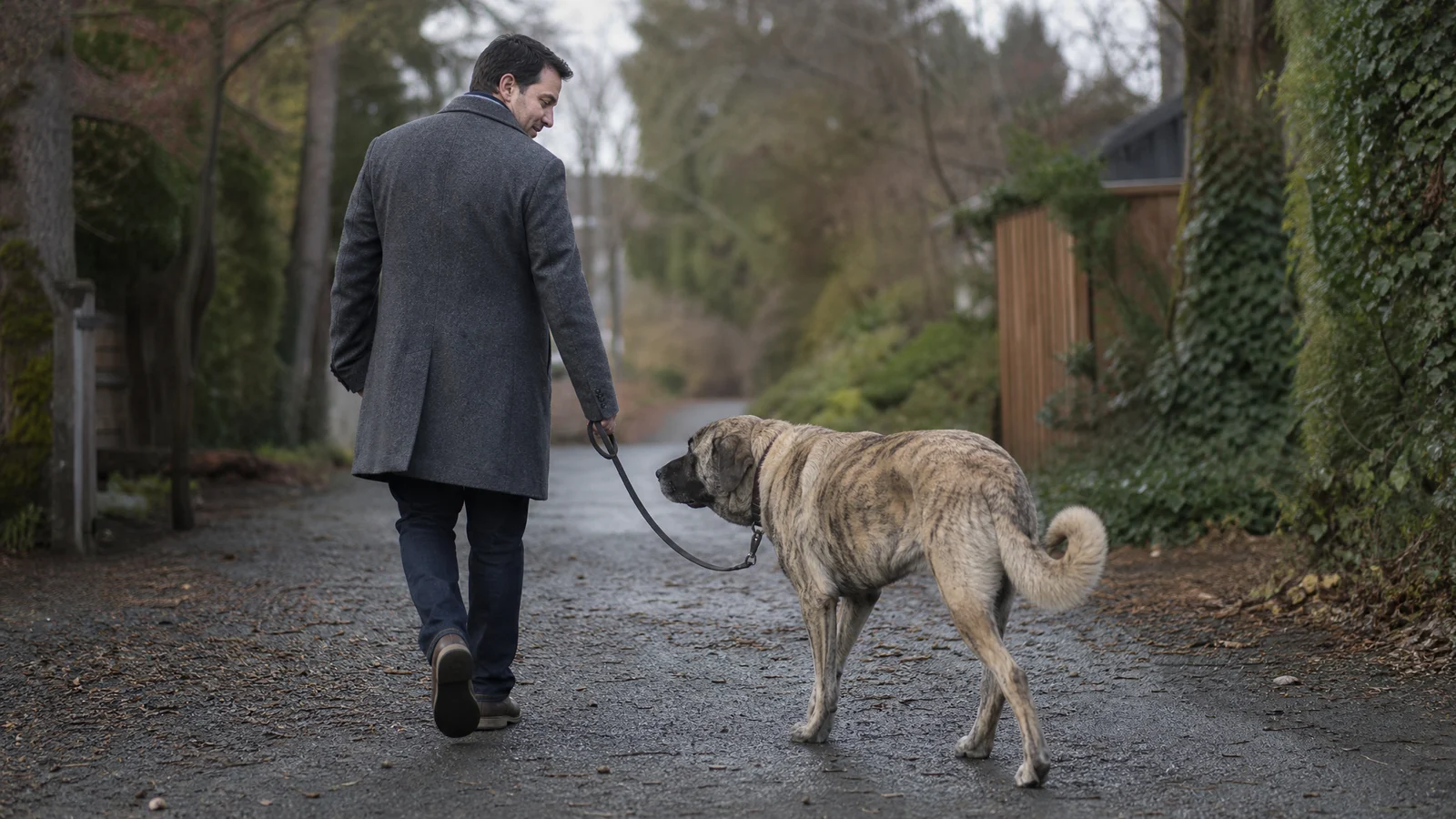
A lunge at another dog or a stranger tends to work for the dog who does it, and a behavior that pays off repeats. What helps is changing what happens when the trigger appears, and this guide covers that, from the first stiff posture to the point where a professional should join in.
Breed ratings add context without delivering a verdict. The AKC lists the Anatolian Shepherd as reserved with strangers, sums up its temperament as reserved, independent and loyal, and scores Good With Other Dogs at 3 of 5, a score its scale labels With Supervision. A reaction to an approaching stranger is no surprise, though the ratings describe the breed and not any one dog.
Why Anatolian Shepherd Reactivity Keeps Paying Off
Before any plan, it helps to see the walk from the dog's side. Leash reactivity covers reactions to other dogs, people, other animals, bikes and cars, and the dog may whine, bark, snarl, growl, pull or lunge. It can be scary or embarrassing for the person holding the leash, and it takes much of the fun out of walking.
Best Friends notes that barking, snarling and lunging are often successful for dogs who feel frightened, insecure or protective. In the dog world, these are distance-increasing behaviors: if the other dog does not take the hint, the person on the other end of the leash usually does, and the pair retreats. From the dog's side, the lunge solved a problem.
The reasons vary. Dogs may react because they are worried, but sometimes the cause is excitement or frustration. A friendly dog who wants to greet another dog and cannot may bark and lunge. Worry and frustration can look alike from the sidewalk, and the training below works the same way for both.
None of this says a particular dog will react, and none of it is a reason to give up on walks. It is a reason to plan encounters instead of leaving them to chance. Reactions to visitors at home are a different situation, covered in our Anatolian Shepherd visitors and strangers guide.
Early Signs and Quick Exits for an Anatolian Shepherd
Reactions rarely come from nowhere, and spotting the early signals is what makes a quick exit possible. The first job is learning what the quieter signals look like, and the second is having a way out ready for the day the trigger shows up closer than planned.
Signs Worth Learning
Battersea describes a threshold, the distance at which a dog can stay non-reactive around a trigger, as a bubble, and the dog begins to react when the trigger enters it. Subtle signs tend to appear as the trigger nears the edge, which gives an attentive handler a chance to act early. You can work out your dog's threshold by monitoring their behavior.
- Lip licking, whale eye and ears pulled back are early, subtle signs that a dog is worried.
- A yawn can be the first sign of discomfort, and looking away so the whites of the eyes show is a clear one.
- Moving away, crouching or turning the head aside are avoiding behaviors that tell you the dog wants more space.
- Growling, barking and sometimes snapping follow once the quieter signals have been ignored.
The reverse picture matters too. Battersea describes a relaxed, friendly dog as one with a loose, wagging tail and no tension in the face or body, which is the look to expect when a walk is going well.
When the Trigger Turns Up Too Close
Some encounters arrive earlier than planned. Battersea suggests a "this way" cue as an emergency U-turn: you say the cue as you turn away from the trigger, and your dog follows you off. Because it is built into loose-leash walking practice, the dog already knows the move when you need it, and our Anatolian Shepherd leash training guide covers that groundwork.
PDSA calls the escalation a ladder of communication. When early signals go unanswered, a dog moves up to more obvious ones, all the way to growling, snapping and biting, and a dog whose quiet signals have been missed again and again may skip rungs. A growl is a clear sign that the dog is distressed and asking for space, so PDSA says never to punish it: you are more likely to train out the warning than the worry.
Let your dog move away from whatever is bothering them instead, and give more space at the first lip lick so the quieter signals keep working. If your dog has noticed the trigger and is still far enough away to feel safe, that is also a moment for generous treats, because the sight of the trigger then arrives with something good attached.
Changing Anatolian Shepherd Walks Before the Training Starts
Sources advise limiting exposure to known triggers, which keeps your dog from rehearsing the behavior while training takes effect. That starts with knowing the triggers and the threshold, and it changes the shape of the walk.
Management asks something of the handler. Behavior specialists say you have to pay attention to learn the triggers, whether it is big dogs, all dogs or only dogs resembling one in particular, and then walk with your senses alert for the sight, sound or smell of them, ready to act as soon as one appears.
Behavior specialists treat management and training as a pair. Desensitization and counterconditioning is very effective but not an instant fix, and it is often slower at the beginning than most people expect, so management protects the training and keeps the dog feeling safe. Training without management risks slow or failed progress, and management without training leaves a dog who is still afraid.
An off-leash dog running up too close can make your dog lunge and bark and set the training back, which is exactly what these habits are meant to prevent. Because management will not catch every trigger, the same specialists say to be ready to do the counterconditioning on the spot when a trigger cannot be avoided.
Leash Rules and Walk Choices
The breed club adds a firmer line for this breed: Anatolians should never be allowed off leash off their own property, with the possible exception of completely fenced Sniff Spots where you and your dog can play privately.
- Walk at times of day and in places where triggers are unlikely, such as areas where dogs must be on leash and people follow the rules.
- Use the environment as a screen, since a parked car or a tree can block your dog's view of a trigger while it passes.
- Have set phrases ready to help other people understand that you would like them or their dog to stay away, which behavior specialists admit can be tricky.
- Skip routes with unpredictable encounters for now, and trade some walks for training or enrichment at home.
If walks need a temporary break, sources suggest other outlets for your dog, such as sniffing games in the yard, snuffle mats, training and other enrichment activities at home. The break also gives you time to learn the triggers and the threshold without pressure.
Practicing Anatolian Shepherd Reactivity at a Safe Distance
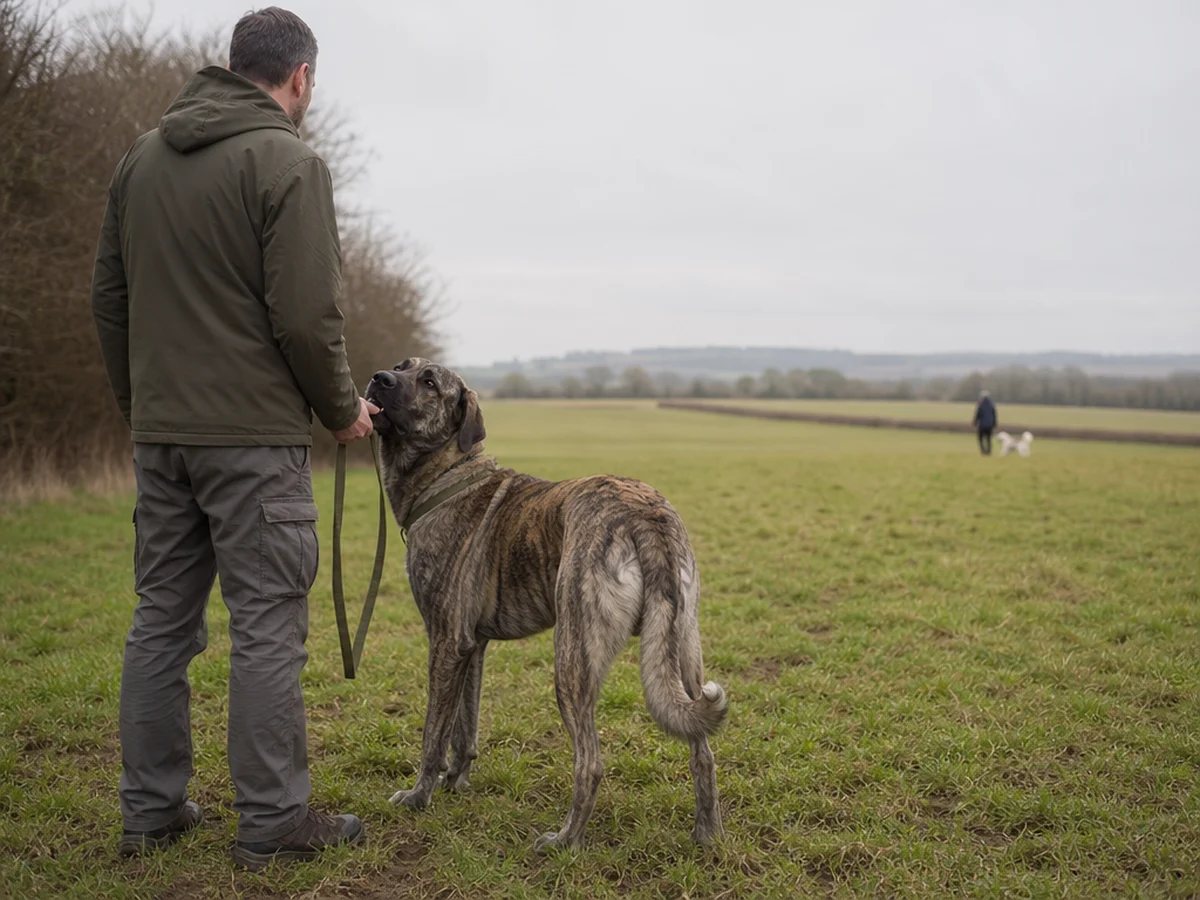
The method the sources describe is simple to state and slow to carry out. It pairs the sight of a trigger, at a distance where the dog can still cope, with something the dog enjoys, and it uses moving away as part of the reward.
Best Friends notes that the technique is the same whether the trigger is another dog or a person on a bike, because the dog's own goal, getting away from what bothers them, becomes the reinforcer for an alternate behavior.
Finding the Starting Distance
Start by working out where the line is. Battersea's threshold idea is the guide: note the distance at which your dog still notices a trigger and stays relaxed, and treat anything closer as too much for now. The sources give no numbers, so let your dog's body language set the figure.
Best Friends starts sessions with a helper, a person with a calm, well-mannered dog on leash. Approach only until your dog notices the other dog but does not react. Then lead your dog away to a spot where they can focus on you again, and celebrate with praise, toys or treats.
We would rather begin too far away than too close. A reaction at close range is more practice at the very behavior you hope to fade, while a trigger that your dog has noticed from a safe distance is a chance to hand over great treats, which is the counterconditioning part of the plan.
Closing the Gap Over Time
Repeat the approach and retreat several times, and always lead your dog away before a reaction starts. Keep the mood positive and fun, because the lesson is that seeing another dog predicts good things and an easy exit.
Once your dog begins to look to you in anticipation of moving away at the end of an approach, that look can become the cue to move off, and your dog is choosing the turn instead of the lunge. As positive experiences add up, the distance between the dogs can start to shrink, because your dog is more relaxed and confident in the new routine.
Real walks add one more skill, which is narrating the moment as it unfolds. Behavior specialists describe a running commentary: that dog is far enough away, that bouncy one needs more distance so we wait behind this parked car, and this one has been noticed from a spot where the dog feels safe, so out come the yummy treats. The last of those is the training part, and the first two are the management.
Getting Help With Anatolian Shepherd Reactivity
Home practice is a good start, though some situations call for more people on the team. Sources are clear that a vet visit comes first when behavior changes suddenly, and that a qualified professional should guide the work when safety is in question.
Start With the Vet
For any aggression problem, the ASPCA advises seeing the veterinarian before anything else, to rule out medical issues that could cause or worsen it. The ASPCA also notes that it can be just milliseconds between a warning and a bite, though dogs rarely bite without some warning first, and that a fearful dog may become aggressive if cornered or trapped. Behavior specialists add that a sudden change in behavior, or serious anxiety, deserves a vet visit too.
Routine veterinary visits are worth keeping up as well, and a calm, well-handled exam helps everyone, as our Anatolian Shepherd vet and handling guide explains. Ask the veterinary team whether anything about your dog's health could be part of the picture, and leave that judgment to them.
Choosing a Professional
If you cannot keep your dog safely managed at home or on walks, sources recommend seeking a behaviorist's help, and teaching a muzzle is one option to discuss with them. The safest, most effective approach is behavior modification guided by a qualified professional, and it works by rewarding good behavior.
Titles matter here. The American College of Veterinary Behaviorists says a veterinarian may call themselves a behaviorist only with board certification, while trainers and others face no such limit and need no education to use the word. Because the consequences and liability are serious, the college says any dog showing aggression should see a veterinary behaviorist. Our Anatolian Shepherd behavior problems guide covers the wider picture.
An Anatolian Shepherd Does Not Need to Meet Every Dog
A successful walk for a reactive dog does not have to include a greeting. Best Friends says even a dog who is comfortable around other dogs does not have to approach and meet every dog who comes along, and it cautions that on-leash greetings can build frustration that ends in a scuffle. Passing at a comfortable distance counts as a complete success. For the wider picture of meeting dogs and people, see our Anatolian Shepherd socialization guide.
Other people on the sidewalk may be working on similar challenges with their own dogs, and Best Friends says that not approaching them can be of great help with their training efforts. A dog who keeps walking gives theirs room to succeed.
 Training basicsHow to Teach an Anatolian Shepherd to Stay
 Training basicsIs an Anatolian Shepherd the Right Dog for You? What Training Takes
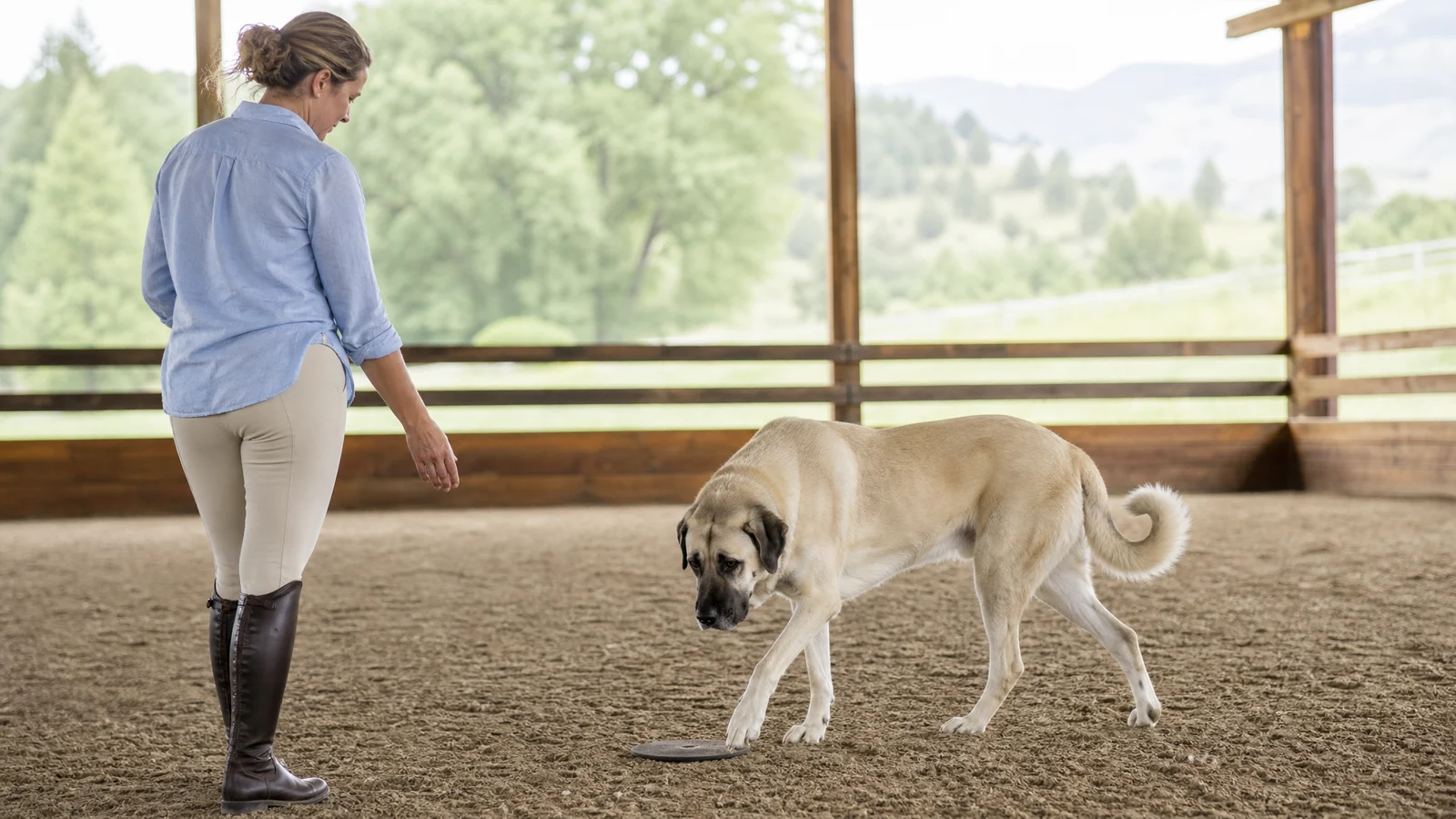 Exercise and jobsHow to Teach an Anatolian Shepherd to Spin