
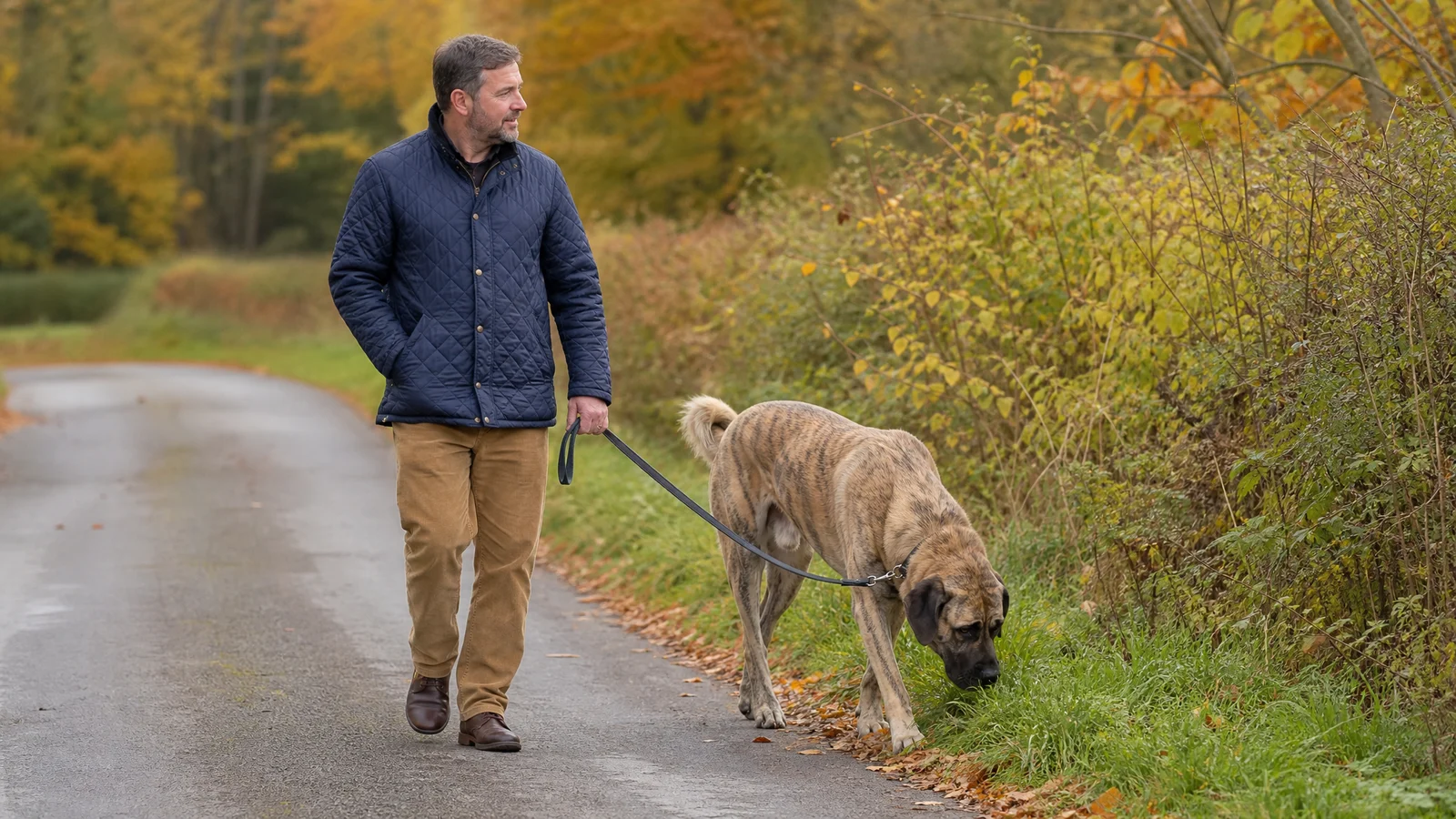
Some Anatolian Shepherds end the day stretched on a cool patch of ground, eyes half closed, ears still tuned to the far fence line. Their owners gave them a secure space to patrol and a slow, sniff-heavy walk. Others dig craters beside the gate, bark at every shadow and slip away the moment a latch fails, because all they got was a short trot around the block before work.
The difference is rarely mileage. These dogs were made for long hours of watching and strolling, so the right kind of movement beats the hardest kind, and a quietly busy mind counts as much as tired legs.
This guide covers exercise for an Anatolian Shepherd, from the patrol instinct behind it to the signs that tell you the plan is working, with walk length, fencing, escapes, brain games and rest days along the way.
Exercise Built Around Patrolling
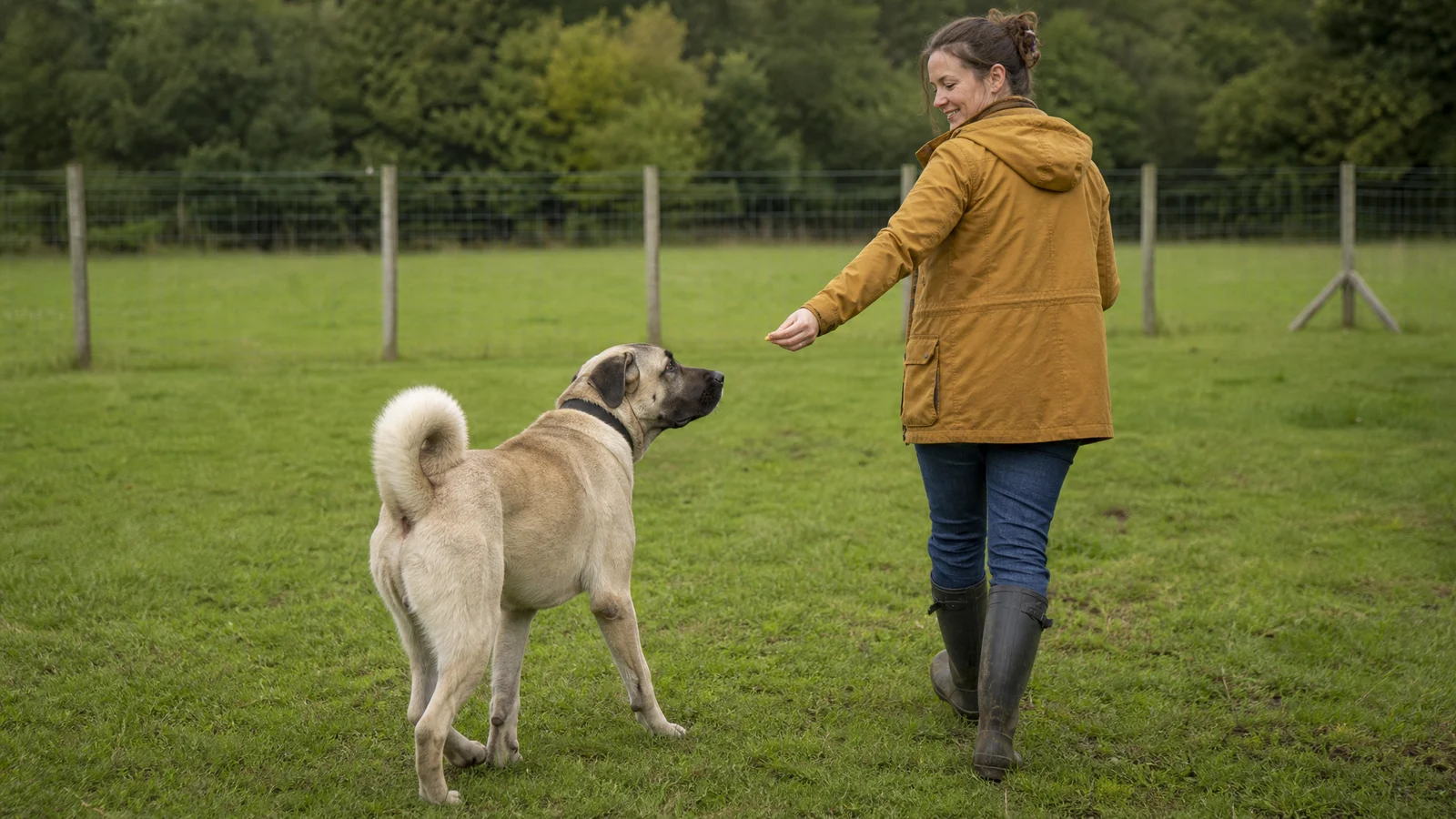
Start with what they were bred for. For millennia these guardians exercised independent judgment in response to perceived danger, and that job was never a sprint. It was long, slow rounds of watching, walking and deciding. Your daily plan should be a gentler echo of that rhythm, with unhurried time on their feet, plenty of looking and long stretches of resting with the world in view.
The published breed ratings sketch the shape of the day. Several sit in the middle of the scale, trainability sits below it, and one sits at the very top.
| Trait | Rating | What it means for your days |
|---|---|---|
| Energy level | 3 of 5, moderate | Steady stamina, not a dog who bounces off the walls |
| Mental stimulation needs | 3 of 5, moderate | Some thinking work daily, but no constant job required |
| Playfulness | 3 of 5, moderate | Play is moderate, so expect some but not non-stop |
| Trainability | 2 of 5 | Short sessions with rewards worth working for |
| Watchdog and protective nature | 5 of 5, vigilant | Watching and patrolling is the work they love best |
Turning Ratings Into a Routine
The breed standard describes a temperament that is calm and observant, and it says responsiveness with animation is not characteristic. So let go of the picture of a dog spinning with joy over a ball. Expect a dog who strolls a boundary, freezes to study a faraway sound, then ambles on.
General advice from a veterinary charity says some breeds need at least an hour or two of exercise each day, and that working breeds need more than that. For a guardian, read this as many hours of easy time outdoors, not short bursts of hard effort.
Common advice says to tire out a strong dog with hard running or endless fetch. We would skip it here. Hard exercise builds fitness without teaching calm, and a fitter Anatolian simply patrols harder and longer. We have trained this breed for many years, and steady rhythm tends to serve a guardian better than intensity.
If you later want a bigger outlet, our article on Anatolian Shepherd sports and jobs covers roles that suit this temperament. Choose the outlet around the individual dog's comfort and focus.
Anatolian Shepherd Exercise and Walk Length
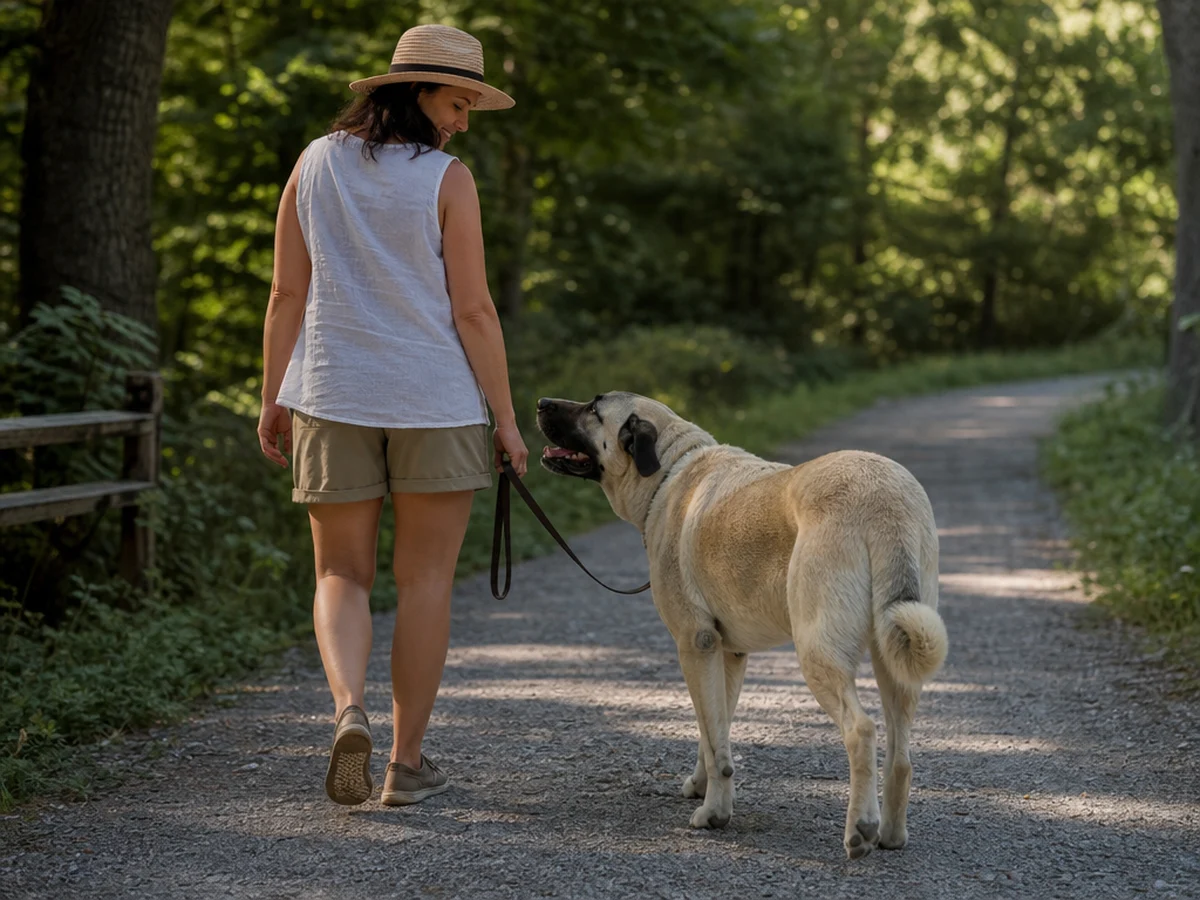
No source gives one right number of minutes for this breed, and dogs vary, so judge a walk by how your dog looks rather than by a clock. This table shows how pace and length shift with the situation.
| Situation | Pace and length | What to watch |
|---|---|---|
| Young puppy | Short, gentle, led by the puppy | Flopping down means the outing is over |
| Big adolescent | Steady and moderate, no hard repetition | A body that looks adult before the joints are ready |
| Healthy adult | Long and unhurried, with pauses to scan | Settling afterward, not pacing |
| Hot day | Cooler early and late hours, water along | Heavy panting, slowing down |
| Older dog | Shorter and more frequent, on softer ground | Stiffness when getting up |
Puppy Outings Led by the Puppy
Let the puppy choose the speed. Stop when they stop, and let them stare at a passing bicycle or a swaying branch as long as they like. A tiny treat for relaxed looking turns every pause into a lesson.
The parent club says the breed can be a superb, deeply bonded companion with proper and consistent socialization, and early introductions to as many new experiences as possible help produce a secure, confident adult. Outings are where that happens. Offer new sounds, surfaces and people one at a time, always at the puppy's pace.
Size, Joints and Footing
A big teenager can look like an adult long before their joints and judgment catch up. Keep the effort gentle. Skip long runs beside a bike, jumping drills and marathon ball sessions, and favor grass and packed dirt over long stretches of concrete.
Lay rugs on slippery floors, lift a puppy into the car and use a ramp for a big dog. At regular vet visits, ask what activity is right for your dog as they grow.
Reading Whether It Was Enough
Enough is the amount that leaves your dog loose in the body and happy to lie down and watch. If they come home and keep pacing, you probably need more variety, not more speed. Try a new route, a new smell or a longer pause at a good lookout.
Fenced Space Comes First for Exercise
A secure yard is where an adult Anatolian gets much of their daily movement, because walking a boundary is exactly what a guardian wants to do. Build the yard before you build the schedule.
A good exercise yard offers more than height. It should support both movement and quiet observation.
- Shade and fresh water, so a long watch never turns into overheating.
- A spot with a view, such as a rise or a corner with a clear line of sight, where a watchful dog can settle and look.
- Latches and gates that a clever, independent dog cannot work open.
- A boundary free of gaps, loose boards and soft ground where digging could start.
But a fence is a place, not a plan. A dog left alone outside with nothing to do will often pace, bark and dig, which is the opposite of the settled guardian you want. Stroll the boundary with your dog on a loose leash, reward calm check-ins with you, then let them rest.
Beyond the fence, keep outings on leash. A dependable recall is what makes off-leash time safe and worthwhile, yet these dogs were bred to make decisions alone, and that works against coming when called. Our article on Anatolian Shepherd recall and off-leash safety shows how to build the reliability you can.
Anatolian Shepherd Mental Stimulation
With mental stimulation rated 3 of 5, this breed does not need a constant stream of puzzles, but a little thinking work every day pays off. Keep every game slow and quiet. A thoughtful guardian does not need winding up, so choose games that lower arousal rather than raise it.
Scent Games
Smell is the best place to start. The ASPCA notes that letting a dog use their nose is both stimulating and calming, indoors or on walks, and gives them information about their surroundings.
Scatter a handful of tiny treats in short grass and say "find it." Once that is easy, tuck treats under towels or into open cardboard boxes. Stop while your dog is still keen.
Chew and Lick Puzzles
Spread something savory on a lick mat or tuck treats into a snuffle mat, and let your dog work at it slowly. Start easy so they win quickly, then raise the difficulty over several days. Because trainability sits at 2 of 5, keep the rewards generous and the sessions short.
The Look-and-Return Game
Your dog will notice things at a distance, because noticing is what they do. Turn it into a game. When they spot something far off, wait for them to look back toward you, say your marker word at that instant, and give a treat. They learn that watching and then checking in with you pays well, and the watching stays relaxed.
Settle Practice
Reward your dog for lying down on a mat, then build the time slowly and add small distractions. It is the most breed-appropriate game of all, because it teaches a watchful dog to rest while still keeping an eye on the world. Our guide to teaching an off switch goes further.
Anatolian Shepherd Roaming and Fence Escapes
An Anatolian who leaves the yard is rarely being naughty. This is a highly territorial, independent breed, and a dog who decides something past the boundary needs checking will go and check. Boredom, a shortage of company and a gap in the fence all make that decision easier.
More walking alone will not fix it. Prevention works best as a set of habits that remove easy escape opportunities.
- Walk the whole boundary regularly and repair weak spots before your dog finds them.
- Give the yard a purpose with scent games, shared strolls and a shady lookout, so the fence is not their only entertainment.
- Reward your dog for settling away from the gate, and treat every gate as a place for calm waiting.
- Avoid leaving a bored dog outside for long stretches without company or something to do.
- Keep outings beyond the yard on leash.
For fence types, digging and why these dogs wander, see our article on fencing, roaming and digging, which covers the construction details. Use that plan alongside the daily exercise routine here.
Exercise Rest Days
Rest is part of the plan, not a gap in it. An Anatolian lying on a rise with eyes half open is still doing their job, and a day spent mostly like that is a perfectly good day.
Build in quiet days after anything unusual, such as a long outing, a hot spell, a busy weekend with visitors or a day of new sights and sounds. On those days, offer a gentle walk, a lick mat and a shaded place to watch, and nothing more.
Watch for signs you are overdoing it. A dog who is slower to rise, who lags on walks or who pants hard long after stopping needs a lighter day, not a pep talk. Growing dogs tire in ways that are easy to miss, so err on the side of less.
Regular vet visits matter too, because stiffness or a changed stride can start quietly. Mention any change in how your dog moves rather than pushing through it.
Anatolian Shepherd Exercise Signs to Watch
Success does not look like a worn-out dog. It looks like a calm one. These signs tell you the routine is working:
- Settled evenings, with your dog lying down where they can watch the household.
- A relaxed body, with soft eyes, loose shoulders and easy breathing at rest.
- Unhurried yard strolls that end in a nap rather than more pacing.
- A willingness to check in with you on walks and take a treat when offered.
- A dog who stays home, because home is where everything interesting happens.
These signs are your cue to ask a professional. Call your veterinarian for limping, stiffness or reluctance to move, and a reward-based behaviorist for the rest:
- Pacing or restlessness that persists despite a steady routine.
- Limping, stiffness or reluctance to climb or jump.
- Destructiveness, such as relentless digging or chewing.
- Attempts to roam, escape or find gaps in the fence.
It all comes back to what this breed is. The Anatolian Shepherd is a watchful, thoughtful guardian who does not need to be exhausted but does need a reason to relax. Give them steady, calm, varied activity in a secure space, with unhurried walks, quiet scent games, a view to rest beside and real days off, and they will reward you with the loyal, settled presence the breed is known for.
 BehaviorRewarding Quiet: Anatolian Shepherd Barking and the Neighbors
 Exercise and jobsWhen an Anatolian Shepherd Clears the Fence: Gates and Boundaries
 Training basicsAnatolian Shepherds and Off-Leash Time: Building a Check-In Habit