
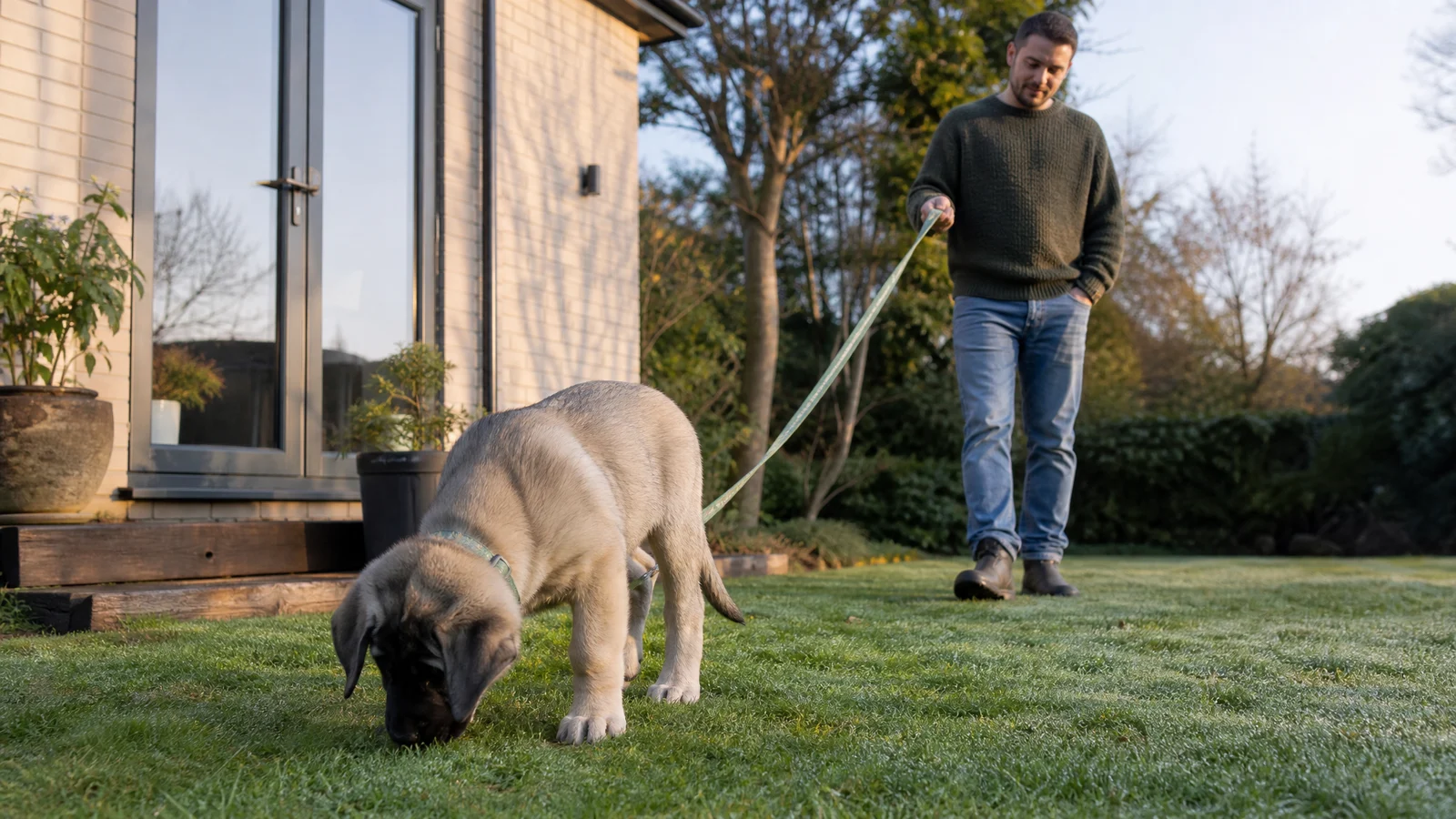
The usual advice says to take a puppy out every couple of hours, praise each success, and expect reliability within a few months. That advice is sound as far as it goes, but this breed was bred to use independent judgment, and that independence can make them slower to respond. So plan for patience and repetition, and be ready for a clean stretch to end in a puddle now and then.
We have spent many years working with this breed's habits, and we would rather you plan for slow and steady than be caught off guard. Done well, potty training gives you a calm, tidy dog who is easy to live with. Done badly, you mop up after a very large animal for a very long time.
We'll walk you through the signals your puppy gives and the causes behind indoor accidents, outdoor refusals and night whining, then the setup for puppies raised partly with stock, the reward mechanics, and what to expect as they mature.
Reading Potty Training Signals
Your puppy tells you they need to go before the puddle appears. Sniffing the floor, circling, wandering off, or suddenly stopping play are the usual signs. The breed standard describes a calm, observant temperament, so watch the room as closely as you watch the clock, and treat each behavior as a message you can answer.
What You See and What It Means
Act while the behavior is still a signal and not yet an accident:
- Slow, searching sniffing along the floor means your puppy is hunting for a place to go, so clip on the leash and head out right away.
- Tight circling means a bowel movement is close, so leave the game unfinished and move.
- Sudden wandering toward a corner, a doorway or the room's far edge means they are slipping away to go in private, so follow and steer them to the exit.
- Freezing mid-play with a faraway look usually means the bladder is full, often right after a wrestle, so end the game and go out.
- Standing at the door or staring at you is a direct request. A self-directed breed does not always offer one, so go straight out and reward the trip.
A dog this composed may skip the dramatic signals altogether. Keep a simple log of meals, naps and trips for a few days, and a pattern will show up that your eyes missed, such as a puppy who needs out soon after every nap.
Timing Triggers for Trips
Build the baseline around events, not just hours. Go out first thing in the morning, soon after each meal, on waking from every nap, after play or an excited greeting, and right before bed. Every couple of hours is a fair opening rhythm for a small puppy, and your log will tell you when to stretch it.
Walk out with your puppy each time, stand still and stay quiet, because chatter pulls a young mind off the job. Lead on leash instead of carrying. A giant breed outgrows being carried fast, and a puppy who already walks you to the exit is a gift later. Catch the triggers and you head off most accidents.
Anatolian Shepherd Accidents Indoors
Every puddle or pile has a cause, and the place and time usually point straight to it. Read the scene: where it happened, how long since the last trip, and who was watching. Then fix the setup, not the puppy. The evidence supports reward-based methods only, and calm handling keeps a puppy relaxed enough to toilet in front of you.
Puddles After Missed Signals
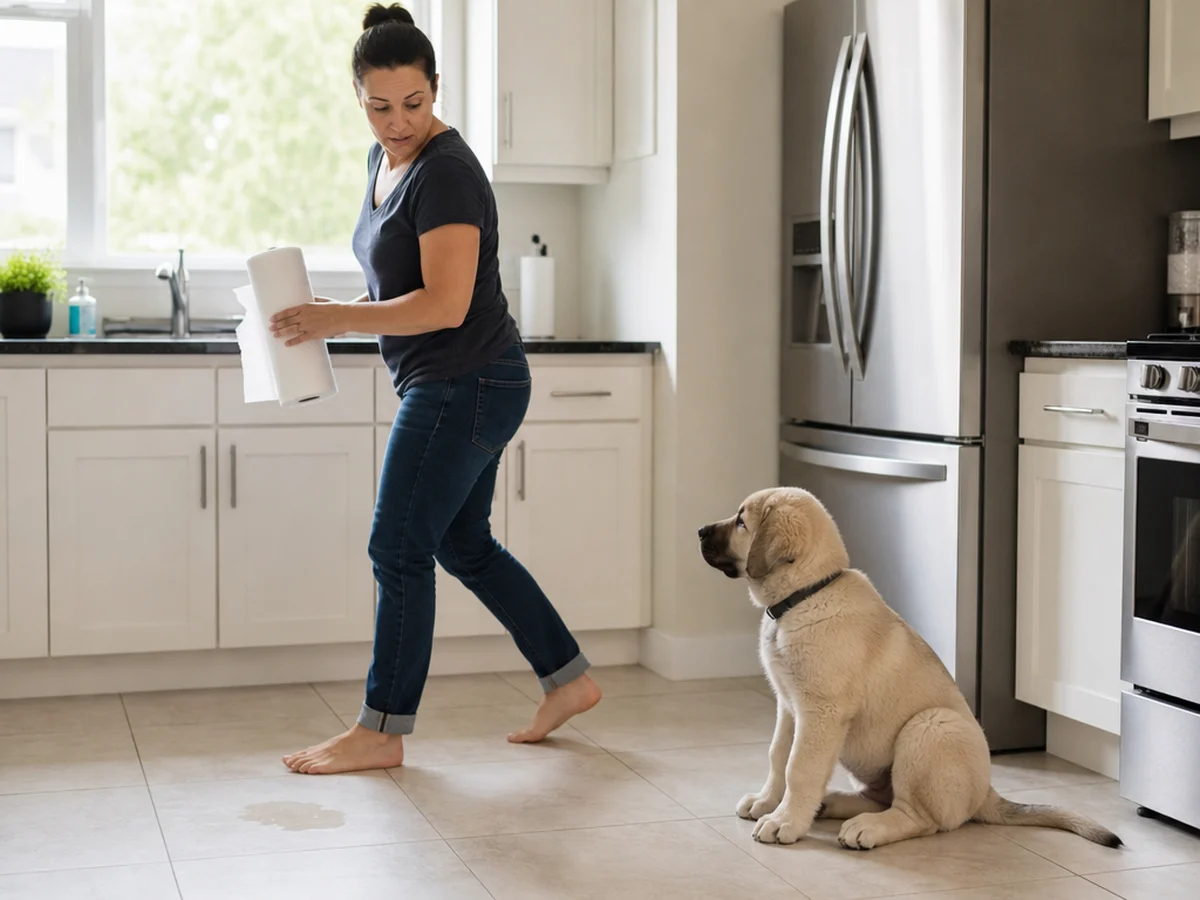
A puddle in the room where you were sitting together usually means a signal slipped past or the trip came late. Because this breed signals softly, the miss is more often ours than theirs. If you catch it in progress, make a mild interrupting sound, lead your puppy outside and reward if they finish there. Afterward, check the log for the gap and shorten the interval until signals and trips line up.
Piles Out of Sight
Messes behind the sofa, down a hallway or in a seldom-used room mean too much freedom too soon. An independent puppy will quietly wander off and do as they please, and each unwatched slip rehearses the wrong habit. Shrink their world with a gate or pen, keep them in the room with you, and add space only after a run of clean days. If accidents return when you open a door, close it again.
Repeat Spots and Enzyme Cleanup
When one patch of carpet keeps getting used, leftover scent is telling your puppy that this is the bathroom. Ordinary household cleaners can leave a trace you cannot detect but they can. Use an enzyme-based cleaner made for pet messes, soak the spot, let it dry fully and block access for a while. An adult of this breed leaves far larger messes than a puppy does, so lock in a thorough cleanup habit now.
Marking on Upright Things
Small squirts on furniture legs, a visitor's bag or a door frame, usually from an older puppy, are marking and not an emptied bladder. The standard calls this a highly territorial dog, so new objects and new people can trigger it. Block access to favorite targets, offer a toilet trip before you settle with anything new in the house, and reward generously when the right patch gets used.
Regular vet visits matter here too. If a previously reliable puppy has frequent accidents or seems to strain, call your veterinarian, since a health problem can look like a training problem. A mess is information about your schedule, not a verdict on your puppy.
Anatolian Shepherd Outdoor Refusal
You clip on the leash and walk out, and your puppy plants their feet, surveys the horizon or sniffs one leaf for an age. Then they come back inside and go on the rug. This is common in a breed developed to make its own decisions, and it is rarely stubbornness for its own sake. Make the toilet patch dull and predictable, and pay well for using it.
Planting and Scanning the Yard
A puppy who stops at the door or stands scanning is usually distracted by an alert, watchful mind. The standard also accepts reserve off their own territory, so even a familiar yard can feel busy. Stand still, stay boring, say your cue once and wait. Let them look for a moment. When they turn back to the patch and start sniffing, hold your position and reward the instant they finish.
Stalling on Leash
A puppy who dawdles has often decided the outing is for exploring, or has learned that finishing ends the fun. Keep to the same patch, keep the leash slack, and allow some sniffing after the reward so that going quickly never costs them anything. Common advice says to stay out until they go. With a dog who can outwait you, set a short limit instead. After a few minutes go in, keep them in the crate or pen, and try again soon.
Rain, Cold and Wet Grass
Bad weather hands a self-directed puppy a perfect excuse. Shelter the patch if you can, dress for it yourself, and keep the trip short and businesslike. Pay extra when they go. A cue word earns its place here, because a puppy who has learned that the word leads to a payoff stops debating and starts moving.
Night Whining and Potty Breaks
Crying, pacing and night accidents all raise the same question: does your puppy truly need out, or are they protesting the dark? Young puppies cannot hold on as long as adults, and an alert guardian breed hears every sound on the property. Treat a real need as urgent, and treat protest as practice at settling.
Need or Protest?
These signs help you tell the two apart:
- Sudden, urgent crying after a long sleep, with circling or scratching at the crate floor, points to a real need.
- A whine that fades when you speak softly from the next room is protest.
- Crying that starts at lights-out and settles by itself is also protest.
- Barking at a noise outside, with ears forward and eyes on the window, is watchfulness and not a toilet request.
- A wet crate in the morning means the gap was too long or the crate has spare room.
When unsure in the early weeks, take them out. A dull, unneeded trip costs a few minutes, while a soiled crate costs you the natural reluctance to go where they sleep.
Running a Quiet Night Trip
Keep the lights low, clip on the leash, say the cue once and wait. Skip the talking, the play and the excited greeting, because the trip is the whole job. Give a small treat and a calm word, walk back, and settle your puppy straight into the crate.
Make the last trip right before bed, and use a divider so no spare corner exists. Our Anatolian Shepherd crate training guide shows how to make the crate a place they like. As nights lengthen, stretch the gap one trip at a time, led by your log.
Potty Training Stock Puppies
Many Anatolian puppies spend part of each day outdoors with livestock, the life this breed was developed for. That gives them a toilet map with a barn or pen, a yard and a house, and nobody has told them the rules differ. A clean pen with a messy kitchen, or the reverse, shows blurred boundaries. Give each area one clear rule, and keep the cue, marker word and treats identical in all of them.
Teaching a Spot Outdoors
Lay out the outdoor area with a sleeping place that stays clean and dry, and a separate toilet patch well away from bedding, water and feed. Lead your puppy to that patch on leash after meals and naps, using the same marker word and cue as at home.
Clean the patch often and the bedding daily, because a dirty bed erases the preference you are counting on. Spend time with your puppy away from the stock too. Early socialization to people and new experiences is what builds a secure adult.
Why Pens and Barns Blur the Rules
A barn floor or large shared pen offers endless open ground, and no corner clearly says bathroom. With animal smells everywhere, a puppy allowed to go anywhere learns that anywhere is fine. Shrink the space they sleep and spend unwatched time in, mark the toilet patch with a path or gate, and make it the only place that earns a treat. Clear edges teach faster than repeating yourself.
Bringing House Rules Into Mixed Living
A puppy who has used outdoor ground freely has no reason to think a rug differs from a barn floor, so treat the move indoors as a fresh start. Begin with the full routine: leash to the door, trips at the usual triggers, a gate or pen, the crate for rests, and a reward each time they finish outside.
Keep early indoor visits short and end each at the toilet patch. Add time as clean days stack up, and expect a few accidents while the idea sinks in. Teach the indoor rule as brand new, because to your puppy it is.
Rewarding Potty Training Outdoors
Rewards turn the right spot into your puppy's own idea. With a self-directed giant, the payoff must be immediate, clear and worth their while. Three levers do the work: when you pay, what you pay with, and how you thin the payment out over time.
Reward Timing
Say your marker word as your puppy finishes, then reward the moment they finish, right on the spot. A treat handed over back at the door pays for the walk and not the toilet. Keep a pouch of pea-sized treats by the door so the reward never waits on a trip to the kitchen. A breed that responds slowly needs the connection to be unmistakable.
Treat Value and Calm Praise
A reward your puppy truly wants makes that behavior more likely to come back, but not every Anatolian puppy is food-driven. Test a few soft treats and save the best for the toilet patch.
If food earns a shrug, use a life reward instead: a few extra minutes of sniffing, or a short game once they finish. Keep praise quiet and warm. The standard says animated responsiveness is not characteristic of the breed and discourages overhandling, so skip the party and let your puppy keep their dignity.
Fading Treats Without Backsliding
Fade only after a long run of clean trips. Move from a treat every time to a treat most times, then to a treat now and then, and keep a surprise jackpot for an especially good trip. Let life rewards and calm praise carry the rest. If accidents rise, go back to paying every trip for a while. Do not drop rewards altogether during the teenage months, when the habit is most likely to wobble.
Anatolian Shepherd Potty Training Ahead
Reliability in this breed arrives gradually, not on a date. Treat the four-month benchmark as a hopeful guess and not a deadline, because slow-maturing, independent dogs often keep a few lapses well beyond it. Judge progress by the trend: fewer accidents, longer gaps between trips, and a puppy who heads to the door unprompted.
Many reliable puppies slip in adolescence. The cause is usually a mix of more freedom, more distraction and a growing urge to mark, so tighten the routine for a few weeks. Restore the set trips, supervise more closely, clean marked spots with your enzyme cleaner and pay generously for the right patch. A slip does not mean your dog has forgotten what they learned.
The usual adult picture is a calm, clean dog who walks to the door, waits and heads to the usual spot. At that size you still owe regular access outside, because a giant adult cannot be rushed or carried when nature calls. A new home, a houseguest or an illness can all cause a lapse. Go back to leashed trips for a few days, and book a vet visit if lapses repeat.
The breed club says most authorities agree these dogs can be superb, deeply bonded companions with proper and consistent socialization. A steady routine is part of that bond. For the wider picture, our FAQ on how trainable Anatolian Shepherds are explains the independent streak behind it all.
Expect reliability to come slowly, expect a few adolescent slips, and keep the routine consistent through the first months. That early steadiness is what keeps the habit solid in a full-grown dog for life.
 Training basicsHow to Train an Anatolian Shepherd: The Complete Guide
 Training basicsLeash Training an Anatolian Shepherd Who Pulls and Lunges
 BehaviorSocializing an Anatolian Shepherd With Kids, Dogs and Strangers