
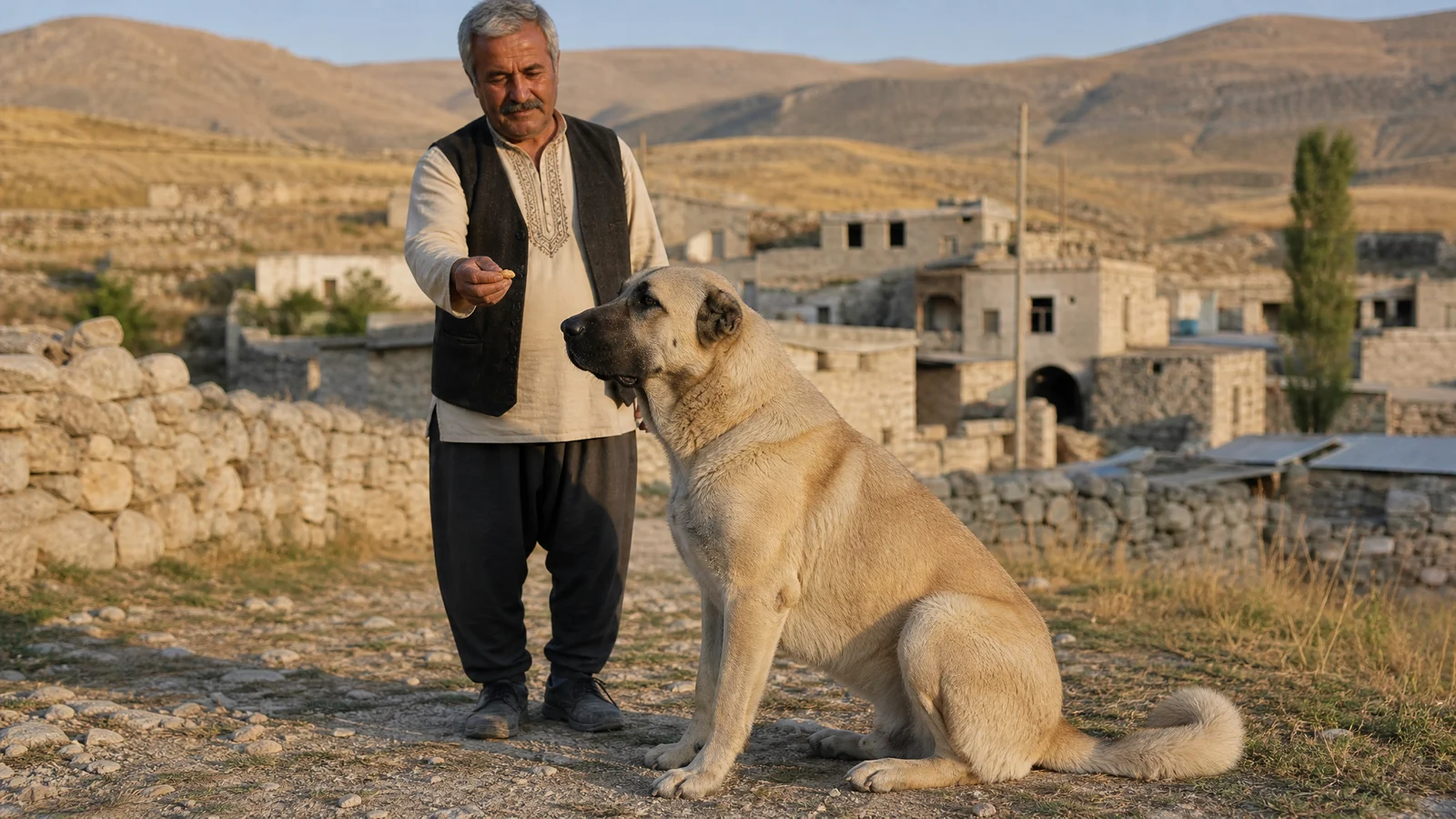
Teach an Anatolian Shepherd to sit by marking and rewarding a sit they offer, or by guiding the movement voluntarily with food. Use the offered-response route only when the dog already understands a clicker. The word comes later, after the movement is becoming predictable, rather than being repeated before the dog has connected the position.
Start in a quiet place with comfortable footing and choose one route for that session. In this guide, we will compare the entry points, build the captured response into a cue, keep the guided alternative compact and separate sit from stay, relaxation and greeting work. There is no fixed repetition count or deadline for mastering the cue.
Sit Starting Points for Your Anatolian Shepherd
Watch the dog before choosing a method. An offered sit gives you a behavior to capture, while a standing dog who follows food may be ready for a guided start. Hesitation does not reveal a motive. The Anatolian Shepherd Dog Club of America notes that the breed’s natural independence can make puppies slower to respond to commands, but that general observation cannot explain one dog’s movement.
Use this entry table to route the next attempt, not to label the dog. A changed surface, unfamiliar room or uncomfortable movement calls for a different decision from a dog who is simply standing and ready to participate.
| Observed Starting Point | Appropriate Route | Limit on the Inference |
|---|---|---|
| The dog offers a comfortable sit and already knows a clicker | Capture the offered sit | The response does not prove the word is learned |
| The dog stands comfortably and follows a food guide | Use the compact guided start | Following food does not guarantee a finished cue |
| The dog avoids or appears uncomfortable with the movement | Pause and seek individual guidance | Do not assign a cause from this article |
Teaching an Offered Sit as a Cue
Battersea Dogs & Cats Home describes capturing a sit for a dog who is already familiar with clicker training. The American Veterinary Society of Animal Behavior separates the cue that requests a behavior, the marker that identifies it and the reward that follows. Keep those jobs distinct in this general capture method:
- Wait quietly for the dog to choose a comfortable sit without prompting the movement. Click when the sit occurs, then provide an appropriate reward.
- Continue marking offered sits while they are predictable enough for you to read. An unprompted response is useful material, not proof that a spoken cue has meaning.
- Add the word immediately before the sit you can reasonably anticipate. Mark and reward the completed response so the new cue is followed by the same clear consequence.
Say the cue once when you have reached that stage. Repeating it while the dog is standing can turn the word into background sound and does not make the movement clearer. If the offered sit stops appearing, simplify the setting or end the session instead of filling the pause with extra cues.
Capture is an entry route, not a breed-specific preference. The selected club observation supports patience with response speed, but it does not establish that every Anatolian Shepherd learns sit best by offering it. Use the response available from the individual dog in the current setting.
When an Anatolian Shepherd Needs a Guided Sit
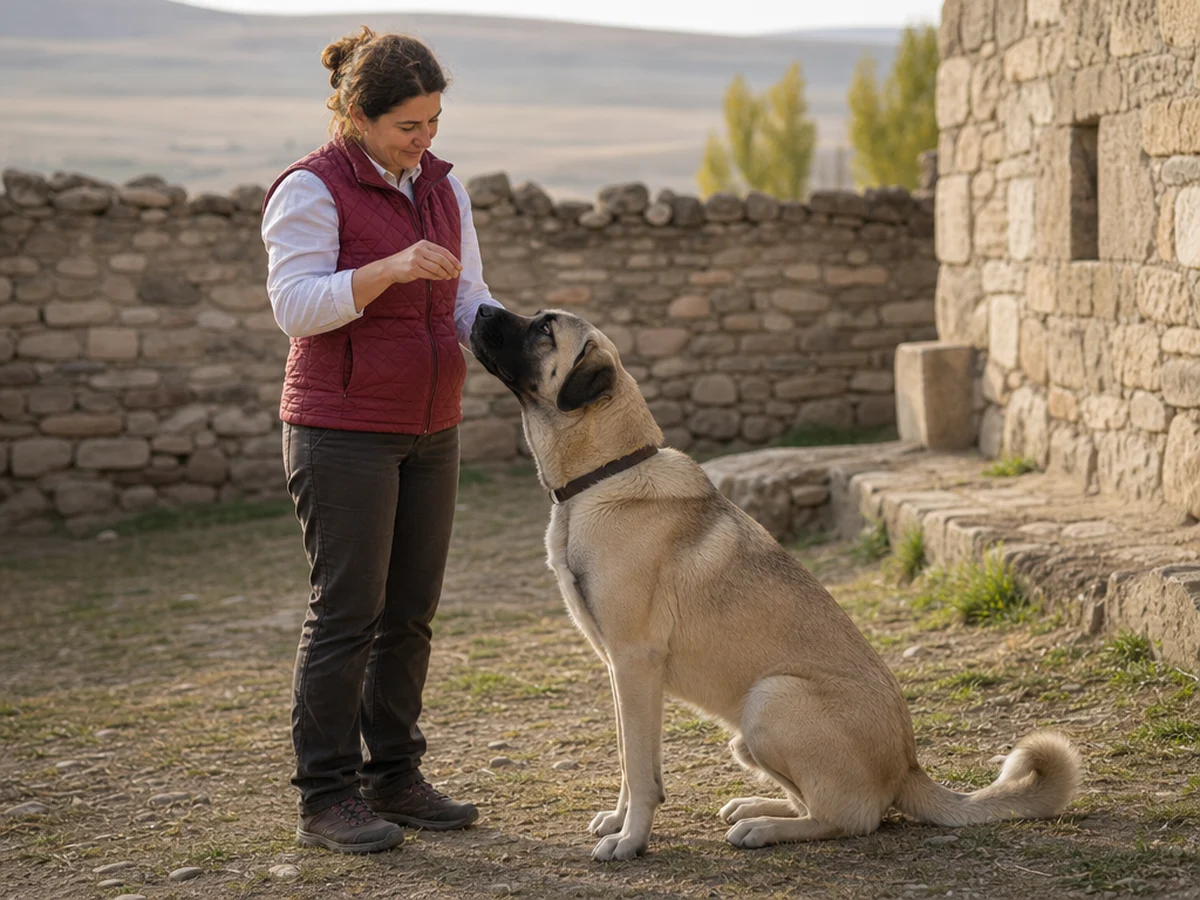
A dog who is standing comfortably but does not offer a sit may use a voluntary food guide instead. This is a compact alternative, not a second complete curriculum. Do not combine both routes in a way that makes the same moment harder to understand.
The RSPCA sit guide starts with food near the dog’s nose and moves it over the head so the dog can follow into a sit. Reward the completed position. Add the word only as the movement becomes predictable, and use a clear end signal so the brief practice has a recognizable finish.
Keep the dog free to participate. Do not push their body into position, pull them through the movement or insist on a hand path they avoid. If comfortable movement is in question, pause and seek appropriate individual advice. Maintain regular veterinary visits rather than trying to resolve discomfort through another repetition.
Teaching the Anatolian Shepherd Sit as a Separate Task
Sit is a position response. It is not the same as holding that position for duration, relaxing without a cue or remaining composed while a visitor approaches. Adding those jobs here would make it difficult to tell whether the dog understands sit or is struggling with the new condition layered onto it.
Reward the marked sit in the current lesson and let the next skill keep its own progression. The Anatolian Shepherd training overview routes broader cue work, while Anatolian Shepherd temperament keeps the larger trainability question. Neither link changes the narrow method on this page.
Do not turn the first sit into a visitor test, a distance exercise or an everyday-reliability claim. A dog may perform the position in one quiet room and need an easier setup elsewhere. That change describes the current context, not a failure of the cue or a judgment about the breed.
Remaining Anatolian Shepherd Sit Details
The body has chosen two entry routes, explained when the word is added and protected the sit lesson from other tasks. Three narrower gaps remain about offered behavior, marker choice and physical prompting without repeating the complete method.
Does an Offered Sit Mean the Word Is Already Learned? No. An offered sit gives you a response to mark and reward, but the dog has not necessarily connected that movement to the new word. Add the cue immediately before a predictable sit and continue marking the completed response. Judge what happens after the cue rather than assuming the earlier voluntary movement proves understanding.
Can You Teach Sit Without a Clicker? Yes, the selected guided route does not require the dog to know a clicker. Use the voluntary food guide, reward the completed sit and add the word only when the movement is becoming predictable. The capture route on this page has a known-clicker prerequisite, so do not silently remove that condition from its method.
Should You Push an Anatolian Shepherd Into a Sit? No selected method calls for physically placing the dog in position. Choose an offered response or a voluntary food-guided movement, and stop if the dog avoids the motion or seems uncomfortable. Individual guidance belongs ahead of more practice when comfortable movement is uncertain.
Your Next Anatolian Shepherd Sit Teaching Session
Continue the route that produced a comfortable voluntary response. If the dog offered a sit, capture it and add the word only when the movement is predictable. If the dog followed the food guide, reward the completed position and keep the alternative compact. A new room or surface may require an easier version rather than a harder test.
End the short session clearly while participation is still useful, and keep regular veterinary care on the calendar. The next goal is not food-free obedience or a promised mastery date. It is one understandable cue, one observable sit and one appropriate reward in a setting where the dog can take part.
 Puppy trainingAnatolian Shepherd Puppy at 4 to 6 Months: What Changes
 Exercise and jobsIndoor Activities and Brain Games for an Anatolian Shepherd
 BehaviorHow to Stop an Anatolian Shepherd Pulling on the Leash