
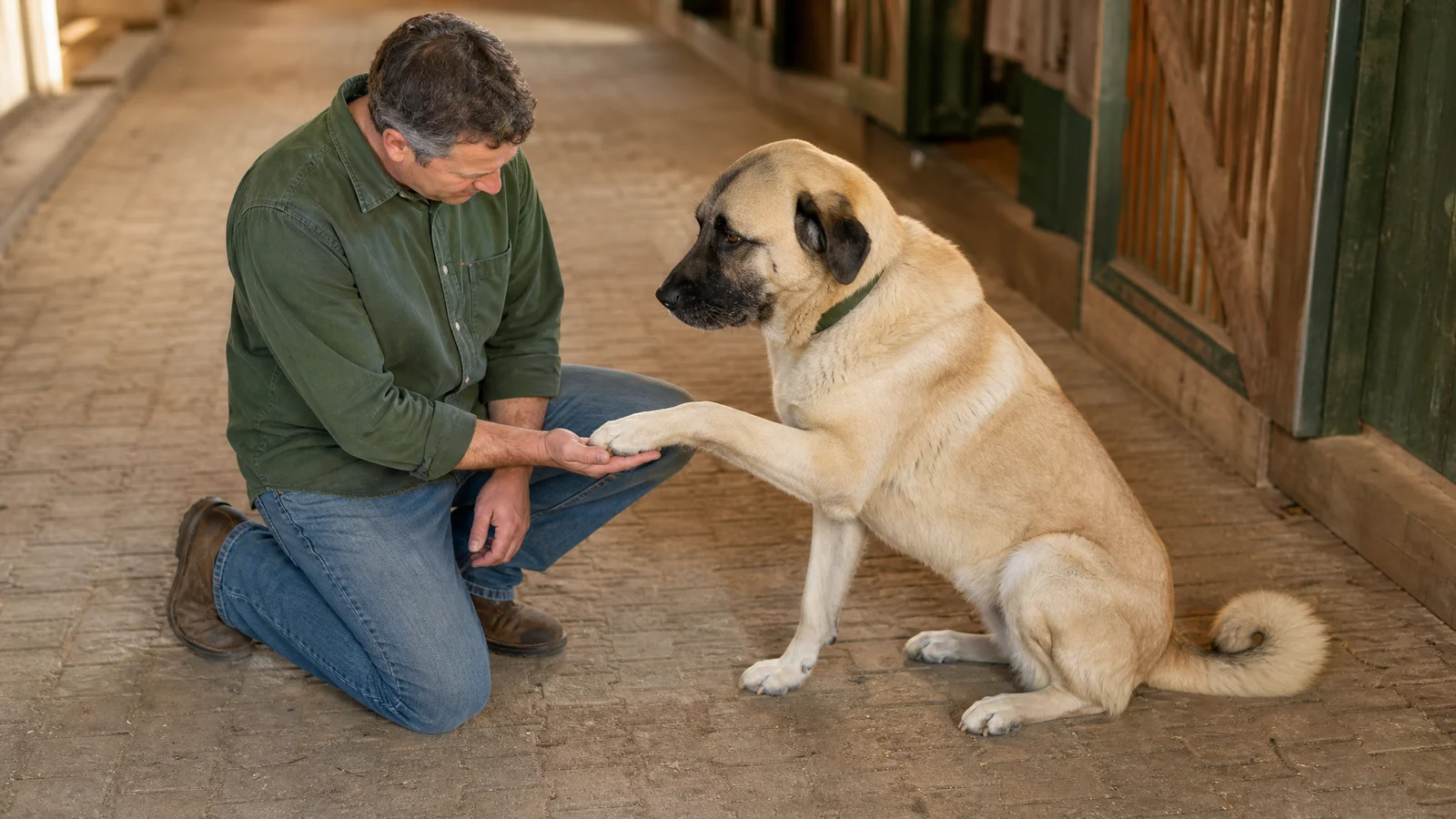
Teach an Anatolian Shepherd to shake by rewarding a voluntary paw touch to a still hand, then choose whether that paw offer is the finished trick or the starting point for a comfortable high five. Do not lift, hold or position the dog's leg. The dog should be free to withdraw between attempts.
A paw cue asks for low hand contact. A high five raises the open hand target only as far as the dog can reach without jumping, leaning or twisting. Neither performance gives permission to hold the paw for grooming or nail care.
This guide defines those two endpoints before giving one reward-based progression. We will then separate trick practice from handling and answer three household questions that the teaching sequence leaves open.
Anatolian Shepherd Paw and High-Five Endpoints
Decide what the dog will touch and where that target will remain. The Dogs Trust paw and high-five method allows the lesson to stop at a paw cue or progress to an open-palm gesture. That makes either endpoint complete.
The AKC Anatolian Shepherd standard discourages overhandling, but a breed description cannot decide how one dog feels about this trick. Offer a clear target and let the individual's movement, comfort and willingness determine whether practice continues.
A Paw Offer Can Be the Whole Trick
For the paw endpoint, hold the target low and still. Mark when the dog places a paw against it, then deliver the reward from the other hand. A light touch is enough, and the dog can put the foot back on the floor immediately after the marker.
Name the action only after the voluntary touch is predictable in this setup. The cue can identify that brief contact without asking the dog to leave the paw in the handler's hand. Release after the reward and reset with both hands away from the leg.
High Five Changes the Hand Target
A high five uses an open palm held slightly higher than the paw target. Raise the hand in small changes while the dog remains balanced and comfortable. Stop below any height that encourages jumping, a hard reach or a shift that looks awkward.
Give the higher gesture its own cue so the endpoint stays clear. If the dog offers only the familiar low paw touch, reward that known response or reset. Do not withhold the target and wait for larger movement the dog has not been taught.
Teaching Voluntary Paw Contact
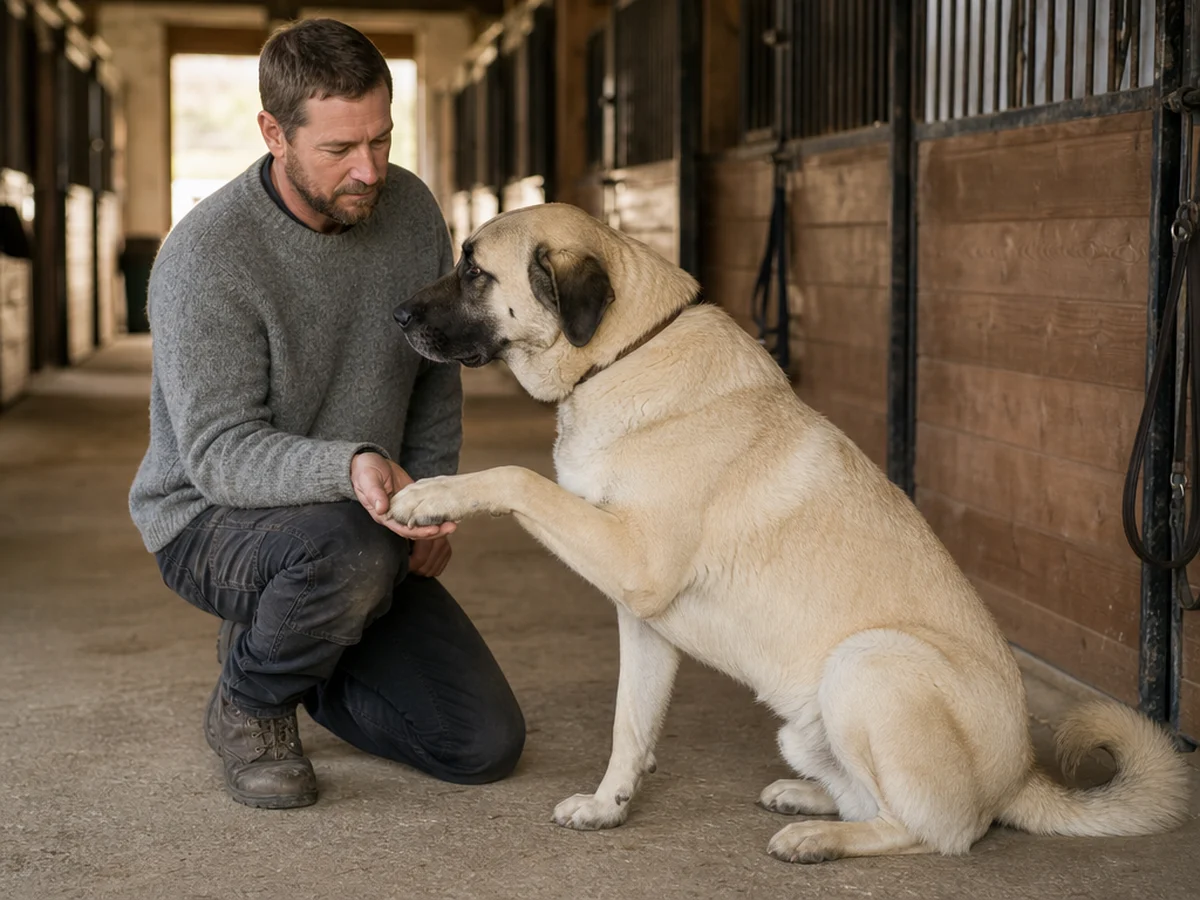
Begin in a quiet place with secure footing and prepare rewards before presenting a hand. Use this general paw-to-palm progression while the dog continues to choose contact:
- Hold a closed food hand still and mark a voluntary paw touch against it.
- Deliver the reward, then present an empty closed hand as the next target.
- Open the target hand gradually and reward from the other hand after contact.
- Add the paw cue only when the low open-palm touch is predictable.
- Keep that endpoint or raise the palm modestly and name the separate high-five gesture.
The AVSAB humane training statement describes cues, markers and reinforcers within reward-based teaching. Use a click or familiar verbal marker at the touch, then deliver the promised reward. The marker should identify contact, not pressure the dog to keep the paw raised.
Keep the target hand quiet. Moving it toward the paw can turn an offered response into contact initiated by the handler. If no touch appears, lower the difficulty, take a break or return to the earlier closed-hand target rather than reaching for the leg.
Teaching Paw Tricks Without Handling
The trick ends when the marked touch and reward are complete. Do not close fingers around the paw, inspect nails or extend the limb after the dog offers contact. Those actions belong to a separate cooperative-care plan with their own signals and stopping points.
The RSPCA training guidance supports short, regular sessions so the dog is not overwhelmed. End before repeated paw lifting affects balance or enthusiasm. A break is useful information, not a reason to make the target more insistent.
Keep coat and paw care on the Anatolian Shepherd handling page. A dog who performs a paw trick has not agreed to touch, restraint or nail work. Preserve that boundary even when the offered paw makes handling seem convenient.
Watch the dog place the foot back on the floor. If movement changes, weight bearing looks uneven or contact appears uncomfortable, stop the trick and seek veterinary guidance. Keep regular veterinary visits part of the dog's care.
General breed context belongs on the Anatolian Shepherd temperament page. This method does not use independence or responsiveness as a reason to repeat the cue. It responds only to the offered movement in the present setup.
Paw and High-Five Teaching Questions
The teaching sequence defines the hand targets and handling boundary, but three household decisions remain. These answers keep the finished behavior optional and prevent extra requests from changing its meaning.
Can the finished cue be a word or a hand signal? Yes. Use one clear signal for the low paw offer and a different one if the high-five gesture is taught. Keep the chosen target visible and reward the response before adding another version.
What if the Anatolian Shepherd offers the other paw? Decide whether either paw meets the household's trick endpoint. If one specific side matters, reward only that voluntary contact and reset without moving the other leg. Do not physically switch the dog's paw.
Should visitors ask the dog for a high five? Only when the dog is comfortable approaching, the household wants the interaction and the visitor can present the known target without crowding. The trick should not become a compulsory greeting or a test of sociability.
The Finished Anatolian Shepherd Paw Offer
Mark the chosen paw or high-five contact, deliver the reward and move the target hand away so the dog can return the foot to the floor. End when the Anatolian Shepherd withdraws, loses balance or stops offering the movement. A brief voluntary touch is the whole trick, never permission to hold the limb or require a visitor greeting.
 Training basicsHow to Teach an Anatolian Shepherd to Focus on You
 Exercise and jobsEasy Tricks to Teach an Anatolian Shepherd
 Training basicsAnatolian Shepherd at 1 Year and Up: When Do They Calm Down?