
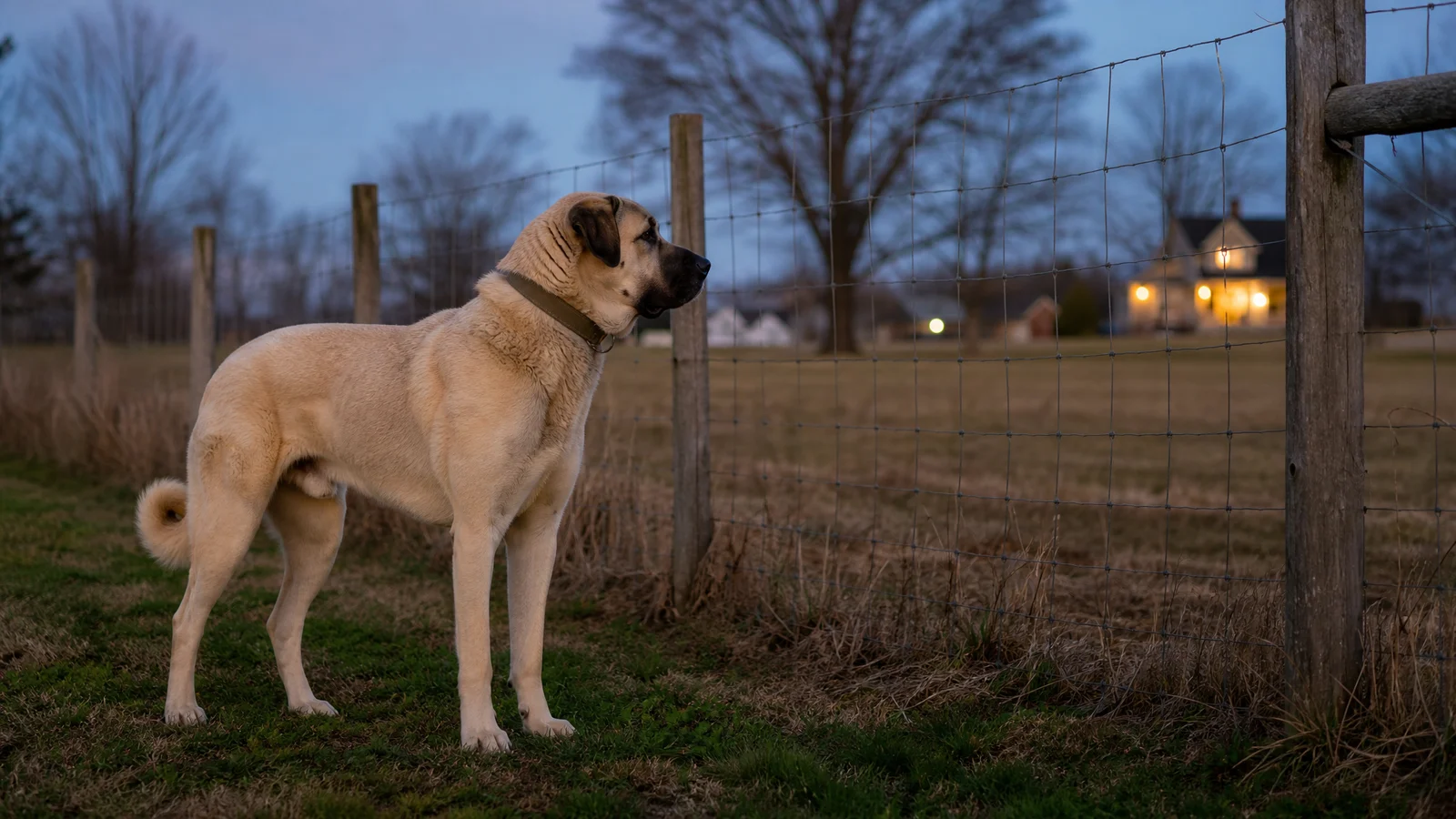
Night barking near a shared property line is usually met with one instruction: bring the dog indoors at dusk and make it stop. The breed standard describes the Anatolian Shepherd as alert, calm and observant, and as an instinctive protector. Asking that dog for total silence means asking them to quit the work they were bred for.
With close neighbors, what works in practice is less dramatic. The dog quiets when the pause after a bark gets paid, and shutting the bark down leaves the reason for it untouched. Done well, you keep a watchman who speaks up once and then settles. Done badly, you get a complaint and a louder dog.
We'll walk you through measuring what the neighbors really hear and talking to them first, then sorting which barks deserve a reward, marking the quiet, choosing where the dog sleeps and screening the street view.
Checking How Far Anatolian Shepherd Barking at Night Carries
Find out what the people next door actually hear before you change anything, because your own estimate is probably off. You sleep with a fan running and the dog sounds far away, or you sleep through bursts that keep them up. The breed rates 3 of 5 for barking, the middle of the scale, so expect bursts tied to triggers more than a dog who barks until dawn. Even so, one burst at the wrong hour sounds like all night through a bedroom wall.
Pick one way to measure and run it for several nights, since a guardian's evenings repeat far more than yours do. Any of these works:
- Record overnight audio on a phone placed near the spot where the dog spends most of the night, then note when the bursts land.
- Stand on the neighbor's side, with permission, near their bedroom window while your household runs the evening as usual.
- Log the time, the trigger you can see and the length of each burst, so the same back door or the same pair of headlights shows up as a pattern.
- Ask the neighbor for times instead of adjectives, because a time can be checked against your recording and "constant" cannot.
Separate a Pattern From a New Problem
A dog bred to guard livestock does not clock out at bedtime, so look for the pattern rather than the total: the hours, the triggers and how long each burst runs.
If the barking is new in an older dog, that is a different question. Stronger reactions to strange or loud sounds and more barking are among the common changes seen with cognitive dysfunction. Keep up regular vet visits, and mention the night barking at the next one.
This is general information, not a diagnosis. If your dog's night behavior changes suddenly or with age, check with your veterinarian.
The first choice, then, is to treat the real sound level as your starting point. The recording or the log tells you how big the problem is, and every later step gets measured against it. It also gives you something calm and factual to hand the neighbors.
Telling the Neighbors About Night Barking Before a Complaint Arrives
The second decision is whether to speak to the neighbors first, and the answer is yes. A neighbor who hears about the barking from you, with a plan attached, is a different person from one who has spent a week awake building a case. You also start slightly behind, because Anatolians are reserved with strangers, and from the dog's side of the fence that includes the neighbor who has lived next door for years.
What to Say at the Door
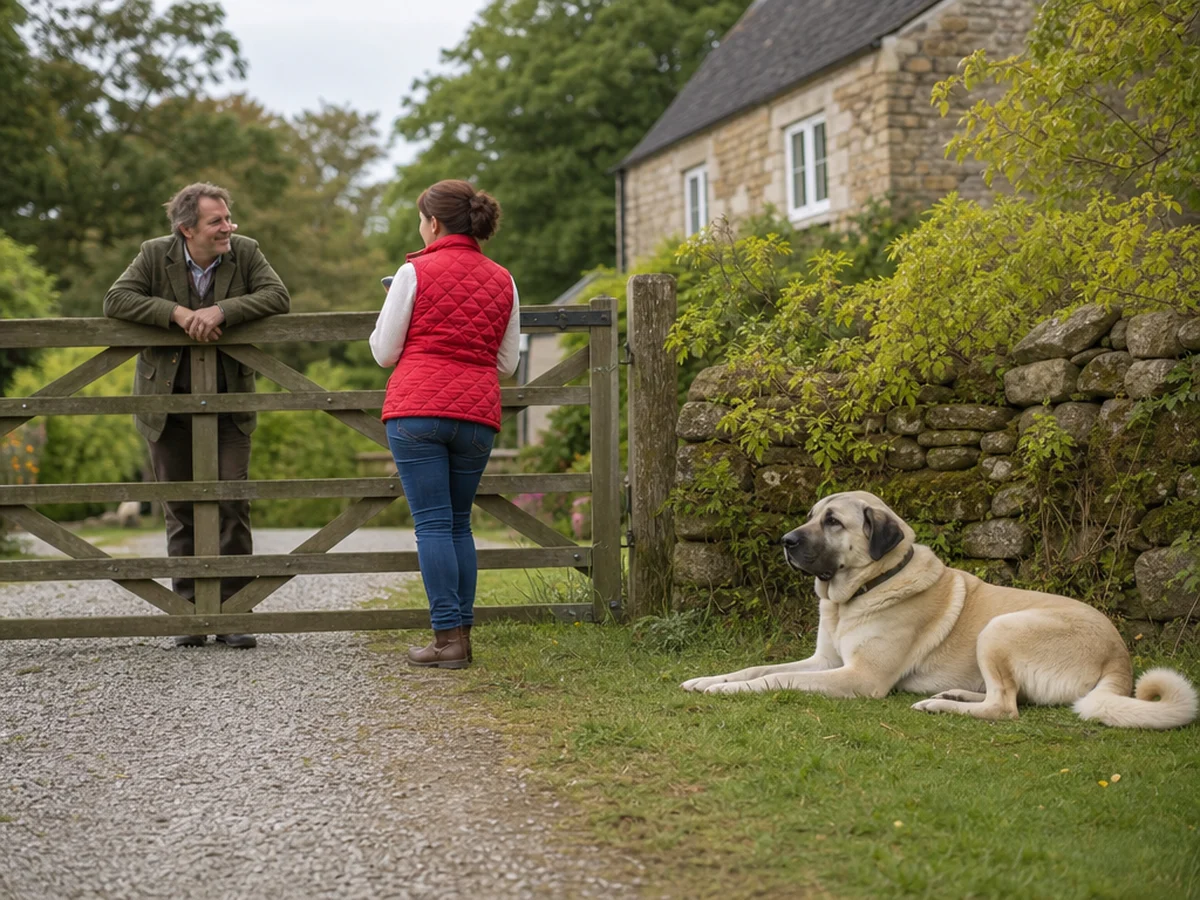
Knock or leave a short note. Say you know the dog barks at night, that you have measured it, and that you are teaching them to alert once and then settle. Do not promise a silent dog. A natural guardian will always speak up now and then, so promise a trend instead: quieter nights over the coming weeks. Neighbors forgive effort far more easily than they forgive excuses.
Then ask what happens on their end. A bird feeder, a pet door, a porch light on a sensor or a late routine at the back door can set your dog off on a schedule neither of you has noticed. Small changes over there sometimes cut the alerts with no training at all.
Set Up the Feedback Line
Give them a number to text, and ask for the time of each bad night. Answer quickly, because speed matters more than wording. Check each report against your recording and you learn which alerts they actually hear. When nights improve, say so. A neighbor who hears about progress starts noticing the quiet too.
The choice here is to make contact early, before any complaint, and to keep the feedback line open for as long as barking is a topic. Ask for times and triggers instead of general descriptions.
Which Anatolian Shepherd Barks at Night Deserve a Reward?
Not every bark is a problem, and sorting them first saves you months of working on the wrong one. Anatolians were bred for millennia to exercise independent judgment about danger, and an alert bark is that judgment being reported. On working ranches the dogs' presence nearly always keeps predators away, so a real confrontation is rare and the bark is simply the signal that a line was crossed.
Alert Barks to Leave Alone
The first few barks at a new sound are the dog doing the job. A short burst at a car door, a gate latch or a visitor on the walkway is a report, and it deserves a look from you, not a lecture. Walk out, look at what they are looking at and let them see you register it. In our experience with this breed, a dog whose alert gets acknowledged settles sooner than a dog who is hushed at the first sound.
Barks to Shape
Shape the barks that keep going after you have acknowledged the trigger, that repeat at one corner of the fence, or that start with no trigger you can find. Those are the ones the neighbors hear.
Territorial barking comes from a motivation that stays put when the noise is merely stopped, and the dog may find another way to defend their territory. So give them a better way to finish the job than announcing. That better way is a pause, and the pause is what you pay for.
The choice for this step is to reward only the pause after a bark, never the bark itself. Treats handed out in the middle of a barking run teach the dog that barking earns food, and you will have bought yourself more of it.
Marking Quiet When Barking at Night Pauses
This decision is about tools: a marker word and a treat the dog will actually take after dark. Settle both before the first alert, because fumbling in your pockets while a guardian barks at a fence teaches nothing except that you are slow.
Pick the Word and the Treat
Choose a short word you use for nothing else, such as "yes," and say it in the same flat voice every time. Flat matters at night, because an excited voice winds up the dog and wakes the neighbors. The marker tells the dog that exact second earned a treat, which is the only way a pause lasting a heartbeat can be paid for.
Then pick a treat that survives darkness and distraction. A dog on duty ignores daily kibble when something moves at the fence, so use something small, soft and clearly better than normal food, and keep it for evening work only.
Expect repetition. This breed rates 2 of 5 for trainability, and their independence makes them slower to respond than eager-to-please breeds. Reward-based training still needs rules, and dogs do best with clear routines and guidelines, so the same steps in the same place every night beat clever variations.
The First-Week Routine
Keep treats in your pocket from dusk on. Use the same order below when the first alert comes:
- Let the dog give the alert, then walk out calmly and look toward what they are looking at, so the message is received.
- Stand beside them and wait. The instant the barking drops away, even briefly, say the marker and hand over one treat.
- If the quiet continues, give another small treat.
- Call them to the settling spot and reward them again on arrival.
- On later evenings, wait a little longer before you mark, so the pause stretches.
If calling the dog away from the fence falls apart, build that skill in daylight first with Anatolian Shepherd recall practice. Return to night work only after the easier version is dependable.
Once the pause is dependable, add a cue word just as the quiet begins, then mark and reward. Say it earlier and you are only talking over a barking dog. The cue will never mean "never bark again." It means "message received, you can stop now."
So the choice for week one is "yes" as the marker, a soft treat kept for nights only, and payment for a few seconds of silence. Keep that combination unchanged through the week.
Should an Anatolian Shepherd Spend Nights Along the Shared Fence?
Decision five is where the dog sleeps, and the shared fence is the worst default. A guardian stationed on the boundary hears every cough and sees every light, and the barking attaches to those spots. If your dog has worn a path along the fence, that path shows you where it happens. Nights make it worse, because the dog has the boundary to themselves and nobody walks out to acknowledge the call.
Each realistic placement trades something away. Choose based on the trigger and the distance from neighbors:
| Placement | Upside | Downside |
|---|---|---|
| Along the shared fence | The dog feels on duty and can see the boundary | Every neighbor sound becomes a trigger and the barking sticks to those spots |
| Inner pen or fenced section | Cuts off the nearest triggers while the dog still hears and smells the property | Needs a second fenced space and a bed the dog will actually use |
| Set-back spot away from the fence | Keeps a view of the yard and house, farther from the neighbor's windows | Needs a sightline barrier and some work to make it the best spot |
Make the Set-Back Spot Pay
For most households the set-back spot wins. It keeps the dog on duty without a line of sight to the neighbor's bedroom window. Put a solid wall behind it and make it the best place on the property, with a bed, a chew and the occasional treat dropped without being asked for. Reward settling there every time you pass.
The breed is only moderately adaptable, so move the bed in stages rather than overnight, and expect some protest at first. A dog who has had real exercise and something to think about gives up the patrol sooner, and the plan for building that day is in daily Anatolian Shepherd exercise and brain games.
The choice is a set-back spot for sleeping, the inner pen if the yard allows one, and the shared fence only in daylight, while you are around to pay for pauses. Recheck the setup after a few nights.
Screening the Street View to Cut Night Barking
A street-facing yard hands the dog a live feed of strangers who show up at random and leave on their own schedule. The dog barks, the person keeps walking, and the dog concludes the bark worked, which for a territorial breed is about the best feedback going. You cannot reschedule the passersby, but you can edit what the dog gets to see.
Lights count too. Headlights sweeping the fence, a porch light and a neighbor's motion sensor all throw movement at the edge of the yard, and a guardian who cannot identify something tends to announce it. Work through these in order and stop when the next recording improves:
- Block the lowest sightlines first, since that is where passersby and other dogs first appear. Solid panels, a privacy screen or a dense planting bed all work.
- Break the line of sight from the dog's spot to lit windows and the neighbor's door, rather than walling in the whole yard.
- Leave sound and scent open, so the barrier cuts the visual trigger without cutting the dog off from the property.
- Move meals and chews to a spot away from the street fence, so the dog has something better to do than watch.
The same street triggers follow you onto walks, so if the dog lunges at passersby there, Anatolian Shepherd leash training for lunging picks up where this leaves off. Watch the first evenings after any change, since a few dogs bark more when they lose sight of the street. If yours does, open a small window of view back up.
The choice is to try one barrier first, a solid screen on the stretch of fence that faces the street beside the dog's spot, and to add nothing else until the next recording shows whether it helped.
One Reward for Barking at Night
Quiet is taught by paying for pauses, not by silencing the dog. An Anatolian Shepherd comes from a line of dogs trusted to make their own calls about threats, and with close neighbors the goal is an alert that ends in something worth more than another round of barking. Everything above serves that: measure the sound, talk to the neighbors, sort the barks, mark the pause, move the sleeping spot and screen the view.
So tonight, do one thing. Put soft treats in your pocket, go to the shared fence when the first alert bark comes and stand beside the dog without a word. The moment the barking stops, even briefly, say your marker and give the treat. Then walk them to their settling spot, pay them again and write down the time. Tomorrow, compare that time with your recording and do it again. The neighbors will not notice the first night. They will notice the habit.
 Exercise and jobsWhen an Anatolian Shepherd Clears the Fence: Gates and Boundaries
 Training basicsAnatolian Shepherds and Off-Leash Time: Building a Check-In Habit
 CareAnatolian Shepherd Shedding, Coat Blowing and Handling