
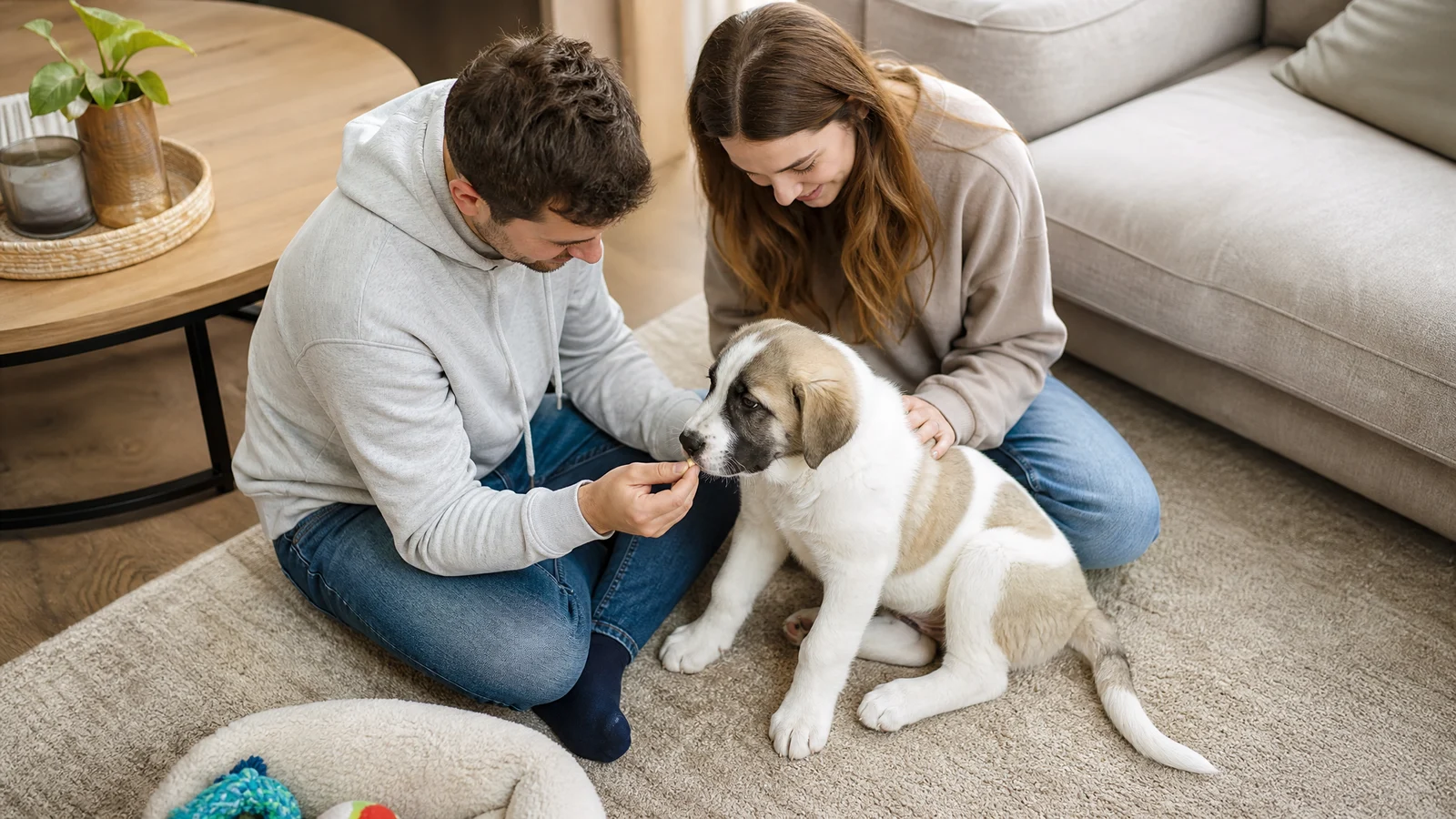
The most common mistake with an Anatolian Shepherd puppy is treating them like a fast-learning pet breed and putting off socialization until they settle in. The puppy sits once, ignores the next few requests, and the household decides either that training has failed or that there is plenty of time. Neither is true, and both cost weeks you can't get back.
The fix is to train for the calm guardian you are growing and to start gentle exposure now. That matters for this breed because a very large dog who never learned that the world is safe is hard to live with, while one who did grows into a steady, deeply loyal companion.
Read on for where standard advice falls short, why waiting backfires, what a quiet puppy hides, why pressure undermines trust, how to read wariness, what the teenage months mean, and a two-week plan.
Puppy Training Rules From Other Breeds Fall Short
Most puppy advice assumes a dog who wants to please, learns a cue in a few repetitions and checks with you before every decision. That suits many breeds, so it is where most of us start. With an Anatolian Shepherd it can leave you feeling like you are failing when you aren't.
The reason is what they were bred for. These dogs were developed over millennia to use independent judgment when they sense danger, and training one of these puppies can be very different from other breeds, with slower responses to cues. A quick sit followed by a blank stare is ordinary here.
Independence is not a reason to give up, though. Obedience training is a must with this breed, and an experienced owner will find these dogs trainable, smart and extremely loyal. We have spent many years specializing in this breed, and the practical translation never changes: plan for patience and repetition, keep sessions brief, and treat a slow answer as thinking rather than defiance.
What you are aiming for is partnership. With proper, consistent socialization, these dogs can become superb, deeply bonded companions, though they are not pets in the conventional sense. Keep that picture in mind and the rest of the plan falls into place.
Anatolian Shepherd Puppy Socialization Cannot Wait
A popular belief says a new puppy should be left alone for a few weeks to settle in before the outside world gets involved. For a mellow breed that might cost little. For a guardian it costs a lot, because the easiest learning window is already open on the day they arrive.
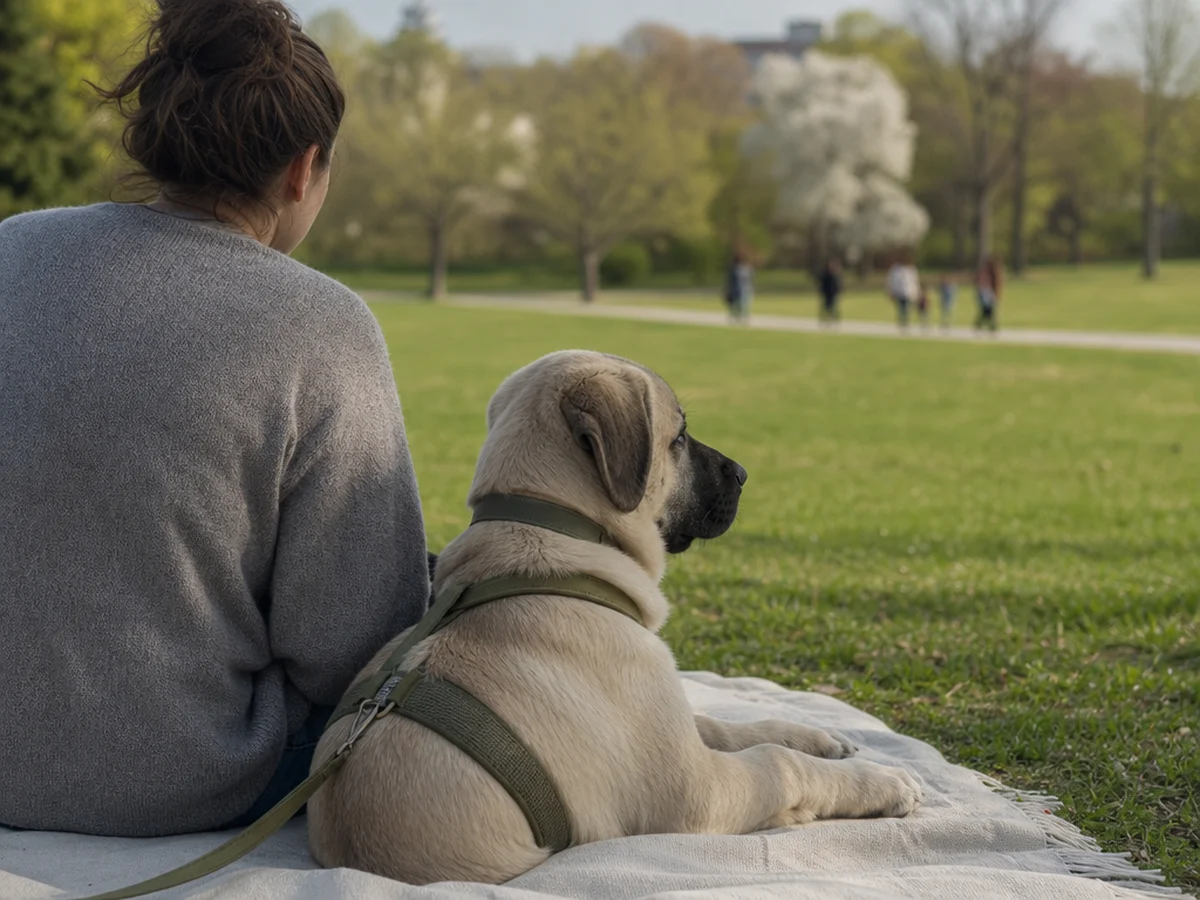
Behavior specialists put the primary and most important time for puppy socialization in the first three months of life, when sociability outweighs fear. If your puppy joins you at eight weeks, only part of that window remains. Every week spent waiting is a week of easy learning left unused.
This breed tends to be wary and instinctively protective, so an Anatolian puppy must be socialized, and broad early experience is what helps produce a secure, confident adult. Reserve grows with maturity, which means what your puppy collects now is what they lean on later. The goal is a settled dog, not a social butterfly.
Gentle is the key word. Let your puppy watch new people, sounds and places from a comfortable distance, pair each with a small treat, and let them decide whether to approach. Guests who sit quietly beat guests who swoop in, and our guide to socializing an Anatolian Shepherd puppy lays out the steps.
Is a Calm Eight-Week Anatolian Shepherd Puppy Easy to Train?
A sleepy, agreeable puppy feels like proof you got an easy one, and it is lovely to enjoy. But the quiet is a snapshot, not a forecast. Underneath is an independent guardian who matures slowly, so your plan has to change as the dog does.
The Early Weeks
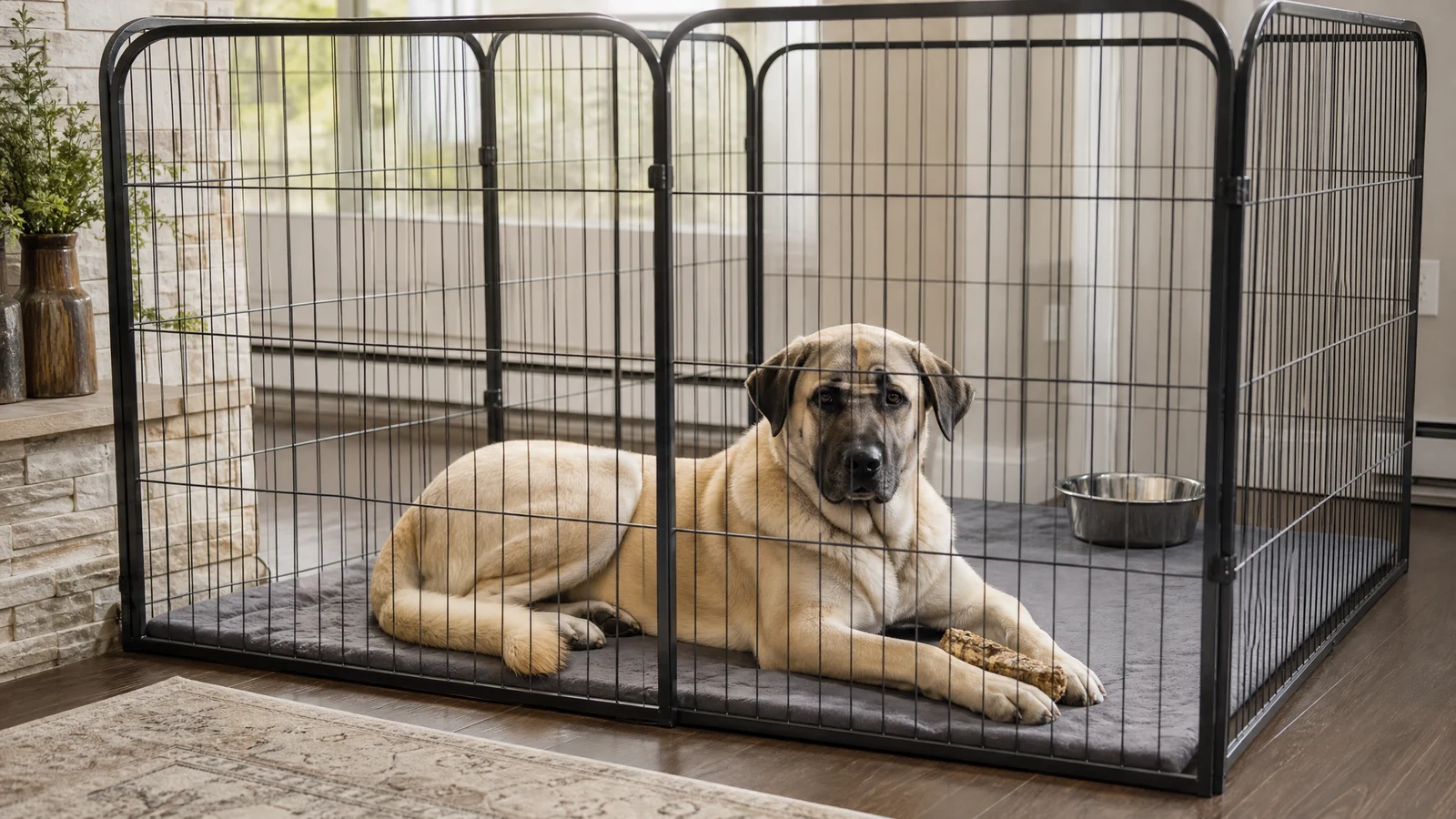
Early on, the job is rest, routine and tiny lessons. Take your puppy outside after sleeping, eating and play, reward the moment they finish, and introduce a crate or pen with treats so it becomes a spot they choose. Teach their name, sit and settling on a rug one small lesson at a time, marking the right moment and rewarding at once.
Mouthing needs attention now, since this breed is classed as XLarge and puppy teeth become big-dog teeth. Offer a chew toy, reward the choice, and pause the game calmly if teeth keep landing on hands. Every family member should handle it identically so the puppy gets one clear message.
The Middle Months
Coordination and curiosity arrive together, and so does the first hint of watchfulness. Build calm greetings with feet on the floor, loose-leash walking with a flat collar or well-fitted harness, and a recall rewarded richly. When a cue slips, ask once, make the task easier and reward the smallest success.
Expect answers to come slower than from a breed made to take direction. A puppy who ignores a cue is usually weighing up the situation, not testing you. For cue-by-cue detail, see our guide to training an Anatolian Shepherd.
Approaching Adult Size
Late in the first year and into the second, the body nears full size while the mind is still maturing. The breed standard gives measurements and weights for dogs aged two or older and says general balance matters more than absolute size. Males run from 29 inches and 110 to 150 pounds, and females from 27 inches and 80 to 120 pounds.
That is a lot of dog to live with if manners are fuzzy. Keep sessions short and varied, and hold your household rules steady so the grown dog already knows them.
Puppy Training Built on Pressure Backfires
Many people assume a dog this big needs a tough, no-nonsense hand or they will never listen. It sounds logical when the adult is so large and heavy. The trouble is that cooperation from this breed was never about force.
These dogs were bred to decide for themselves, so pressure doesn't hand the decision to you. It just gives them more to be wary about. A puppy who is crowded, hurried or handled roughly learns that people and new things are worth worrying over, and in a reserved, protective breed that lesson sticks. The breed standard even notes that overhandling would be discouraged.
What works is making the right choice easy and worth it. Mark the behavior you want, reward at once with a treat, praise or a bit of play, and manage the setting with gates, leashes and secure fencing so your puppy can't rehearse what you don't want. For pushy behavior, a calm interrupt or a short pause behind a gate does the job, followed by a friendly reset.
Calm, consistent teaching is what lasts, and it protects what the breed does best. Though protective, these dogs are calm, friendly and affectionate with their immediate family, and trust is what lets that side show.
Does Wariness of Strangers Mean Failed Puppy Training?
Owners worry about this more than almost anything else. The puppy who greeted everyone as a baby now stares at visitors, and it feels like proof you did something wrong. In this breed it is usually proof of growing up, because the dogs are loyal and affectionate to their owners but wary of strangers when mature.
Reserve around strangers, and away from their own territory, is acceptable under the breed standard, which also describes the temperament as alert, calm and observant. So your goal isn't a dog who loves every visitor. Your goal is a dog who notices, checks in with you and settles.
Normal reserve looks like watching a newcomer from a distance, staying near you, and relaxing once the person is calm and still. It builds gradually and responds to distance and rewards. A problem looks different: an abrupt change, a dog who can't settle for long after a trigger, or fear that spreads to people and places they used to accept.
If you see a sudden change, call your veterinarian first, because many behavior changes are signs of treatable medical problems. Regular vet visits keep that conversation easy. If health checks come back clear and the worry continues, a behaviorist who uses rewards can help you build a plan.
Teenage Months Are Not the End of Puppy Training
Adolescence brings a belief that stings: the training window has closed, and a puppy who ignores their cues has simply turned out stubborn. It hasn't closed. Teens of many breeds go through a stretch of acting as if they have never heard a cue, and in a dog built to think independently it can look more pronounced.
When Cues Seem to Vanish
Expect slower responses, more interest in the fence line and fresh testing of household rules. Go back to basics by shortening sessions, using better rewards and practicing somewhere easy before asking for the same thing somewhere hard. Hold your rules steady even when the effort feels pointless.
Mark and reward good choices as they happen, and calmly interrupt unwanted ones. A short pause behind a gate works for pushy play, and then you return to being friendly so the break reads as a reset.
Watchfulness Sharpens
As instincts mature, the standard's description of an instinctively protective, highly territorial dog starts to show. Give distance, reward relaxed watching, and teach a settle spot for when visitors arrive. Rewarding quiet, calm waiting turns a big reaction into a routine.
Keep socializing through this stage, because it is not a one-time window. Quiet outings where your teenager can observe from afar and earn rewards for staying relaxed build a secure adult. Shield them from strangers who rush in, since being crowded only makes a wary dog warier.
Two Years and Beyond
Two is the age at which the standard's measurements apply, so it marks adulthood on paper, not the end of learning. Keep known cues going in new places, add mental work such as sniffing walks and puzzle toys, and check your fencing regularly. Don't rely on recall alone near open boundaries, since a guardian may decide something beyond the fence needs attention.
Supervise around children and other animals, and teach kids to stay calm, never to tease, and to give the dog space at mealtimes and naps. Keep regular vet visits on the calendar too.
An Anatolian Shepherd Puppy Training Plan for Two Weeks
Put the myths together and the picture is clear. Patient, early, pressure-free training shapes a calm guardian across the two years they take to reach adult size, and the steady, devoted dog who follows is worth every slow week. You don't need to do everything at once, so here is a plan to begin today, whether your puppy is brand new or a young dog whose basics need refreshing.
- Early in week one, check the whole perimeter of your yard for holes, dips along the ground, and anything a determined dog could climb. Then set up a gated rest area and agree on cue words with everyone in the household.
- Midweek, add one short daily session on name response and settling on a rug, and trade a chew toy whenever mouthing starts.
- By the end of week one, give your puppy a calm social experience each day, such as a quiet visitor who ignores them until they choose to approach, and book a regular vet visit.
- At the start of week two, begin loose-leash practice with a flat collar or harness, rewarding every step beside you.
- Through the rest of week two, practice a happy recall in a fenced area and a settle routine for when guests arrive, rewarding the smallest steps.
Keep every session short and end each one on a success. Slow progress is normal for this breed, and patience now is what the calm, loyal adult is made of.
 Training basicsAre Anatolian Shepherds Easy to Train? Temperament Basics
 BehaviorAnatolian Shepherd Behavior Problems and the Instincts Behind Them
 Training basicsCrate Training an Anatolian Shepherd and Preventing Separation Anxiety