
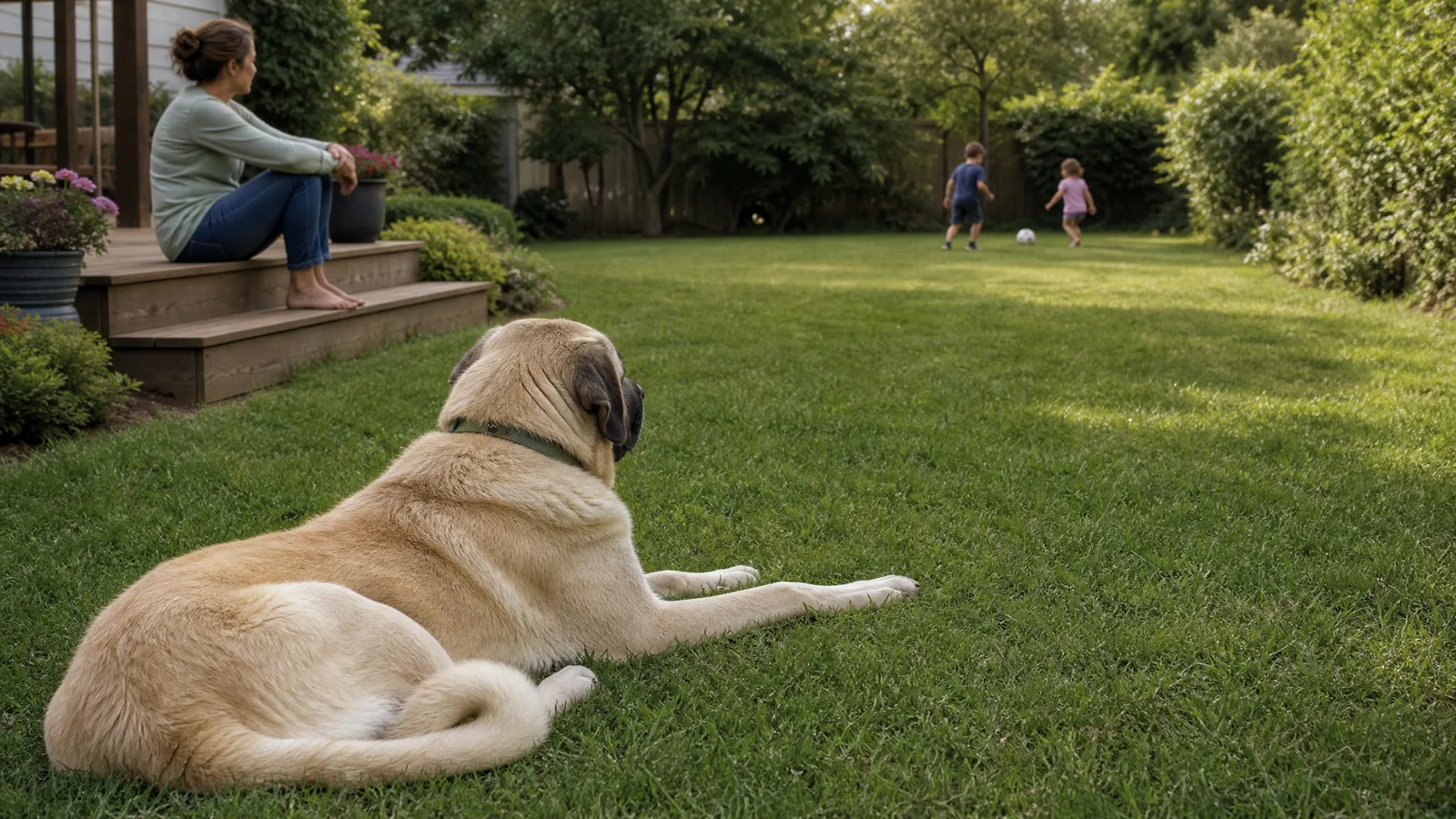
An Anatolian Shepherd can be good with kids, but you socialize them toward calm neutrality, not friendliness. This guardian breed rates 1 of 5 for openness to strangers and 3 of 5 with young children and other dogs, which means supervision comes with the package. A livestock guardian is bred to assess newcomers, so the realistic goal is relaxed tolerance, not enthusiasm.
Getting this wrong has a clear cost. A guardian who never learns what ordinary life looks like treats the mail carrier, a neighbor's toddler and a visiting dog as possible threats, and the household slowly stops having company. Done well, the same instincts give you a steady, deeply bonded dog, and we have spent many years specializing in how this breed behaves and learns.
This article looks at socializing through four ordinary households: a home with young kids, an apartment, a house with a second dog and a cat, and an owner who works all day. You will be able to find your own situation, set rules that fit it, and finish with guest rules and a doorbell drill you can start today.
What Socializing Means for a Reserved Anatolian Shepherd
Socializing means teaching a dog what ordinary life looks like so they can stay settled around it. For many breeds that ends with a dog who rushes to greet everyone, but the finish line here is quieter. Openness to strangers is rated 1 of 5, labeled "Reserved," and the UKC standard describes dogs who are loyal and affectionate to their owners but wary of strangers when mature.
The cause is job history. The parent club notes that the breed was bred for millennia to exercise independent judgment in response to perceived danger, and a dog selected to decide alone whether a newcomer is a threat will not hand that decision to the nearest stranger. They watch first and judge second. The breed standard accepts reserve around strangers and off their territory, which is why pushing for friendliness tends to backfire.
What the Other Ratings Show
The other ratings read the same way. A 3 of 5 for young children and for other dogs sits at "With Supervision" on that scale, so it describes a condition for success, not a defect. Watchdog and protective nature scores 5 of 5, "Vigilant," yet the breed is calm, friendly and affectionate with their immediate family. The result is a dog who is soft at home and watchful at the gate.
We define the goal as neutrality: a dog who notices a person, glances at you, and settles, with no greeting and no warning. Individual dogs vary, so treat the ratings as averages and watch your own dog. For the earliest stage, the Anatolian Shepherd puppy socialization article covers what to do before the guardian grows up, and this one picks up in real households.
Calm indifference to a stranger is a success, not a failure of friendliness.
Socializing Young Kids and a Watchful Anatolian Shepherd
Young children are the hardest test of this temperament because they move fast, shriek and grab, and they are also the family members the dog most wants to keep an eye on. Two separate things are happening, watching and misreading, and the plan works better when you treat them separately.
How the Dog Watches Your Kids
A vigilant guardian may keep watch on the children, because the breed was bred for millennia to exercise independent judgment in response to perceived danger. That is the breed's job showing up in a living room, not aloofness.
The risk is not malice but misreading: a sudden shriek or a scuffle between two children can look, to a vigilant dog, like someone needs defending. We cannot see inside any dog's head, so the safe assumption is that loud, fast play can tip them toward stepping in.
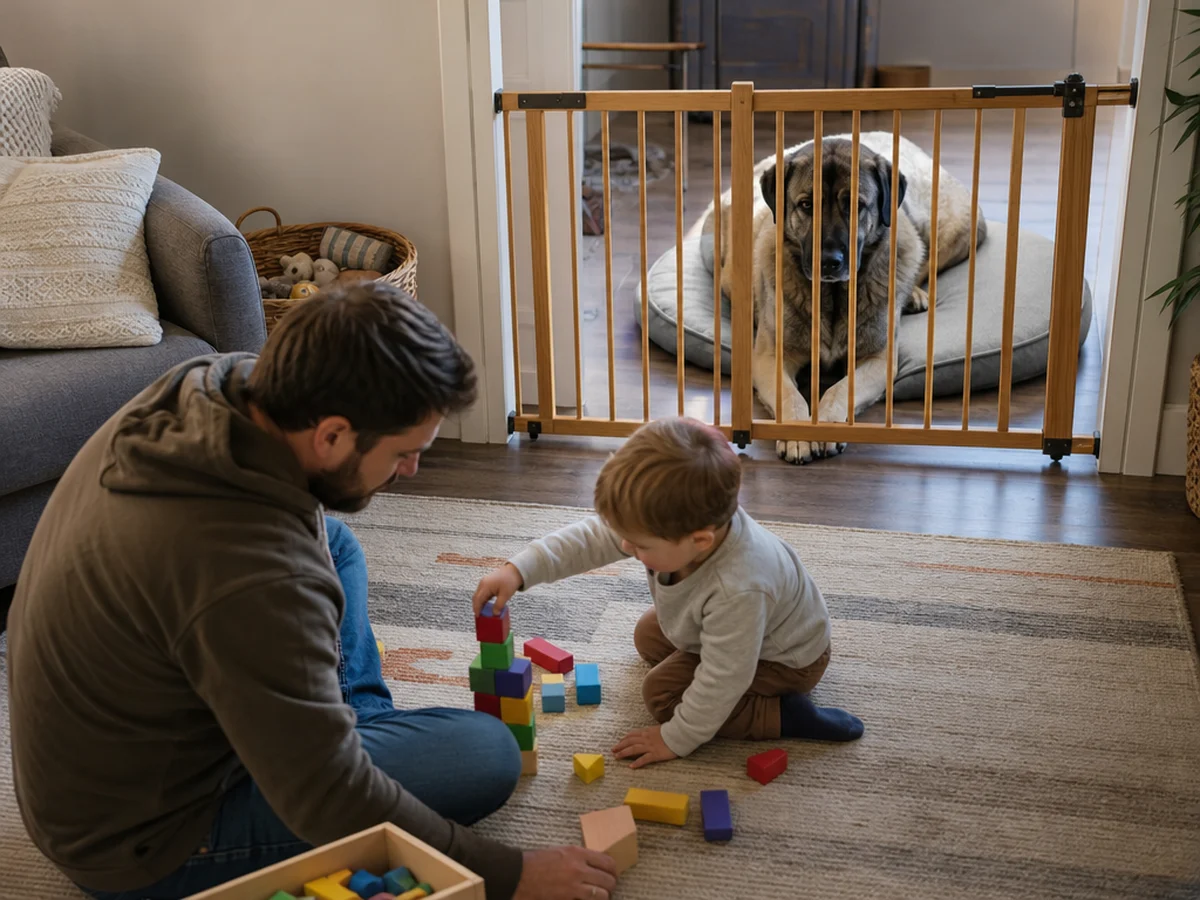
This matters because young children are far more likely to be bitten than other age groups, and the dog most often involved is the family's own rather than a stranger's. A safe home does not rely on good nature alone. It gives the dog a retreat, such as a bed behind a baby gate where no child ever goes, so they can leave a noisy scene instead of deciding how to handle it.
Rules for Your Kids and Their Friends
These rules give children a job that matches the dog's, which is staying calm. Teach them before the first practice session.
- Children never hug, climb on or lean over the dog, because the breed standard discourages overhandling and a dog who feels cornered has few polite options.
- The dog's bed and gated space are off limits to every child, every time.
- Nobody disturbs the dog while they eat or sleep.
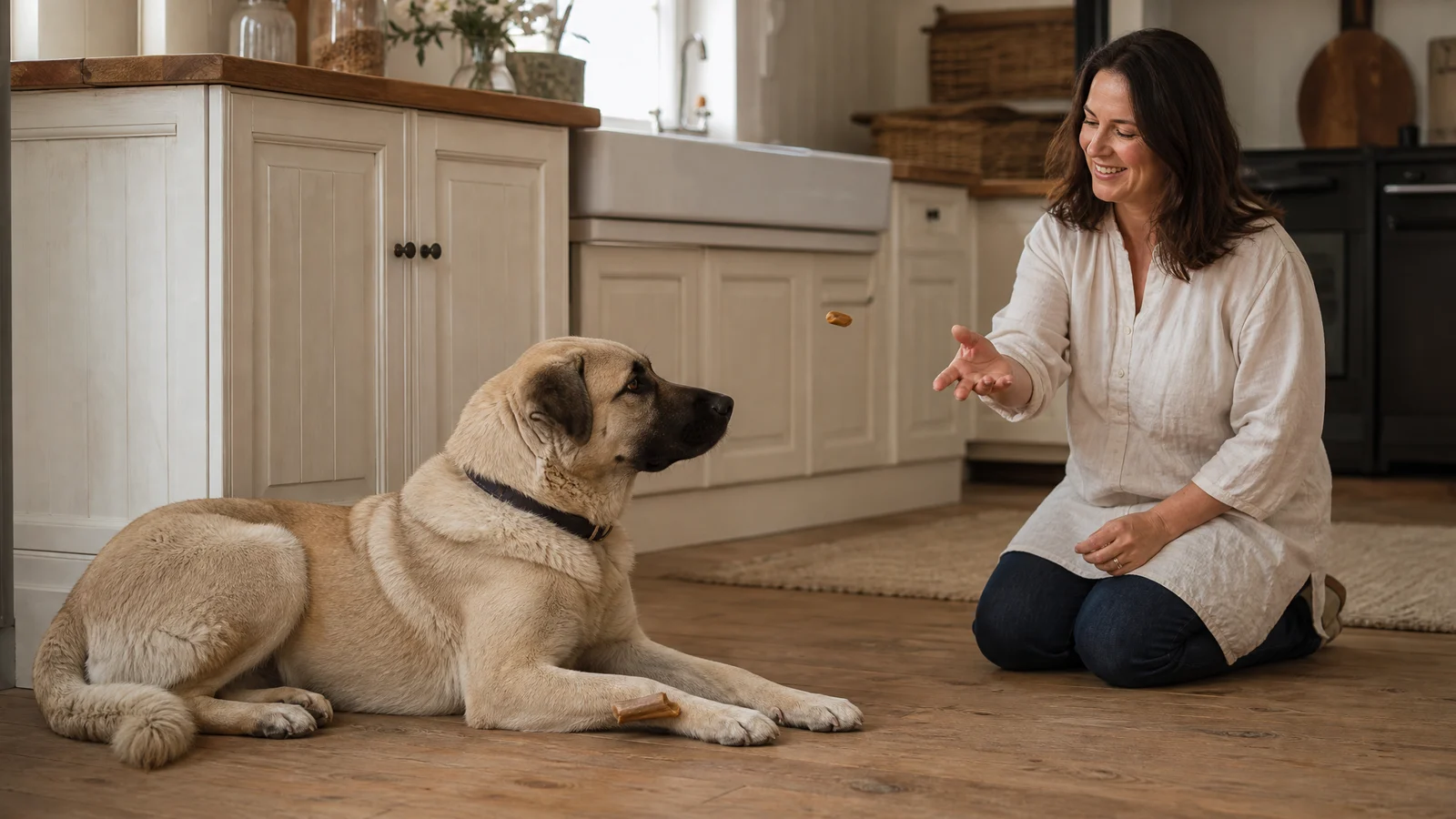
- Young children toss treats from a few steps back instead of reaching toward the dog, which keeps the exchange boring and safe.
- An adult with free hands stays nearby whenever a child and the dog are in the same room.
Visiting children are the bigger unknown, since the dog has not yet learned their voices or habits. When friends come over, move the dog to the gated space with a chew before play gets loud, not after. Once the noise settles, let them watch from a distance and reward them for staying relaxed while kids run past.
A gate put up early costs far less than any cure.
Socializing an Anatolian Shepherd Around Apartment Neighbors
An apartment turns the outside world into a stream of near misses. Footsteps pass the door, the elevator opens beside you, and a neighbor squeezes by within arm's reach. For a dog bred to assess approaching strangers, the front door is the boundary, so every sound near it counts as an event worth reporting.
Barking in this setting tends to reward itself. The dog barks, the footsteps move on, and from their point of view the barking worked. We cannot be certain what any one dog concludes, but repetition makes patterns stick, and the breed's barking rating of 3 of 5, "Occasional," leaves room to prevent a habit before it hardens.
Start with sound. When your dog notices footsteps in the hall, mark that moment with a single cue word like yes, which pinpoints for the dog exactly when they earned a treat, and feed right away, ideally before any barking begins. If the dog barks anyway, you are past threshold, meaning the distance or volume at which they can no longer settle. Move farther from the door and try again.
Then add the situations that make apartment life distinct:
- Let your dog ride the elevator while it is empty first, standing between them and the door and feeding for calm, before you try it with people aboard.
- In hallways, step aside and draw your dog's attention to you with a treat so a passing neighbor is background, not the main event.
- Do not ask neighbors to pet or greet. A reserved dog owes no one a hello, and being ignored teaches that strangers are not a big deal.
- Cover any glass beside the door, since a dog who can watch the hallway all day rehearses alert behavior all day.
The instincts behind these reactions get a fuller treatment in living with an Anatolian Shepherd. In an apartment, neutral reactions are built from many boring, rewarded passes.
This is general information, not veterinary advice. Check with your veterinarian before any medicine or diet change.
Socializing an Anatolian Shepherd in a Dog-and-Cat Household
A home with a second dog and a cat has several opinions to manage, and who arrived first changes the stakes. Residents tend to treat the home as theirs, and a breed the standard calls highly territorial adds weight to that, whether your Anatolian is the newcomer or the one who has always lived there. The common rule is pacing: the most nervous animal sets the schedule.
Letting Dogs Meet Through a Gate
The breed rates 3 of 5 with other dogs, "With Supervision," so plan every meeting as supervised. Begin outside the home, on neutral ground such as a quiet street, with both dogs on loose leashes. Walk in the same direction at a distance, close the gap gradually while rewarding calm, allow a brief sniff, then keep walking. Tension tends to build when dogs are held face to face, which is why the walk matters more than the greeting.
Indoors, a baby gate is your best tool. Feed each dog a treat on their own side so the other dog's presence predicts something good, and trade rooms while the other is out of sight so neither one has to defend a space they have not explored. Give each dog a separate bed, feed them apart and pick up chews before they become something worth guarding. If you see stiffening, hard staring or freezing, calmly call one dog away for a treat and add distance.
Giving the Cat the High Ground
Battersea advises completely separate living areas for a new dog and the resident cat, held for two to three weeks at minimum, before any careful introductions. The reason is that a cat who feels trapped, and a dog who feels the cat is intruding, both act on instinct, and a gap in time lets each settle into the new smells and sounds first.
Once the separation period is over, begin with sight only. Open a gate or crack a door, keep the dog on leash, and make sure the cat can leave whenever they like and has shelves or a tall tree to climb. Whenever the dog notices the cat and then turns back toward you, reward them.
If the cat is the newcomer, the dog is the resident, so go at least as slowly. Do not leave them alone together until there is a long record of calm, and remember that dogs vary in how they respond to small, quick-moving animals.
Whoever moves slowest in the house decides how fast the introductions go.
Socializing a Dog Left Home on Workdays
An owner who is out all day faces a different problem: not too much exposure but too little, and too sudden when it comes. Long hours alone mean the dog's picture of strangers is built mostly from sounds at windows and doors, which are rarely paired with anything good. A bored guardian may also patrol and rehearse alert barking. We cannot say how much any one dog suffers, but the pattern makes evening visitors harder to handle.
Arrivals and Departures That Stay Quiet
Leave without ceremony and give something to work on just before you go, such as a food puzzle or chew, so your departure predicts something good. On return, wait until the dog is calm before greeting and keep the greeting low-key. Big reunions raise arousal, and a dog who is already excited is quicker to react to the next noise at the door. Dogs differ, but quiet routines cost nothing to try.
Daily Exposure That Fits a Workday
Choose walk times on purpose. A morning walk when neighbors and children are out and an evening walk when streets are quiet give two kinds of practice. Stop on a bench or at the edge of a park, feed for calm, and let the world pass without greeting anyone. With moderate energy and moderate mental stimulation needs, the breed does well on sniffing, puzzles and short outings rather than constant activity.
If a walker or neighbor helps at midday, give them the same rules: no forced petting, treats for calm, no meetings with strangers. Regular vet visits matter here too, because a sudden change in how wary your dog acts can have a physical cause worth ruling out. For patterns that persist, common Anatolian Shepherd behavior problems helps sort normal guarding from trouble.
Quiet arrivals and chosen walks turn long workdays into steady practice.
House Rules for Guests Visiting Your Anatolian Shepherd
Every household above reached the same lesson: a vigilant dog relaxes when arrivals follow a script. Because the breed was bred to judge danger independently, every unscripted moment forces the dog to make a call, and house rules take that call away. Share these with anyone who visits.
- Only announced guests come in, and anyone new, including visiting children, gets a quick briefing from you before they reach the door.
- The dog waits on the mat, behind a gate or in another room before the door opens, never loose in the entry.
- Guests ignore the dog at first, sit down, and never reach over the head, hug or corner the dog. The dog chooses whether to approach.
- Treats come from you, and you pay for settling, not for sniffing the guest.
- Visits end before the dog is tired or wound up, and sooner if the dog stiffens, stares hard or freezes.
Notice that none of this asks the dog to love guests. It asks for a settled dog on a mat, which fits a breed whose standard accepts reserve around strangers. This naturally independent, very intelligent breed picks up a script quickly but can be slow to answer cues, so expect to repeat it many times and reward generously. A predictable visit is the kindest kind of introduction.
One Doorbell Drill for Socializing Your Anatolian Shepherd Today
Start with a doorbell drill today, if nothing else. The bell packs the whole subject into a few seconds: an arrival, a boundary and a stranger on the way, at a moment you can rehearse. A dog who learns to go to a mat when the bell rings has been handed a job that replaces their own judgment call. If your dog does not yet settle on a mat, spend today rewarding lying down on it, then return to this.
- Set the mat several steps away from the door, out of the direct line of sight if you can, and keep small treats in your pocket.
- Ring the bell yourself or play a recording, say your marker word the instant your dog turns toward the sound, and send them to the mat.
- Feed on the mat several times while the sound is still fresh, paying for lying calmly and never for barking.
- Open the door only if the dog is still settled. If they get up, close it and reset without comment.
- Stop after a few repeats while it is still going well, with one last treat on the mat.
Expect uneven results at first, since this breed answers cues slowly and thinks for themselves. Repeat the drill each day, and the bell becomes a signal to settle instead of a call to patrol. That is the shape of socializing a guardian: not a dog who loves every visitor, but a calm one who has seen enough ordinary arrivals to let you handle them.
 BehaviorAnatolian Shepherd: Guarding food and space
 Training basicsRecall and Off-Leash Safety With an Anatolian Shepherd
 Training basicsObedience Training for an Independent Anatolian Shepherd